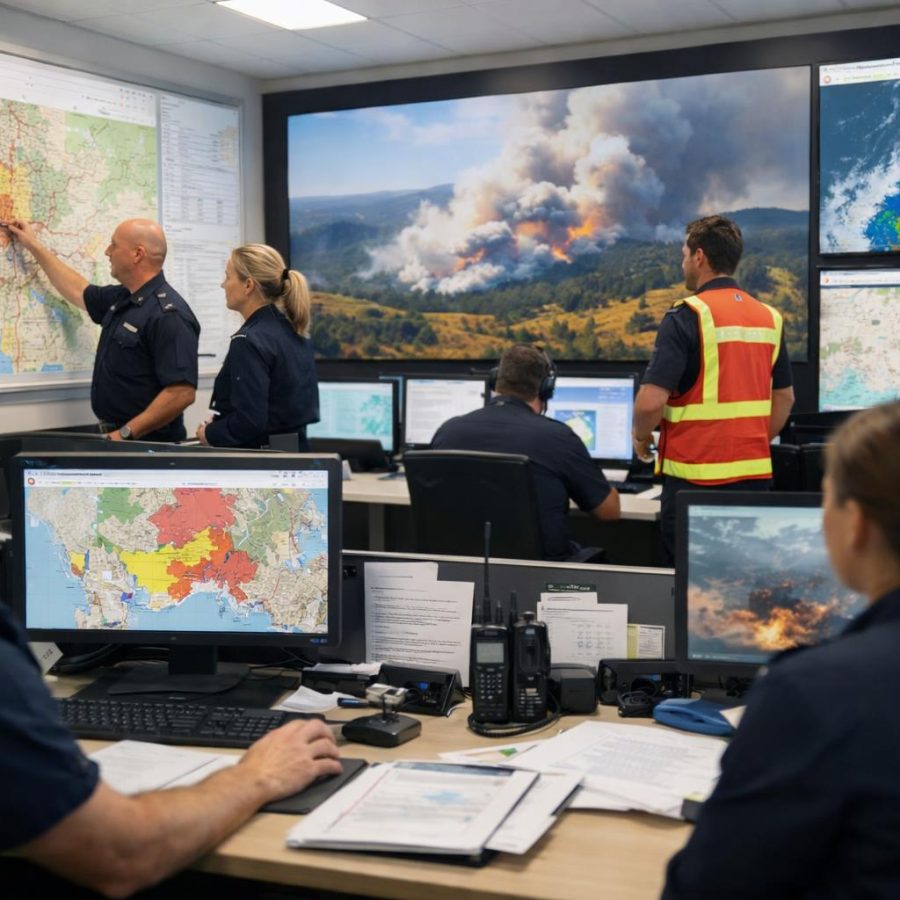
An emergency response plan is only useful if it reflects what would actually happen in an emergency. That means it needs to be practical, current, easy to follow and suited to the real hazards of the site, not just stored away in a folder and forgotten.
Why emergency response plans need regular review
A written emergency response plan can look complete on paper and still fail when people need it most. This is usually not because organisations lack care. More often, the plan has drifted away from reality.
Buildings change. Staff change. Equipment changes. Hazards change. Even the way people work can change without anyone updating the emergency documents. Over time, a plan that once made sense can become harder to use, slower to follow, or less relevant to the site it was written for.
A periodic review helps organisations check whether the plan is still fit for purpose. It is a practical way to identify weak points before an emergency exposes them. A good review does not aim to criticise the existing document for its own sake. It aims to find gaps, test assumptions and improve the parts that matter most.
Need Help Reviewing Your Emergency Response Plan?
I provide professional fire and emergency response plan reviews and gap analysis,
tailored to your organisation, site, hazards and location.
Service provided through Fiverr Pro. Formal statutory approval, certification or
engineering sign-off is not included where an authorised professional is required.
This matters for all kinds of organisations, including workplaces, schools, warehouses, offices, shopping centres, community facilities, accommodation sites, property managers and other operations worldwide. The details will differ, but the principle is the same: emergency planning should reflect the organisation, the site, the hazards, the location and the applicable local requirements.
That is why a document should not be treated as finished simply because it has been written once. A plan is a working control measure. Like any control measure, it should be checked, tested, updated and improved.
For some organisations, a review may be simple. For others, especially larger or more complex sites, it may need input from someone with real emergency-management experience who can identify practical weaknesses that are easy to miss from inside the organisation.
Common gaps found in emergency response plans
There is no single list of flaws that applies to every site, but many reviews uncover similar issues. These are often the kinds of gaps that do not stand out until someone tries to use the plan in a real event or during a realistic exercise.
Frequent weaknesses to look for
- The plan exists, but people do not know where it is kept.
- Contact details are out of date or incomplete.
- Roles are listed, but responsibilities are unclear in practice.
- Evacuation routes do not match the current building layout.
- Assembly areas are not suitable for the actual site or occupancy.
- Procedures are too generic and do not reflect site-specific hazards.
- Fire and emergency instructions are inconsistent across different documents.
- Special needs arrangements are missing or not practical.
- Training has not kept pace with staffing changes.
- Exercises have not been used to test the plan against real conditions.
Some plans are also too long, too complicated or written in language that staff will not use under pressure. A good emergency plan should be easy to follow when people are under stress, dealing with noise, uncertainty and time pressure. If the document is difficult to understand in a quiet office, it will be even harder to use during an actual incident.
Another common issue is over-reliance on a template. Templates can help get started, but they do not automatically produce a good plan. A plan copied from another site may miss the real hazards, the actual staffing structure, the physical layout, or the local response arrangements that matter for that organisation.
It is also important to distinguish between what is written and what is likely to happen. For example, a plan may say that one person will contact emergency services, another will manage the evacuation, and another will account for staff. That may be sensible in theory. But if those people are not available during certain shifts, the plan will need a practical backup arrangement.
Roles and responsibilities must be clear
One of the most useful parts of a review is checking who is expected to do what. During an emergency, uncertainty about roles can cause delay, duplication or missed actions. A plan should make responsibilities clear enough that the right people can act quickly.
Questions a review should ask
- Who raises the alarm?
- Who decides whether to evacuate, shelter or isolate an area?
- Who contacts emergency services or the relevant site contacts?
- Who checks toilets, meeting rooms, offices or other areas where people may be missed?
- Who assists visitors, contractors or people with mobility or communication needs?
- Who meets emergency responders and provides site information?
- Who manages communication with staff, occupants, residents, clients or the public?
These responsibilities should not be assumed just because someone has a title. Organisational charts and real emergency roles are not always the same. A person may be senior in name but not present on every shift. Another person may have practical authority on site and be better placed to act immediately.
Where a role depends on training, that training should be current. Where a role depends on authority, that authority should be recognised in the plan. Where a role depends on access to information, that information should be available when needed.
It is also worth checking succession. If the primary person is away, who takes over? If a supervisor is offsite, who has the next level of authority? If a key contact is unavailable, does the plan still work?
For many organisations, the best plans are simple enough that people can understand them quickly, but clear enough that they do not rely on guesswork. The goal is not to write a perfect document for every possible emergency. The goal is to make sure the organisation can respond in a coordinated and realistic way.
That usually means reviewing roles in the context of the actual staffing pattern, hours of operation, contractor presence, visitor numbers and the practical limits of the site.
Fire and emergency procedures should match the site
Fire and emergency procedures should never be copied from another building without checking whether they fit the site. Even small differences in layout, occupancy, use or access can change how an emergency should be managed.
For example, a procedure may need to consider the location of exits, stairways, fire doors, alarm devices, manual call points, extinguishers, hydrants, shut-offs, refuge areas, emergency lighting, security barriers, or areas with restricted access. The exact details will vary by site and local requirements.
Useful review points
- Are alarm and evacuation instructions easy to understand?
- Do staff know what different alarms mean, if there is more than one signal?
- Are evacuation routes still clear and usable?
- Are fire doors, exits and stairs kept free of obstruction?
- Are procedures in place for out-of-hours occupancy or mixed-use areas?
- Are shutdown steps included where they are safe and appropriate?
- Do procedures reflect the actual building systems and fire protection features?
Some organisations assume that a single evacuation instruction will suit every situation. That is not always realistic. In some locations, partial evacuation, staged evacuation or sheltering may be more appropriate than immediate full evacuation. In other situations, local fire or emergency procedures may require a different approach.
The key point is that the plan should support the organisation’s actual response strategy, not an idealised version that ignores the site. If the building has changed, the fire compartments, exits or movement paths may need review. If the way the premises are used has changed, the emergency procedures may need updating too.
This is also where a review can identify conflicts between documents. For example, one document may describe one response method while signage, induction material or contractor instructions describe another. In an emergency, conflicting information can slow people down.
A review should therefore compare the emergency response plan with the site as it operates now, not only with the original design drawings or older documents.

Site-specific hazards and risks need fresh attention
Every organisation has its own hazards and risks. Some are obvious, such as fire load, stored materials, machinery, electrical systems or high occupant density. Others are less obvious, such as temporary works, after-hours access, restricted mobility, noisy environments, language barriers, or the presence of vulnerable people.
An emergency response plan should reflect the actual risk profile of the site. That means it should consider the hazards that are currently present, not only the hazards that were present when the plan was first written.
Examples of changes that can affect the plan
- New machinery, processes or chemicals.
- Renovations, reconfigurations or partition changes.
- Changed storage arrangements or increased combustible load.
- More people on site, or fewer trained staff during certain shifts.
- New tenant fit-outs or shared-use arrangements.
- Seasonal activities, events or temporary installations.
- Different weather exposure, flood risk or local access issues.
- Changes to nearby hazards or surrounding land use.
These changes can affect evacuation routes, shutdown priorities, communication methods and the number of people who need assistance. They can also affect whether the same plan is suitable for day operations, night operations, weekends or periods when the site is busier than usual.
Where the site includes special hazards, the plan may need specific procedures for isolation, suppression, containment or emergency shutdown. Those actions should only be included where they are realistic, authorised and supported by proper training.
It is also important to consider the limits of what the organisation can reasonably control. Not every hazard can be removed, and not every emergency can be predicted. The purpose of the review is to improve preparedness, strengthen weak points and make the plan more workable.
Evacuation arrangements and communication must be practical
Evacuation planning is often where a gap analysis reveals practical problems. A route may be shown on a plan, but that does not mean it is the best or only route in practice. A route can be blocked by equipment, security controls, deliveries, weather exposure, crowding or temporary works. A review should ask whether the arrangements still work for the current site.
Evacuation questions to test
- Are primary and alternative evacuation paths available and realistic?
- Are assembly areas large enough and suitably located?
- Can people with mobility or sensory needs move safely?
- Are visitors and contractors covered by the procedure?
- Is there a reliable way to account for everyone?
- Are emergency communication methods available if normal systems fail?
- Can the organisation still communicate if power, phones or internet are disrupted?
Communication is just as important as movement. People need to know what is happening, where to go and who is in charge. In many emergencies, confusion grows when messages are vague, delayed or inconsistent.
A review should check the practical communication chain. That includes internal alerts, supervisor notifications, emergency services contact points, after-hours contacts and any communications with tenants, customers, residents or visitors. If the organisation uses radios, public address systems, SMS messaging or other tools, those tools should be tested and backed up where possible.
In some settings, communication must also account for language differences, hearing difficulties, visual impairments or low literacy. A plan that relies on one method alone may not be enough.
It can help to write instructions in short, direct steps and to separate immediate public actions from the tasks reserved for trained or authorised responders. For example, staff may be told to raise the alarm, move to a safe area and follow instructions, while only authorised personnel are expected to handle shutdowns, fire systems, access control or liaison with responders.
Clear public instructions reduce hesitation. Clear responder instructions reduce confusion. Both are important, but they should not be mixed together in a way that makes the plan harder to use.
Document control, review dates and version management matter
Even a good plan can become unreliable if document control is weak. Outdated versions, conflicting copies and unclear review dates are common sources of error. A review should check whether the organisation can actually tell which version is current.
That means looking at more than the front page. It means checking whether copies held by managers, supervisors, contractors, front-of-house teams and other users all match. It also means checking whether emergency contact lists, diagrams, appendices and site references have been updated at the same time as the core document.
What document control should show
- Document title and version identification.
- Current review or issue date.
- Next scheduled review date, if used by the organisation.
- Who approved or maintained the document internally.
- Which sections were updated and why.
- Where controlled copies are held.
Good document control does not need to be complicated. It just needs to be reliable. If the plan is distributed electronically, people should know where the current version lives. If the plan is kept in hard copy, there should be a controlled method for updating it. If the plan forms part of an induction package, the induction content should be updated when the plan changes.
Review dates are also a reminder that emergency planning is not a one-off task. Many organisations benefit from a scheduled review cycle, but the timing should suit the site and the risk profile. A date alone is not enough, though. The plan should also be reviewed after meaningful change, such as building works, staffing shifts, new equipment or changed hazards.
Document control is not just administration. It is part of operational reliability. If people cannot trust the document, they will not use it confidently under pressure.
Training, exercises and practical testing reveal what paperwork cannot
A plan can look reasonable until people try to use it. That is why training and exercises are so important. They help show whether people understand the plan, whether the instructions make sense and whether the arrangement works in the real environment.
A review should ask whether the plan has been tested in a practical way. This does not always require a large exercise. Even a short drill, walk-through, call-tree test or desktop discussion can show gaps that were hidden in the written version.
What to check after training or exercises
- Did people know their roles without being prompted too much?
- Did they understand the alarm and evacuation steps?
- Were there delays caused by unclear instructions?
- Did communication work as expected?
- Were the routes and assembly arrangements practical?
- Did the exercise reveal any conflicts with normal work practices?
- Were lessons recorded and acted on?
The value of an exercise is not just the exercise itself. The real value comes from what the organisation learns afterwards. If the same problem appears repeatedly and nothing changes, the exercise is not being fully used.
Training should also reflect turnover and change. New staff may need different instruction from experienced staff. Contractor management may need separate briefing. Supervisors may need a deeper understanding of their responsibilities. If a role is relied on during an emergency, the person doing that role should be properly prepared.
Not every organisation needs the same level of training or the same type of test. The most useful approach is the one that suits the site, the hazards, the occupancy and the way the organisation operates. A small office and a complex multi-tenant facility should not be treated as if they face the same conditions.
How to prioritise findings after a review
Once a review identifies gaps, the next step is prioritisation. Not every issue needs the same response time. Some findings may be critical and require immediate attention. Others may be useful improvements that can be scheduled later.
This is important because organisations often have limited time and resources. A sensible priority system helps focus effort where it will reduce the most serious weakness first.
One simple example is shown below. It is only an illustration, not a universal standard.
| Priority | Example meaning | Simple visual guide |
|---|---|---|
| Critical | Immediate attention needed for a major gap that could seriously affect the response | ██████████ |
| High | Priority action required soon because the issue could affect preparedness or response | ████████ |
| Medium | Planned improvement that should be scheduled and tracked | ████ |
| Low | Monitor and improve when practical | ██ |
A practical review should also explain why something is prioritised. For example, a missing evacuation arrangement for a busy occupancy period may be more urgent than a formatting issue in the document. Likewise, an unclear emergency role may matter more than a minor wording improvement.
The aim is not to create a long list of faults. The aim is to decide what must be fixed first, what should be improved next and what can be monitored.
For many organisations, a short action list with owners and target dates is more useful than a lengthy report that never leads to change. Priority should drive action, not just documentation.
Review area, weakness and improvement examples
The table below shows how a gap analysis can turn review findings into practical next steps. The examples are general and should always be adapted to the organisation, site and local requirements.
| Review area | Possible weakness | Suggested improvement |
|---|---|---|
| Roles and responsibilities | Emergency duties are listed, but backup arrangements are unclear | Define primary and alternate roles for key tasks |
| Evacuation | Routes shown on the plan no longer match the current layout | Update diagrams and confirm paths are usable |
| Communication | Contact list is incomplete or outdated | Refresh contacts and add escalation steps |
| Hazards and risks | New equipment or storage has not been considered | Review hazards and revise procedures accordingly |
| Training | New staff have not been briefed on emergency actions | Update induction and refresher training |
| Document control | Multiple uncontrolled copies are in circulation | Issue a controlled version and withdraw old copies |
| Exercises | No practical testing has been recorded | Schedule and document a suitable exercise |
| Site changes | Building works have altered access or exits | Recheck routes, signage and occupancy arrangements |
This kind of table can be very useful during a review meeting because it turns a general discussion into a focused action list. It also helps people see the difference between identifying a problem and improving the plan.
A strong review should end with a clear set of priorities, assigned responsibilities and realistic timeframes. If a finding is urgent, it should be treated as urgent. If it is moderate, it should be added to the improvement plan and tracked. If it is minor, it should still be recorded so it is not forgotten.
Professional review versus formal certification or regulatory sign-off
It is important to separate a professional review or gap analysis from formal statutory approval, engineering certification or regulatory sign-off. These are not the same thing.
A professional review focuses on identifying weaknesses, practical improvements and priority actions in the plan. It is a risk-informed review of the document and its usability. It may point out where the plan appears incomplete, out of date or inconsistent with the site.
Formal statutory approval, certification or sign-off is different. It may be required by legislation, regulations, standards, building approval processes or other local legal requirements. Where that is the case, the work may need to be completed or endorsed by an authorised professional in the relevant jurisdiction.
Why the distinction matters
- A review can improve the plan without pretending to be legal certification.
- Certification may require specific qualifications or authorisation.
- Some sites need engineering input, fire-system expertise or regulated sign-off.
- Local requirements can vary widely between jurisdictions and site types.
That is why organisations should not assume that one service covers every need. A gap analysis can be a valuable part of emergency planning, but it does not replace specialist certification where that is legally required. In some cases, a review may reveal that the organisation should seek additional input from an authorised professional before finalising the plan.
This distinction is especially important for larger, higher-risk or more complex sites. The best approach is to understand what the review is intended to do, and what it is not intended to do.
For many organisations, the practical value of a review is that it helps make the next decision easier. It may show that the plan just needs editing, or it may show that a more formal technical or regulatory process is needed as well.
Priority actions after a review
Once findings have been identified and ranked, the organisation should move quickly from review to action. A good review is only useful if it leads to improvement.
Practical next steps
- Confirm the key findings and priority level for each one.
- Assign responsibility for each action to a named person or role.
- Set a realistic target date for completion.
- Update the emergency plan, supporting documents and diagrams where needed.
- Brief staff, tenants, contractors or other occupants on the changes.
- Test the updated arrangements in a practical way.
- Record what changed and keep the document control trail current.
It is often helpful to separate immediate actions from longer-term improvements. Immediate actions might include updating a critical contact list, fixing a broken evacuation route instruction or correcting a major role conflict. Longer-term actions might include revising the plan structure, improving training or introducing a better exercise cycle.
Where a finding relates to a serious operational weakness, do not wait for the next scheduled annual review. Address it as soon as reasonably possible. Likewise, if a change in the building, staffing or hazard profile makes the current plan unreliable, revise the plan promptly.
Organisations should also track what was changed and why. This creates continuity, helps future reviewers understand the reasoning and reduces the chance of losing useful information when staff change.
A final quality check is worth doing after updates. Check that the revised plan is still clear, that the responsibilities make sense and that the practical steps are still realistic for the site. If necessary, run a short exercise or walk-through to confirm the changes.
Getting a practical gap analysis can save time and confusion
For many organisations, the hardest part is not recognising that the plan should be reviewed. The hardest part is knowing where the weak points are and what should be fixed first. A structured gap analysis helps bring that clarity.
Ken provides a professional review of an organisation’s existing emergency response plan and a clear gap analysis based on extensive real-world fire and emergency-management experience. Depending on the selected service package, the review may cover plan weaknesses, priority findings, risk and hazard considerations, responsibilities, emergency procedures, document control, recommended improvements, an action plan and suggested updates to selected sections.
Each review is tailored to the organisation, site, hazards and geographical location. Package pricing is based on one site and the listed inclusions. Larger or more complex organisations should make contact before ordering so the appropriate scope and price can be established.
Worldwide clients are welcome, but formal certification, statutory approval or engineering sign-off is not included where those matters require an authorised professional within the client’s jurisdiction. That distinction is important, because a useful gap analysis can support the next step without pretending to replace a regulated approval process.
If your organisation already has an emergency response plan but is unsure whether it is complete, practical or up to date, a professional review can help identify what needs attention before the plan is put to the test. You can find the service here: https://pro.fiverr.com/kenwalker235/review-your-emergency-response-plan-and-provide-a-professional-gap-analysis
In the end, the value of an emergency response plan depends on whether people can use it when it matters. A review helps make sure the document reflects the real site, the real risks and the real response arrangements. That is the practical standard to aim for, whatever the size or type of organisation.
Conclusion: Do not wait for an emergency to reveal what the plan missed. Review it periodically, test it in practice, prioritise the highest-risk gaps first and keep it aligned with the organisation as it changes. Before publication or implementation, verify the facts, the local requirements and the site-specific procedures that apply in your jurisdiction.
Need Help Reviewing Your Emergency Response Plan?
I provide professional fire and emergency response plan reviews and gap analysis,
tailored to your organisation, site, hazards and location.
Service provided through Fiverr Pro. Formal statutory approval, certification or
engineering sign-off is not included where an authorised professional is required.
FireRescue Training Hub
Access practical fire and emergency study support resources, downloads, checklists, audio guides, and member-only course content.
- Course library
- PDF downloads
- Audio guides
- Checklists
Study support only. Not accredited training or a replacement for workplace procedures.
About the author and safety review
Ken Walker
Former Station Officer and fire service educator
Former career firefighter with extensive career and volunteer fire service experience.
Qualifications: Associate Diploma of Applied Science in Fire Technology; Institute of Fire Engineers studies.
Author profilehttps://www.firerescue.com.au/about-us/