Australia has learnt some hard lessons from its worst bushfires. Ash Wednesday in 1983, Black Saturday in 2009 and the Black Summer fires of 2019–20 each exposed different weaknesses in how we prepare, warn, respond and recover. Those lessons are still relevant to people living in rural towns, on the edge of cities and anywhere a fast-moving bushfire or grassfire could threaten them.
This guide looks at what happened, what official inquiries and fire agencies learnt, and the steps households can take before the next dangerous fire day. The emphasis is simple: protect people first, make decisions early, and prepare long before smoke appears.
The essentials at a glance
- Make a household bushfire plan with a clear trigger to leave early, a safer destination and a backup arrangement.
- Check the Fire Danger Rating before a fire starts. Check official incident warnings when a fire is occurring. They are different systems.
- On Extreme or Catastrophic days in Victoria, CFA recommends leaving high-risk areas the night before or by 10 am. Follow your own state or territory agency’s directions.
- A well-maintained home may be more resilient, but no building, sprinkler or firebreak can guarantee survival.
What’s been updated — November 2026: Historical figures have been checked against official records. This revision separates Fire Danger Ratings from emergency warnings, corrects advice about leaving early and places of last resort, removes a blanket 20-metre clearing rule, and clarifies that FireRescue is an educational website, not an official warning service.
Three fires that changed Australia’s approach to bushfire safety
The numbers below describe different events across different areas and time periods. They should not be used to rank how dangerous any future fire might be. Every life lost matters, and even a small fire can be deadly under the wrong conditions.
Ash Wednesday — 16 February 1983
On Ash Wednesday, intense fires swept across Victoria and South Australia during severe drought, heat and powerful, shifting winds. Seventy-five people died: 47 in Victoria and 28 in South Australia. The Victorian Government’s fire history also records major losses of homes, farmland, businesses, livestock and public infrastructure. A violent wind change worsened several fires and caught people in rapidly changing conditions. Source: Forest Fire Management Victoria.
For fire services, the disaster drove improvements in training, protective clothing, appliances, coordination and community education. For households, the lasting message is that a familiar road, familiar landscape or previous experience does not make a property safe when wind and fire behaviour change suddenly. CFA’s Ash Wednesday history explains the changes made after 1983.
Black Saturday — 7 February 2009
Victoria’s Black Saturday fires occurred after prolonged dry conditions and an extraordinary heatwave. The Australian Disaster Resilience Knowledge Hub records 173 deaths and 2,029 houses lost. Many communities, including places around Kinglake and Marysville, suffered devastating losses. Fire moved rapidly in extreme conditions, and late attempts to escape exposed people to smoke, radiant heat, blocked roads and direct fire impact. Source: Australian Disaster Resilience Knowledge Hub.
The 2009 Victorian Bushfires Royal Commission prompted major discussion and reform around community safety, warnings, planning, land management and emergency response. But a critical lesson remains easy to understand: a warning may be too late, and leaving once a fire is close is not the same as leaving early. Waiting to see the flames before making a decision is a dangerous plan.
Black Summer — 2019–20
Black Summer was a prolonged, widespread fire season, not a single day’s disaster. The Australian Government’s response to the national Royal Commission records 33 lives lost and 3,110 homes destroyed. Fires affected communities in multiple states. Smoke travelled great distances, roads and telecommunications were disrupted, and some communities became isolated. Source: Department of the Prime Minister and Cabinet.
The Royal Commission into National Natural Disaster Arrangements examined how Australia could improve preparedness, coordination, communication, recovery and national support. Its report made 80 recommendations. The community lesson is broader than any single firefighting tactic: a large emergency can interrupt the normal services we take for granted. A plan that depends on one road, one phone, one power supply or one person may fail when pressure increases. Source: National Natural Disaster Arrangements Royal Commission.

Are Australian bushfires getting more dangerous?
The answer needs care. Australia’s fire seasons differ between regions, and each fire is influenced by weather, drought, vegetation, terrain and ignition. It would be wrong to claim that climate change caused every fire or that every place faces the same trend.
However, CSIRO and the Bureau of Meteorology’s State of the Climate 2024 reports an increase in dangerous fire weather and longer fire seasons across large parts of Australia. It projects further increases in dangerous fire weather days for much of southern and eastern Australia. These long-term changes interact with year-to-year rainfall, vegetation growth and drying. After wet periods, vigorous grass growth can become a hazard when it cures.
For a household, the useful question is not whether next summer will resemble 1983, 2009 or 2019–20. It is whether you can respond to the conditions forecast for your district and the fire developing near you. Plan for those decisions well before they are urgent.
Lesson 1: Know the difference between fire danger ratings and warnings
These two systems are often mixed up. They answer different questions:
Fire Danger Rating: How dangerous would a fire be if one started in the forecast area?
Emergency warning: What is happening with an actual incident, and what action does the issuing authority want you to take?
The four national Fire Danger Ratings
- Moderate — Plan and prepare. Stay informed and keep your preparations current.
- High — Be ready to act. Know your plan, your trigger and what you will take.
- Extreme — Take action now to protect life and property. In Victorian high-risk areas, CFA recommends leaving early, before a fire starts.
- Catastrophic — For your survival, leave bushfire risk areas. Do not plan to remain in a high-risk area to defend a property.
There may also be No Rating when no proactive fire-danger action is required for the district. This does not mean that ignition is impossible. The national levels above replaced older categories such as Severe and Very High in the current Australian Fire Danger Rating System. CFA: About Fire Danger Ratings.
The three core incident warning levels
- Advice: An incident is occurring or has occurred. Access official information and monitor conditions.
- Watch and Act: An emergency is developing. Take action now to protect yourself and others.
- Emergency Warning: You are in imminent danger. Act immediately and follow the specific instructions issued for your location.
Warnings do not necessarily arrive in order. Your first warning may already be an Emergency Warning, and some fires develop before an alert reaches you. Listen to local ABC emergency broadcasts and use your state or territory’s official emergency information service. In Victoria, that includes VicEmergency. CFA: Understanding warnings.
Important: FireRescue.com.au publishes education and preparedness guidance. It is not an emergency warning issuer. For a fire or other immediate threat to life, call Triple Zero (000) from a safe location.
Lessons Learned from Australia’s Deadliest Fires
Source: Analysis of historical data from Australian bushfire incidents. Learn more about bushfire history in Australia.
Lesson 2: Make leaving early a real plan, not just an intention
The most important part of a bushfire plan is a decision made before a dangerous day arrives. Talk about it with everyone in the household. Where will you go? When will you leave? How will you get there? Who will you tell? What happens if the planned route or destination is not available?
Victorian guidance: CFA advises people in high fire-risk areas to leave the night before or by 10 am on Extreme or Catastrophic days, before a fire starts. This is the Victorian agency’s advice, not a universal national departure time. Check the guidance from your state or territory for local conditions. CFA: When to leave.
A last-minute decision can quickly become impossible to carry out. Smoke can make roads difficult to see. Branches, vehicles and emergency road closures can block routes. Conditions can change faster than a person can pack the car and collect family members. Never drive through a known fire area or past official road closures.
Write down these six household decisions
- Trigger: Which forecast rating or local condition means we leave before a fire starts?
- Destination: Where is our planned lower-risk destination, and is it actually available?
- Transport: Who drives? Do we have fuel, keys, access and a backup if a car or road is unavailable?
- People: How do we collect children, older relatives or anyone needing assistance?
- Pets and livestock: What carriers, transport, food, water and early arrangements are required?
- Communication: Who receives a message when we leave, arrive or change plans?
People who need mobility assistance, medical equipment, extra time to understand instructions or support from another person should have a plan that allows them to leave earlier, not later. Do not assume transport services or support people will be available at short notice.
Keep the plan in a place that is easy to find. Rehearse the steps with everyone. Review it if your household changes, a child starts at a new school, a family member becomes unwell, or a regular road is closed. CFA: Make your bushfire plan.

Lesson 3: Prepare your home before the weather deteriorates
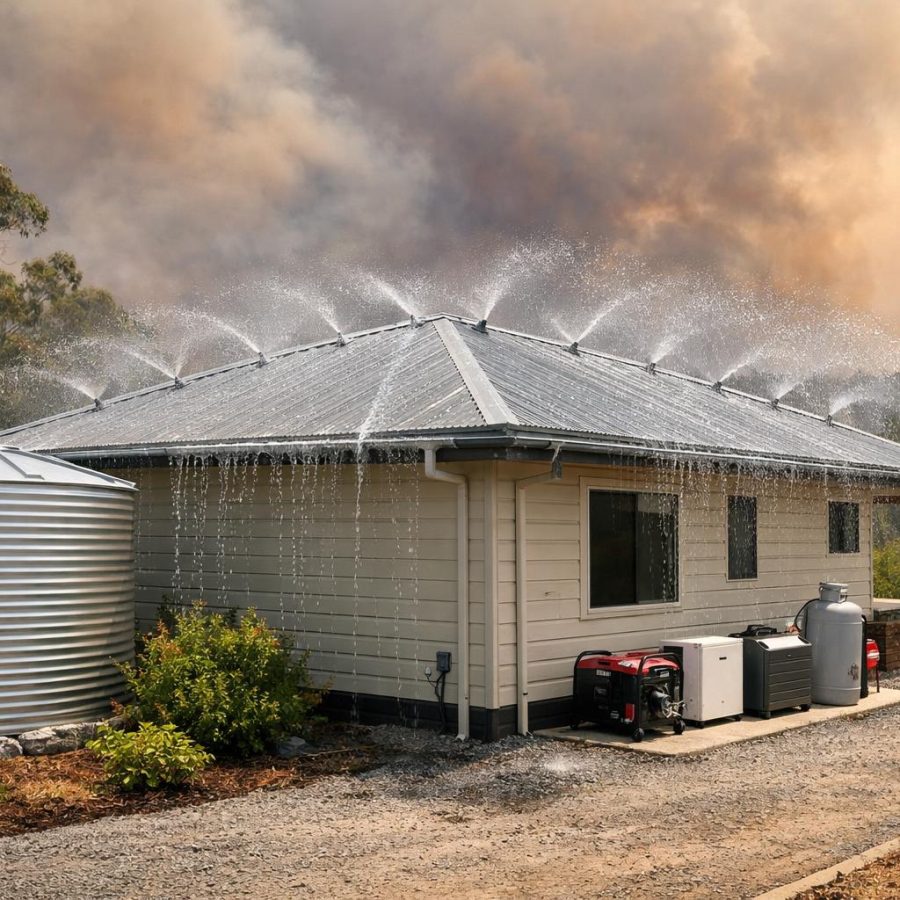
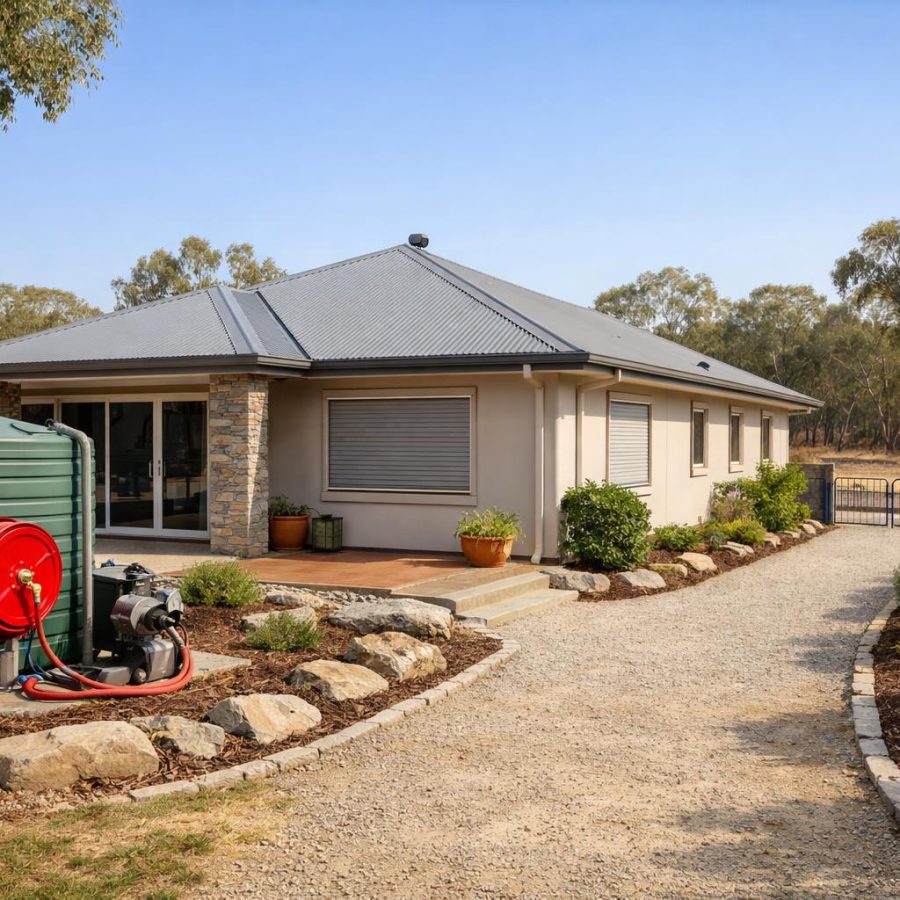
Home maintenance matters whether you intend to leave early or have a separate, professionally considered property-defence plan. Fire can threaten a house through embers, radiant heat, direct flames and burning material around the building. A well-maintained home can have a better chance of resisting ignition. It does not make the house fireproof or provide a reason to delay leaving.
Start with ordinary maintenance
- Gutters and roof: Remove leaves and debris safely and regularly. Check for places embers could collect or enter. Seek a professional for roof work you cannot do safely.
- Windows, doors and vents: Check gaps, damaged seals, screens and vulnerable openings. Use products and installation methods suited to the building and any applicable bushfire construction requirements.
- Decks and underfloor areas: Clear dry material, stored items and leaf litter. Inspect enclosed and hard-to-reach spaces where embers could settle.
- Garden: Cut grass, remove dead vegetation, manage shrubs close to the home and avoid storing combustible mulch or material beside walls and windows.
- Outdoor belongings: Move firewood, doormats, cushions and other flammable items away from the house before dangerous days. Store fuels and LPG cylinders according to applicable safety guidance.
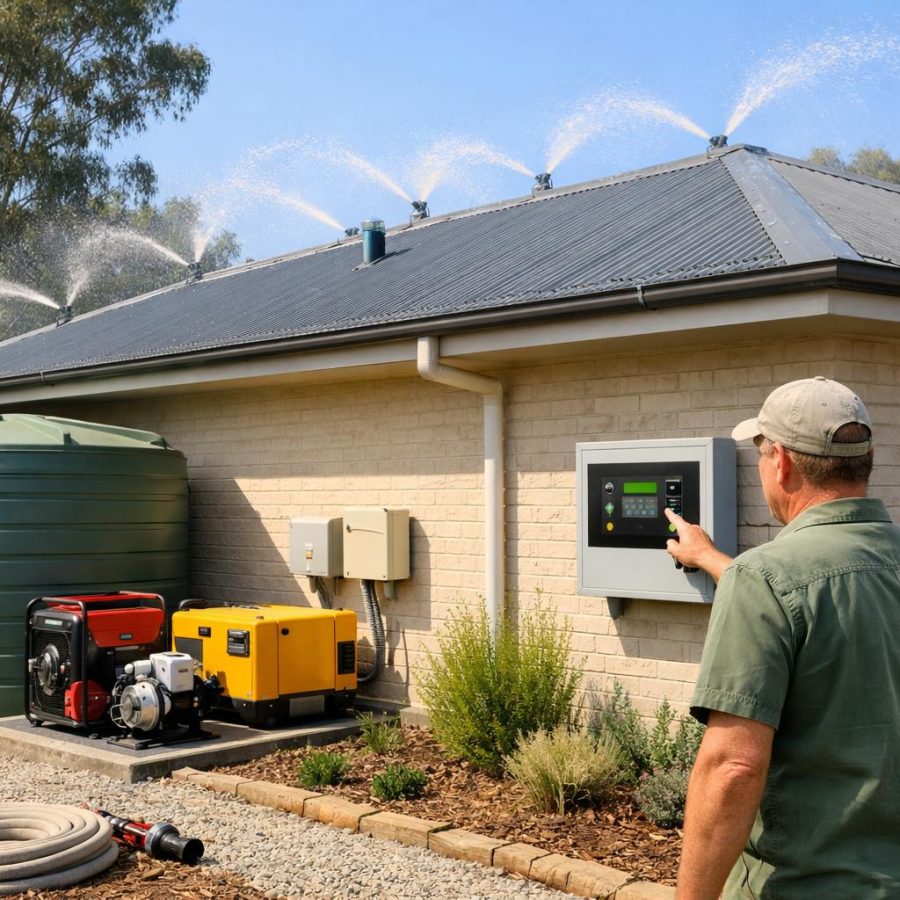
- Water and access: Maintain water supplies, fittings and driveways where relevant, but never assume a pump, sprinkler or responding fire crew will be able to defend the property.
There is no universal 20-metre or 30-metre clearing distance that makes every home safe. Permitted clearing, bushfire planning requirements, vegetation protections and site risk vary by location. In Victoria, specific 10/30 and 10/50 vegetation-clearing provisions may apply to qualifying properties, but those are planning-permit exemptions in defined circumstances, not mandatory defendable-space distances for all homes. Check with the relevant council and planning authority before clearing vegetation. CFA: Vegetation removal rules.
For building or renovation work in a bushfire-prone area, ask a qualified professional about the appropriate Bushfire Attack Level (BAL), local planning requirements and compliant construction details. Simple retrofits can be useful, but specific products such as mesh, shutters, glazing or roofing should not be assumed suitable for every BAL. For more detail, see the FireRescue guide to BAL and your property.
Use the CFA property-preparation guidance as a starting point. Keep maintenance on a schedule instead of trying to finish it when dangerous fire weather has already arrived.
Lesson 4: Prepared communities are connected, but don’t replace emergency services
Ash Wednesday, Black Saturday and Black Summer also demonstrate why neighbours, volunteers, local councils and professional emergency services need to work together. Good connections help people share trustworthy information, notice neighbours who may need assistance and make recovery easier. They do not turn untrained residents into firefighters, and they cannot guarantee that crews will reach every property.
Consider a simple neighbourhood preparedness conversation before summer. Ask who might need extra help planning transport, who has pets or livestock, which roads are regularly closed, and how people will communicate if mobile service fails. Respect privacy and obtain consent before adding anyone to a contact list or group chat. Never let informal messages override an official warning or evacuation instruction.
Community groups can help by arranging approved fire-safety information sessions, encouraging residents to make individual plans, and supporting trained local brigades through appropriate channels. If you want to volunteer, ask your local fire service about formal training and roles rather than taking on hazardous tasks yourself.
Plan for disruption. Black Summer showed how one emergency can affect electricity, communications and roads at the same time. Keep a battery-operated or hand-crank radio, charged power banks, printed emergency contacts and an agreed out-of-area contact. Official ABC emergency broadcasts and your jurisdiction‘s warning service should be part of your information plan.
Community Bushfire Resilience Data
- Local Council Bushfire Preparedness Survey 2023 - A comprehensive survey conducted by local councils to assess community awareness, preparedness, and response to bushfire risks. This report provides data on fire safety plans, survival kits, and vegetation compliance.
- Volunteer Firefighter Reports - A collection of insights and statistics reported by volunteer firefighters on community engagement, response times, and availability of fire safety equipment.
Lesson 5: Know your last-resort options, but never make them Plan A
One dangerous misconception is that a public oval, community building or neighbour’s house is automatically a safe refuge. A Neighbourhood Safer Place — Bushfire Place of Last Resort in Victoria is not guaranteed safe, may not be staffed and does not provide the services of an evacuation or relief centre. It is intended only when safer options have failed. CFA: Last-resort options.
If a fire starts near you, follow current emergency instructions and assess whether it is still safe to leave. If conditions make evacuation unsafe and you are trapped, seek the best shelter available and follow specific official last-resort guidance. Different circumstances require different actions. An ordinary house, car, paddock or body of water must never be described as a guaranteed safe place.
Critical safety warning: Do not plan to drive through an approaching fire front. Do not wait for an Emergency Warning as your trigger to leave. During a rapidly developing fire, follow the instructions issued for your exact area and call 000 if life is in immediate danger.
Returning home also requires care. Do not assume it is safe simply because the Fire Danger Rating has fallen. Check local road access, current incident warnings and the advice of police, fire services or the relevant authority before returning. Fallen trees, damaged power lines, hidden hot spots and unsafe buildings can remain dangerous after flames have passed.
A practical bushfire preparedness checklist for your household
Try these checks as part of your regular preparation. They are not a substitute for your own state or territory’s fire plan or site-specific professional advice.
- We know the Fire Danger Rating for our district and where to find official incident warnings.
- Everyone knows our leave-early trigger, safer destination and backup destination.
- We have considered who needs additional time, transport or support.
- Our emergency kit has medicines, identification, chargers, radio, water, food and essential personal items.
- Our pet or livestock arrangements are practical and ready before a dangerous day.
- We have checked the car, fuel, routes and alternative travel arrangements.
- Gutters, garden, roof edges and areas under decks are being maintained.
- We have printed contact details and an alternative if mobile or internet service fails.
- We know that local last-resort places are not guaranteed safe.
- We have talked through the plan and set a date to check it again.
For emergency kits, start with CFA’s packing guidance. For animals, see CFA’s pets and bushfires checklist. Tailor both to your household and location.
What these disasters mean from a firefighting perspective
There is an operational lesson behind all three events: under extreme conditions, the number of people and assets at risk can grow faster than emergency resources can protect them. Firefighters may need to prioritise life safety, defend critical points, move crews away from untenable positions and work across multiple agencies. Strong winds, poor visibility, falling trees, ember storms, communication failures and changing fire fronts complicate every decision.
This is an operational interpretation of the published evidence, not a claim about attending a particular historical incident. Better equipment, training, aircraft and communications have made important differences since 1983. They cannot remove the limits imposed by severe fire weather. Households reduce pressure on responders by making early, informed decisions, following warnings and not placing themselves in hazardous positions while trying to save possessions.
It also matters how information is delivered. Messages must be understandable, timely and accessible to people with different languages, hearing, vision, mobility or cognitive needs. A household plan should work for real people on a difficult day, not only look tidy on paper.
Common questions about lessons from major Australian bushfires
Does an Emergency Warning mean I should always get in the car?
No. It means immediate danger and immediate action, but the specific instructions depend on conditions. Leaving can be unsafe if fire, smoke or road closures have already cut off a route. Follow the current directions for your location. This is why leaving before a fire starts is so important.
Is a Fire Danger Rating the same as a warning that a fire is nearby?
No. A Fire Danger Rating forecasts how dangerous fire conditions could be if a fire started. An incident warning provides information about an actual event. Check both, but do not rely on receiving a warning before acting.
Will a bushfire-resistant home keep my family safe?
No construction rating or material guarantees occupant or property survival. Bushfire-resistant design and maintenance can improve resilience, but human safety still depends on weather, location, planning and following official advice.
Do I have to clear 20 metres around my house?
There is no blanket 20-metre rule for every Australian property. Requirements and permissible clearing depend on the state, local planning controls, vegetation and site circumstances. Ask the relevant council, fire agency or qualified practitioner before major clearing.
Can I rely on a phone alert?
No. Alerts can be delayed, missed or unavailable during network disruption. Use more than one official source, keep an emergency radio and learn to act on conditions around you. If you see an unreported fire or immediate threat, call 000.
What is the most valuable lesson from Black Saturday?
There is no single lesson, but for a household the most practical one is to make early decisions. Leaving once fire is threatening the property can be too late. Plan beforehand and act before conditions remove your safer choices.
Conclusion: Honour the lessons by preparing before the next fire
Ash Wednesday showed how quickly wind and fire conditions can change. Black Saturday showed the deadly consequences of extreme conditions and late decisions. Black Summer showed what happens when a large, prolonged disaster strains communities, transport and communications at the same time.
The practical response is not fear. It is a clear plan, a maintained property, trusted information and a decision to place life ahead of possessions. Start with one conversation at home. Agree on a leave-early trigger and destination, check your kit, then work through the property checklist. Repeat the process before each fire season.
For more practical detail, read How to Prepare for a Bushfire in Australia, Fire Danger Ratings: Know Your Risk and Bushfire Attack Levels and Your Property.
If you notice an outdated source or have a useful community preparedness experience to share, contact FireRescue through the website. Please distinguish first-hand experience from general advice and do not include private details about others.
Official sources and further reading
Reviewed against public agency guidance: 14 November 2026. The sources below support the historical figures and general preparedness advice. Emergency directions and local laws can change; always check your jurisdiction’s latest advice.
- Forest Fire Management Victoria — Ash Wednesday 1983
- CFA — Ash Wednesday and the changes that followed
- Australian Disaster Resilience Knowledge Hub — Black Saturday
- Australian Government — National approach to national disasters
- Royal Commission into National Natural Disaster Arrangements
- CSIRO and Bureau of Meteorology — State of the Climate 2024
- CFA — Fire Danger Ratings
- CFA — Emergency warnings
- CFA — When to leave
- CFA — Make a bushfire plan
- CFA — Preparing your property
- CFA — Vegetation-clearing rules
- CFA — Last resort options
- CFA — What to take with you
- CFA — Pets and bushfires
Safety notice: FireRescue provides general education, not emergency directions, a site-specific fire plan, building certification or a guarantee of survival. Follow official warnings, evacuation directions and professional advice relevant to your location. Call 000 for immediate emergencies.
FireRescue Training Hub
Access practical fire and emergency study support resources, downloads, checklists, audio guides, and member-only course content.
- Course library
- PDF downloads
- Audio guides
- Checklists
Study support only. Not accredited training or a replacement for workplace procedures.
About the author and safety review
Ken Walker
Former Station Officer and fire service educator
Former career firefighter with extensive career and volunteer fire service experience.
Qualifications: Associate Diploma of Applied Science in Fire Technology; Institute of Fire Engineers studies.
Author profilehttps://www.firerescue.com.au/about-us/