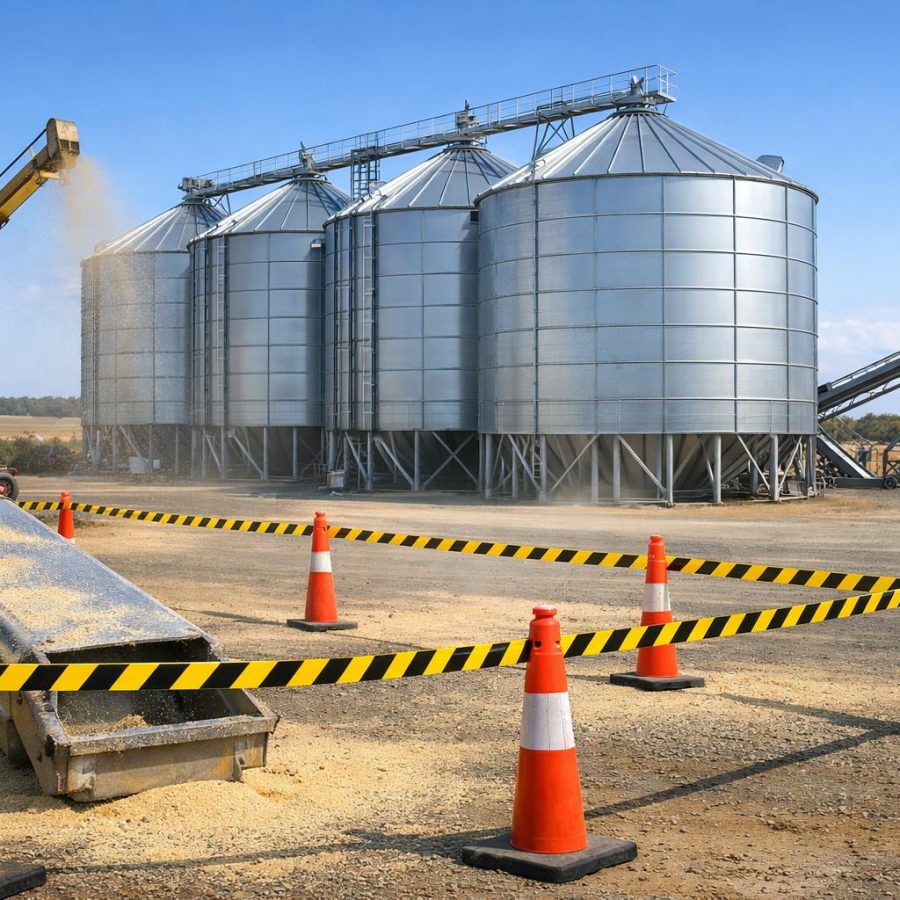
Farm fire safety in Australia is about reducing risk before the first hot, windy day arrives, then making clear decisions fast when conditions change. A good farm bushfire plan protects people first, keeps workers informed, helps livestock move early, and reduces the chance that a small ignition becomes a major loss.
Why farm fire safety needs a whole-property approach
Farms bring together homes, sheds, fuel, hay, machinery, livestock, crops, powerlines, water supplies and long access roads. That combination can turn a small fire into a serious emergency very quickly. A mower striking a rock, a bearing overheating on a harvester, a spark from welding, or a grassfire entering a fence line can all create different problems at once.
The best approach is to treat farm fire safety as a property-wide task, not just a firefighting task. That means reducing fuel loads, planning safe movement, checking machinery, preparing water supplies and agreeing in advance who decides when to stop work or leave. It also means understanding that conditions can change faster than a vehicle can reach help.
For immediate life-threatening emergencies in Australia, call Triple Zero (000) straight away. Do not wait to see whether a fire grows. If smoke, flame or embers are already threatening people, buildings or livestock, the safe step is to get emergency help underway as early as possible.
Write a farm bushfire plan before the season starts
A written farm bushfire plan gives everyone the same instructions when stress is high. It should be practical, short enough to use, and easy to update. Keep a printed copy in the home, office, shearing shed, workshop and any vehicle that is likely to be on the property during the fire season.
The plan should identify the people normally on the property and who may need assistance. That includes children, older people, people with disability, visitors, workers and contractors. It should name the person who makes the final call to stop work, move livestock or leave. In many situations, uncertainty causes delay, and delay increases risk.
The plan should also include emergency contacts, neighbouring landholders, primary and backup evacuation routes, gate locations, access keys, truck turning areas, water supplies, fuel storage, chemical storage, electrical isolation points, livestock locations and any safer location that may offer temporary protection if escape becomes impossible. Backup communications matter as well, because power and mobile coverage may fail.
Simple Farm Fire Plan table
| Plan item | What to record | Example note |
|---|---|---|
| People on property | Household members, workers, visitors, children, older people, anyone needing help | Who is here today and who may need support |
| Decision maker | The person who can stop work, leave or move stock | Primary and backup decision person |
| Emergency contacts | Triple Zero, local fire authority, neighbours, vet, mechanic, transport contact | Printed and saved offline |
| Livestock | Current locations, movement routes, low-risk containment areas | Stock can be moved early |
| Water supplies | Dams, tanks, pumps, hydrants, hoses and access points | Clear signs and good vehicle access |
| Hazards | Powerlines, solar systems, gas, fuel, chemicals, silos, unstable structures | Mark on property map |
| Evacuation routes | Primary route, backup route, gate codes and turn-around areas | Routes usable for heavy vehicles |
Review the plan before every fire season and after major changes to the property. If workers or contractors arrive, give them a short safety briefing. Tell them where to park, where to go in an emergency, what the local sirens or warnings mean, and who has authority to stop operations.
Use Fire Danger Ratings and warnings as action triggers
The Australian Fire Danger Rating System gives a clear guide to how dangerous a fire may be if one starts. It does not mean a fire will definitely happen, but it is an important signal for what to do next. Use it together with official warnings, weather forecasts and local restrictions.
- Moderate: plan and prepare.
- High: be ready to act.
- Extreme: take action now to protect life and property. Leaving early is usually the safest option.
- Catastrophic: leave bushfire-risk areas early, preferably the night before or early in the morning.
A good property routine is to treat warnings as a trigger, not as background information. If the forecast, rating and local conditions all point to danger, do the work earlier in the day, move stock early, cancel non-essential tasks and make sure everyone knows the plan.
Keep several warning sources ready. Use state or territory warning websites, apps, radio and emergency information services. Charge power banks, keep battery radios ready and print the most important contact details. Do not rely on one phone with one battery in one pocket, because technology may fail at the worst time.
Also remember that official warnings may arrive after a fire has already started or moved close. A property owner should never wait for a warning if the flames, smoke or embers are already visible nearby. In that case, act first to protect life and call Triple Zero (000) if the fire is not already being safely controlled.
Prepare people, visitors, workers and contractors
People are the first priority on any farm. That includes family members, seasonal workers, contractors, delivery drivers, guests and anyone who may not know the property well. On a dangerous day, confusion about gates, roads, paddocks and safe gathering points can slow the right response.
Before the season, decide who is allowed to stay and who should leave early. Make clear who is responsible for children, who supports anyone needing assistance, and who keeps track of workers and visitors. If people are present only briefly, give them simple instructions as soon as they arrive.
Useful safety brief for workers and contractors
- Where the safest shelter or departure point is.
- Which roads, gates and turning areas to use.
- Who to call if smoke or flame is seen.
- Where the emergency kit, first aid and water are kept.
- Which machinery, fuels or chemicals need extra care.
- What to do if mobile coverage fails.
People should know that they are not expected to improvise. They should also know they must stop work if they feel unsafe or if conditions change fast. This is especially important for isolated workers who may be tempted to keep going to finish a job. Fatigue, heat and urgency all reduce good judgement.
For families, practise the plan at least once before fire season. Walk the route, check locked gates, confirm who takes pets, and agree on the meeting point if people are separated. If a person needs extra help, the plan should reflect that in plain language. The aim is not to create pressure. The aim is to remove uncertainty before there is smoke in the air.
Prepare buildings, access roads and fuel loads
Property preparation is one of the most effective ways to reduce risk. Start near the home, sheds, workshops, fuel storage, hay storage and machinery areas, then move outward across the property. Reduce grass, weeds, leaf litter and other combustible material around buildings and access routes. Keep gutters clean, repair damaged roofing and close gaps where embers could enter.
Access matters just as much as fuel reduction. Emergency vehicles may be heavy, long and slow to turn. Roads, bridges, gates and turning areas should be suitable for those vehicles wherever possible. Mark hazards clearly on a property map so people can identify them in poor visibility or under stress.
Where practical, separate hay, machinery, workshops, fuel, chemicals and livestock facilities so one fire does not destroy several important assets at once. Separation does not remove risk, but it can slow fire spread and give people more time to act. Avoid creating clutter around buildings that could trap embers or limit movement.
Do not assume that clearing vegetation is always a simple task. Do not remove native vegetation or carry out roadside work without checking planning, environmental and local council requirements. Some work may need approval or may be restricted by local conditions. Before doing any burning or hot work, check the rules that apply in your area.
Before the Fire Season checklist
Use this checklist early, while there is time to fix problems. Do not leave it until the weather becomes hot, dry and windy.
- Update the written farm bushfire plan and share it with family, workers and contractors.
- Identify who makes the final decision to stop work, move livestock or leave.
- Check emergency contacts, neighbour details and transport contacts.
- Mark gates, access roads, water points and hazards on a property map.
- Clean gutters, clear embers traps where practical and repair damaged roofing.
- Reduce grass, weeds, leaf litter and other fuel around homes, sheds and storage areas.
- Check water tanks, pumps, hoses, nozzles, knapsacks and extinguishers.
- Service machinery and inspect bearings, belts, wiring, exhausts and fuel systems.
- Prepare a low-risk livestock area and confirm how stock will be moved early.
- Separate hay, fuel, gas cylinders, chemicals and batteries where practical.
- Check batteries for radios, torches, phones and power banks.
- Review local fire authority advice on harvest rules, burn permits and restrictions.
Protect crops, machinery and hot-work tasks
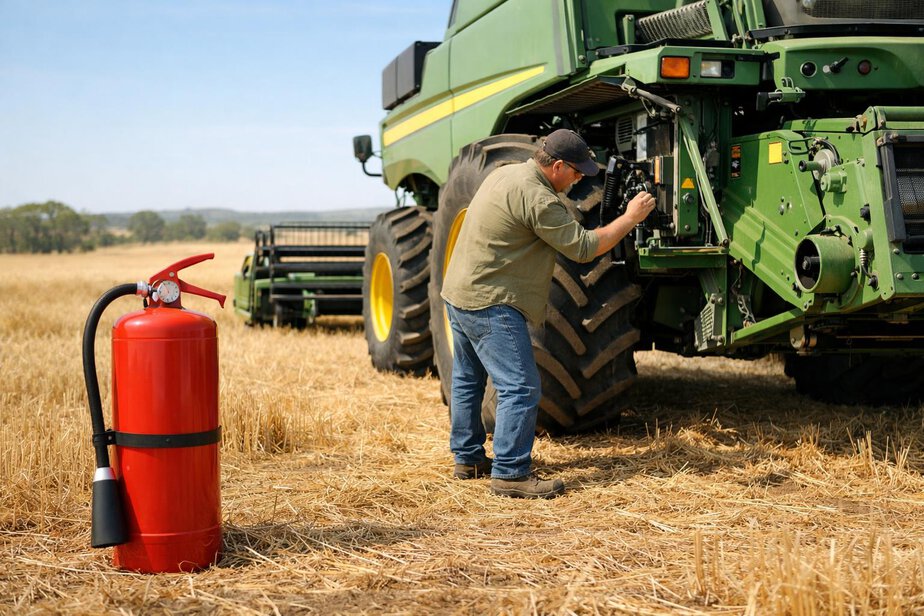
Machinery fires are often caused by hot exhausts, bearings, electrical faults, damaged wiring, sparks, overheated brakes or accumulated crop material. Harvesting, slashing and transport work can all create ignition risk, especially during hot, dry and windy weather.
Before work, clean chaff, dust, oil, grass and crop material from machinery. Inspect bearings, belts, wiring, exhausts and fuel systems. Check extinguishers, pumps, hoses and the farm fire unit. Confirm Fire Danger Ratings, Total Fire Bans and any local harvest restrictions before starting. Make sure workers know how to stop operations and call for help.
During work, stop regularly and inspect machinery. Watch for smoke, heat, smells, vibration or unusual noise. Avoid driving or parking hot vehicles in dry grass. If conditions deteriorate, stop operations. If local harvest rules require work to cease, comply immediately. No crop is worth a person being injured or trapped while trying to keep a harvester running.
Harvester fire prevention and hot-work safety
Hot work such as welding, cutting and grinding should be postponed during dangerous conditions whenever possible. If it must be done, clear combustible material from the area and keep suitable firefighting equipment ready. The same principle applies to servicing equipment with hot components or working near dry vegetation.
Farm fire safety in Australia also means recognising when a job should simply wait. A quick repair is not worth a fire starting in a workshop, under a vehicle or around a fuel tank. If there is a doubt, delay the task until the weather and conditions are safer.
Haystack fire safety and safe storage
Haystack fire safety starts before baling. Hay should be properly cured and dry before it is baled and stored. If hay is baled too wet, it can heat after storage and create a fire risk that is easy to miss in the first few days.
Store hay in smaller, separated stacks where practical and keep it away from homes, sheds, workshops, fuel, chemicals and powerlines. Choose well-drained ground and protect the storage area from rain, roof leaks and run-off. Manage grass and vegetation around the stack so a stray spark or grassfire does not reach it quickly.
Monitor newly stored hay for heat, steam, condensation, mould, discolouration and unusual smells such as caramel, tobacco or burning odours. These signs can suggest internal heating. If you suspect a problem, use caution and do not rush to move a very hot stack without understanding the risk.
If hay is near or above 70°C, or if smoke is visible or can be smelled, call Triple Zero (000) immediately. Moving very hot hay may introduce oxygen and cause sudden ignition. That is why the safest response is often to keep people clear and get emergency help early rather than trying to fix the problem by hand.
Hay handling reminders
- Use proper curing and moisture management before storage.
- Keep storage separate from other high-value assets where possible.
- Check stacks early after storage and continue to monitor them.
- Do not ignore strange smells, heat or condensation.
Water supplies, farm fire units and fireground safety
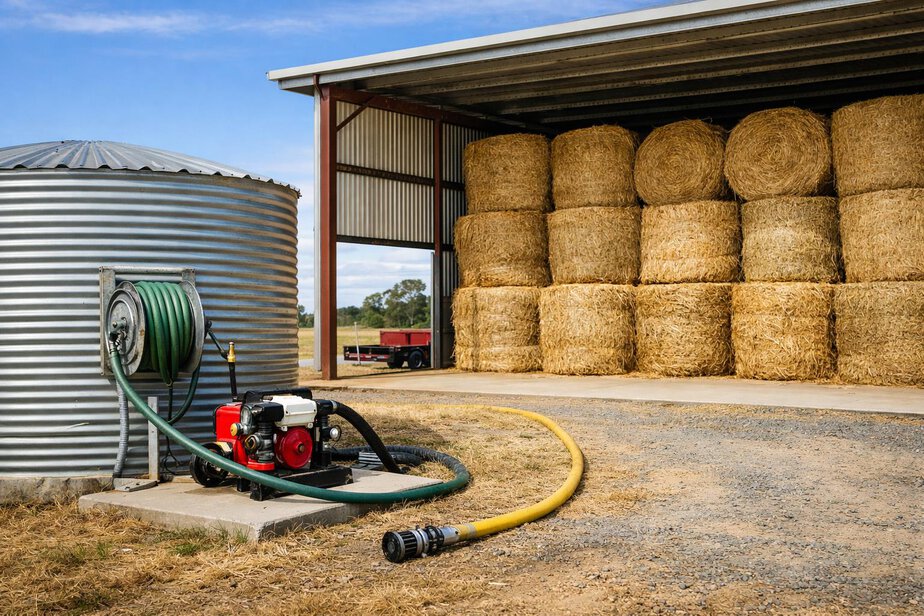
Reliable water and well-maintained equipment can help with spot fires, asset protection and safe defence of the property where conditions allow. Maintain pumps, hoses, nozzles, extinguishers, knapsacks and water tanks. Test them under working conditions, not just by starting them once in the shed. Confirm that important pumps have an independent power or fuel source, because mains power may fail during a bushfire.
Water supplies intended for fire appliances should be easy to identify, accessible from a firm surface and have enough space for vehicles to enter, turn and leave. Mark the location clearly on the farm map. Keep the surrounding ground as practical and safe as possible for vehicle access.
In Victoria, CFA guidance for farms that plan to actively defend a building recommends a dedicated firefighting water supply of at least 10,000 litres at each building. That is Victorian guidance, so readers should check current local requirements in their own state or territory.
A farm fire unit commonly includes a suitable vehicle, water tank, pump and hose. It should be maintained, insured and loaded within the vehicle’s legal limits. But a private unit does not make an untrained person a firefighter. Operators need appropriate training, protective clothing, boots, gloves, eye protection, communications and a safe escape route. They also need to understand fireground awareness and changing fire behaviour.
Farm fire units should communicate with the responsible fire service and integrate with organised operations. Do not enter closed roads or active firegrounds without authority. Never work alone near an uncontrolled fire. Do not operate downhill from a fire, in dense smoke, without an escape route or where flames may cut off the vehicle.
Livestock bushfire safety and low-risk containment areas
Livestock bushfire safety starts well before a fire approaches. Prepare one or more low-risk livestock areas, such as a well-grazed or cultivated paddock located away from scrub, buildings, powerlines and stored fuel. The area should have enough water, feed and fencing for animals to remain there during hot, dry conditions if movement is delayed.
Plan livestock movement early. Moving animals when fire is already close can place people and animals in greater danger, especially if roads are blocked or smoke is heavy. If stock must be moved, do it while visibility is good, temperatures are lower and routes are still open.
Keep identification, ownership, veterinary, transport and insurance records backed up away from the farm. If animals are injured, missing or displaced, these records can save time and reduce confusion later. Also plan for pets and working dogs, because they are often forgotten in a rush.
Think through the practical details of stock protection. Who opens the gates? Which paddock is safest? Where is the water? Which fences are secure? Which vehicles can tow safely? What happens if a gate is locked or a truck cannot reach the yards? Clear answers matter more than broad intentions.
Pre-fire livestock movement list
- Identify the safest paddock or containment area.
- Check water, feed and fencing in advance.
- Decide who moves stock and who opens gates.
- Keep transport contacts ready if relocation is needed.
- Move early rather than waiting for smoke on the horizon.
High-Risk Fire Day checklist
When the Fire Danger Rating is High, Extreme or Catastrophic, the goal is to reduce exposure and make early decisions. Use the day to act, not to hope conditions improve.
- Check the latest Fire Danger Rating and official warnings early.
- Delay or cancel non-essential work, especially hot work and harvesting.
- Move livestock early if relocation may be needed.
- Refuel and service equipment before the day heats up, if safe to do so.
- Keep people close to shelter, transport and communications.
- Brief workers and contractors before they start work.
- Check water, pumps, hoses, extinguishers and the farm fire unit.
- Park vehicles where they can leave quickly.
- Keep the property map, contacts and keys ready.
- Prepare to leave early if conditions worsen.
On an Extreme or Catastrophic day, leaving early is often the safest option in bushfire-risk areas. Do not wait until roads are blocked or the fire is visible from the driveway. If there is any doubt about the safety of defending the property, the correct decision may be to go early and protect life.
If a fire starts and cannot be safely controlled, call Triple Zero (000) immediately. Provide the property address, road access, gate information, hazards and the best entry point if known. That information can help responding crews reach the property more effectively.
After a fire: recovery, checks and next steps
Recovery should begin with safety, not clean-up. Wait until authorities confirm that it is safe to enter affected areas. Even when flames are out, there may still be hidden dangers such as falling trees and branches, damaged powerlines and solar equipment, unstable buildings, hot hay, ash pits, roots, fence posts, gas cylinders, chemicals, batteries and contaminated water supplies.
Check on livestock carefully. Some animals may be injured, distressed, missing or unable to access water. Record losses and seek veterinary help where needed. Keep people away from unstable structures, silos, tanks and anything that may collapse or reignite.
Once the property is safe to enter, photograph damage for insurance and records, but do not stand in hazardous areas to do so. Make notes about what worked in the plan and what failed. Did the livestock area hold up? Were the roads usable? Did the pumps work under load? Did workers know where to go? Recovery is easier when lessons are captured while memory is still fresh.
Farm fire safety in Australia continues after the fire front has passed. The next fire season often arrives faster than expected, so update the farm bushfire plan, repair critical equipment, review fuel loads and replace anything that was used, damaged or found to be unreliable. Re-stock first aid, drinking water, batteries and communication gear.
In the end, good farm fire safety is about preparation, early action and clear limits. Reduce fuel loads, check machinery, protect water supplies, plan for livestock, brief workers and be ready to leave early when conditions become dangerous. Always verify current advice from the relevant state or territory fire authority, local council and local rural fire brigade before publication and before you act.
FireRescue Training Hub
Access practical fire and emergency study support resources, downloads, checklists, audio guides, and member-only course content.
- Course library
- PDF downloads
- Audio guides
- Checklists
Study support only. Not accredited training or a replacement for workplace procedures.
About the author and safety review
Ken Walker
Former Station Officer and fire service educator
Former career firefighter with extensive career and volunteer fire service experience.
Qualifications: Associate Diploma of Applied Science in Fire Technology; Institute of Fire Engineers studies.
Author profilehttps://www.firerescue.com.au/about-us/