Part 6 of 8
Fireground Communication and Control — Reports, Chain of Command, Evidence Protection and Environmental Care
Fireground communication and control keep wildfire operations connected, safe and purposeful. Crews maintain contact with supervisors, work with firefighters in the area, provide fire reports, limit damage where possible, respond to changing fire behaviour and protect possible evidence of fire cause. Therefore, communication is not separate from suppression work. It helps control the whole operation.
Part 6 refresher progress
Mark each section as refreshed while you work through communication, reports and control duties.
By the end of Part 6, you should be able to:
Explain how crews maintain communication with supervisors and other firefighters in the work area.
Describe why fire reports support control, safety and shared operational awareness.
Recognise how fire control activities should minimise damage to assets and the environment.
Understand why crews protect the area of origin and report possible evidence of fire cause.
Maintain communication through the chain of command
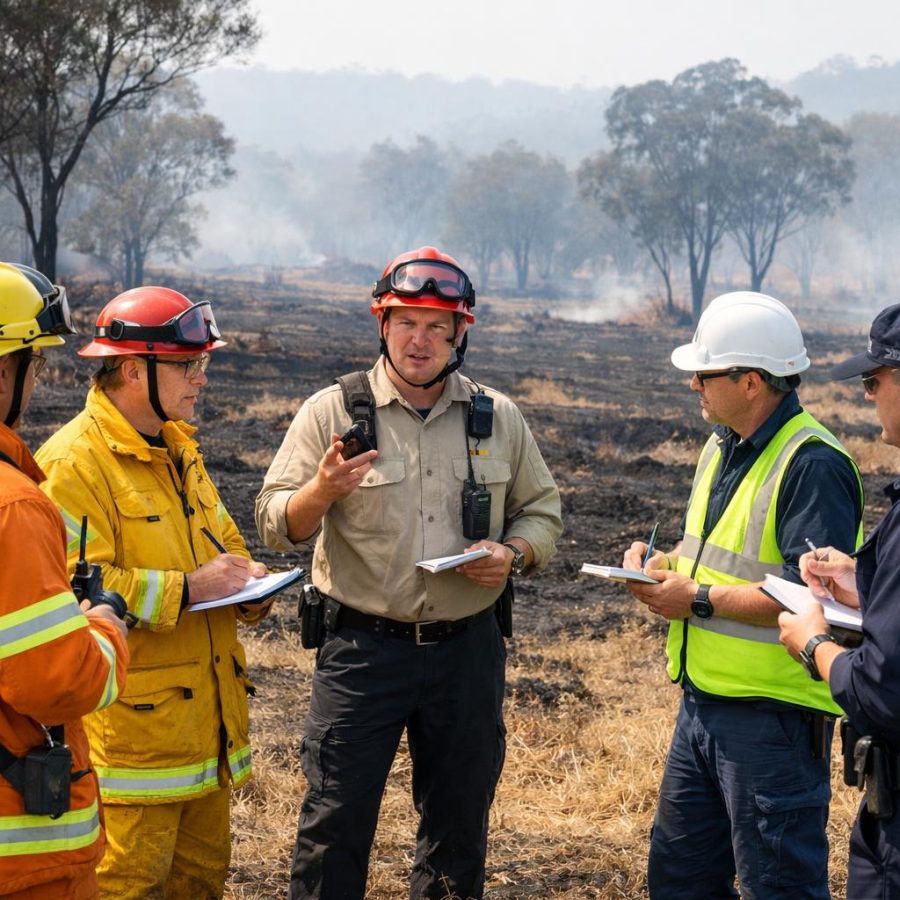
Crews maintain communication with their supervisor through the chain of command and with firefighters working nearby.
Communication keeps the task connected
Fireground communication and control begin with clear contact between the crew, the supervisor and nearby firefighters. A wildfire crew does not work in isolation. Instead, it supports a larger operational effort. Because conditions can change quickly, crews need reliable communication to stay aligned with the current plan.
First, the crew communicates upward through the chain of command. This gives supervisors the information they need to guide work, track progress and respond to changes. Meanwhile, the crew also stays connected with firefighters in the same work area. That local communication helps teams avoid confusion and coordinate activity.
The chain of command protects clarity
The chain of command creates order. It tells crews where instructions come from and where reports should go. Therefore, it reduces mixed messages during stressful conditions. When everyone follows the communication pathway, the incident can operate with better discipline.
Clear communication also helps crews confirm tasks. For example, a crew may receive a change in tactic, a safety concern or a request for a situation update. In each case, good communication supports timely action. As a result, information moves where it can help decision-making.
Nearby firefighters need shared awareness
Crews also communicate with firefighters in the work area. That matters because adjoining teams may depend on one another’s actions. One crew may notice changing fire behaviour, movement near a control line or a safety concern that affects others. Therefore, local communication supports both safety and task control.
Communication is a fireground control tool. It keeps instructions, updates and safety information moving in the right direction.
Provide fire reports to the supervisor when required
Crews provide fire reports to the supervisor as required, so important information reaches the people managing the operation.
Reports turn observations into useful control
A fire report helps translate what the crew sees into information that supports the wider operation. Crews observe progress, hazards, changing fire behaviour and conditions in the work area. Then, they report what matters through the correct pathway.
Good reports improve shared awareness. For example, a supervisor may need to know whether a tactic is working, whether conditions have changed or whether a safety concern requires attention. Therefore, a clear report can influence the next decision.
Report what matters, clearly and calmly
Effective reporting does not rely on dramatic language. Instead, it uses accurate and relevant detail. A crew should focus on what the supervisor needs to understand. Clear reports help leaders compare information from several work areas and decide what action should follow.
The course also lists fire report requirements in its knowledge evidence. That reinforces the importance of reporting. Consequently, crews should treat reporting as an operational duty, not an optional extra after the “real work” ends.
Reports support both safety and objectives
Reports do more than describe fire activity. They also protect safety and help achieve objectives. If a crew notices behaviour that may threaten a safety zone, an escape route, a control line or a protected asset, it needs to pass that information on. As a result, supervisors can act with a clearer understanding of the developing situation.
A useful fire report is accurate, timely and directed to the right supervisor through the correct communication pathway.
Observe
Notice progress, hazards, behaviour changes and matters that affect the task.
Filter
Focus on information that helps the supervisor understand the operational picture.
Report
Provide the required fire report clearly and through the correct pathway.
Best practice
Report significant changes early, especially when they affect safety, objectives or the assigned tactic.
Common mistake
Holding useful information too long because the crew expects someone else to notice it first.
Use fire control activities that reduce damage and environmental impact
Crews undertake fire control activities in ways that minimise overall damage and reduce impacts on assets and the environment.
Control work should solve one problem without creating another
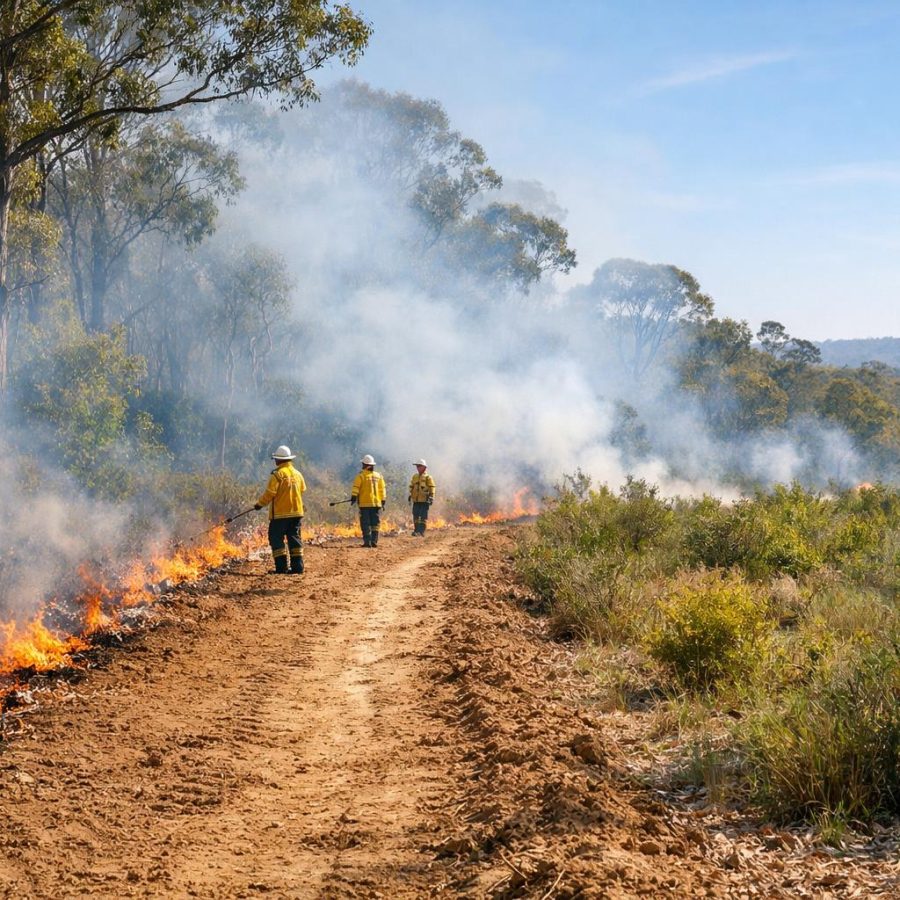
Fireground communication and control also include how crews carry out fire control activities. Suppression work aims to achieve objectives. However, the course also requires crews to minimise overall damage and impact on assets and the environment. This balance matters.
A tactic may help control the wildfire, yet crews still need to think about its broader effect. Therefore, they should work within the chosen strategy and use methods that limit unnecessary harm where practical. This applies to assets, working areas and environmentally sensitive places.
Environmental care belongs on the fireground
The knowledge evidence highlights environmentally sensitive areas and actions that minimise damage. That means environmental awareness does not sit outside operations. Instead, it forms part of good fireground practice. Crews should remain aware of the ground, access routes, nearby features and the effect of their activity.
In addition, fire control activities should support the assigned objective rather than create avoidable disruption. A well-managed crew does the required work while still respecting assets and the environment. As a result, control becomes more disciplined and more professional.
Use reports when damage risk increases
Sometimes conditions force difficult choices. Even then, crews should communicate relevant concerns. If a control activity may affect assets or environmentally sensitive areas, the supervisor needs that information. Consequently, reporting and environmental care work together.
Wildfire control should achieve the operational purpose while limiting avoidable damage wherever conditions allow.
Act on changing fire behaviour to protect safety and objectives
Crews consider potential fire behaviour and act on it to support safety and maintain progress toward operational objectives.
Conditions keep changing, so thinking must keep changing
Part 5 focused on fuels, weather and topography. Part 6 continues that work by linking behaviour awareness to action and communication. Crews need to consider potential fire behaviour, then act in ways that protect safety and support objectives.
For example, a change in wind, flame development or fire movement may alter the usefulness of a tactic. Meanwhile, the same change may affect a nearby control line, crew position or protected asset. Therefore, crews need to recognise behaviour changes and respond through the right operational pathway.
Behaviour awareness supports control
Fire behaviour awareness helps crews avoid static thinking. The incident may not stay the same after the briefing. Because of that, the crew should keep comparing current conditions with the task, the safety picture and the objective. This habit supports better judgement.
The performance evidence also highlights anticipating and reacting to changing wildfire behaviour. That confirms the point. Crews do not only observe. They respond. As a result, fireground communication and control remain active during the whole task.
Safety and objectives belong together
Some crews may think safety and objective completion compete with each other. In reality, both belong inside disciplined operations. If the fire behaviour changes, crews may need to raise a concern, adjust their action under direction or report a shift that affects the plan. Therefore, good control work protects both people and progress.
When fire behaviour changes, crews should notice it, communicate it and act in ways that protect safety and support the operational objective.
Fire behaviour control check
Protect the area of origin and possible evidence of fire cause
Crews protect the area of origin and possible evidence of fire cause, then bring it to the attention of the supervisor or relevant authority.
Evidence protection begins with awareness
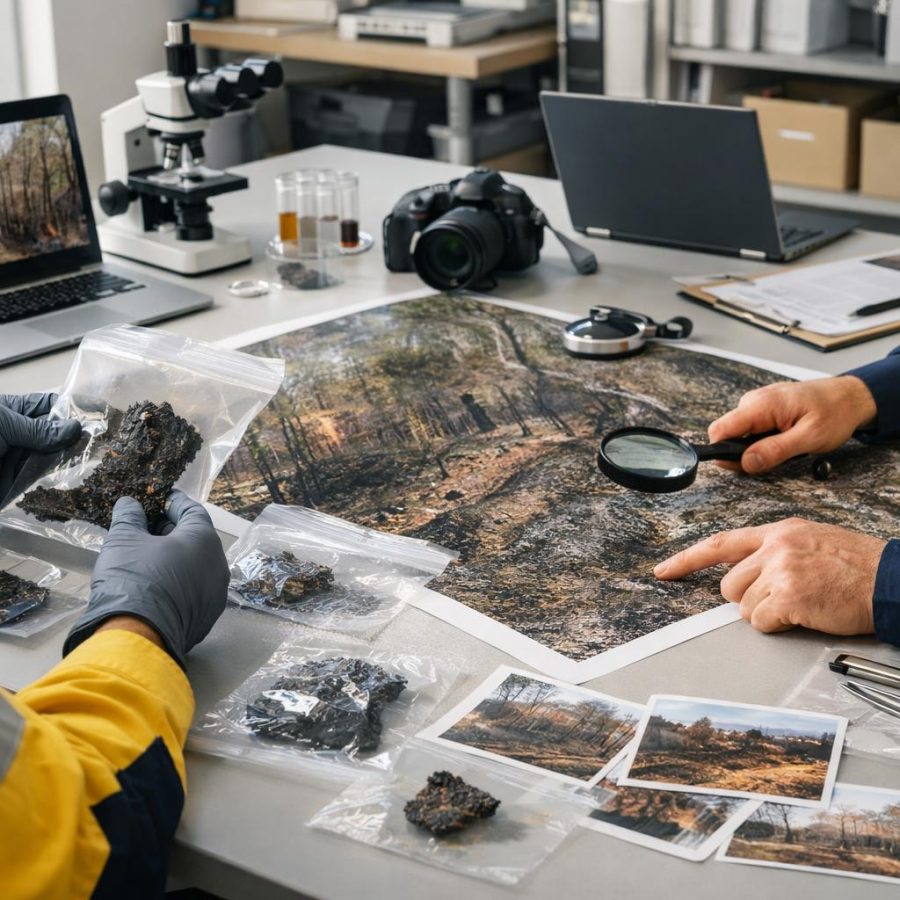
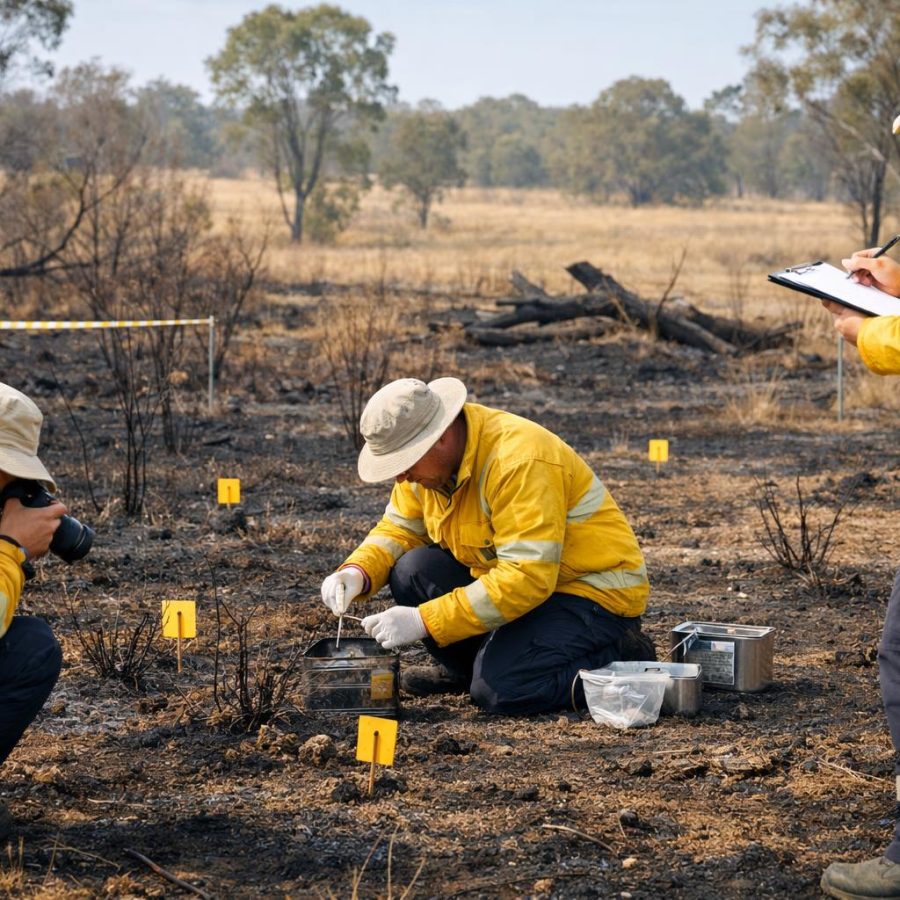
Wildfire suppression can overlap with important cause-related evidence. Because of that, crews need to recognise the area of origin and protect possible evidence when they encounter it. This duty supports the broader incident process and preserves information that may matter later.
The course does not ask crew members to investigate the cause. Instead, it asks them to protect relevant areas and bring possible evidence to the attention of the correct person. Therefore, the practical task is clear: avoid unnecessary disturbance, preserve what matters and report it properly.
Protect first, then report through the right channel
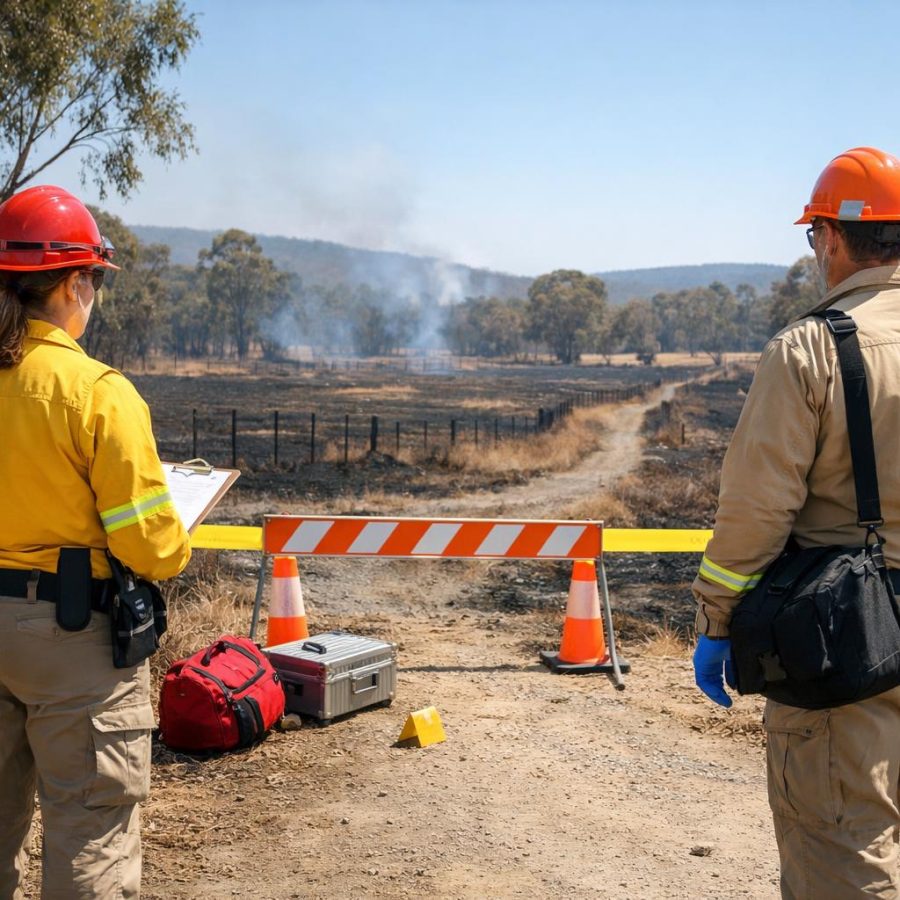
If a crew identifies an area of origin or possible evidence of cause, it should protect that area in accordance with organisational procedures. Next, it should notify the supervisor or the relevant authority. This sequence helps reduce the chance that valuable information disappears during busy fireground activity.
Part 3 already introduced observations made on approach. Part 6 now extends the idea during combat and control work. Consequently, evidence awareness runs across the operation, not only during travel to the fireground.
Evidence care belongs with professional discipline
Firefighters often focus on immediate risk, and rightly so. Even so, professional discipline also protects information that may matter after the flames subside. A crew that safeguards possible evidence helps the wider organisation understand the incident more clearly.
Do not investigate beyond your role. Protect the area, avoid unnecessary disturbance and report possible evidence through the correct pathway.
Recognise
Notice the area of origin or possible evidence of wildfire cause when it becomes apparent.
Protect
Avoid unnecessary disturbance and apply organisational procedures.
Report
Bring the matter to the supervisor or relevant authority without delay.
WILDFIRE READY focus: I
Part 6 activates the second I in the WILDFIRE READY Cycle: Information maintained through communication, reports and fire behaviour awareness.
Information moves through command
Crews maintain communication with supervisors and nearby firefighters so the operation stays connected.
Information supports control
Fire reports, environmental concerns and changing behaviour all help leaders understand the fireground.
Information protects evidence
Crews protect the area of origin and report possible evidence of fire cause through the proper pathway.
Part 6 explains why information matters during wildfire suppression. Communication keeps teams linked. Reports help supervisors make decisions. Environmental care reduces unnecessary impact. Behaviour awareness supports safety. Evidence protection preserves details that may matter after the fire.
These duties sit at the centre of professional fireground control. Therefore, crews should treat communication and reporting as active operational skills. They are not paperwork in disguise. They help the whole incident function with greater discipline.
Scenario: Conditions change near the control line
A crew notices changing fire behaviour near its work area. Nearby activity may affect assets, and the crew also observes a location that could relate to fire cause. Which action best matches Part 6?
Part 6 refresher check
Choose the best answer for each question.
1. Crews maintain communication with:
2. Fire control activities should aim to minimise:
3. If crews identify possible evidence of fire cause, they should:
Say the Part 6 sequence out loud
Use this short drill to reinforce communication, reporting and control duties before moving into Part 7.
- Maintain communication with the supervisor through the chain of command.
- Stay connected with firefighters in the work area.
- Provide fire reports to the supervisor when required.
- Use fire control activities that minimise damage to assets and the environment.
- Consider changing fire behaviour and act to support safety and objectives.
- Protect the area of origin and possible evidence of fire cause.
- Report evidence to the supervisor or relevant authority through the correct pathway.
FireRescue Training Hub
Access practical fire and emergency study support resources, downloads, checklists, audio guides, and member-only course content.
- Course library
- PDF downloads
- Audio guides
- Checklists
Study support only. Not accredited training or a replacement for workplace procedures.
About the author and safety review
Ken Walker
Former Station Officer and fire service educator
Former career firefighter with extensive career and volunteer fire service experience.
Qualifications: Associate Diploma of Applied Science in Fire Technology; Institute of Fire Engineers studies.
Author profilehttps://www.firerescue.com.au/about-us/