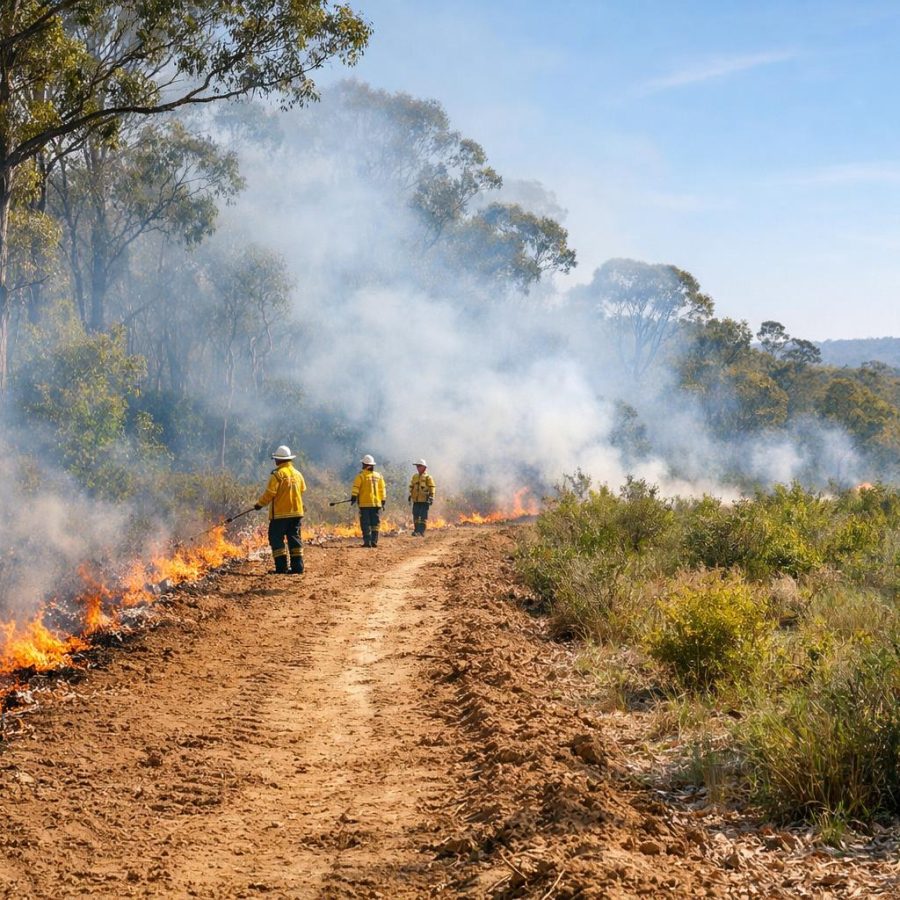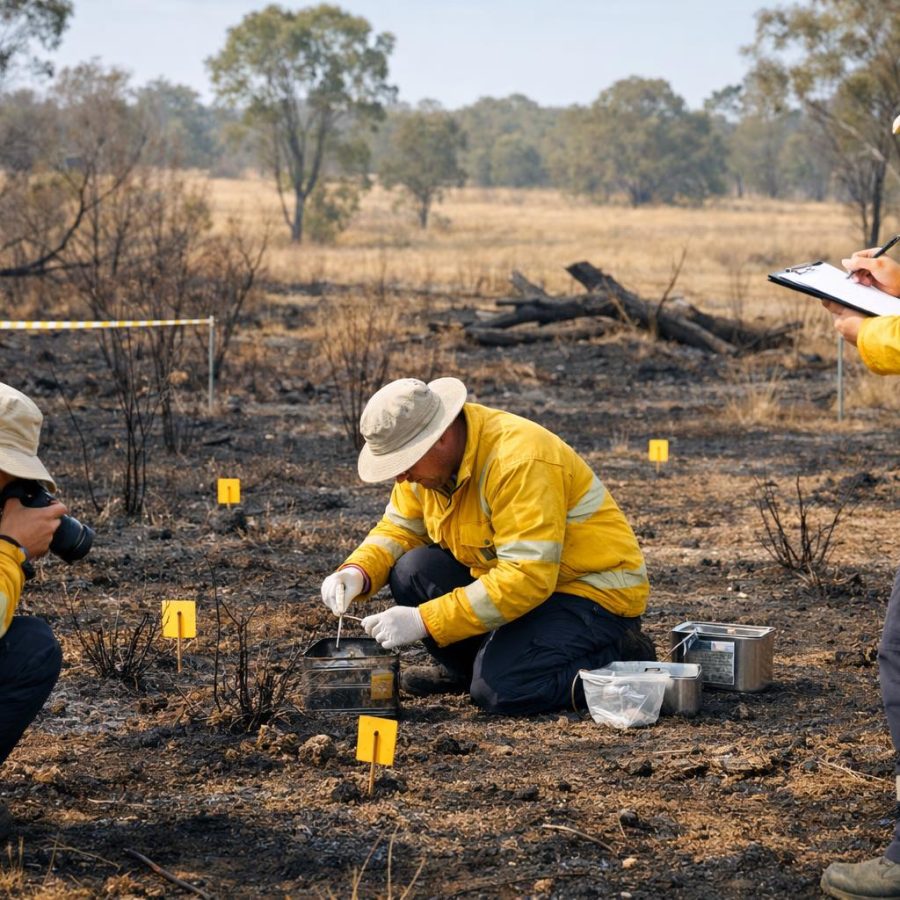
Emergency preparedness helps Australian households make better decisions before a crisis happens. Whether the risk is bushfire, storm, flood, heatwave, house fire or a serious household accident, preparation can reduce confusion, protect people and make it easier to leave early or shelter safely when authorities tell you to act.
This guide is designed as a simple starting point for families, couples, renters and carers. It focuses on five practical steps: make a household plan, prepare an emergency kit, improve fire safety, learn basic first aid and review your plan regularly.
If you only do a few things, do these first: make a simple emergency plan, know who may need extra help, pack an emergency kit, test smoke alarms, learn the basics of first aid and know to call 000 in a life-threatening emergency.
What’s been updated
- Rebuilt the article as a simple all-hazards household guide for Australian families.
- Added a clear five-step structure for home and family readiness.
- Grounded planning, kit and bushfire points in current official Australian guidance.
- Kept first-aid advice basic and safe for general readers.
- Added a plain-English emergency-services roles section.
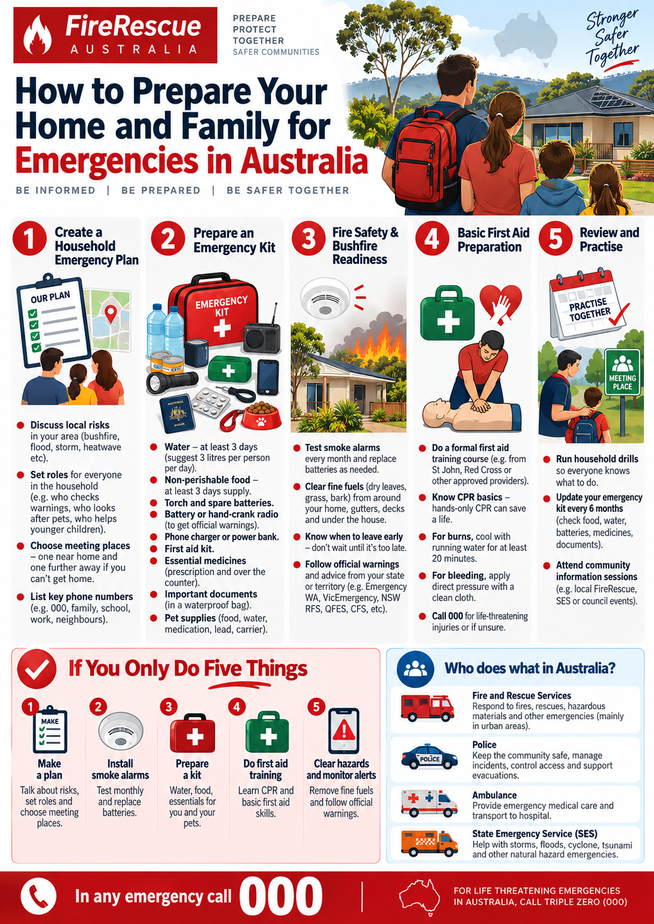
- Added A4 infographic and one-page printable PDF support asset.
Step 1: Create a household emergency plan
A household emergency plan helps everyone know what to do if normal routines are suddenly disrupted. Start by discussing the risks most likely where you live. In Australia, that could include bushfire, storm, flood, heatwave, house fire or a major medical emergency.
- decide where you will go if you need to leave home
- choose a primary and backup meeting place
- write down important phone numbers
- decide who helps children, older people, pets or anyone needing extra support
- nominate an out-of-area contact if local communications fail.
Keep the plan simple enough that all family members can understand it. A written plan is far more useful than assuming everybody will know what to do under stress.
Step 2: Prepare an emergency kit
An emergency kit should help you manage the first hours or days of disruption. Store it where it can be accessed quickly and review it at least every six months.
Basic emergency kit checklist
- drinking water
- non-perishable food
- torch and spare batteries
- portable radio
- phone charger or power bank
- first aid kit and regular medicines
- important documents and identification
- clothing and sturdy footwear
- pet supplies where needed.
Tailor the kit to your household. Infants, people with disability, older relatives and pets may all need extra items.
Step 3: Improve fire safety and bushfire readiness
Every Australian household should think about both home-fire safety and bushfire readiness, even if the level of risk is different from one area to another.
Home-fire safety
- install smoke alarms as required in your state or territory
- test alarms regularly and maintain them according to current guidance
- know two ways out of key parts of the home if possible.
Bushfire readiness
- know your local bushfire risk
- make a bushfire plan if you live in a risk area
- keep gutters and fine fuels managed where safe to do so
- monitor official warnings and Fire Danger Ratings
- leave early when your plan says to go. Leaving early is the safest option.
Step 4: Learn basic first aid
A first aid kit is useful, but knowing how to respond is even more important. Formal first aid training from a recognised provider is strongly recommended.
- call 000 in any life-threatening emergency
- for burns, cool under cool running water for at least 20 minutes
- for serious bleeding, apply direct pressure
- give care only within your level of training.
Basic first aid skills can make a real difference while waiting for professional help to arrive.
Step 5: Review and practise
Preparedness fades if it is never reviewed. Revisit your plan regularly, replace expired items, test equipment and run simple family drills so everybody remembers what to do.
- review the emergency kit every six months
- talk through what each person would do
- update phone numbers and meeting places
- repeat the review whenever your household changes.
If you only do five things
- Make a simple plan.
- Prepare a kit.
- Test smoke alarms.
- Learn basic first aid.
- Monitor risks and official warnings.
Who does what in Australia?
Fire and Rescue / Fire Services: respond to fires, rescues and other emergencies.
Police: protect public safety, manage incidents and support evacuations or traffic control.
Ambulance: provide emergency medical care and transport to hospital.
State Emergency Service (SES): assist with storms, floods and other natural-hazard emergencies.
In any emergency, call 000 and clearly say whether you need Fire, Police or Ambulance.
Related FireRescue guides
- How to Prepare for a Bushfire: Practical Guide for Australians
- 72-Hour Emergency Kit Australia Guide
- Family Emergency Communication Plan Template
Conclusion
Emergency preparedness does not need to be complicated. A clear plan, a simple kit, working smoke alarms, a few first aid skills and regular family practice can make a major difference when something goes wrong.
The most useful plan is the one your household understands and is willing to use. Start small, improve it over time and keep checking the official guidance that applies where you live.
Official sources checked
- Australian Red Cross — household emergency preparedness resources
- Victorian State Emergency Service — emergency planning and kit guidance
- Country Fire Authority Victoria — bushfire planning and when to leave
- Fire and Rescue NSW / Queensland Fire Department — smoke alarm guidance
- Healthdirect Australia — public first-aid guidance for burns and bleeding
- Triple Zero — national emergency-calling information
Ken Walker — former Station Officer and fire-service educator with career and volunteer firefighting experience.
This article provides general educational information for an Australian audience. It does not replace current directions from emergency authorities, site-specific professional advice or formal first-aid training. During an emergency, follow official warnings and instructions.
Corrections and field experience: FireRescue Training Hub welcomes source-backed corrections and practical community experience that can improve this guide. Current official guidance always takes priority.
FireRescue Training Hub
Access practical fire and emergency study support resources, downloads, checklists, audio guides, and member-only course content.
- Course library
- PDF downloads
- Audio guides
- Checklists
Study support only. Not accredited training or a replacement for workplace procedures.
About the author and safety review
Ken Walker
Former Station Officer and fire service educator
Former career firefighter with extensive career and volunteer fire service experience.
Qualifications: Associate Diploma of Applied Science in Fire Technology; Institute of Fire Engineers studies.
Author profilehttps://www.firerescue.com.au/about-us/