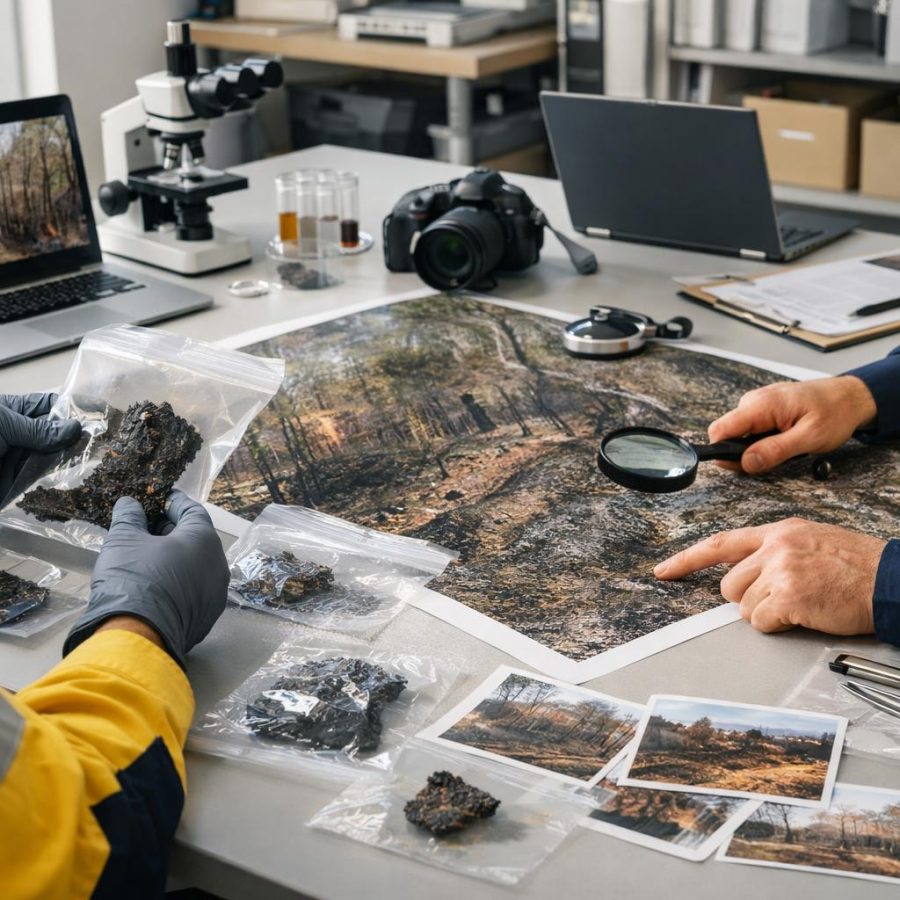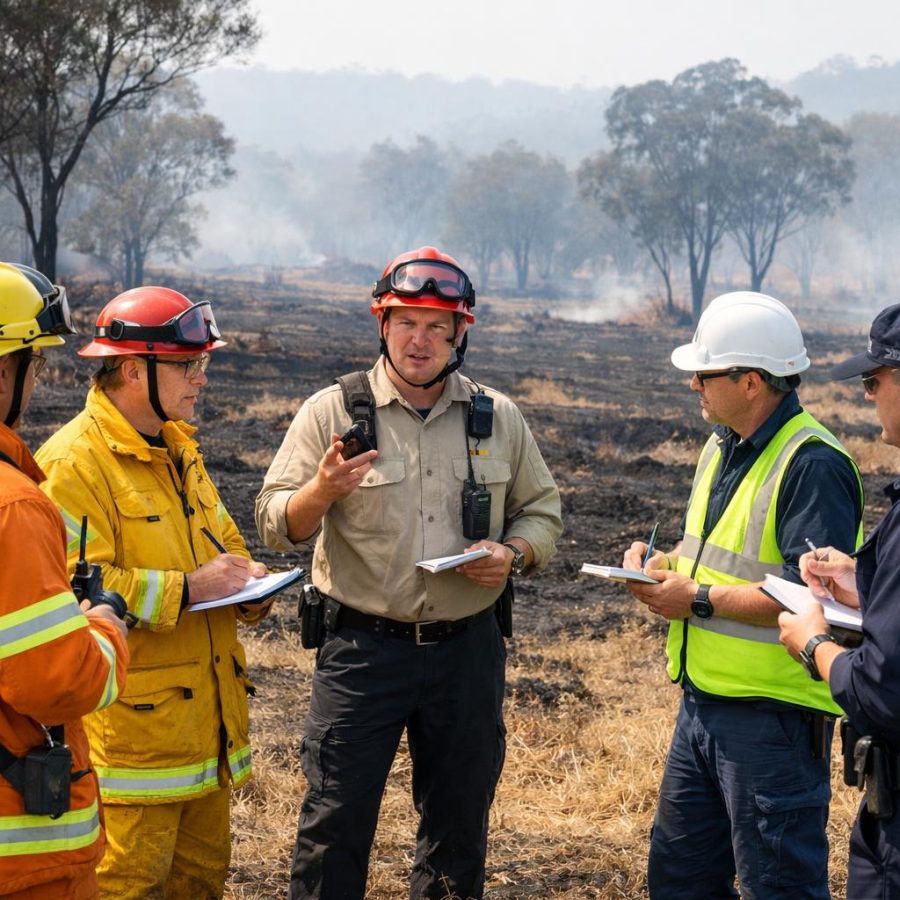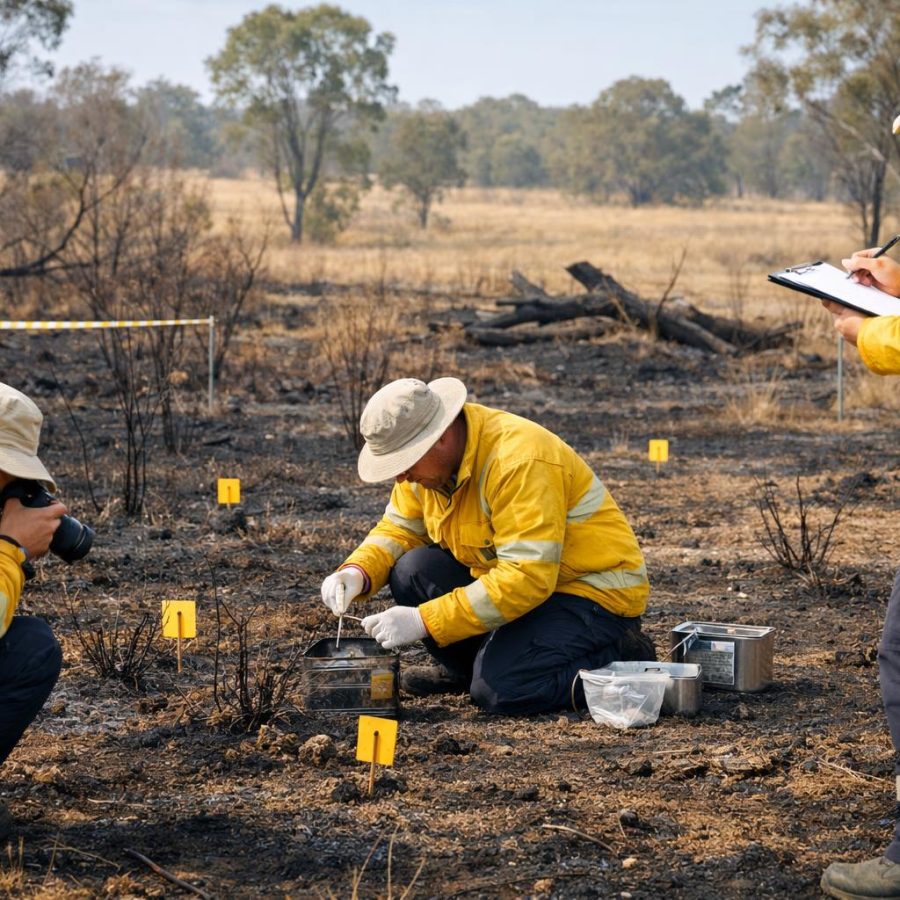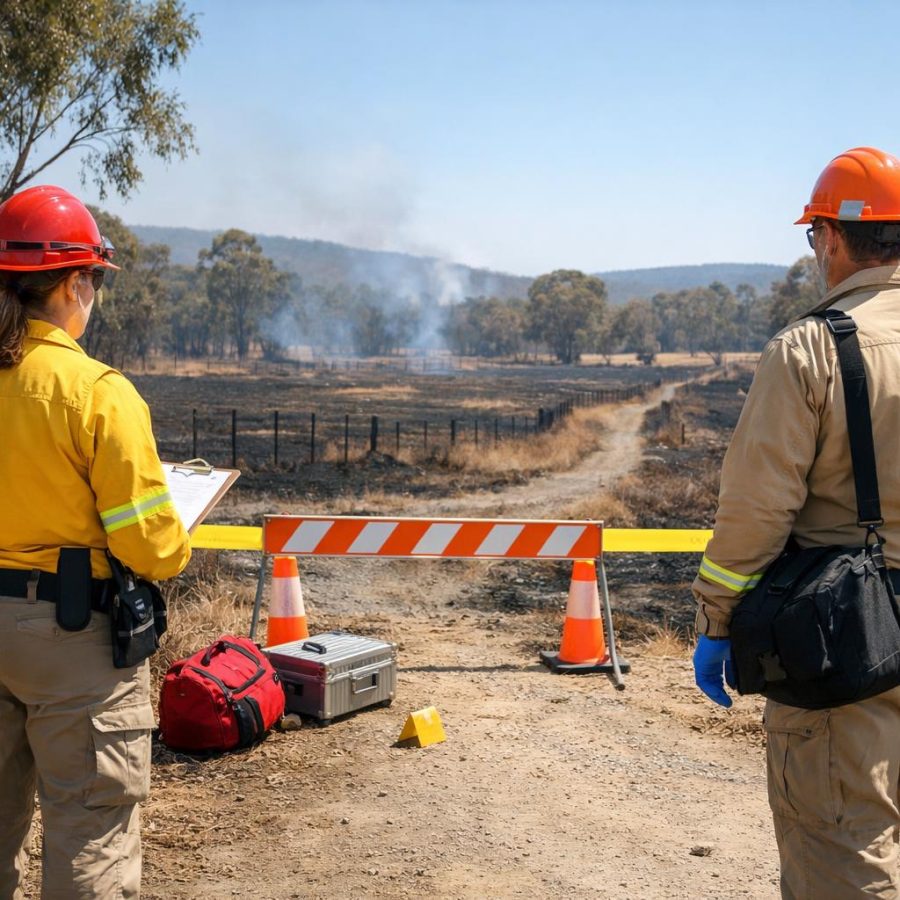
Prescribed burning is the controlled use of fire, planned for a specific place and purpose, under specified environmental conditions. In Australia it sits within a much larger fire system: one shaped by climate, vegetation, topography, people, buildings, roads, farms, cultural practice and emergency response. Fire is not an accident in many Australian landscapes. It is a natural and recurring part of how those landscapes function, and it has also been used by Aboriginal and Torres Strait Islander peoples for countless generations as a cultural and land-management practice.
Why prescribed burning matters in Australia
AFAC’s revised 2021 National Position on Prescribed Burning treats that reality clearly. It recognises that fire is integral to the Australian landscape, that bushfires cannot be eliminated, and that prescribed burning has a role in risk reduction, ecological care, cultural practice and economic protection. That is an important and mature starting point.
The position also does something that has not always been handled well in public debate. It avoids presenting prescribed burning as a magic answer. That matters. Australia’s fire problem is not solved by one treatment, one season or one agency. Prescribed burning can change fire behaviour in some places and at some times, but it cannot stop every bushfire, protect every home or control every ember under extreme conditions.
The right way to think about prescribed burning is as one part of a broader fire system. It can reduce fuels, alter fire behaviour, support ecological goals and create strategic options for suppression. But it must sit beside home hardening, ember protection, evacuation planning, community readiness, mechanical treatment, cultural burning, land-use planning and suppression preparedness.
What the AFAC position gets right
The strongest feature of the 2021 position is its broad and balanced philosophy. It recognises multiple benefits and links prescribed burning to ecological, social, cultural, technical, legal and economic considerations. That is the right foundation. A national position should not reduce fire to a single metric such as hectares burnt or fuel removed.
It also correctly says that landscape health depends on the fire regime, not just on whether fire occurred. The extent, season, frequency, intensity and patchiness of fire all matter. In Australian ecosystems, a small patchy burn in the right season may have very different ecological effects from a hotter, more uniform burn in the wrong conditions.
The position also does well to emphasise community and business engagement. Fire decisions affect neighbours, landholders, towns, Traditional Owners, industry and local governments. Two-way engagement is far better than one-way announcement. Communities are more likely to accept fire programs when they understand the purpose, risks, limits and expected outcomes.
Recognition of Traditional Custodians is another major strength. The position acknowledges Traditional Custodian fire knowledge and the need to respect ownership of that knowledge. That is important because cultural fire is not just a technical input. It is connected to Country, law, identity, family responsibility and intergenerational care.
It is also valuable that the position calls for clearly stated, preferably measurable objectives, supported by research, monitoring and adaptive management. It rightly says practitioners need field experience, mentoring and knowledge transfer, and that risk reduction should be shared across tenures. Fire does not stop at fence lines, so the response should not either.
Finally, the position correctly places prescribed burning inside a legal and planning framework. Burns must comply with relevant legislation, policies and planning requirements. That is essential in a country where terrain, tenure, weather, smoke impacts and community exposure can change rapidly.
Where the position falls short
Although the position is strong in principle, it is weaker in how it turns principle into accountability. It calls for measurable outcomes, but it does not establish a national minimum dataset or common reporting standard. That omission matters. Without a shared way to record what was intended, what was done and what actually changed, it is hard to compare programs or learn across agencies and jurisdictions.
For example, the position does not clearly require reporting of fuel condition before and after a burn, fuel structure and arrangement, burn intensity, coverage and patchiness, residual heavy fuels, smoke exposure, treatment life, suppression benefits, escapes, injuries, near misses or unplanned impacts on communities or the environment. Those are not minor details. They are the evidence needed to judge whether a burn worked as intended.
The position also gives limited guidance on how to deal with conflict between objectives. A burn may aim to reduce risk, support biodiversity, protect cultural values and limit smoke exposure, but those goals do not always align neatly. A clearer framework for setting priorities, documenting trade-offs and explaining compromises would improve trust and transparency.
Another gap is the lack of explicit discussion about what happens in severe fire weather. A treated area can still be overwhelmed when wind, heat, dryness and topography line up unfavourably. The public often hears about fuel reduction in terms that imply strong protection. The position should say more clearly that under extreme conditions, the benefit may be limited, localised or uncertain.
There is also not enough emphasis on ember attack, building ignition, local layout and home vulnerability. In many Australian communities, structure losses are driven by embers and spot fires rather than the main flame front. If a national position focuses too much on landscape fuel and too little on the built environment, it risks overpromising what burning can achieve.
Smoke and public health also deserve stronger treatment. Prescribed burning can create real exposure problems for people with asthma, older people, children, outdoor workers and nearby communities. A modern national position should not treat smoke as a side issue. It should frame smoke management as a planning requirement, not an afterthought.
Climate change is another area that needs sharper attention. The safe and effective window for burning can shift with warmer temperatures, drier fuels, altered seasons and more volatile weather. A national position should not assume that historical burn windows will remain reliable. Climate-adjusted planning is now a practical necessity.
Finally, the position encourages engagement, but it does not go far enough on shared decision-making. Consultation is not the same as co-governance. Nor does it explain how local knowledge changed the plan, or how communities can see their concerns reflected in final choices. That is a missed opportunity for legitimacy and learning.
What newer research suggests should be revised
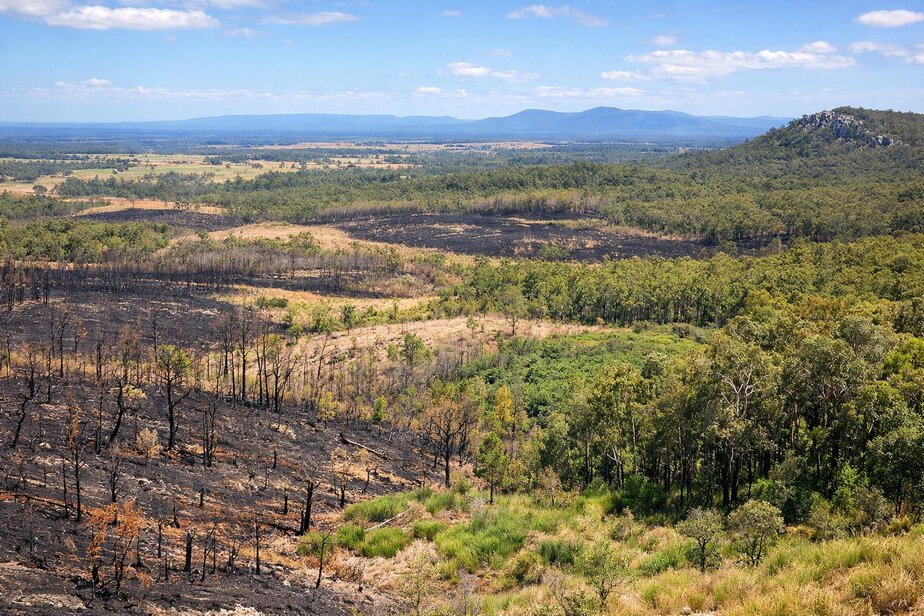
Much of the supplied research was published in 2026, five years after the AFAC position. It should not be used to criticise what was known in 2021 as if the position had ignored later evidence. A fairer use of that research is to show what now needs revision, reinforcement or clearer explanation.
One important lesson is that fuel arrangement can matter as much as fuel quantity. The work by Eissa, Filkov, Escobedo and Ghodrat found that two fuel beds with the same fuel load could behave very differently depending on fuel type and structure. In practice, that means the question is not just how much fuel is present, but how that fuel is arranged, connected and able to sustain flame spread.
That finding matters because many public discussions still treat fuel reduction as a simple matter of tonnage or hectares. The newer research suggests that a burn plan should pay close attention to fuel structure, residual heavy fuels and how the burn changes the shape of the fuel bed. A patchy burn may leave enough connected fuel to support fire spread, while a treatment that looks substantial from a distance may have limited effect where the structure remains intact.
Similarly, the model-comparison work by Pallikarakis and Kolaitis shows that fire-spread model accuracy can fall sharply on steeper slopes, with some combinations under-predicting spread on slopes above about 20 degrees. This is a serious caution for planning in rugged terrain. A national position should therefore stress that model outputs are conditional, not predictive truth, and that local expertise and conservative judgment are essential.
The landscape-scale modelling work by Qin and colleagues also highlights the danger of coarse resolution. Coarse community-scale models can miss spread where it will actually occur, or predict spread far faster than a better-resolved result. That is a reminder that maps and simulation outputs can look authoritative while still being badly misleading if they are used beyond their validated scale.
Another useful lesson is that fire modelling still struggles with junctions, merging fire fronts and ember-driven spread. The supplied research suggests these processes remain difficult to represent faithfully. For prescribed burning, that means the system should expect uncertainty in edge zones, slope alignments and wind-exposed interfaces. It also means that planning should treat those areas conservatively, not optimistically.
The work on fuel consumption adds another important point: heavy fuels may continue smouldering or remain partly unconsumed. That is directly relevant to prescribed burning. A burn that removes fine surface fuels may still leave large woody material, hollow logs or partly consumed fuels that matter for later suppression, ecological habitat and continued smoke.
The evacuation research is equally important. It suggests that people do not simply obey or ignore warnings in a fixed way. Their decisions are adaptive, shaped by official alerts, local observations, neighbours, family, transport, previous experience and personal capability. That means prescribed burning policy should not assume a single communication channel or a uniform response. It should support layered communication and local decision support.
Taken together, the 2026 research strengthens the case for a more careful national position. It points towards measured objectives, validated models, uncertainty statements, local evidence, and a broader understanding of the whole risk system.
Prescribed burning, community risk and the built environment
One of the biggest public misunderstandings is the belief that if more burning is done, community risk must fall in a direct and predictable way. Sometimes it does help. Sometimes it helps only a little. Sometimes the main benefit is not in stopping flame at the edge of a burn, but in making suppression safer, slowing spread enough for crews to work, or reducing fire intensity in specific parts of a landscape.
But homes are often lost through a chain of events: ember attack, vulnerable roof spaces, gaps in maintenance, exposed vents, combustible items close to the house, and delay in evacuation or active defence. Prescribed burning can be part of the answer, but it does not fix all those links. That is why home hardening and ember protection must sit beside prescribed burning in a national risk strategy.
Community layout also matters. Settlements on slopes, in gullies or in dense vegetation face different exposures from those in more open terrain. Road access, exit options, local warning systems and social networks all influence outcomes. A burn program that ignores those factors may produce a good-looking fuel map and still fail to reduce real risk where people live.
Public education should therefore be more practical and more honest. It should say what a burn can change, what it cannot change, and what householders still need to do. That includes preparing a plan, understanding local warnings, maintaining the property, checking evacuation routes and being ready to leave early when conditions demand it.
Prescribed burning should be seen as one line of defence in a layered system. If one layer fails, the others still matter. That is the most realistic way to talk about bushfire safety in Australia.
Traditional Owners, governance and cultural fire
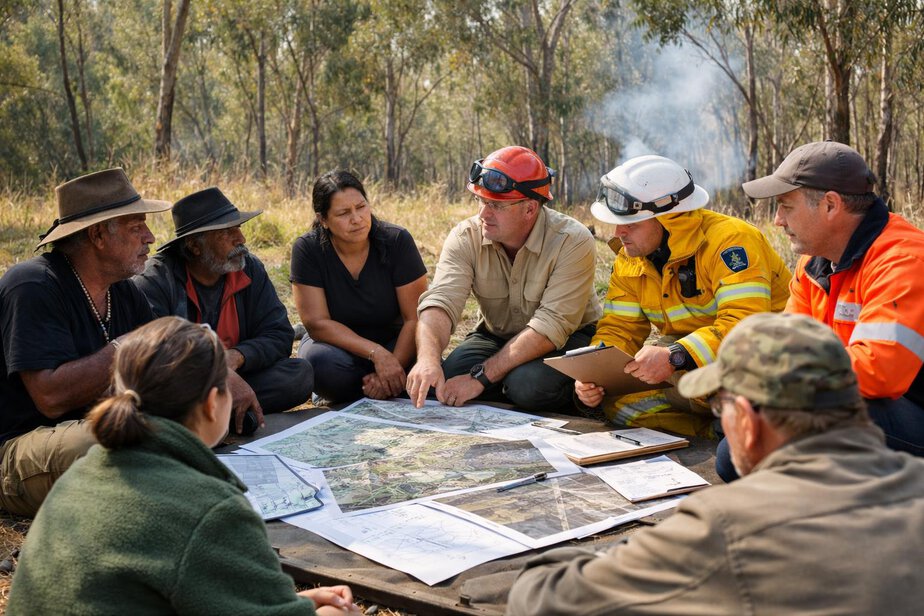
The 2021 position is right to recognise Traditional Custodians and their fire knowledge. However, recognition alone is not enough. If Australia wants a genuinely modern national position, it should move from acknowledgement to shared authority where Traditional Owners want that role and are supported to lead it.
That means more than consultation. It means Traditional Owner-led governance for cultural burning where appropriate, paid leadership, protection of cultural intellectual property, and outcome measures chosen with Traditional Owners rather than imposed solely by agencies. It also means recognising that cultural objectives may differ from agency risk objectives, and that those differences should be negotiated respectfully.
Cultural burning should not be treated as a symbolic add-on to hazard reduction. It is a distinct body of knowledge and practice with its own purposes, timing, responsibilities and measures of success. In some places, those purposes may overlap with risk reduction. In others, the fit may be partial. A national position should be honest about that rather than collapsing everything into one category.
Community trust will improve when people can see how Traditional Owner knowledge changes the burn design, monitoring plan and evaluation. If the national position is updated, it should make that visibility routine.
What a better national framework would look like
A revised national position should keep its current strengths but add a clearer system for performance, reporting and review. The aim should not be bureaucracy for its own sake. The aim should be learning, consistency and public confidence.
First, it should set clearly measurable objectives for every burn or program area. Not every objective has to be the same, but every objective should be specific enough to assess. For example, a burn may aim to reduce fuel continuity in a defined zone, create patchiness for ecological benefit, or protect a strategic asset. If the objective cannot be measured or at least checked, it should be rewritten.
Second, national reporting standards should be common across jurisdictions. Agencies should report the same core information in the same way, including pre-burn and post-burn fuel condition, residual heavy fuels, patchiness, burn coverage, weather limits used, and any deviations from plan. Without that, a national picture is impossible.
Third, model assurance must become normal. Every prediction used to support decisions should state its validation conditions, uncertainty range and practical limits. Model outputs should never be presented as more certain than they are. Where models are coarse or uncertain, the plan should say so plainly.
Fourth, monitoring should happen before and after burns. If the objective is to change fuel condition, ecology, smoke exposure or suppression advantage, the monitoring must look for those changes. A burn that is not monitored is a lesson missed.
Fifth, public dashboards would help. They could show the number of burns, objectives, fuel outcomes, smoke impacts, escapes, treatment life and ecological observations in plain language. Public reporting should not expose sensitive operational detail, but it should make performance visible enough for trust and review.
Sixth, smoke and health planning should be built into burn approval, not bolted on. That includes timing, ventilation conditions, nearby sensitive groups, communication pathways and post-burn review of smoke impacts. Health agencies, planners and fire agencies should work as one system.
Seventh, Traditional Owner-led governance should be embedded where appropriate. That includes paid roles, decision-making authority, and recognition of cultural measures of success. This is especially important if the work is on Country with continuing cultural obligations.
Eighth, field mentoring and succession planning should be formalised. A national position should recognise that skill comes from supervised practice over time. Agencies need the next generation of experienced practitioners, not just procedures.
Ninth, research-to-operations partnerships should be ongoing. New findings on fuel structure, slope, ember spread, evacuation behaviour and smoke risk need a clear path into planning, training and review.
Tenth, climate stress testing should become standard. Programs should be checked against hotter, drier and more variable conditions so agencies can see where historic assumptions no longer hold.
Finally, the national position should be reviewed on a scheduled cycle. Fire behaviour, research, governance and community expectations change. A position that is only revisited when something goes wrong will always lag behind reality.
Comparing the current position with needed improvements
| Current strength | Identified failing | Missed opportunity | Recommended corrective action |
|---|---|---|---|
| Recognises prescribed burning as one part of a broader fire strategy | Does not define common national performance measures | Hard to compare programs or learn across jurisdictions | Adopt a national minimum dataset and shared reporting standard |
| Supports adaptive management and research use | Limited guidance on uncertainty and model limits | Decision-makers may over-trust maps and simulations | Require validation statements, uncertainty ranges and conservative use notes |
| Values community engagement | Does not require shared decision-making or clear feedback on how local input changed plans | Consultation may stop short of trust-building | Record how community knowledge influenced planning and outcomes |
| Recognises Traditional Custodians | Does not clearly require co-governance or cultural IP protection | Traditional Owner leadership can remain advisory rather than central | Support Traditional Owner-led governance and chosen outcome measures |
| Supports multiple benefits | Limited treatment of smoke, health and climate-adjusted burn windows | Important public impacts may be underweighted | Embed smoke planning, health pathways and climate stress testing |
| Promotes practitioner skill and cross-tenure cooperation | No strong national pathway for mentoring, succession and long-term capability | Knowledge may remain informal and uneven | Fund field mentoring, accredited learning and succession plans |
Suggested national performance measures
| Domain | Example national performance measure |
|---|---|
| Fuel | Pre- and post-treatment fuel load, fuel structure, continuity, residual heavy fuels and patchiness recorded in a standard format |
| Fire behaviour | Observed flame height, intensity class, rate of spread, spotting behaviour and any divergence from predicted behaviour |
| Community risk | Exposure reduction in strategic zones, number of communities with documented benefit, and comparison with local preparedness actions |
| Ecology | Indicators of species response, habitat condition, seasonality fit and patch mosaic outcomes against stated ecological objectives |
| Cultural outcomes | Traditional Owner-defined indicators, governance participation, knowledge protection arrangements and Country-based outcomes |
| Public health | Smoke exposure days, sensitive receptor alerts, complaints, health advisories and post-burn health review |
| Operational safety | Escapes, near misses, injuries, equipment failures, suppression assistance and lessons learned |
| Treatment life | How long the treatment remains effective before fuel recovery or changed conditions reduce its usefulness |
These measures are examples, not a final prescription. The point is that national reporting should focus on outcomes, not only activity. Counting burns is useful. Understanding what those burns achieved is better.
The path forward
The most useful response to the 2021 AFAC position is not rejection. It is refinement. The position is fundamentally sound and should remain the base layer of national thinking. It gets the philosophy right: multiple benefits, ecological context, cultural recognition, adaptive management, practitioner skill and cross-tenure cooperation.
What it needs now is a stronger measurement and accountability spine. It should be clearer about what success looks like, when success is limited, how uncertainty is handled and how the public can see the difference between a good burn, a partial success and a burn that did not deliver the intended result.
It should also speak more directly to the realities of severe fire weather, ember attack, model limits, smoke, climate change, community behaviour and Traditional Owner governance. These are not side issues. They are central to whether prescribed burning reduces harm in the places where Australians actually live.
The 2026 research supplied for this review points in the same direction. It suggests that fuel structure matters, slope matters, resolution matters, ember processes remain difficult to model, heavy fuels may smoulder or survive, and community behaviour is adaptive rather than simple. Those lessons do not diminish prescribed burning. They make it more important to do it carefully, measure it properly and integrate it with other risk treatments.
The national task is therefore clear. Australia needs prescribed burning that is planned for stated outcomes, measured against common standards, reviewed honestly and embedded within a wider system of preparedness. That system should include home hardening, ember protection, evacuation planning, mechanical treatment, cultural burning and suppression readiness. None of these alone is enough. Together, they are far more credible.
In the end, the best national principle is simple: the right fire, in the right place, at the right time, for clearly stated and measured outcomes. That is the standard Australia should aim for, and it is the standard that should guide the next revision of the national position. Before publication or implementation, facts, local procedures and jurisdiction-specific requirements should always be verified.
Principal attached research used
- Sara McAllister, The Wildfire Problem – A Path Forward.
- Hovart et al., Compliance with Preparedness and Early Evacuation Guidelines.
- Kuligowski et al., A Theoretical Framework Explaining Evacuation Travel Behaviour in Bushfires.
- Pallikarakis and Kolaitis, Comparative Assessment of Wildland Fire Rate of Spread Models.
- Hassan et al., A Unified Scaling Law for Bushfire Junctions.
- Qin et al., Simulations of Firebrand-Driven Fire Spread in Landscape-Scale WUI and Urban Conflagration Models.
- Qin and Trouvé, Simulations of Firebrand Ignition in Landscape-Scale Fire Spread Models.
- Eissa et al., The Effect of Fuel Structure and Wind Speed on Ignition Behaviour.
- Ding et al., Coupling Computer-Vision House Fuel Load Estimation with Fire Spread Simulation.
- Al-Bulqini and Trouvé, Simulations of Fuel Consumption in Wildland Fire Spread.
FireRescue Training Hub
Access practical fire and emergency study support resources, downloads, checklists, audio guides, and member-only course content.
- Course library
- PDF downloads
- Audio guides
- Checklists
Study support only. Not accredited training or a replacement for workplace procedures.
About the author and safety review
Ken Walker
Former Station Officer and fire service educator
Former career firefighter with extensive career and volunteer fire service experience.
Qualifications: Associate Diploma of Applied Science in Fire Technology; Institute of Fire Engineers studies.
Author profilehttps://www.firerescue.com.au/about-us/