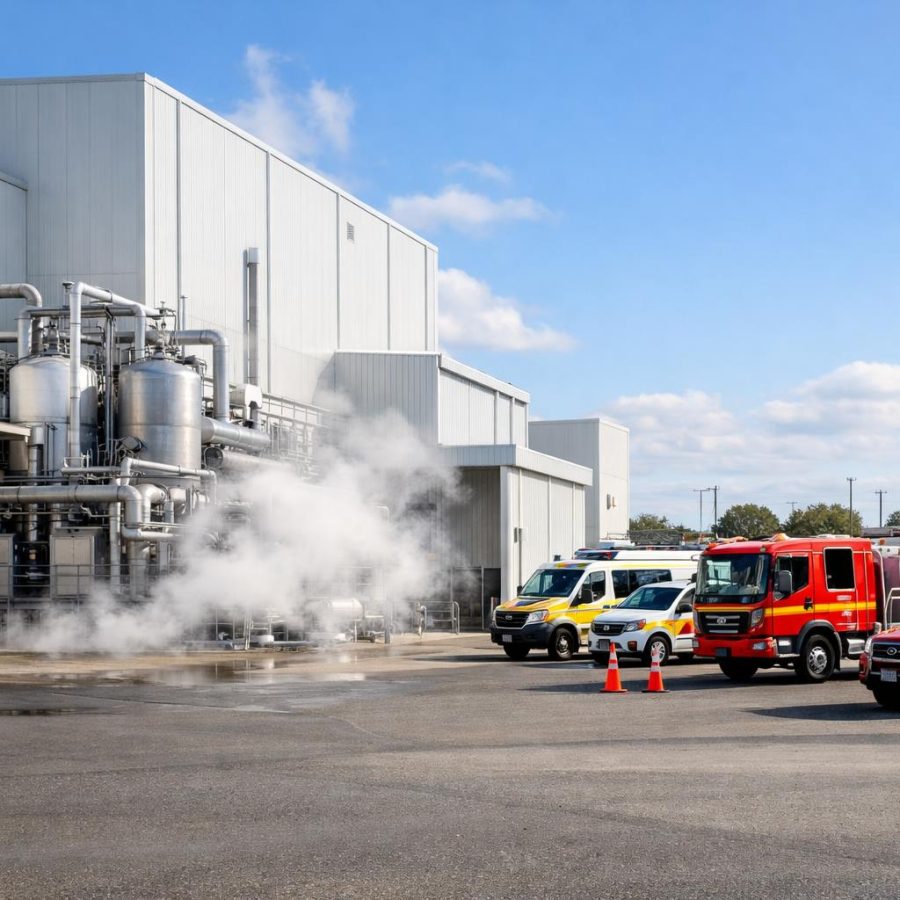
Hydrogen fuel-cell vehicles and hydrogen refuelling stations are now part of Australia’s changing transport and energy landscape. For firefighters and other emergency responders, the key issue is not whether hydrogen is “more dangerous” than petrol, diesel or battery-electric vehicles, but how its hazards differ and how to manage them safely, methodically and with the right information.
Understanding hydrogen fuel-cell vehicles in simple terms
Hydrogen fuel-cell vehicles use hydrogen gas as an energy carrier. In simple terms, the vehicle stores hydrogen in high-pressure tanks, then feeds that gas through a fuel cell where it combines with oxygen from the air to produce electricity. That electricity powers an electric motor, while the main exhaust product is water vapour.
For emergency responders, the important point is that a hydrogen fuel-cell vehicle is not the same as a battery-electric vehicle, even though both may drive in a similar quiet, electric way. A fuel-cell vehicle carries compressed hydrogen gas and associated pipework, valves, sensors and control systems. Those components create a gas-release and jet-flame risk profile that is different from both liquid-fuel vehicles and battery systems.
The high-level response principle is straightforward: identify the vehicle if possible, keep people clear of likely release paths, control ignition risks, protect exposures, and involve trained specialists and the vehicle manufacturer’s emergency guidance where available.
How hydrogen differs from petrol, diesel and battery-electric hazards
Hydrogen should not be judged through the same lens as petrol or diesel. Those fuels are liquids, can pool, and often produce visible smoke and flame behaviour responders may be more familiar with. Hydrogen is a very light gas that disperses rapidly outdoors, but it can also ignite very easily if it finds an ignition source in the right mixture with air.
Safe Work Australia’s hazardous chemical information classifies hydrogen as an extremely flammable gas and a gas under pressure. That combination matters. The gas is flammable, and it is stored at high pressure, which means damaged tanks, lines or valves can release energy quickly and create a forceful jet discharge.
Hydrogen also differs from battery-electric vehicle hazards. Battery incidents may involve electrical isolation, thermal runaway, toxic smoke and prolonged re-ignition risk. Hydrogen incidents may involve invisible or hard-to-see flames, jet releases, venting from pressure-relief devices and the possibility of a flammable cloud if a leak is not controlled. Each hazard set needs its own controls.
It is also important not to overstate the danger. Hydrogen vehicles are engineered with multiple safety systems, and the presence of a hydrogen system does not mean the vehicle will necessarily behave unpredictably. The real issue is that responders must recognise the hazard early and apply appropriate controls.
| Fuel type | Main responder concern | Typical control focus |
|---|---|---|
| Petrol or diesel | Liquid fuel spill, pool fire, smoke | Ignition control, runoff management, exposure protection |
| Battery-electric | Electrical and thermal runaway hazard | Isolation, cooling, monitoring, re-ignition awareness |
| Hydrogen fuel-cell | High-pressure gas release and jet flame | Detection, exclusion zones, vent-path awareness, controlled isolation |
That table is only a guide. Actual response decisions should always follow the vehicle model, site layout, local procedures and the advice of trained HazMat and technical specialists.
Identifying hydrogen vehicles at crashes and fires
One of the first challenges is simply knowing what you are dealing with. Hydrogen fuel-cell vehicles may not be obvious at a glance, especially if the vehicle is damaged, on fire or has been relocated after the impact. Badging and model cues can help, but responders should not rely on appearance alone.
Manufacturer-specific emergency response guides are essential. These guides can show tank locations, shut-off points, high-voltage considerations, pressure-relief device positions, airbag and restraint hazards, and the safest access routes for that model. Because those details vary between vehicles, a generic approach is not enough.
Practical identification steps may include:
- Checking vehicle badging, registration information and visual model markers where safe to do so.
- Looking for manufacturer emergency response placards or labels if they are visible and accessible.
- Using dispatch information, witness reports or owner information where reliable.
- Assuming the vehicle may contain a high-pressure gas system if the model is known to be a fuel-cell vehicle.
When uncertainty remains, responders should manage the scene as though a hydrogen hazard is present until it is ruled out by reliable information and appropriate assessment.
Hydrogen leaks, pressure releases and the visibility problem
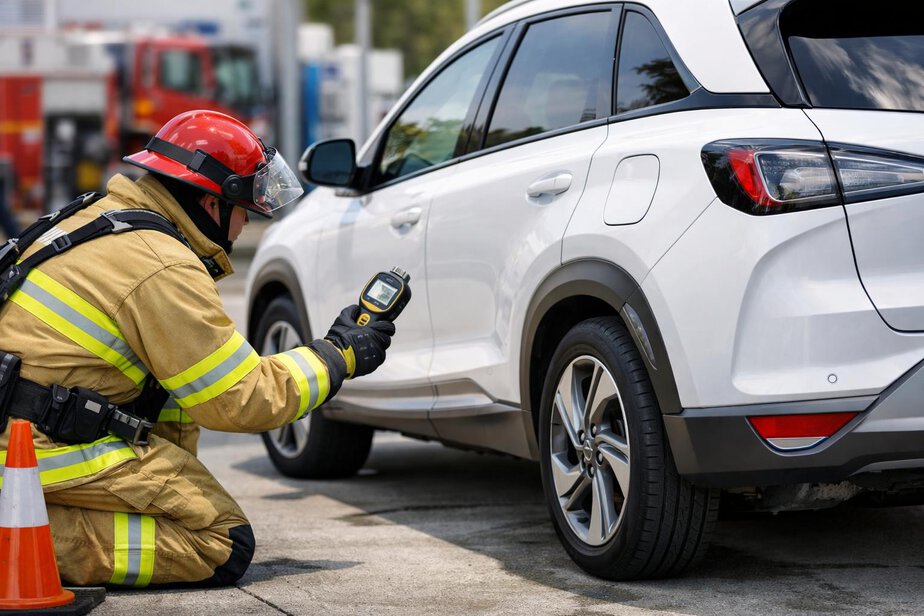
Hydrogen presents a difficult detection problem because it is invisible, odourless and very light. A responder may arrive at a scene with no obvious visual clue that gas is escaping, even when a serious leak is present. That is why specialist detection equipment should be considered whenever a release is suspected.
Hydrogen has a wide flammable range in air, which means a leak can create a hazardous atmosphere across more conditions than many people expect. The exact controls used at an incident will depend on the setting, but the general rule is to avoid creating ignition sources and to establish a safe perimeter before close investigation.
Useful detection and assessment tools may include:
- Hydrogen-specific detectors where available and appropriate.
- Thermal imaging cameras to help identify unusual heating, flame behaviour or overheated components.
- Suitable flame-detection equipment that can assist where a flame is pale or hard to see.
- Continuous monitoring by trained personnel when the situation is unstable or changing.
Hydrogen flames can be pale blue and almost invisible in daylight. They can also produce comparatively low radiant heat when compared with many hydrocarbon flames. That means responders should not rely only on seeing flame or feeling heat to confirm the presence or absence of fire. A jet flame may be operating in front of them with little visual warning.
Because hydrogen is much lighter than air, released gas normally rises and disperses rapidly outdoors. That reduces the chance of ground-level pooling in open air, but it does not remove the hazard. Hydrogen can collect beneath roofs, canopies, awnings, ceilings and in enclosed or poorly ventilated spaces, where it may accumulate to a flammable concentration. Station forecourts, workshops, tunnels, basements and partially enclosed car parks deserve particular caution.
Safe approach, appliance positioning and exclusion zones
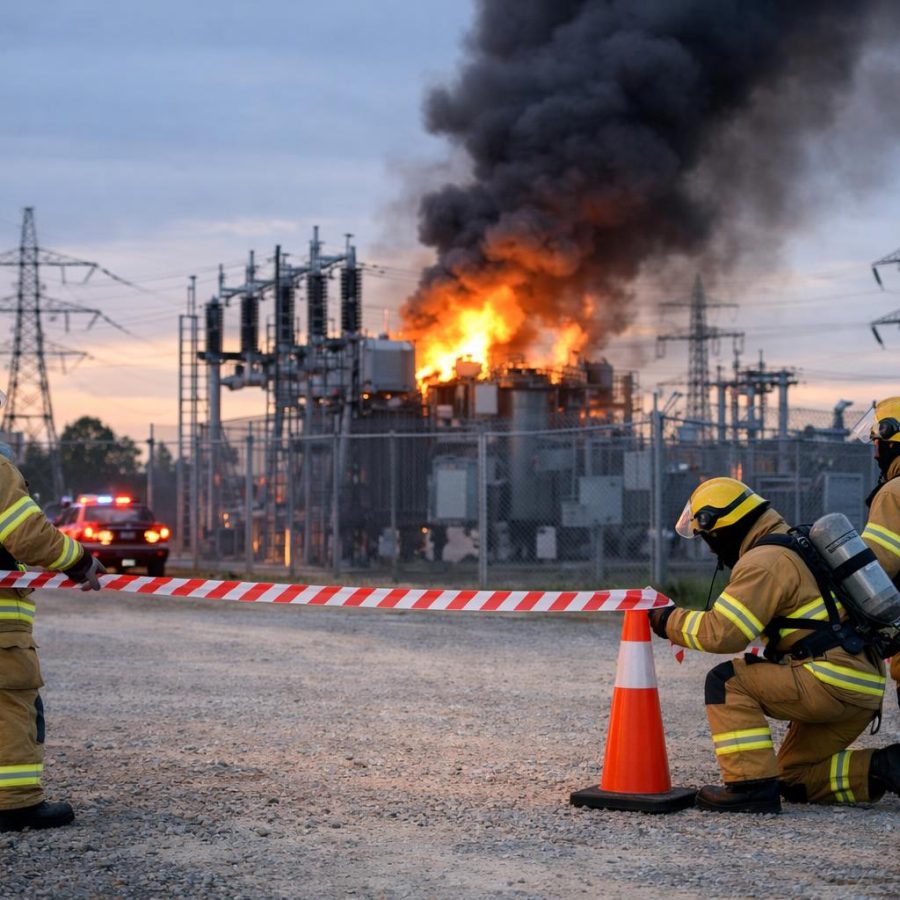
Initial scene safety starts with where the first crews stop and how they approach. As with any dangerous-goods incident, responders should consider wind direction, topography, enclosure, access routes, traffic risks and the location of people who may need rescue. If hydrogen is suspected, a cautious approach and a well-defined exclusion zone are essential.
Where a release is suspected but not yet controlled, appliances should be positioned to support containment, rescue and protection without placing crews directly in the likely path of a vent, leak or flame. Firefighters should avoid standing above a vehicle roofline, beside tank vents or in other positions where gas or flame could emerge unexpectedly. The safest appliance position will depend on the site and wind, but the principle is to keep crews out of likely discharge paths and maintain room to withdraw if conditions change.
Establishing exclusion zones should be based on the actual scene, not on a fixed assumption alone. The zone may need to account for:
- possible gas dispersion and ignition risk,
- jet-flame reach if ignition has occurred,
- collapse or secondary impact hazards,
- traffic control and bystander protection,
- roofed or confined areas where gas may accumulate.
Where an unignited release is suspected, ignition sources must be managed aggressively. This includes obvious sources such as flames and sparks, but also less obvious risks such as vehicle ignition systems, electrical equipment, hot surfaces and uncontrolled entry into enclosed spaces with poor ventilation.
Public actions and responder actions should remain separate. Members of the public should be moved away and told not to approach, smoke, operate switches or attempt informal investigation. Trained responders can then make controlled decisions about monitoring, rescue and isolation.
Fire involving a hydrogen vehicle
A fire involving a hydrogen fuel-cell vehicle may present as a conventional vehicle fire at first, but the high-pressure hydrogen system changes the tactical picture. As heat affects the vehicle, pressure-relief devices may activate. These devices are designed to vent hydrogen if tank temperatures become excessive, helping prevent a catastrophic tank failure.
That venting may be deliberate and expected, not necessarily evidence that the system has failed. However, the discharge itself is hazardous. It can create a high-velocity gas release and, if ignited, a concentrated jet flame. Firefighters should remain clear of the expected discharge path and avoid positioning directly above the tanks or vents.
The fact that a pressure-relief device is operating should not be treated as a routine sign that the scene is becoming safer. It means the vehicle is actively managing internal pressure under heat stress, and the release path may remain dangerous until the system cools, the gas is exhausted or the supply is otherwise isolated.
Another critical point is that extinguishing a hydrogen jet flame before stopping the fuel supply can create a different and sometimes worse hazard. If the visible flame is put out while hydrogen continues to escape, an unignited flammable gas cloud can develop and later ignite. For that reason, only appropriately trained and equipped personnel should attempt to control a hydrogen fire or major release, and any decision to extinguish should be made within the wider incident plan.
In some circumstances the better tactic may be to protect exposures, isolate the area, manage the gas flow if it can be done safely, and allow a controlled burn while the supply is cut off. That is not a general instruction for all scenes; it is a reminder that flame extinguishment alone is not the same as hazard control.
Hydrogen jet flames may be difficult to see, so a “no visible flame” assumption can be dangerous. Monitor carefully with appropriate equipment and do not enter the vent path.
Cooling exposures and protecting people, structures and nearby vehicles
When a hydrogen vehicle is exposed to fire, cooling surrounding objects and protecting exposures may still be a key part of the response. Nearby vehicles, buildings, loading areas and occupants can all be affected by radiant heat, fire spread or secondary ignition, even if the hydrogen flame itself is hard to see.
Cooling is usually about risk reduction, not direct confrontation. The goal is to stop fire spreading, protect escape routes, and lower the chance that other equipment or structures become involved. Whether water is the best tactical option will depend on the incident conditions and local procedures, but the principle of exposure protection remains relevant.
Responders should also recognise that hydrogen flames can generate comparatively low radiant heat relative to some other fires, which may make the fire seem less severe than it really is. That is misleading. A visually small flame can still represent a significant high-pressure gas hazard and a dangerous vent path.
Occupant rescue must be prioritised when people are trapped or unable to self-evacuate, but rescue should only proceed with a clear understanding of the gas hazards and access routes. The scene may need a coordinated approach involving fire, rescue, ambulance and police, particularly if there is entrapment, traffic congestion or poor visibility.
Where rescue is not immediately possible, protection of life from a safe distance may be the most appropriate first step until the atmosphere and fire behaviour are better understood.
Hydrogen refuelling station emergencies
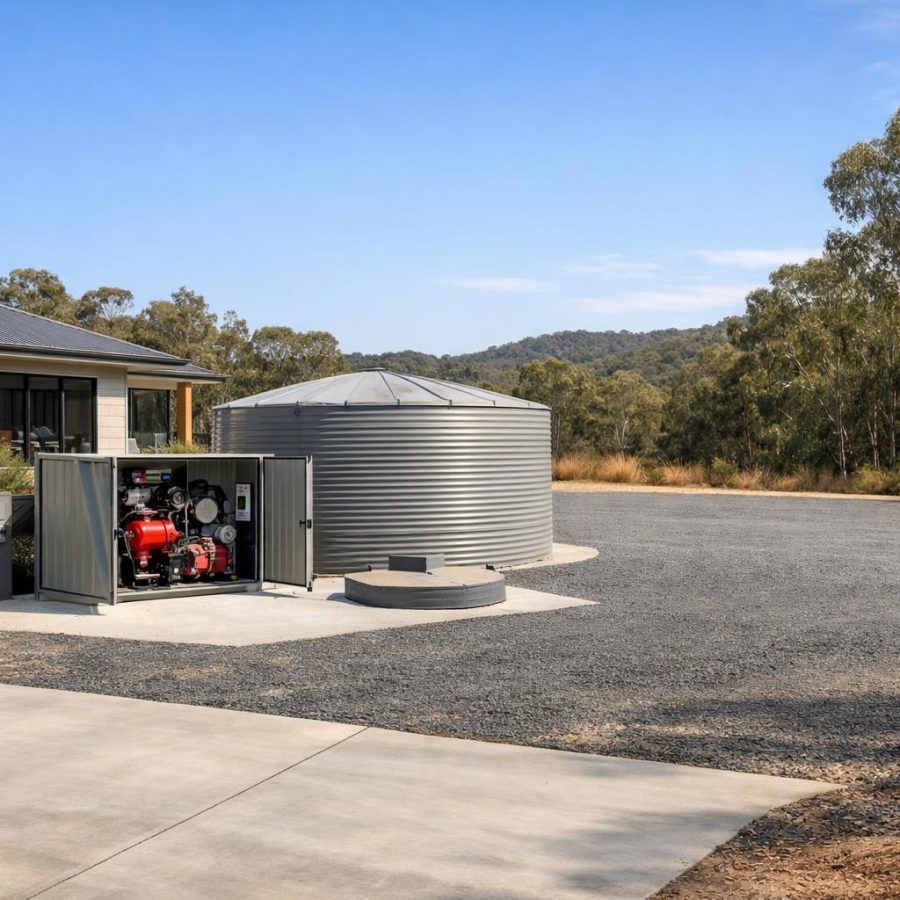
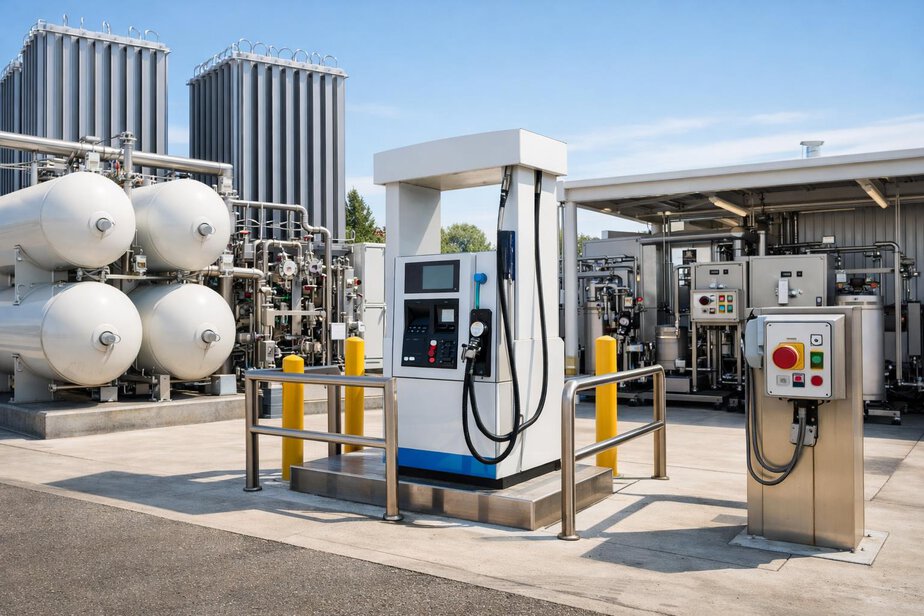
Hydrogen refuelling stations introduce a different set of fixed-site hazards. Responders may encounter electrolyser equipment, compressors, storage vessels, high-pressure dispensers, cooling systems, sensors, alarms and shutdown controls. The station layout and operating pressure can vary significantly between sites, so assumptions based on one facility should never be carried across to another.
Australian examples show that a station may include equipment for producing hydrogen, compressing it, storing it at high pressure and dispensing it for vehicle refuelling. The presence of these elements means an incident may involve not only the dispenser area but also upstream equipment, pipework, isolation valves, control systems and storage vessels.
When attending such a site, responders should seek, as early as possible:
- the site emergency plan or Emergency Information,
- the dangerous-goods manifest where applicable,
- site plans showing equipment and isolation points,
- locations and quantities of hydrogen,
- details of storage vessels, compressors and dispensers,
- advice from the facility operator or technical specialist,
- information on emergency shutdown systems.
Site personnel are often a crucial source of information because they know the normal operating state, the alarm history, the likely failure points and how to isolate the system safely. That does not mean operational control should be handed over to the facility operator, but their technical knowledge should be used early and formally through incident command.
Where a site emergency plan exists, responders should obtain and use it. Hydrogen facilities are not the place to improvise. Pre-incident planning, familiarisation visits and regular liaison with operators are far better than trying to learn the site layout during an active emergency.
Incident command, specialist support and post-fire monitoring
Hydrogen incidents benefit from disciplined incident command and early liaison between agencies. Firefighters may need to work alongside police for cordons and traffic control, ambulance for patient care and triage, HazMat specialists for atmospheric monitoring, and facility technical experts for system shutdown and interpretation of alarms or controls.
Command should be clear about what is known, what is suspected and what still needs verification. That includes whether the vehicle is a hydrogen fuel-cell vehicle, whether the station equipment is involved, whether the gas is burning or merely leaking, and whether any pressure-relief device is venting as intended. Clear communication reduces the chance of crews making assumptions based on incomplete information.
After the visible fire is out or the immediate leak appears controlled, the incident is not necessarily over. Post-fire monitoring is important because damaged hydrogen systems can remain hazardous, particularly if pipework, valves, regulators or storage components have been weakened. The vehicle or equipment may need to remain isolated and monitored for gas accumulation, delayed venting or heat-related reactivation.
Towing and storage also need careful thought after significant damage. A damaged hydrogen vehicle should not simply be moved without understanding the system condition and the advice in the vehicle manufacturer’s emergency response guide. Isolation and transport arrangements may differ between models and incident circumstances. If the hydrogen system has been compromised, the vehicle may need to be quarantined in a suitable area with ongoing controls until it is safe for recovery.
Where there is doubt, responders should maintain the exclusion zone and seek technical advice rather than rushing to return the site to normal use. That caution is especially important at a public refuelling station where members of the community may be tempted to re-enter the area too soon.
Pre-incident planning for Australian fire brigades
Australia’s hydrogen infrastructure is still developing, which makes pre-incident preparation even more important. Fire brigades and emergency services should aim to know where hydrogen vehicles, refuelling sites and supporting infrastructure exist within their response area before a callout arrives. That includes public refuelling stations, depots, research sites, workshops and any location with stored hydrogen or hydrogen-processing equipment.
Pre-incident familiarisation should focus on practical questions. Where are the access roads? Where are the isolation points? What shutdown systems are present? Where could gas collect if released? Which parts of the site are sheltered or enclosed? Who has technical authority after hours? Which local specialist units should be paged early?
Useful pre-incident actions include:
- Visiting hydrogen facilities with operators during business hours.
- Recording site layouts, access constraints and key hazards in brigade plans.
- Confirming how emergency shutdown systems are activated.
- Identifying which models of hydrogen vehicle are likely to be encountered locally.
- Reviewing the current emergency response guides for those vehicle models.
- Practising coordinated responses with police, ambulance and HazMat teams.
Workplace emergency teams at hydrogen facilities also need clear local procedures. That includes who activates shutdown, who guides responders on arrival, where people assemble, how isolation is confirmed and how the site is made safe for handover.
For the broader public, the message is simple: if a hydrogen vehicle, station or piece of hydrogen infrastructure is involved in a life-threatening emergency, call Triple Zero (000) immediately and follow emergency instructions. Do not attempt to inspect or fix the system yourself.
Hydrogen incidents are manageable when responders understand the technology, respect the high-pressure gas hazard and use the right tools, information and cordons. The practical conclusion is that hydrogen should be treated as a specialist but familiar emergency problem: identify it early, keep people clear, monitor continuously, involve technical support and rely on manufacturer-specific guidance and local procedures before making critical decisions. Always verify facts, equipment details and local response arrangements before publication or operational use.
FireRescue Training Hub
Access practical fire and emergency study support resources, downloads, checklists, audio guides, and member-only course content.
- Course library
- PDF downloads
- Audio guides
- Checklists
Study support only. Not accredited training or a replacement for workplace procedures.
About the author and safety review
Ken Walker
Former Station Officer and fire service educator
Former career firefighter with extensive career and volunteer fire service experience.
Qualifications: Associate Diploma of Applied Science in Fire Technology; Institute of Fire Engineers studies.
Author profilehttps://www.firerescue.com.au/about-us/