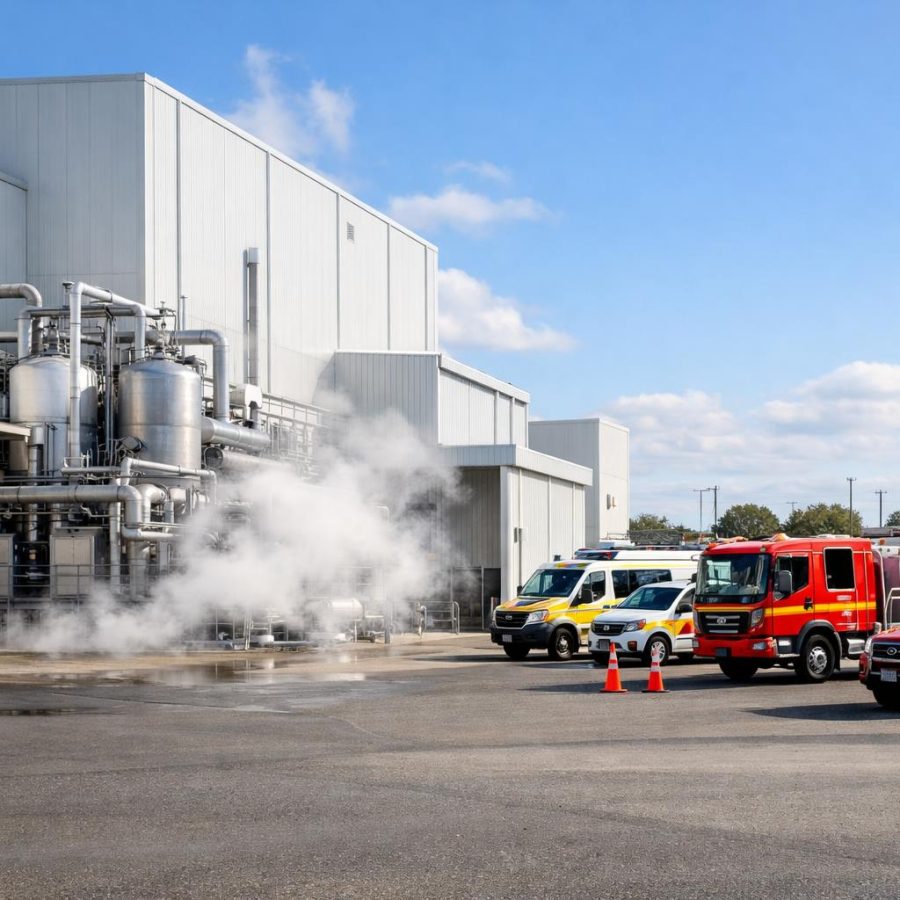
Wind turbine incidents can challenge even well-prepared crews. Fires may begin inside a nacelle, electrical faults can remain live, access is often restricted, and burning debris can fall into surrounding grassland or crops. For Australian firefighters, rescue teams and wind-farm operators, the safest response depends on planning, clear communication and strict control of hazards from the start.
Why wind turbine incidents are so demanding
Modern wind turbines combine several hazards in one structure. A fire may involve high-voltage electrical systems, hydraulic and lubricating oils, rotating machinery, stored mechanical energy and confined internal spaces. At the same time, the incident is often happening at extreme height, in exposed weather, with limited access for people and equipment.
This is why a wind turbine fire is not treated like an ordinary building fire. A crew that is used to external structural firefighting may find the conditions very different. The safest approach usually starts with confirming what is burning, where the fire is located, whether the turbine is isolated, and whether the situation is changing rapidly.
Common causes of wind turbine fires
Wind turbine fires may start for several reasons, and responders should expect more than one contributing factor. Common causes include electrical faults in cabling or components, overheating in machinery, mechanical failure, friction from moving parts, and lightning strikes. A fault inside the nacelle can quickly involve oils, plastics and insulation materials.
Even when the visible flames are small, the underlying cause may still be active. Electrical systems can remain energised unless confirmed isolation has occurred. Mechanical parts can also store energy even after the blades stop moving. This means a turbine should never be assumed safe simply because it has stopped rotating.
Why the cause matters to crews
- It affects whether the turbine can be safely approached.
- It helps determine whether the incident is likely to spread.
- It informs decisions about exclusion zones and defensive operations.
- It shapes what information technicians and site management need to provide.
Height, access and internal spaces
Modern turbines are tall structures with restricted internal access. The nacelle sits high above the ground, and the tower contains narrow internal spaces, ladders or access systems that are not suited to ordinary firefighting movement. Some locations are isolated and reached only by long farm tracks or service roads.
That combination creates practical delays. Crews may need to wait for site staff, confirm safe access points, and gather information about the turbine design. If weather is poor, the risk rises again. Strong winds can affect stability, make climbing unsafe and interfere with hose handling, monitoring and drone operations.
Fires in the nacelle and tower
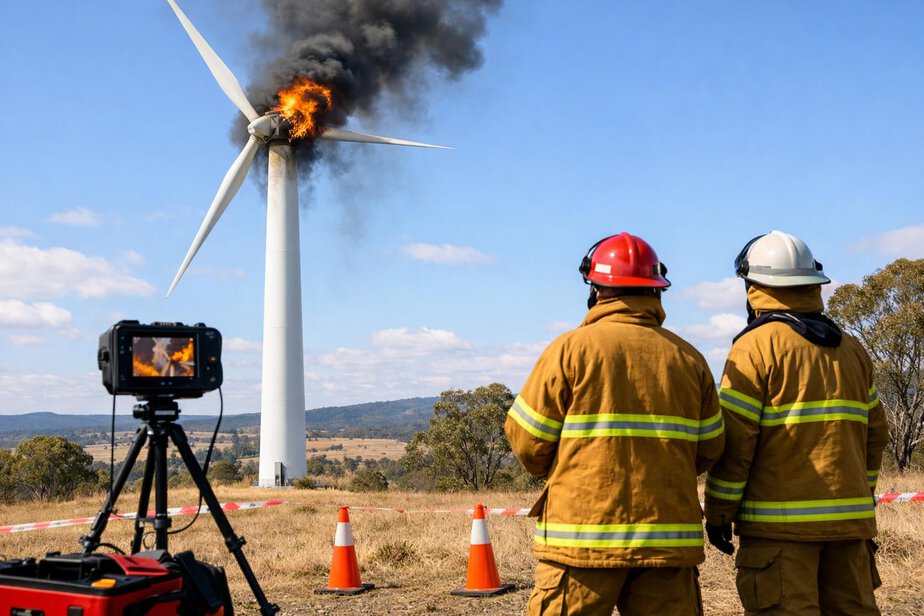
Fire in the nacelle is especially difficult. The fire is high above ground, often enclosed, and may be shielded by the turbine structure. Direct external firefighting is usually not realistic at extreme height, especially if the fire is already affecting the nacelle, wiring or rotating assemblies. Even if crews can see smoke or flame, they may not be able to safely reach the seat of the fire.
For this reason, firefighters often shift to defensive tactics. That may mean monitoring the incident, protecting exposures, and waiting for the turbine to burn out once power has been isolated, provided that this is safe and agreed through incident command. The goal is to reduce risk to crews while preventing the fire from spreading beyond the turbine.
Where crews do operate closer to the structure, they should use an agreed incident plan, clear communications and the right specialist support. That may include breathing apparatus, thermal imaging cameras, gas detection and, where required, high-angle or technical rescue capability for injured personnel.
Exclusion zones, debris and bushfire spread
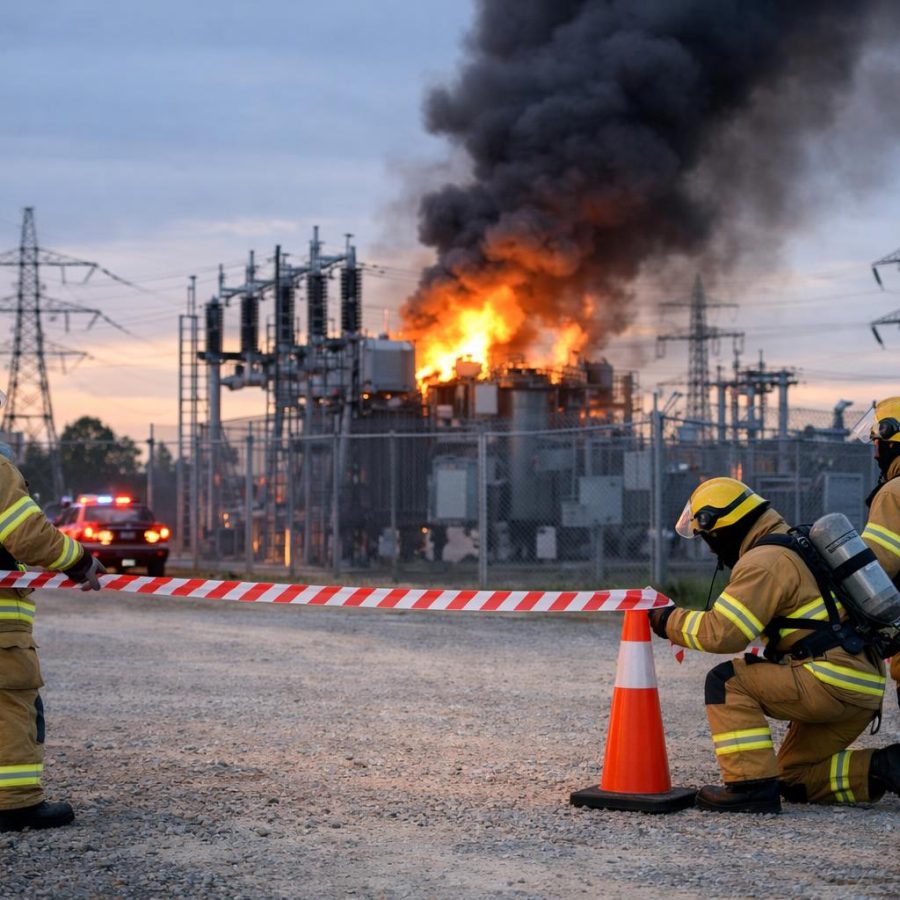
Burning material, blade fragments and damaged components can fall a considerable distance. That creates danger for firefighters, technicians, bystanders and anyone driving near the site. Exclusion zones should therefore be based on site-specific risks, turbine dimensions, weather and agency procedures rather than a single fixed distance for every incident.
Where the turbine is near grassland, crops, buildings or other turbines, secondary fires are a major concern. Burning debris can start spot fires well away from the main structure, and wind can carry embers into nearby vegetation. In bushfire-prone areas, this can create a broader emergency than the turbine fire itself.
| Risk area | Why it matters | Typical response focus |
|---|---|---|
| Ground around the turbine | Falling debris and hot material | Establish exclusion and monitor with thermal imaging |
| Surrounding vegetation | Spot fires and ember attack | Protect grassland, crops and assets |
| Nearby turbines and equipment | Fire spread and operational disruption | Coordinate shutdown and site control |
Australian guidance on renewable energy facilities recognises the need to manage emergency access, water supplies, vegetation and fire safety. That planning is especially important where a turbine fire could also become a bushfire response.
Monitoring, drones and working with site technicians
Ground monitoring is often an important part of the response. Thermal imaging cameras can help crews observe heat patterns, track changes and confirm whether a fire is increasing or dying out. In some incidents, remotely piloted aircraft systems may also be used for inspection and thermal monitoring, if approved and operated by authorised personnel under the appropriate aviation and agency arrangements.
Wind-farm technicians and site management can provide valuable information about the turbine type, access points, shutdown controls, water supplies and internal layout. They may also know whether there are other hazards on site, such as electrical equipment, fuel stores or difficult access roads. Building relationships before an incident makes this information much easier to obtain under pressure.
Rescue of injured or trapped technicians
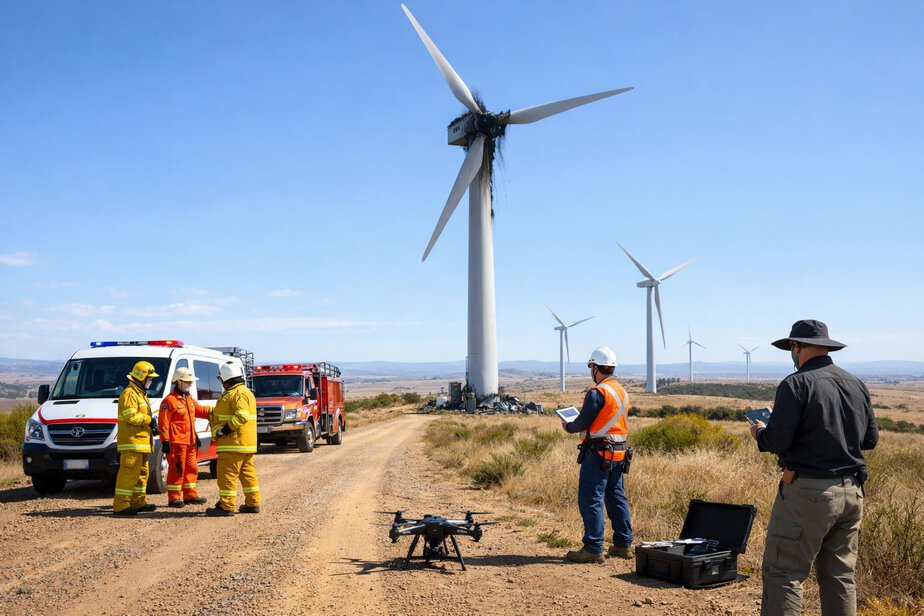
Sometimes the incident is not only about fire. A technician may be injured, isolated or trapped at height. That can require a specialist rescue response involving rope rescue, fall-arrest systems, breathing apparatus and careful scene control. This is well beyond normal structural firefighting capability in many districts.
High-angle rescue should be left to trained and authorised personnel with the correct equipment and procedures. Responders must consider the structural condition of the tower, the possibility of electrical hazards, the presence of smoke or contaminated air, and whether the turbine can be safely accessed at all. In some cases, rescue may have to wait until the hazards are controlled or specialist support arrives.
Rescuers also need to think about the weather. Strong winds can make climbing, lowering, drone use and casualty packaging more difficult and more dangerous. When nearby turbines are involved, site management may need to shut down additional units to create a safer operating area.
Incident command, aircraft and multi-agency coordination
Wind turbine incidents work best when there is clear incident command and disciplined communications. Firefighters, rescue personnel, site technicians, power specialists, police, ambulance and aviation staff may all have a role. Each agency brings different information and responsibilities, so coordination is essential.
Aerial firefighting aircraft, if considered, face substantial obstacles. Turbines and blades create serious aviation hazards, and aircraft decisions must remain with appropriately authorised aviation personnel. Crews on the ground should never assume aircraft can operate safely close to rotating or damaged turbines without a proper risk assessment.
Nearby responders should also keep records of what is observed, what has been isolated, who has authorised actions, and what changes occur over time. That is useful during the incident and later for review or reporting.
Planning before the callout
Pre-incident planning is one of the best protections for brigades located near wind farms. Familiarisation visits help crews understand site access, turbine layout, water points, radio coverage, shutdown arrangements and likely hazards. That preparation matters whether the incident is a fire inside the turbine or a bushfire threatening the facility.
Australian guidance from the CFA and other agencies highlights the value of emergency access, firefighting water supplies, vegetation management and emergency planning at renewable energy facilities. It also reinforces the need to understand each site individually rather than relying on a one-size-fits-all approach.
What wind-farm operators should have ready
- Current site maps and access information.
- Emergency contacts and after-hours escalation details.
- Water supply locations and access routes.
- Shutdown procedures and technician support arrangements.
- Emergency information books for responding crews.
Lessons from Australian experience
Australian responders have already shown that a cautious, planned approach can work. A Victorian wind turbine fire at Codrington involved smoke in the nacelle, isolation of power, a significant exclusion zone and ground monitoring rather than an immediate attempt to attack the fire at height. Later inspection included specialist tools and controlled access once conditions were more stable.
The key lesson is not that every turbine fire should be handled the same way. It is that the response must match the risk. Crews need to respect height, electricity, structural uncertainty and falling debris, while also protecting the surrounding landscape and any people on site. Conventional firefighting skills remain valuable, but they must be paired with technical rescue, site knowledge and sound incident command.
For Australian fire agencies, wind-farm operators and emergency planners, the priority is clear: prepare early, share information, build local relationships and never rush into a damaged turbine without proper assessment. That approach protects responders, technicians and the community. Before publication, verify local procedures, site arrangements and current agency guidance.
FireRescue Training Hub
Access practical fire and emergency study support resources, downloads, checklists, audio guides, and member-only course content.
- Course library
- PDF downloads
- Audio guides
- Checklists
Study support only. Not accredited training or a replacement for workplace procedures.
About the author and safety review
Ken Walker
Former Station Officer and fire service educator
Former career firefighter with extensive career and volunteer fire service experience.
Qualifications: Associate Diploma of Applied Science in Fire Technology; Institute of Fire Engineers studies.
Author profilehttps://www.firerescue.com.au/about-us/