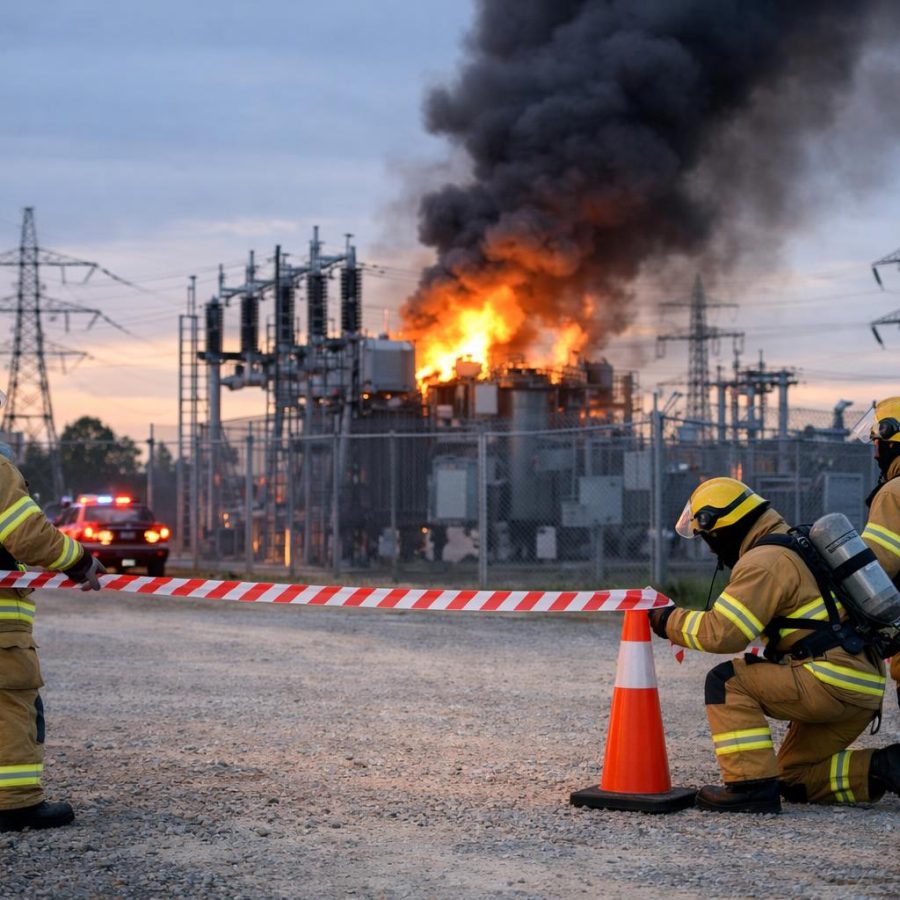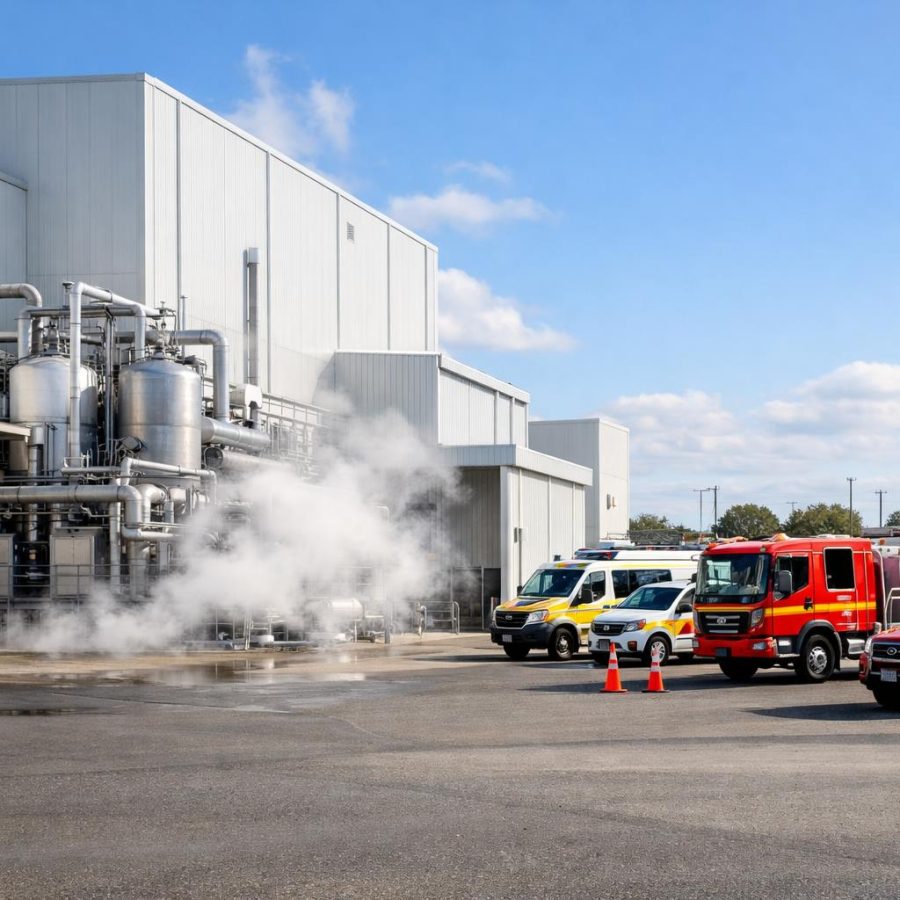
When a major emergency hits, many people do not wait to be asked. They turn up with boots on, sleeves rolled up and a strong desire to help. That willingness can be a real strength, but only if spontaneous volunteers are managed in a way that protects safety, supports the incident management system and keeps the response under control.
Understanding spontaneous volunteers
Spontaneous volunteers are members of the public who offer assistance during or after an emergency without being part of an established emergency-service deployment or an organised volunteer program. They may arrive at a relief centre, a council depot, a fire station, a recovery hub or an incident base. Some come with practical skills. Others simply want to carry boxes, make tea, clean up or check on neighbours.
Their motivation is usually straightforward. People want to help their community, protect vulnerable neighbours and feel that they are contributing during a stressful event. In many Australian emergencies, that instinct is valuable. Communities recover more quickly when local goodwill is channelled into safe, useful work.
At the same time, spontaneous volunteers are not the same as trained emergency-service volunteers. A CFA, SES, RFS, Fire and Rescue NSW or other trained and authorised volunteer member has an organisational role, defined competencies, supervision and often formal equipment and insurance arrangements. A member of the public who appears with good intentions does not automatically have those protections or responsibilities.
Why uncontrolled volunteers create problems
Uncontrolled volunteers can create more work for incident management teams than they remove. They can arrive in large numbers, ask for access to restricted areas, self-deploy into dangerous locations, use vehicles without coordination, or take on tasks that they are not trained to do. Even when their intentions are good, the result can be confusion, duplication of effort and added risk.
Common problems include:
- people entering exclusion zones or hazardous areas
- vehicles blocking access for emergency crews
- untrained people attempting cleanup in unstable or contaminated environments
- well-meaning residents spreading unverified information
- volunteers working long hours without rest or hydration
- records being lost, which later affects accountability and insurance questions
There is also a management issue. Every person in or near an operational area needs to be accounted for. That means incident controllers and local coordinators need to know who is on site, where they are working, what they are doing and who is supervising them. Without that control, a volunteer can become another missing person, another casualty or another distraction.
Registration, identification and accountability
Registration is the first practical step in managing spontaneous volunteers. It does not need to be complicated, but it does need to be consistent. A simple process should capture enough information to support safety, task allocation, welfare and records.
At minimum, record:
- full name
- contact details
- emergency contact
- basic skills or qualifications relevant to the emergency
- any limitations, such as mobility restrictions or language support needs
- task allocated
- supervisor or team leader
- arrival time and departure time
- location or work area
Identification matters as well. A simple temporary badge, wristband, vest or sign-in card may be enough if it is used consistently and supports local procedures. The purpose is not to create unnecessary bureaucracy. It is to make it obvious who has been inducted, where they are meant to be, and whether they belong in that place at that time.
Good records also help later. They can support welfare follow-up, insurance processes, debriefing, thank-you messaging and recovery planning. They can also help if there is a complaint, an injury or a question about what a person was asked to do.
| Registration item | Why it matters |
|---|---|
| Name and contact details | Supports accountability and follow-up |
| Emergency contact | Useful if the volunteer is injured or unwell |
| Skills and limitations | Helps match the person to a safe task |
| Task and supervisor | Clarifies responsibility and reporting |
| Times and location | Assists records, welfare and incident review |
Matching volunteers to safe and appropriate tasks
Not every helpful task belongs in a high-risk environment. The rule is simple: match the task to the person, not the person to the task. Public volunteers are usually best suited to low-risk, clearly supervised work where the consequences of error are limited and the work can be stopped quickly if conditions change.
Examples of suitable tasks may include:
- packing and sorting relief supplies
- setting up food, water or welcome areas under supervision
- administrative support such as forms, signage or phone assistance
- restocking community recovery supplies
- assisting with approved information distribution
- helping with non-hazardous clean-up in controlled recovery settings
- supporting local outreach, checking welfare or other community care tasks
Tasks that should remain with trained and authorised personnel include firefighting, rescue, hazardous materials work, structural assessment, operating heavy plant, managing traffic in active operations, entry into contaminated areas and any work inside exclusion zones or active firegrounds. The fact that a person offers help does not make those tasks safe for them.
Where volunteers have relevant qualifications or trade experience, that information should still be checked and not assumed. A person may be a builder, a nurse, a truck driver or a mechanic, but emergency work still requires task-specific induction, supervision and approval.
Briefings, supervision and clear chains of command
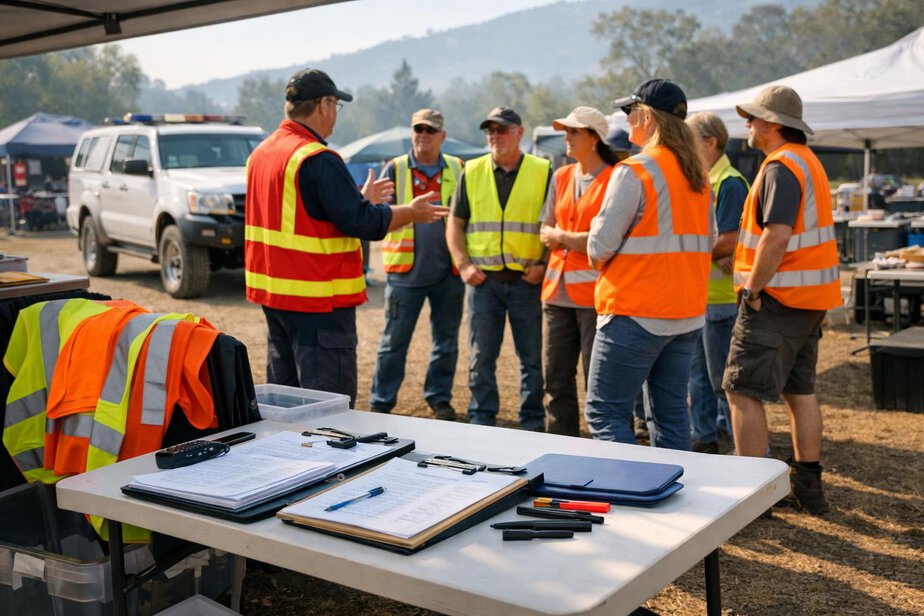
Every volunteer should receive a short briefing before they start. That briefing should explain what is happening, what the hazards are, where they may and may not go, who they report to and what to do if conditions change. In a fast-moving emergency, a short and clear briefing is better than a long one that is not understood.
A useful briefing should cover:
- the purpose of the task
- the limits of the role
- the hazards in the area
- which areas are prohibited
- how to ask for help or report a problem
- communications arrangements
- rest, food and water arrangements
- when and how to leave the area
Supervision is not optional. Volunteers should be allocated to a named team leader or supervisor who understands the task and the operating environment. That person should be able to stop work, redirect the volunteer or remove them if the task is no longer safe or suitable.
Clear chains of command matter because emergencies already involve pressure, emotion and changing priorities. If volunteers receive instructions from multiple people, confusion follows quickly. Incident management arrangements should make it obvious who is authorised to task volunteers, who can approve changes and who has final say.
Volunteer enthusiasm should never override established incident-control arrangements. Respectful communication is important, but so is operational discipline.
PPE and minimum safety requirements
Personal protective equipment, or PPE, should be based on the task and the environment. It is not a substitute for proper task selection, supervision or hazard control. Before handing out PPE, responders should confirm that the activity is suitable for public volunteers in the first place.
Minimum safety requirements will vary, but may include sturdy closed footwear, gloves, high-visibility clothing, eye protection, long sleeves, hats, masks or hearing protection. The exact equipment should match the work and the local procedures. Volunteers should also be told how to use the equipment, when to replace it and when it is not enough for the job.
PPE alone does not make a task safe. For example, boots and gloves do not make floodwater, contaminated mud, unstable walls or fireground debris acceptable for untrained people. Likewise, a high-visibility vest does not make a road or traffic corridor safe for someone without traffic control training and authorisation.
Incident managers should also consider hygiene. In many recovery settings, handwashing, clean drinking water, sun protection and insect protection are just as important as gloves or vests. A volunteer who becomes unwell is no longer an asset and may become another welfare problem.
Hazards that must stay off limits
Public volunteers should be kept away from hazardous operational areas unless they are appropriately trained, equipped and authorised. This is one of the most important boundaries in spontaneous volunteer management.
Hazards commonly found during Australian emergencies include:
- active firegrounds and exclusion zones
- traffic on open roads and along detours
- moving machinery and plant
- floodwater, including contaminated water and hidden debris
- damaged or unstable buildings
- collapsed fences, fallen trees and overhead hazards
- smoke, ash, chemicals or other contaminants
- rescue scenes and patient care areas
It is especially important to keep volunteers out of damaged structures and unsafe clean-up areas. Floors may fail, walls may shift and materials can contain asbestos, fuel, sewage, chemicals or sharp debris. The same caution applies to flood-affected areas, where contaminated water and unseen hazards can cause serious illness or injury.
Traffic is another common risk. Volunteer vehicles, pedestrians and emergency vehicles must not compete for space in a busy operational area. If volunteers are needed for a public-facing task, direct them to a controlled location away from live traffic and heavy equipment.
Working with volunteer organisations, councils and community groups
Where possible, spontaneous volunteers should be directed into recognised coordination systems rather than left to self-organise. Local councils, relief centres, community organisations, faith groups and established volunteer agencies often have better systems for screening, task allocation, welfare and record-keeping.
That coordination matters because it reduces duplication and improves safety. A community group may be better placed to manage food distribution, donated goods, welfare checks or recovery support than an incident site that is already stretched. Likewise, a recognised volunteer organisation may already have the right training, insurance arrangements and supervision structures in place.
Incident managers should work with these partners early. The goal is not to hand off responsibility completely. It is to connect goodwill with a structure that can use it well. In many emergencies, councils and community recovery teams become the right place for many spontaneous volunteers after the immediate response phase passes.
Care is also needed when volunteers arrive through informal networks. A local club, school, service group or neighbourhood chat may quickly generate offers of help. Those offers should be welcomed, but the work still needs to be directed through the incident or recovery structure so that it aligns with the overall plan.
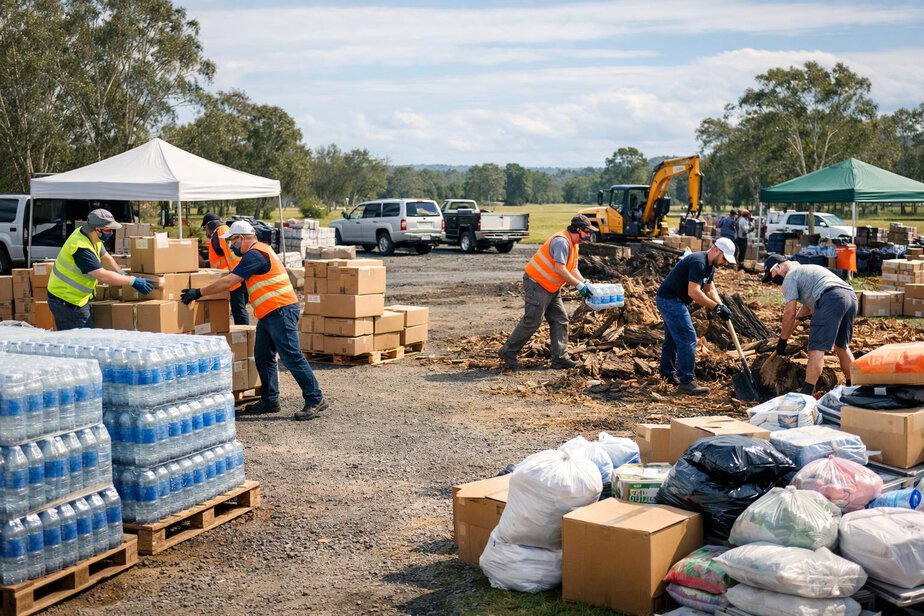
Donations, logistics and welfare management
Volunteers are often closely linked to donations. People may arrive with food, clothing, blankets, tools, vehicles or other goods they believe are needed. This can be helpful, but it can also create storage and sorting problems if it is not managed properly.
Logistics teams should be clear about what is needed, where donations should go and what should not be brought in. Unrequested items can overwhelm a relief centre, block access, create waste or create extra work for volunteers. A controlled donations process is usually better than ad hoc drop-offs.
Welfare is just as important as logistics. Volunteers may be tired, distressed or personally affected by the same emergency they are trying to help with. They need water, food, shade or shelter, rest breaks and a sensible finishing time. They also need a way to step back if they are overwhelmed.
Useful welfare practices include:
- rotating tasks to reduce fatigue
- monitoring for signs of stress or exhaustion
- ensuring access to drinking water and toilets
- providing clear rest breaks
- reminding volunteers to report injuries or illness early
- keeping work periods realistic for the conditions
Long, unbroken shifts often lead to mistakes. In recovery work, fatigue can be as much of a hazard as the physical environment.
What Incident Managers Should Do When Volunteers Arrive
When spontaneous volunteers turn up, a simple step-by-step response can keep the situation orderly and safe.
- Acknowledge the offer. Thank the person for coming forward and make it clear that help is welcome, but must be managed safely.
- Direct them to the right point. Move them away from operational traffic and into the registration or reception area.
- Record basic details. Capture their name, contact information, skills, limitations, emergency contact and arrival time.
- Check the current need. Confirm whether there is actually a task suitable for public volunteers.
- Match task to risk. Assign only low-risk work that fits their skills and the current conditions.
- Brief them properly. Explain hazards, boundaries, supervision, reporting lines, welfare arrangements and what to do if conditions change.
- Issue any approved equipment. Provide only the PPE or identification required under local procedure.
- Supervise and monitor. Make sure a named supervisor is responsible for the task and can stop it if needed.
- Close the loop. Record finishing time, where they worked and what they did before they leave.
This process can be adapted for a relief centre, council facility, evacuation centre or recovery hub. The key is consistency. When the same basic steps are used every time, volunteers feel respected and the incident stays under control.
Managing people who refuse instructions and transitioning into recovery
Some well-meaning people will resist boundaries. They may say they know the area, have done this sort of work before, or simply want to get on with the job. Others may be upset, impatient or frustrated that they cannot help in the way they expected. These situations need calm, firm and respectful handling.
Start by explaining the reason for the instruction in plain language. For example, the area may be unsafe, the task may already be covered, or the person may not have been briefed or registered. If they still refuse, do not argue at length. Escalate to the appropriate supervisor or incident manager and keep the interaction professional. The objective is to protect safety and maintain control, not to win a debate.
As the emergency shifts into recovery, spontaneous volunteers can often be re-engaged in more structured ways. This is where community clean-up support, admin assistance, welfare outreach, supply sorting and local recovery projects can become valuable. Recovery is often a better setting for public volunteers than the fast-moving operational phase, provided supervision and task boundaries remain clear.
Communication with the local community is important throughout. People are more likely to cooperate when they understand why volunteers are being managed carefully. Public messages should explain where help is needed, where it is not, and how people can register through recognised channels. That reduces self-deployment and helps direct goodwill into productive work.
Conclusion and practical key takeaways
Spontaneous volunteers can be one of the strongest signs of community resilience. Managed well, they can support relief, logistics and recovery in ways that genuinely help. Managed badly, they can add risk, confusion and workload to an already difficult emergency.
The safest approach is simple. Register people, identify them clearly, brief them properly, match them to low-risk tasks, supervise them closely and keep them out of hazardous operational areas. Respect their willingness to help, but do not allow goodwill to override incident-control arrangements or safety rules.
For firefighters, SES personnel, emergency managers, councils and community organisations, the aim is not to say no to community help. It is to turn that help into something useful, accountable and safe.
Practical key takeaways:
- Life safety comes first, always.
- Untrained volunteers should only do safe, supervised tasks.
- Every volunteer should be registered and accounted for.
- Briefings must cover hazards, boundaries and reporting lines.
- PPE helps, but it does not make dangerous work safe.
- Keep volunteers away from firegrounds, floodwater, damaged buildings, traffic and machinery unless they are authorised and trained.
- Use recognised volunteer organisations, councils and recovery systems wherever possible.
- Provide food, water, rest and fatigue management.
- Record who worked, where they worked and what they did.
- Verify local procedures, legal requirements and agency instructions before publication or use in an actual event.
In an emergency, good intentions are not enough. The best community response is one that is organised, respectful and safe.
Always confirm details with the relevant emergency-service agency, Incident Controller, council or local authority, as procedures and local arrangements may change.
FireRescue Training Hub
Access practical fire and emergency study support resources, downloads, checklists, audio guides, and member-only course content.
- Course library
- PDF downloads
- Audio guides
- Checklists
Study support only. Not accredited training or a replacement for workplace procedures.
About the author and safety review
Ken Walker
Former Station Officer and fire service educator
Former career firefighter with extensive career and volunteer fire service experience.
Qualifications: Associate Diploma of Applied Science in Fire Technology; Institute of Fire Engineers studies.
Author profilehttps://www.firerescue.com.au/about-us/