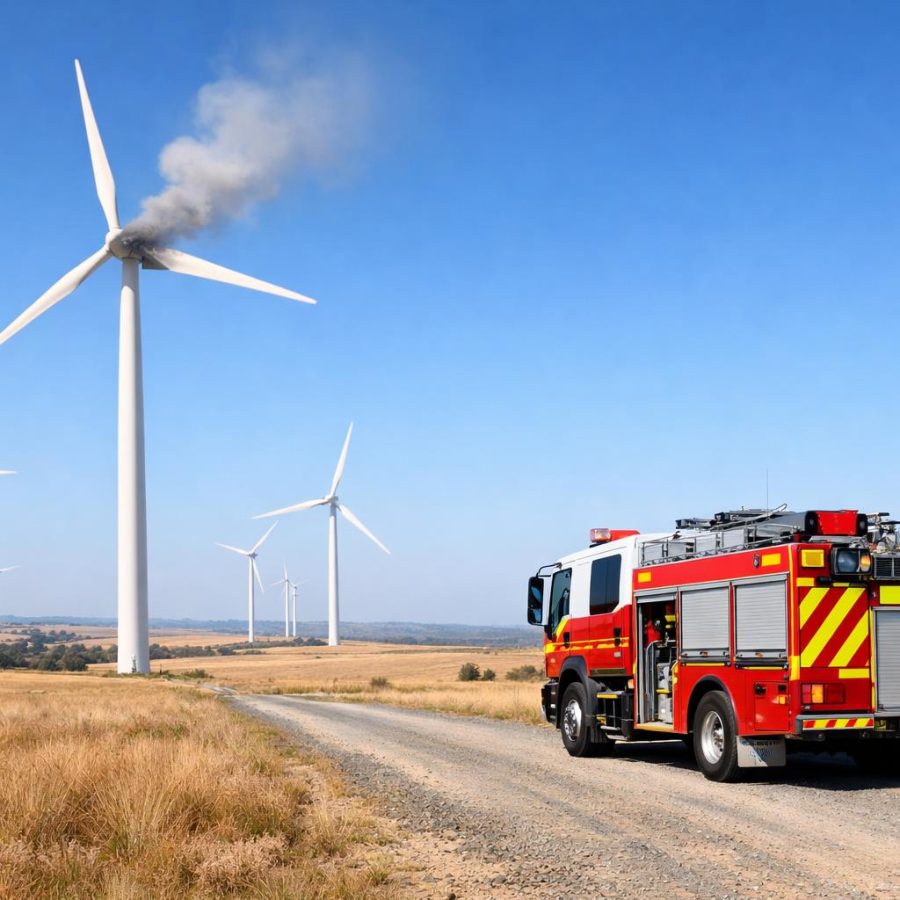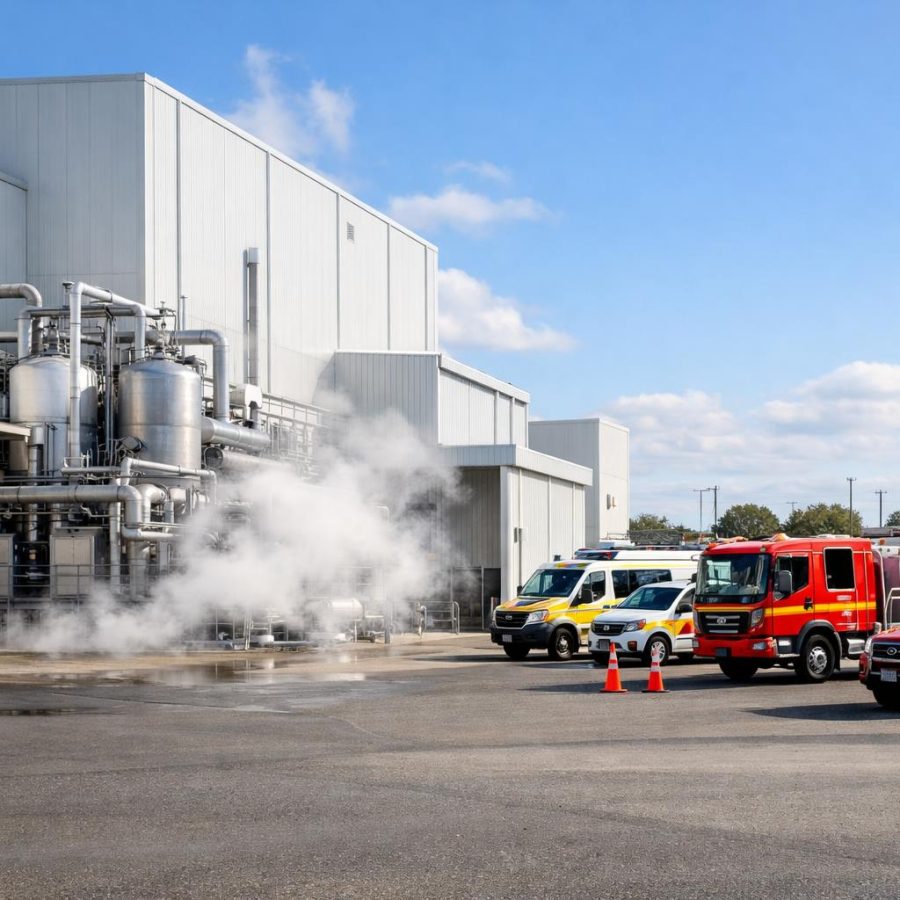
Electrical substation and transformer fires are not ordinary structural fires. They can involve high voltage, arc flash, explosions, energised metalwork, transformer oil, smoke, and hidden hazards that remain dangerous long after flames are knocked down. For firefighters, emergency teams and the public, the first rule is simple: treat all electrical equipment as energised until the electricity authority confirms isolation and the area is safe.
Why substation and transformer fires are different
Electrical substations and transformers can contain terminal stations, zone substations and distribution substations with high and very high voltages close to ground level. Many sites are enclosed by fences, can be remotely operated, and may normally be unattended. That combination creates a difficult scene: a fire may be visible, yet the real danger may be a live electrical system, energised metalwork or a fault that is still developing.
Unlike many other fires, the hazard is not limited to heat and smoke. Damage to switchgear, transformers, capacitors, battery banks and cabling can leave parts of the installation energised even when lighting has failed or equipment appears to be shut down. Fire crews should assume that normal visual cues do not prove safety.
Common causes and fuel sources
Substation and transformer fires may start through equipment failure, insulation breakdown, overloads, external faults, weather effects, vandalism, vehicle impact, vegetation contact, or damage to cables and switchgear. In some incidents the first sign is a bang, flash, smoke plume or a device tripping, followed by fire or smouldering equipment.
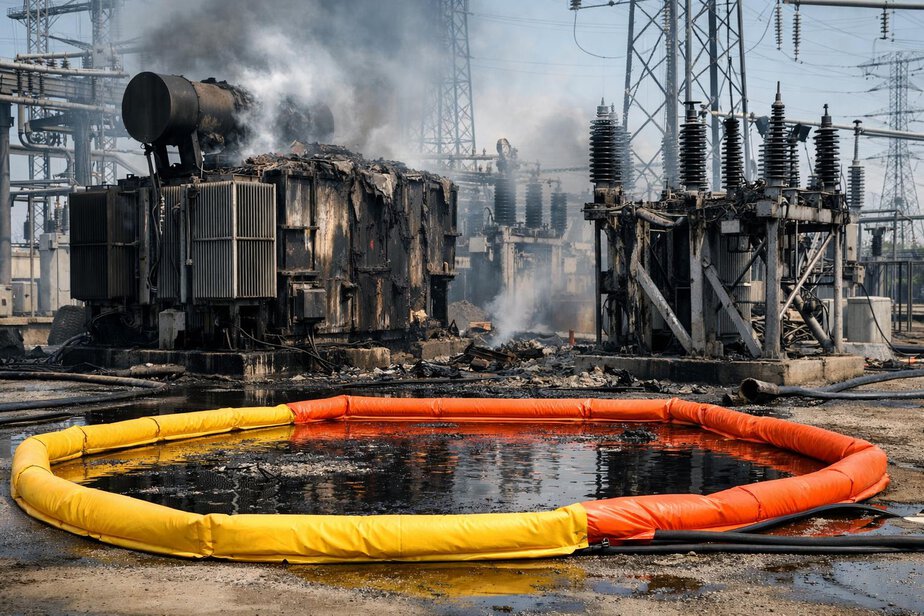
Transformer fires often involve insulating oil. Once heated or ignited, that oil can spread fire beyond the transformer itself. It can also run into soil, drains or waterways, creating contamination issues that require containment and clean-up. Other fuels may be present as well, including plastics, rubber, cable insulation, and nearby vegetation. In some sites, buildings or adjacent assets may add their own fire load.
- Transformer insulating oil
- Electrical insulation materials
- Plastic cable coverings and conduit
- Nearby vegetation or timber structures
- Secondary fuels from adjacent plant or buildings
High-voltage hazards responders must respect
Electrical hazards can cause electric shock, electrocution, severe burns, arc flash, explosion and secondary injuries from blast effects or falling equipment. Arc flash can produce extreme heat, pressure, molten material and blinding light in an instant. Even without direct contact, damaged equipment may still create a lethal environment.
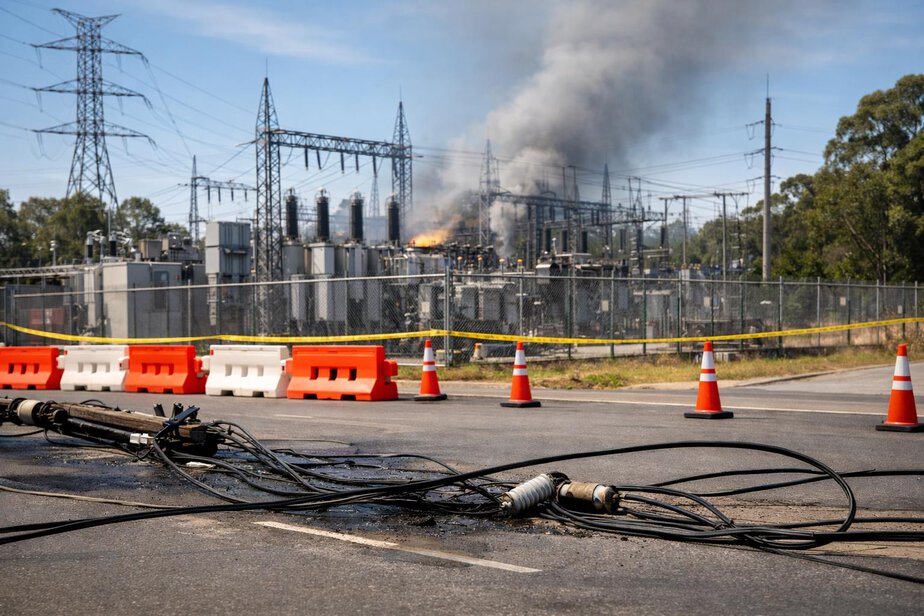
Responders should not touch fences, gates, vehicles, rails, cabinets or other conductive objects that may have become energised. A damaged conductor, a broken insulator, or a fault in buried cabling can energise nearby metalwork and fencing. If a conductor is down or hanging low, there may be additional danger from step potential and touch potential around the fault location.
Step potential and touch potential
Where a high-voltage conductor contacts the ground, the electricity can spread through the surrounding earth in uneven voltage gradients. A person walking into that area may receive a dangerous difference in voltage between their feet. That is step potential. Touch potential occurs when a person touches an energised object while standing in a different voltage area. Both hazards can injure or kill, even without obvious flames.
First actions on arrival
The first response priority is scene size-up, not rapid entry. Set up an exclusion zone, keep the public away, and position appliances and crews at a safe distance. Consider the wind, smoke movement, nearby vegetation, adjacent transformers or equipment, buildings, public areas, access routes and possible runoff into drains or waterways.
Because electricity network sites may be remotely operated, fire crews should immediately contact the relevant electricity distribution or transmission company. This contact should happen as soon as practicable, and certainly before any entry into a fenced substation or any attempt to suppress fire inside the site. The electricity authority must confirm what has been isolated, what remains live, and what actions can safely be taken.
- Establish a perimeter and control public access
- Keep appliances clear of possible collapse, blast or conductive hazards
- Identify overhead and underground electrical assets
- Request immediate attendance by the electricity authority
- Use defensive tactics until isolation is confirmed
Why crews must not enter a fenced substation too early
Energy Safe Victoria guidance states that emergency-services personnel should not enter fenced substations unless accompanied by an electricity company representative. That advice matters because the site may contain live conductors, hidden switching arrangements, stored energy, and equipment that can re-energise unexpectedly.
For a substation fire, firefighting should not begin until an electricity company representative has confirmed it is safe to do so and has advised what actions can safely be taken. Fire crews may still control the wider incident, protect exposures, evacuate the public where required and prepare suppression options, but they should not assume that opening a gate or seeing a breaker open means the danger has gone.
| Issue | Why it matters | Practical response |
|---|---|---|
| Breaker tripped | Does not prove the site is isolated | Wait for electricity authority confirmation |
| No visible power | Hidden or remote feeds may still be live | Treat as energised |
| Fence or vehicle becomes live | Contact voltage may spread | Keep clear and isolate the area |
Smoke, oil, batteries and other concealed hazards
Smoke from electrical fires may contain combustion products from plastics, insulation, cable materials and oil. The exact mix will vary by site and by what has burned. Crews should wear appropriate respiratory and eye protection and avoid unnecessary exposure. If there are battery rooms, compressed-gas cylinders, capacitors or other stored-energy equipment, additional hazards may be present even if the main transformer fire seems under control.
Transformer oil spills can create both fire spread and environmental contamination. Runoff may threaten stormwater systems, nearby soil or waterways. Where possible, crews should anticipate containment needs early and coordinate with site operators and the electricity authority. In some incidents, protecting drains and limiting spread may be as important as cooling hot equipment.
Suppression once electrical hazards are controlled
Water or other firefighting agents must not be applied to energised high-voltage equipment unless specifically permitted under approved procedures and after consultation with the electricity authority. Until electrical hazards are controlled, a defensive firefighting strategy is often the safest approach. That may involve exposure protection, cooling adjacent assets where safe, and preventing fire spread to vegetation, nearby buildings or other electrical plant.
Once the electricity authority has confirmed isolation and the scene is electrically safe, suppression can be reassessed. Crews may then be able to move closer, use appropriate extinguishing methods, and deal with residual hot spots or oil fires. Even then, watch for re-ignition, damaged batteries, hot metal, and stored energy sources that can fail later.
Exposure protection priorities
- Neighbouring transformers and switchgear
- Vegetation and bushfire-prone surroundings
- Nearby buildings and public roads
- Drainage systems and waterways
- Access routes for electricity-authority staff
Public safety, evacuation and incident command
Public exclusion is essential near damaged high-voltage infrastructure. In some incidents, evacuation may be needed if smoke, heat, blast risk, fallen conductors or contamination could affect nearby people or properties. Incident commanders should establish clear communications, control the scene, and liaise early with the electricity authority so that technical isolation, switching and confirmation of safety occur without delay.
Firefighters control the emergency incident, but electrical isolation and confirmation that high-voltage equipment is electrically safe must be undertaken by appropriately authorised electricity personnel. That separation of roles is critical. Fire crews manage life safety, scene control and fire tactics. Electricity specialists manage the electrical system.
Post-fire hazards and safe re-entry
A substation incident is not over when the flames stop. Damaged equipment may remain energised, partially energised or capable of re-energising if conditions change. Conductors can fall later, metal parts can remain hot, and contaminated runoff may still be present. Crews should avoid premature re-entry and should not release the area to others until the electricity authority and incident command are satisfied that it is safe.
Post-fire checks may also need to consider structural stability, residual smoke, hidden hot spots, damaged batteries, oil contamination and access control. Where the public or workers may return nearby, the exclusion zone should remain in place until formal confirmation has been given.
Practical lessons for firefighters and workplace teams
For firefighters, emergency-service personnel and workplace emergency teams, the main lesson is to slow the job down at the start. A calm, defensive approach gives time to establish control, contact the electricity authority and prevent secondary injuries. For the public, the message is equally clear: stay out, keep away from fences and fallen lines, and call Triple Zero (000) immediately if there is any immediate life-threatening emergency in Australia.
- Assume all equipment is energised until confirmed otherwise
- Keep clear of fences, gates, vehicles and conductive objects
- Do not enter a fenced substation without authorised accompaniment
- Coordinate early with the electricity distribution or transmission company
- Use defensive tactics until the site is proven electrically safe
- Watch for oil spread, smoke movement and bushfire exposure
Electrical substation and transformer fires demand patience, discipline and strong liaison. The safest outcome usually comes from controlling the perimeter, respecting the electrical hazards, and waiting for formal isolation confirmation before any close intervention. Before publication or operational use, verify current local procedures, authority contacts and site-specific requirements.
FireRescue Training Hub
Access practical fire and emergency study support resources, downloads, checklists, audio guides, and member-only course content.
- Course library
- PDF downloads
- Audio guides
- Checklists
Study support only. Not accredited training or a replacement for workplace procedures.
About the author and safety review
Ken Walker
Former Station Officer and fire service educator
Former career firefighter with extensive career and volunteer fire service experience.
Qualifications: Associate Diploma of Applied Science in Fire Technology; Institute of Fire Engineers studies.
Author profilehttps://www.firerescue.com.au/about-us/