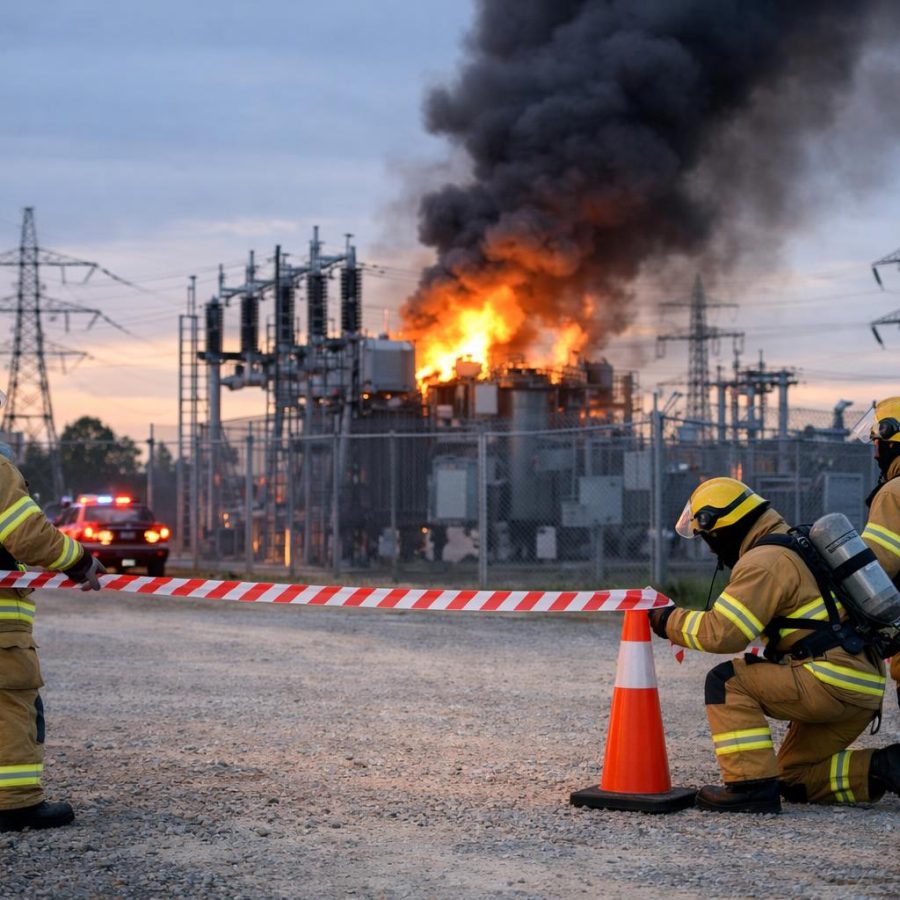
Anhydrous ammonia leaks at cold stores, dairies, beverage plants and food-processing sites can escalate quickly from a plant fault to a hazardous materials emergency. For firefighters and emergency services, the main priorities are simple: protect life, avoid unprotected entry, monitor the atmosphere, and hand over to specialist support when the risk is beyond the initial response.
Why ammonia is used in industrial refrigeration
Anhydrous ammonia is widely used in large industrial refrigeration systems because it performs well in high-capacity cooling and is efficient for major cold-chain operations. It is common in cold-food storage, dairy manufacturing, beverage facilities and similar industrial sites where large refrigeration loads need reliable control.
That efficiency is the reason many facilities use it, but it is also why responders should treat any release seriously. A refrigeration system may contain compressed gas, liquid ammonia, pipework, vessels, valves and machinery spaces, all of which can be involved in a leak or failure.
Health dangers and corrosive effects
Ammonia is dangerous because it is both toxic and corrosive. It can severely irritate or damage the eyes, skin and respiratory system. Significant inhalation exposure can cause serious lung injury, respiratory distress and rapid deterioration in a confined or heavily contaminated area.
Contact with ammonia may burn the skin and eyes. The gas is also highly irritating to the nose, throat and lungs, which can make it hard for exposed people to move, breathe and self-rescue. In a workplace setting, that can create a second emergency when staff attempt to rescue a colleague without protection.
Safe Work Australia classifies ammonia gas as toxic if inhaled, corrosive to the respiratory tract, capable of causing severe skin burns and eye damage, a flammable gas, and very toxic to aquatic life. Those hazards mean responders need to think about people, fire risk and environmental contamination at the same time.
How ammonia behaves when released
Ammonia vapour is normally lighter than air, so it tends to rise and disperse once it warms. However, that simple rule is not enough for incident decisions. When an industrial refrigeration system releases pressurised ammonia, the initial cloud may be extremely cold. In that state it can behave like a dense gas and stay low, move along the ground, or collect in trenches, drains and low-lying areas before warming and lifting.
This is why responders should not assume the cloud will immediately rise away from people or structures. Wind, temperature, release rate, site geometry and surrounding buildings all matter. Atmospheric monitoring is essential before making decisions about entry, evacuation or shelter-in-place.
| Incident issue | Why it matters |
|---|---|
| Cold release | Initial vapour may hug the ground and move unpredictably |
| Open or enclosed spaces | May trap gas, slow dispersion and increase exposure |
| Wind direction | Controls likely plume movement and safe approach |
| Water contact | Can create contaminated run-off and complicate control efforts |
First actions on arrival and scene assessment
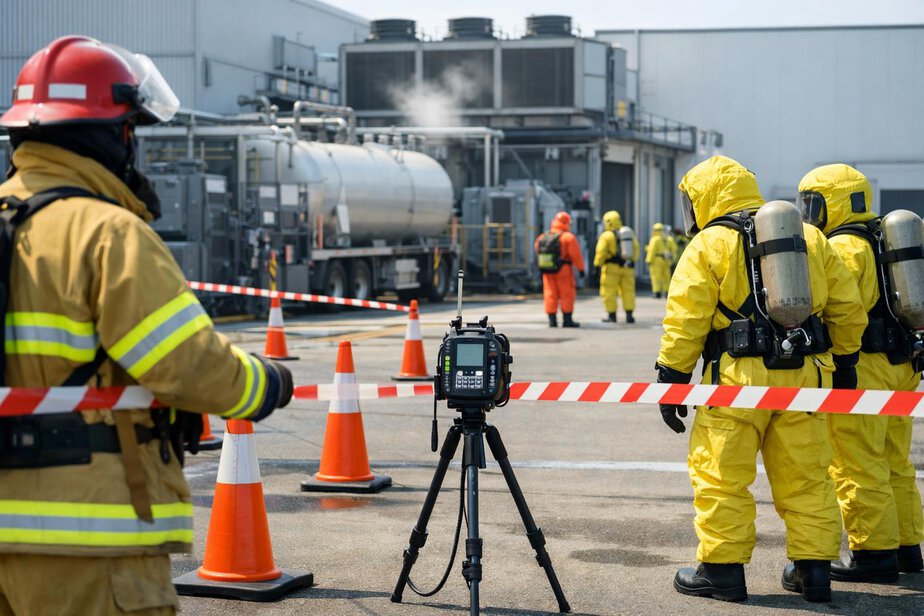
Initial responders should treat the event as a hazardous atmosphere until monitoring proves otherwise. Approach from uphill and upwind where practical, and position vehicles and crews so they are not committed to a contaminated area if the plume shifts. Do not drive into visible vapour or into an area where ammonia may be accumulating.
Establish an exclusion zone early. The size of the zone should reflect the observed release, available information, wind, nearby buildings and the potential for cloud travel. Larger installations, especially near populated areas, may require a wider isolation area and extra caution for off-site impact.
Gather information without rushing into the hazard area. Identify the source of the alarm, the likely location of the leak, whether the release is ongoing, and whether anyone is missing. Determine if the site has already evacuated, whether there are shelter-in-place arrangements, and whether there are ignition risks nearby.
Useful site questions include the quantity of ammonia involved, the plant layout, refrigeration machinery, vessels and pipework, occupied buildings, neighbouring properties and sensitive locations such as schools, hospitals, aged care or childcare facilities.
Monitoring, detection and protective equipment
Atmospheric monitoring is one of the most important tasks at an ammonia incident. Fixed detectors should already be located where leaks could occur, but portable detectors are also vital for determining actual concentrations around the site, at the edge of the exclusion zone and inside any controlled entry path.
WorkSafe Victoria notes that 300 ppm is considered immediately dangerous to life and health and warns against ammonia alarm settings above this concentration. Responders should use this as a reminder that even moderate-looking concentrations can be life-threatening and that alarm interpretation must be conservative.
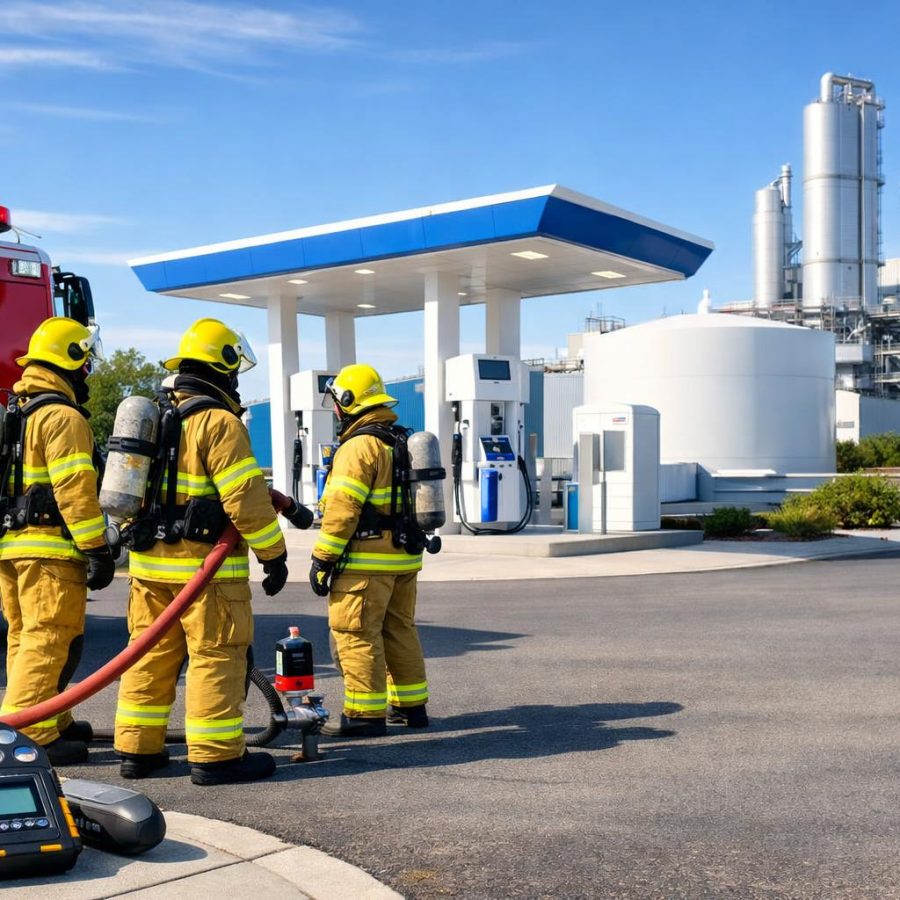
Appropriate respiratory protection and chemical protective equipment depend on the task and the measured conditions. Unprotected entry is not appropriate in a suspected high-concentration atmosphere. Specialist HazMat capability may be needed where readings are elevated, the release is large, the source cannot be isolated safely, or the plume may affect nearby properties.
General PPE for ordinary approach may not be enough for entry into the contaminated area. That is why incident commanders should separate broad scene management from any specialist intervention, and should only commit crews who are trained, equipped and operationally cleared for the hazard.
Evacuation, shelter-in-place and public protection
The choice between evacuation and shelter-in-place depends on plume behaviour, weather, site layout and the ability to protect exposed people quickly. A fast-moving release may require immediate evacuation in the area downwind. In some settings, sheltering indoors may be safer if people can close doors and windows and move away from the affected side of the building.
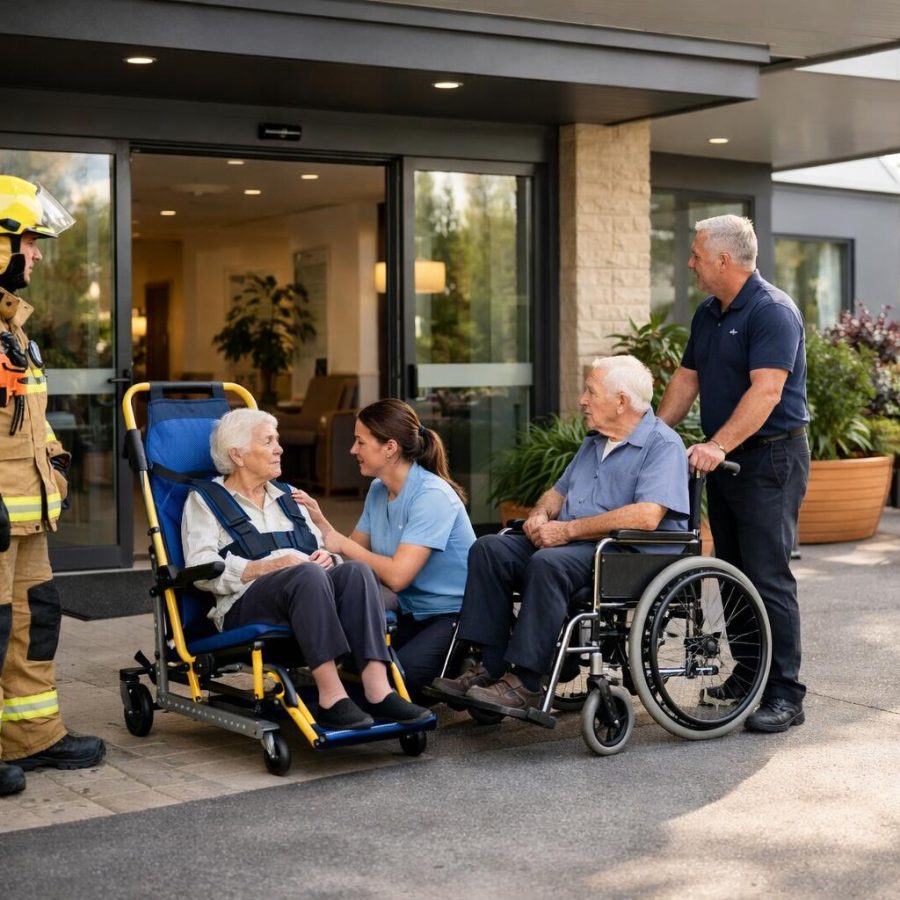
Protect nearby workers, residents and vulnerable facilities early. Alert site personnel first, then consider neighbouring workplaces, housing, schools, aged care and health facilities if the plume could travel. People with breathing difficulties, children and the elderly may be more affected by exposure and may need extra support during any evacuation or sheltering process.
Industrial site emergency plans should already address leak investigation, PPE, containment, evacuation, atmospheric monitoring and notification of emergency services. Where those plans exist, responders should use them as a starting point rather than improvising a site-specific strategy under pressure.
Working with the site team and isolating hazards
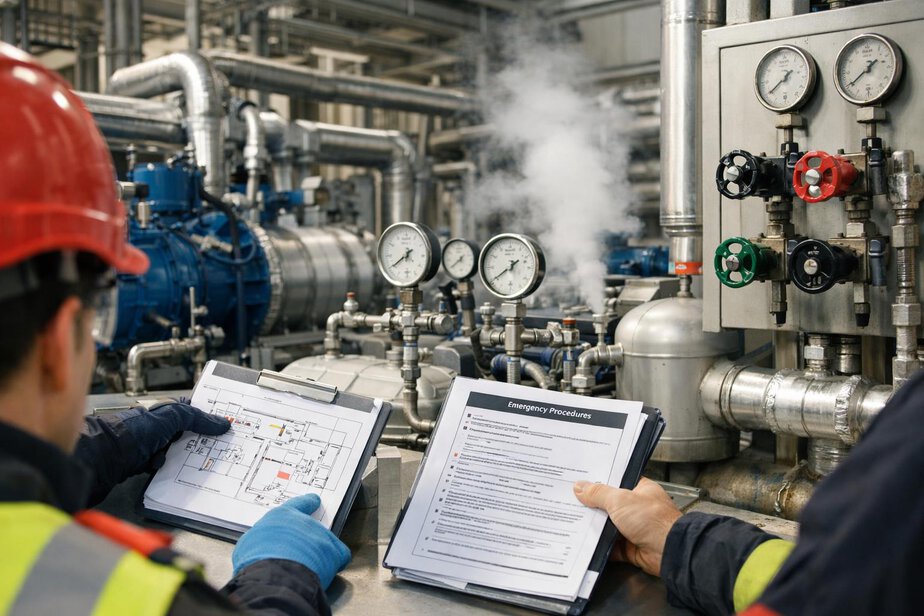
Firefighters and emergency services should work closely with refrigeration technicians and facility management, but only after they have established a safe operating boundary. The site team may know the plant layout, valve lines, shut-off points, emergency isolation procedures and the location of dangerous-goods documentation. That knowledge is useful, but it does not remove the need for responder control.
Obtain the dangerous-goods manifest and the site emergency plan as early as possible. Those documents can help identify the chemicals present, the quantity of ammonia, and any related hazards such as other refrigerants, fuels, electrical systems or confined machinery spaces. They also support better handover and later investigation.
Isolation of ignition sources should be considered where appropriate, especially because ammonia is a flammable gas. However, that action should be controlled and risk assessed. Do not create additional hazards by shutting down systems or entering plant areas without the correct protection and operational plan.
Containment and control should focus on reducing harm, not on forcing a quick fix. A leak may be controlled by trained plant personnel or specialist responders if conditions allow, but attempts to stop or isolate a release should never put unprotected crews into the vapour cloud or into an unknown confined space.
Environmental impacts, decontamination and medical care
Ammonia is very toxic to aquatic life, so run-off and contaminated water need attention. Water used for knockdown, decontamination or site protection may spread contamination if it is not managed. Where possible, plan for controlled run-off, drainage protection and environmental reporting through the incident structure.
Anyone exposed to ammonia should be assessed promptly by trained medical personnel. This includes people with eye irritation, breathing difficulty, skin burns or delayed respiratory symptoms. Early signs may seem mild and then worsen, so exposed people should not simply be returned to work or sent home without proper assessment.
Decontamination should be proportionate and safe. Remove affected people from the contaminated area, control further exposure, and decontaminate only as directed by trained personnel and local procedures. Keep contaminated clothing and equipment isolated until they can be handled safely.
Command, communications and handover
Ammonia incidents need clear incident command. Establish a structure that separates scene safety, monitoring, exclusion zones, public information and specialist tasking. Use plain, direct communications and keep all agencies updated on wind changes, detector readings, plume movement and any change in plant status.
When specialist HazMat crews, environmental officers, ambulance officers, work health and safety representatives or technical refrigeration personnel arrive, ensure they receive a structured handover. Include what has been confirmed, what remains uncertain, who is missing or exposed, what monitoring has been done, and which areas are still unsafe.
Do not let the scene drift into partial control. Record the decisions made, the boundaries set, the readings taken and the personnel committed. That information supports both immediate safety and later review.
In an ammonia release, the safest first decision is often not to enter. Protect the perimeter, confirm the atmosphere, and only commit crews when the risk is understood and the right controls are in place.
Conclusion
Ammonia refrigeration leaks demand disciplined hazardous-materials thinking from the first alarm through to final handover. The key points are consistent: approach from a safe direction, assume the atmosphere is dangerous until monitored, keep unprotected personnel out, and use site information, specialist support and clear incident command to protect people and property.
For firefighters, emergency-services personnel and workplace emergency teams, the message is straightforward. Treat anhydrous ammonia as a toxic, corrosive and potentially flammable hazard that can behave unpredictably when released. Manage the scene conservatively, coordinate early with the site, and verify all facts and local procedures before publication or operational use.
FireRescue Training Hub
Access practical fire and emergency study support resources, downloads, checklists, audio guides, and member-only course content.
- Course library
- PDF downloads
- Audio guides
- Checklists
Study support only. Not accredited training or a replacement for workplace procedures.
About the author and safety review
Ken Walker
Former Station Officer and fire service educator
Former career firefighter with extensive career and volunteer fire service experience.
Qualifications: Associate Diploma of Applied Science in Fire Technology; Institute of Fire Engineers studies.
Author profilehttps://www.firerescue.com.au/about-us/