NEWS & UPDATES
Effective multi-agency command during extreme events is critical to saving lives and minimising damage. It requires clear leadership, communication and a unified approach among emergency services.
Key to success is understanding each agency’s role, establishing collaborative planning frameworks, and adapting command structures to rapidly evolving situations.
This article explores practical considerations and advanced research insights shaping multi-agency command under Australia’s most challenging emergencies.
Background and Context
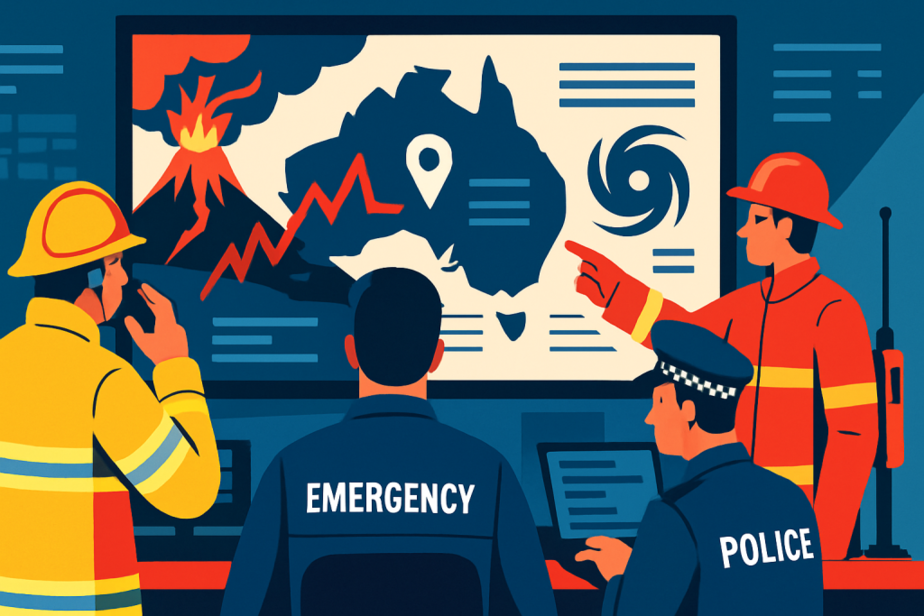
Australia’s diverse climate and geography mean that emergencies can range from bushfires and floods to severe storms and industrial accidents. Each scenario demands a tailored response, but all share the need for coordinated command structures to ensure resources are deployed effectively and public safety optimised.
Multi-agency command involves Fire and Rescue services, Police, Ambulance, and the State Emergency Service (SES), among others. Understanding how these agencies integrate under extreme conditions is vital, particularly as incidents grow in scale and complexity due to climate change and urban expansion.
The increasing frequency and intensity of natural disasters driven by climate variability necessitate enhanced collaboration between agencies. Urban sprawl into previously undeveloped or hazard-prone areas further complicates response efforts, requiring more sophisticated multi-agency coordination to protect vulnerable populations and infrastructure.
In addition, the evolving nature of emergencies demands flexibility in command structures. Traditional hierarchical models are being supplemented with more dynamic and adaptive approaches that allow for rapid delegation and empowerment of field commanders. This flexibility is crucial when dealing with simultaneous or cascading events, such as a bushfire triggering power outages or hazardous material incidents.
The integration of community-based organisations and volunteer groups into the emergency management framework also plays an increasingly important role. These entities can provide valuable local knowledge and additional resources, but require clear protocols and communication pathways to align with professional agencies effectively.
Multi-Agency Command Frameworks
Unified Incident Management
At the heart of effective multi-agency command is the adoption of unified incident management systems. These frameworks enable a single Incident Controller to lead operations, planning, logistics and intelligence functions across agencies. The goal is to avoid duplication and confusion, ensuring all responders operate with shared situational awareness and objectives.
In Australia, Incident Control Centres (ICCs) form the physical or virtual hubs where representatives from Fire/Rescue, Police, Ambulance, and SES collaborate closely. This setup facilitates rapid decision-making and resource allocation, particularly during fast-moving or large-scale events.
These centres are supported by established protocols that define roles, responsibilities and communication flows, which are regularly updated based on lessons learned from previous incidents. The integration of command teams promotes a culture of shared accountability and trust, which is essential when managing complex emergencies.
Moreover, the use of standardized command frameworks such as the Australasian Inter-Service Incident Management System (AIIMS) provides a common language and structure that enhances interoperability. AIIMS supports scalability and flexibility, enabling command teams to expand or contract according to incident size and complexity.
Training in these frameworks is conducted jointly across agencies to ensure familiarity and cohesion. This collaborative preparation reduces friction during live incidents and supports seamless transitions when command responsibilities shift.
Communication and Information Sharing
One of the most challenging aspects of multi-agency command is maintaining clear and consistent communication channels. Each agency operates with its own radio frequencies and communication protocols, so interoperability is essential.
Advances in technology, including integrated digital radio networks and shared data platforms, have improved the flow of information. This ensures that commanders receive timely updates on fire behaviour, police cordons, medical triage status, and community warnings, enabling coordinated responses.
Real-time data sharing platforms now allow agencies to access satellite imagery, weather forecasts, and sensor data simultaneously, which enhances predictive capabilities and strategic planning. However, challenges remain in ensuring all responders have equal access to these technologies, particularly in remote or infrastructure-compromised areas.
Additionally, the development of mobile command units equipped with advanced communication suites enables field commanders to maintain connectivity even in austere environments. These units facilitate live video feeds, mapping overlays, and direct communication links with central ICCs.
Cybersecurity also emerges as a critical concern, as reliance on digital platforms increases. Agencies must safeguard sensitive operational data from cyber threats to maintain command integrity and public trust during emergencies.
Operational Roles of Agencies During Extreme Events
Fire and Rescue
Fire and Rescue services take the lead in managing fires, hazardous material incidents, and rescue operations. Their expertise in fire suppression, search and rescue, and technical rescue is critical during bushfires, structural fires, and chemical spills.
They also coordinate with other agencies to ensure evacuation routes are clear and affected communities are supported with timely warnings and assistance.
Beyond immediate fire suppression, Fire and Rescue units often conduct post-incident assessments to identify ongoing risks such as hotspots or structural instabilities. Their role extends to community education initiatives aimed at reducing fire risk and improving preparedness ahead of future emergencies.
In recent years, Fire and Rescue agencies have increasingly integrated unmanned aerial vehicles (UAVs) or drones into their operations. These technologies provide aerial reconnaissance, thermal imaging for hotspot detection, and real-time situational awareness, enhancing operational safety and effectiveness.
Police
Police are responsible for public safety and security during emergencies. Their roles include traffic and crowd control, enforcing evacuation orders, protecting property, and supporting search operations.
During multi-agency command, police liaison officers integrate with incident management teams to provide intelligence and maintain law and order in affected areas.
Police also play a crucial role in managing critical infrastructure security and preventing opportunistic crime during chaotic situations. Their intelligence gathering supports situational awareness, enabling proactive measures to mitigate secondary threats such as looting or civil unrest.
Furthermore, police forces often coordinate with federal agencies and utilise specialised units such as search and rescue teams and bomb disposal squads when emergencies escalate or involve complex threats.
Ambulance Services
Ambulance services lead medical response efforts, providing emergency care, triage, and patient transport. Their coordination with other agencies ensures that casualties receive prompt treatment and that medical resources are deployed effectively.
In mass casualty incidents, ambulance commanders work within the multi-agency command structure to prioritise care and manage hospital communication.
They also engage in pre-hospital planning, including setting up casualty collection points and managing evacuation of vulnerable populations such as the elderly or disabled. Continuous training in disaster medicine and psychological first aid equips ambulance personnel to handle the emotional and physical stresses of extreme events.
Additionally, ambulance services are increasingly adopting telemedicine technologies, enabling paramedics to consult specialists remotely and make informed decisions on treatment and hospital destination, improving patient outcomes during complex emergencies.
State Emergency Service (SES)
The SES specialises in flood rescue, storm damage response, and community assistance. Their volunteers often provide the vital link between emergency services and local communities by assisting with evacuations, sandbagging, debris clearance and welfare checks.
Within the command structure, SES representatives ensure community needs and vulnerabilities are factored into operational planning.
The SES’s strong community presence allows them to identify and address social factors that influence emergency response, such as language barriers, disability access, and cultural considerations. Their role in resilience building through education and preparedness programs is increasingly recognised as critical to reducing disaster impacts.
Moreover, the SES is actively involved in post-disaster recovery efforts, helping communities restore essential services and infrastructure. Their ongoing support enhances long-term resilience and community cohesion after extreme events.
Practical Implications for Community and Responders
For the community, knowing who to call in an emergency is the first step. Dialling triple zero (000) connects callers to a central operator who can dispatch Fire/Rescue, Police, Ambulance or SES depending on the incident. Clear communication of location, nature of the emergency, and any immediate dangers helps responders prepare and coordinate their response efficiently.
For responders, regular joint training exercises and scenario planning are essential to build trust and operational familiarity. These activities help identify potential gaps and streamline interagency cooperation before real events occur.
Emergency managers must also prioritise the integration of advanced fire research and technology, such as predictive fire behaviour modelling and real-time data sharing, to enhance situational awareness and decision-making under pressure.
Community education campaigns that inform residents about emergency plans, evacuation routes, and preparedness measures empower individuals to act decisively during crises. Public engagement initiatives, including workshops and social media outreach, foster a culture of resilience and shared responsibility.
Furthermore, mental health and wellbeing support for responders and affected communities is gaining recognition as a critical component of disaster management. Multi-agency frameworks increasingly incorporate psychological support services to address trauma and stress related to extreme events.
In addition to traditional response roles, there is growing emphasis on preparedness and prevention strategies. Agencies collaborate on risk assessments and community vulnerability mapping to guide resource allocation and infrastructure hardening. This proactive approach helps reduce the scale and impact of emergencies before they occur.
The use of social media and mobile alert systems has also become integral to public communication. These platforms enable rapid dissemination of warnings, updates and instructions, reaching diverse audiences and enhancing community engagement.
Finally, fostering diversity and inclusion within emergency services supports culturally sensitive responses and improves trust among multicultural communities. Tailoring communication and support services to meet diverse needs strengthens overall emergency management effectiveness.
Conclusion
Multi-agency command under extreme events is a complex but indispensable approach to safeguarding lives and property. By fostering collaboration, communication and continuous improvement, Australian emergency services can meet the challenges posed by increasingly severe natural and man-made disasters.
The community also plays a vital role by understanding emergency roles, following official guidance, and calling triple zero (000) promptly when incidents occur. Together, these efforts contribute to resilience and readiness in the face of extreme events.
As climate change and societal developments continue to influence the nature of emergencies, ongoing investment in training, technology, and interagency cooperation will be essential. The evolution of multi-agency command frameworks reflects a proactive commitment to protecting Australian communities and enhancing national disaster response capabilities.
Looking forward, the incorporation of emerging technologies such as artificial intelligence, machine learning, and enhanced simulation modelling promises to further revolutionise multi-agency command. These tools can provide deeper insights into incident dynamics, optimise resource deployment and support decision-making under uncertainty.
Ultimately, the success of multi-agency command relies on the dedication and professionalism of emergency personnel, the strength of interagency relationships, and the active participation of the community. Together, these elements form the foundation of Australia’s resilience against the growing challenges of extreme events.
FireRescue Training Hub
Access practical fire and emergency study support resources, downloads, checklists, audio guides, and member-only course content.
- Course library
- PDF downloads
- Audio guides
- Checklists
Study support only. Not accredited training or a replacement for workplace procedures.
About the author and safety review
Ken Walker
Former Station Officer and fire service educator
Former career firefighter with extensive career and volunteer fire service experience.
Qualifications: Associate Diploma of Applied Science in Fire Technology; Institute of Fire Engineers studies.
Author profilehttps://www.firerescue.com.au/about-us/