Part 2 of 4
Site the Aerial Appliance: Hazard Identification, Safe Positioning, PPE and Personnel Deployment
Site the aerial appliance correctly and the operation begins with a stronger safety margin. Site it poorly and every later action becomes harder, even when the crew, equipment and intent are good.
Part 2 of this four-part refresher focuses on the first major course element: siting the aerial appliance. It explains how onsite hazards influence safe working operations, how appliance position must support operational requirements, why PPE selection matters, and how personnel working with the appliance must be deployed under organisational procedures and WHS/OHS guidelines.
What this part refreshes
- Onsite physical hazards that affect appliance operations
- Safe positioning that supports the incident objective
- Preventing injury, equipment damage and facility damage
- PPE selection and personnel deployment expectations
A + E: Assess, then establish
The first two actions in the series framework guide this lesson. Assess hazards, site conditions and operational needs. Then establish a safe appliance position and deploy personnel properly.
Mark sections as refreshed
Use the buttons at the end of each section to track your progress through Part 2. This supports study and revision, but it does not replace organisational procedures, operational manuals or approved training.
Site the aerial appliance with hazards in full view
The official course starts the siting element with a clear requirement: identify onsite physical hazards that affect safe working operations of the appliance and ancillary equipment, then site the appliance to minimise their impact.
Siting is a risk decision
Siting is not simply choosing the nearest available space. It is a structured decision that connects the incident need with the physical environment. The operator and supporting personnel must think about what the appliance will need to achieve, where it may need to work, what may threaten that work, and how the selected position can reduce hazard impact while still supporting operations.
The course names hazards and obstacles as performance evidence. It also identifies overhead, structural and surface hazards as specific concerns. Therefore, a good siting habit begins with looking up, looking around and looking down. Overhead hazards may affect movement above the appliance. Structural hazards may affect the safety of the working zone. Surface or ground hazards may influence whether the site remains suitable for appliance operations.
In addition, ancillary equipment must be considered during the siting process. Communications, firefighting equipment, lighting, rescue equipment and breathing apparatus may need space, access and coordination. If the site works only for the appliance but ignores supporting equipment, the position may still be weak.
A — Assess hazards, site conditions and operational needs. Part 2 starts here because a sound appliance position depends on an honest reading of the scene.
Read the site: overhead, structure, surface and atmosphere
The course does not treat hazards as a general warning. It identifies hazard categories that should shape appliance siting and later operation.
Overhead hazards
Overhead electrical wires are named in the knowledge evidence. The working area includes the airspace around the appliance, so overhead risk must be recognised before placement and operation.
Structural hazards
Structural collapse is specifically identified. A building, wall, façade or damaged area may affect how close the appliance can safely sit and how the operational objective is approached.
Surface or ground hazards
Surface or ground collapse is also named. Safe positioning requires attention to the ground conditions that may affect appliance siting, stabilisation and the wider working zone.
Weather and atmosphere
Wind direction and strength appear in the knowledge evidence. Atmospheric conditions can influence siting decisions and must be considered before the appliance is committed to a position.
Use hazard categories to slow down rushed decisions
Operational pressure can tempt crews to favour the fastest or most obvious location. However, the course places hazards first for a reason. The aim is not to create delay for its own sake. Instead, it is to avoid making an early siting choice that exposes people, the appliance or other equipment to preventable risk.
A practical mental scan can help. First, identify the purpose of the appliance at that incident. Next, identify the hazards that could affect safe working operations. Then compare possible locations against both sets of information. As a result, the final appliance position becomes easier to explain, communicate and defend within the incident structure.
Position the appliance to support operational requirements
The performance criteria require the aerial appliance to be positioned in a location that supports operational requirements and helps prevent injury to personnel or damage to equipment and facilities.
A safe position must still be useful
A position that avoids hazards but does not support the incident task is not enough. The course links safe siting with operational requirements. Therefore, appliance position should be tested against both safety and purpose. Can the appliance support the planned rescue or firefighting objective? Does the location minimise identified hazard impact? Does it help protect personnel, equipment and facilities from unnecessary damage?
This balance is one of the most important ideas in Part 2. It discourages two extremes. The first is taking the most aggressive position without enough hazard assessment. The second is choosing a highly cautious position that cannot support the operational need. The stronger approach is controlled judgement, guided by procedures, command communication and the actual environment.
The course also refers to organisational procedures. That means siting decisions are not personal preference. They must fit the organisation’s approved way of working, including siting and stabilisation procedures, emergency procedures, risk mitigation expectations and any appliance-specific requirements.
- Confirm the operational requirement.
- Identify physical site hazards and obstacles.
- Compare possible appliance positions.
- Choose the position that supports the task while minimising hazard impact.
- Communicate and proceed under organisational procedures.
Thinking “closest” automatically means “best”
The course does not instruct personnel to choose the nearest space. It requires a location that supports operations while preventing injury and damage.
Choose the position that serves both task and safety
Operational usefulness and hazard reduction must be considered together. Good siting is a reasoned decision, not a reflex.
PPE selection belongs in the siting phase
The siting element includes selecting and wearing personal protective clothing and equipment according to organisational procedures and WHS/OHS requirements.
PPE is part of readiness, not an afterthought
The course places PPE inside the siting element because people may enter the working area, communicate, assist with deployment or prepare ancillary equipment before the aerial appliance begins active operation. Personal protective clothing and equipment must therefore suit the organisational requirement and the expected operational context from the outset.
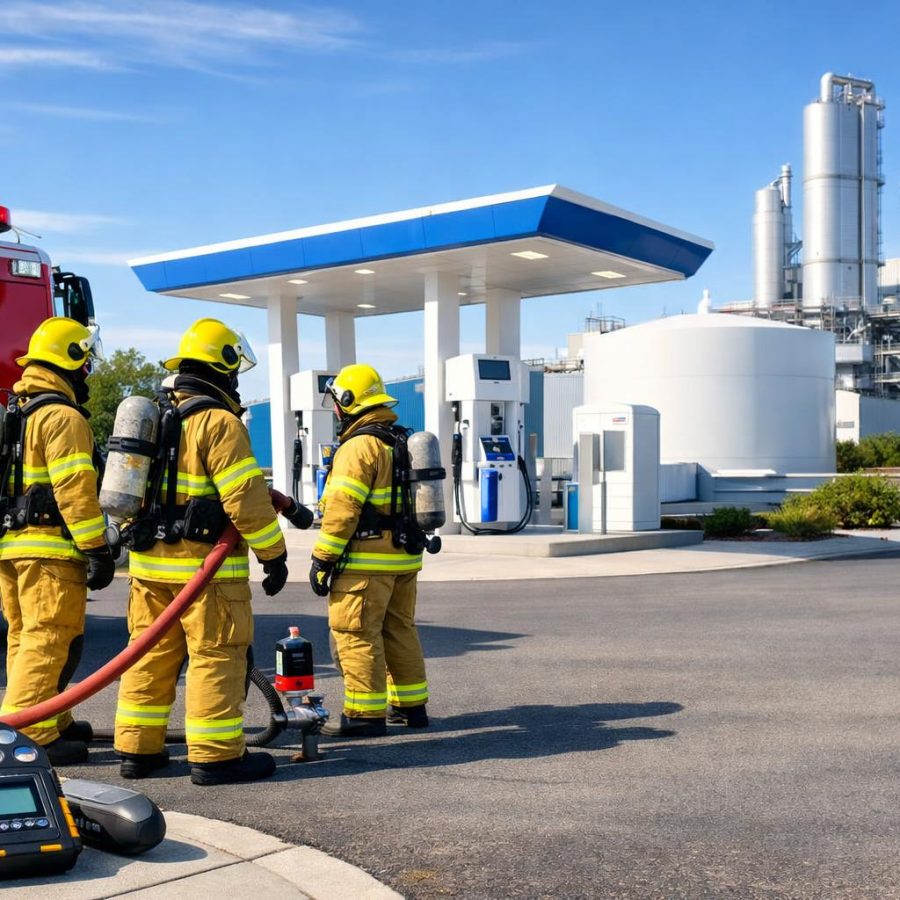
The knowledge evidence lists breathing apparatus, including self-contained or airline arrangements, eye and ear protection, helmet and gloves, safety harness and structural firefighter turnout clothing. These items should be understood as course-relevant PPE categories, with the exact selection guided by the organisation’s procedures and the situation at hand.
In practical terms, this means crews should avoid treating PPE as a box-ticking step. PPE selection affects readiness, safe deployment and the ability to work around an aerial appliance without adding avoidable risk. It also helps keep the learning focus aligned with WHS/OHS organisational requirements, which the performance evidence specifically includes.
Course-linked PPE categories
- Breathing apparatus where required
- Eye and ear protection
- Helmet and gloves
- Safety harness
- Structural firefighter turnout clothing
The article can remind learners of the PPE categories, but the final choice must follow organisational procedures, WHS/OHS expectations and the real operational need.
Deploy personnel working with the aerial appliance safely
The official siting element requires personnel working with the aerial appliance to be deployed according to organisational operating procedures and WHS/OHS guidelines.
Clarify roles
Personnel need to understand their place in the aerial appliance activity. Clear roles support smoother communication, safer movement and better alignment with the chain of command.
Control the working area
Deployment should account for the appliance, ancillary equipment and identified hazards. This keeps people from drifting into unsafe or poorly coordinated positions.
Use procedures
The course anchors deployment to organisational operating procedures and WHS/OHS guidelines. Therefore, personnel placement should be intentional and compliant.
Support communication
Communication methods are part of the knowledge evidence. Deployment should help appropriate personnel exchange relevant information without confusion or delay.
Deployment connects people to the appliance, not just the scene
Personnel working with an aerial appliance may be supporting the position, operating ancillary equipment, maintaining communication, preparing rescue or firefighting support, or acting within other approved roles. The course does not provide a universal crew layout for every organisation. Instead, it requires deployment according to organisational procedures and WHS/OHS guidelines.
This is a helpful boundary. It keeps the refresher honest and field-relevant. Aerial operations require structure, but the exact assignment of tasks must match the local appliance, operating model and incident command arrangements. The general principle remains firm: people should be placed where they support safe appliance operations, not where they add disorder.
A practical siting workflow using AERIAL READY
Part 2 brings the early AERIAL READY actions together into one repeatable study workflow: assess, establish and deploy with control.
Assess
Confirm the operational need, then identify onsite physical hazards, obstacles and scene conditions that may affect safe working operations.
Establish
Select a location that supports the incident objective while reducing hazard impact and helping prevent injury or damage.
Prepare people
Select and wear personal protective clothing and equipment in line with organisational procedures and WHS/OHS requirements.
Deploy
Place personnel working with the aerial appliance according to organisational operating procedures and WHS/OHS guidelines.
Why this workflow matters
A good siting workflow reduces the chance of missing a basic but important step. It also creates a shared language for refresher training, crew discussion and scenario-based learning. For example, a supervisor can ask, “What is the operational need?” followed by, “What site hazards change the position?” and then, “How are we preparing and deploying personnel?” Those questions remain close to the course requirements while still sounding natural in training.
Part 3 will extend this logic into active aerial appliance operation. Once the appliance is safely sited and personnel are correctly prepared, the focus moves to safe working limits, monitoring changing conditions, communication, appliance performance and actions to rectify deficiencies where possible.
60-second siting refresher drill
Use these prompts before moving into the scenario and quiz. They are designed for quick individual review or short crew discussion.
- Name the two linked siting priorities: minimise hazard impact and support operational requirements.
- List four site condition themes that influence siting: overhead, structural, surface or ground, and atmospheric conditions.
- Explain why the closest location is not automatically the best appliance position.
- Name three PPE categories listed in the knowledge evidence.
- State who governs personnel deployment: organisational operating procedures and WHS/OHS guidelines.
- Connect Part 2 to AERIAL READY: assess first, then establish a safe position and deploy personnel properly.
Interactive positioning scenario
Choose the best siting response for a practical aerial appliance placement problem.
An aerial appliance is requested to support a high-level operational objective at an incident. One position gives direct access, but it places the appliance near overhead electrical wires and beside an area of questionable ground. A second position is slightly less direct, but it reduces the identified hazard impact while still supporting the operational requirement. What is the best siting choice?
Knowledge check: Part 2
Select the answer that best matches the official siting element and its supporting evidence themes.
1. What must be identified before the appliance is sited?
2. Which siting statement best matches the course?
3. What guides PPE selection and use in the siting element?
4. How should personnel working with the appliance be deployed?
Good aerial appliance siting protects the task before the task begins
Part 2 focused on the course element “site aerial appliance”. It connected hazard identification, operational positioning, PPE selection and personnel deployment into one practical readiness process. The lesson also reinforced the early AERIAL READY actions: assess the scene, establish a suitable position and prepare people properly.
FireRescue Training Hub
Access practical fire and emergency study support resources, downloads, checklists, audio guides, and member-only course content.
- Course library
- PDF downloads
- Audio guides
- Checklists
Study support only. Not accredited training or a replacement for workplace procedures.
About the author and safety review
Ken Walker
Former Station Officer and fire service educator
Former career firefighter with extensive career and volunteer fire service experience.
Qualifications: Associate Diploma of Applied Science in Fire Technology; Institute of Fire Engineers studies.
Author profilehttps://www.firerescue.com.au/about-us/