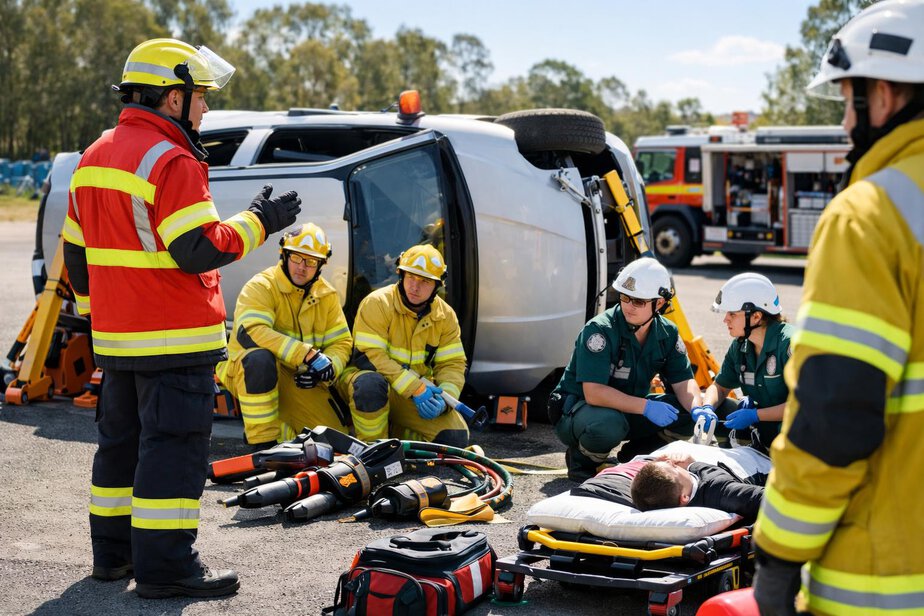
Road crash rescue competitions can look like a race against the clock, but the best teams know they are not really racing at all. The 2026 Victorian road crash rescue challenge in Geelong, where VICSES teams from South Barwon, Frankston and Knox tested their skills in realistic mock rescues, showed how much value sits behind the stopwatch. These events are about safe systems, teamwork, knowledge sharing and better casualty care, not just speed.
Why competitions matter in real rescue work
Road crash rescue is one of those emergency tasks where the public often sees only the dramatic part: damaged metal, hydraulic tools, and responders moving quickly around a vehicle. Competitions make that visible work easier to study, but their real value is deeper. They let trained crews practise under pressure in a controlled setting, then compare how well they manage the scene, protect the casualty and work as one team.
In Victoria, VICSES reported that 104 accredited units provide road crash rescue response across the state, and that the challenge in Geelong was part of preparation for broader rescue capability. The South Barwon, Frankston and Knox teams each worked through realistic mock scenarios, with assessors watching not only what they did, but how they did it. That distinction matters. A rescue can be fast and still be poor if it is unsafe, disorganised or hard on the casualty.
That is why these events are best understood as professional development. They allow responders to practise techniques, compare approaches, identify gaps and strengthen relationships with partner agencies. The Australasian Rescue Organisation describes its road crash rescue challenge as a chance to share rescue knowledge, learn about industry developments, participate in professional development and improve rescue and trauma-care capability. That final point is important: trauma care is not separate from rescue. It is part of the rescue.
In simple terms, the lesson is this: a good road crash rescue is measured by safe decision-making, clear command, controlled access to the casualty and a clean handover, not by how quickly a door or roof is removed.
Scene arrival and the first size-up
The first moments at a crash scene set the tone for everything that follows. In both training and real incidents, crews need a quick but disciplined size-up. That means looking before acting, identifying immediate threats and deciding what must happen first.
ANZCOR Guideline 2 reminds rescuers to quickly assess the situation, ensure safety and send for help. That principle applies whether the crew is on a controlled challenge pad or at a live crash on a busy road. The first question is not “How do we cut?” It is “What are we dealing with, and what is the safest way to begin?”
On arrival, teams should consider:
- where the vehicle has stopped
- whether it is stable or still moving
- who is already on scene
- whether there are fire, fuel, smoke or electrical hazards
- how traffic is behaving around the scene
- how many casualties may be involved
- whether the casualty can be seen, heard or spoken to
- what rescue resources are already available and what still needs to be requested
In a competition, those details are usually prepared in advance and controlled by the exercise design. In a real crash, they may change minute by minute. A scene can start as a single-car entrapment and quickly become something more complex if a second vehicle arrives, traffic continues to flow nearby, or a hazard begins to develop.
That is why size-up is not a box-ticking exercise. It is the basis for every later decision. Crews that rush the first minute can create problems that are hard to fix later. Crews that take a moment to read the scene often work more safely and with fewer surprises.
Dynamic risk assessment in changing conditions
One of the most useful lessons from rescue competitions is how often the best teams keep reassessing the scene. Risk is not fixed. It changes as tools are used, vehicles move, fuel leaks spread, weather shifts or the casualty’s condition changes. Dynamic risk assessment is the habit of checking, updating and adjusting as the rescue unfolds.
In a controlled scenario, assessors can watch whether crews notice new hazards and respond early. In a real crash, that same habit can stop a small problem becoming a major one. A responder may start with a clear plan, then need to slow down because of a fuel smell, a powerline risk, a sudden vehicle movement or a change in the casualty’s breathing.
Common hazards that should be reviewed throughout the job include:
- traffic moving near the work area
- fire and heat sources
- fuel and other leaking fluids
- live or damaged electrical systems
- airbags and pre-tensioners that may not yet have deployed
- unstable ground, embankments or roadside drop-offs
- weather conditions such as rain, strong wind, heat or darkness
- noise, dust, glass and loose debris
Real incidents also bring human hazards that are easy to overlook in training. Distressed relatives may move into the work zone. Bystanders may try to help. Drivers may fail to slow down. A crew may be under pressure from a long wait for backup or specialist resources. Good teams keep scanning for these issues and make small changes before the scene becomes unsafe.
Assessors in competitions can highlight habits that are hard to spot during routine training. For example, a team may stabilise the vehicle well but keep their bodies in a poor position near the load path. Or they may use the right tool but place it where it interferes with casualty care. These are the kinds of subtle risks that a practical assessment can expose.
Command, roles and communication
Good road crash rescue depends on clear roles. Without them, even a skilled team can become crowded, noisy and slow. Competitions are useful because they reveal whether the crew truly has one shared plan or only a collection of individual actions.
At a real incident, there must be a clear command structure and clear responsibilities. Each service keeps its own role, but everyone works toward the same objective. Rescue, ambulance, police and fire services all bring different skills. Their work is strongest when those skills are coordinated rather than duplicated.
Typical role clarity may include:
- who is leading the rescue operation
- who is managing the casualty
- who is operating tools
- who is monitoring vehicle stability
- who is controlling the work zone and traffic risks
- who is communicating with partner agencies
- who is recording key changes and decisions
Communication should be brief, clear and confirmed. Long explanations and overlapping instructions can slow down a rescue, especially in noisy conditions. Teams should use simple language that everyone on the scene can understand. If a plan changes, the change needs to be obvious to all relevant members before work continues.
Competition assessors often notice when teams are technically capable but not well coordinated. One person may start cutting while another is still setting up protection. A medic may try to reach the casualty before access is safe. A support operator may not know when to pause a tool. These are not just training faults; they are reminders that rescue is a team task.
In real emergencies, clear communication becomes even more important because the environment is less predictable. There may be wind, rain, darkness, distant sirens, radio congestion or anxious family members asking questions. The best crews stay calm, keep messages short and make sure everyone knows the next step before they move.
Vehicle stabilisation before rescue work begins
One of the strongest lessons from road crash rescue competitions is that the vehicle must be made safe before major rescue work starts. That sounds obvious, but it is easy to rush past it when a casualty is trapped and time feels tight.
Damaged vehicles can roll, slide, drop or change position. Removing glass, shifting weight, operating hydraulic tools or moving a casualty can all alter the balance of the vehicle. A car that looked secure at first may begin to settle differently once a door is removed or a tool is placed against it. The stabilisation plan needs to account for that and be checked continuously.
Stabilisation is not only about blocking a wheel or placing a prop. It is about creating a safe working platform. That may include chocking, cribbing, controlling suspension movement and ensuring the vehicle cannot shift while rescue work is underway. The exact method will depend on the vehicle, the scene and agency procedure.
A stable vehicle supports better casualty care too. When the work area is steady, rescuers can communicate more clearly, position tools more accurately and avoid unnecessary movement around the person inside. It also helps protect responders from sudden shifts or collapses.
In competition, assessors can quickly see whether stabilisation is rushed, incomplete or poorly checked. In real incidents, the consequences can be serious. A small shift can injure the casualty, trap a rescuer or damage the rescue plan. That is why safety comes before speed. A controlled rescue may feel slower at the start, but it is usually faster overall because there are fewer mistakes to correct.
| Rescue stage | What good teams look for | Why it matters |
|---|---|---|
| Initial stabilisation | Vehicle is blocked, supported and checked | Creates a safe base for rescue work |
| Ongoing monitoring | Team watches for movement or changes | Conditions can change as tools are used |
| Casualty movement | Plan matches the vehicle’s stability | Reduces risk to casualty and rescuers |
| Handover | Scene remains controlled until transfer is complete | Prevents last-minute instability or confusion |
Early contact with the casualty and protection of care
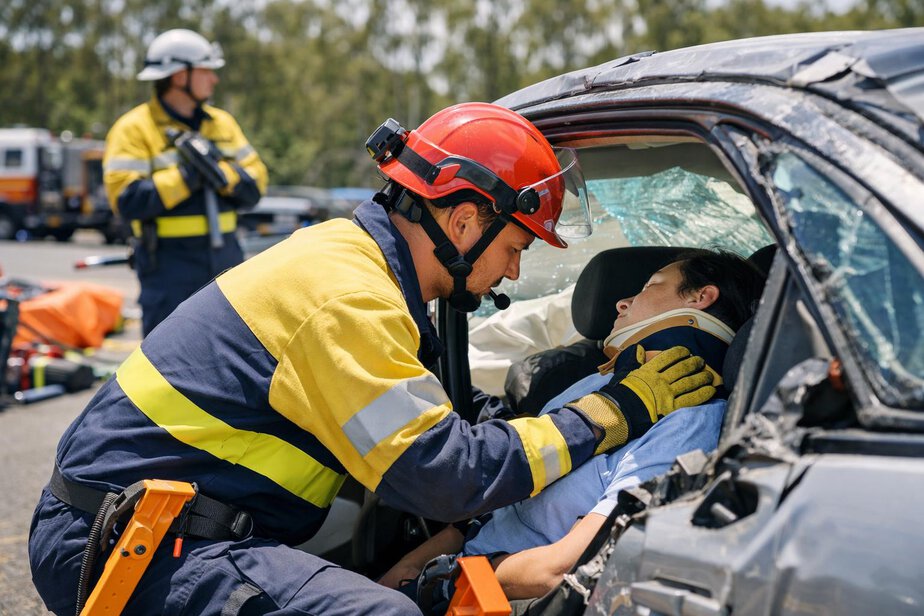
Another strong lesson from rescue challenges is that casualty care should begin early, not after the whole vehicle has been opened. As soon as it is safe, a rescuer or clinician should make contact with the trapped person. That contact provides reassurance, helps gather information and keeps the rescue focused on the person, not just the metal.
Early contact can help responders understand whether the casualty is conscious, breathing, distressed, bleeding or unable to move. It also allows the team to explain what is happening, even in simple terms. A calm voice can make a major difference for someone who is frightened, in pain or disoriented.
The casualty should be protected from avoidable harm during the rescue. That means reducing exposure to:
- glass and sharp edges
- noise from tools and traffic
- movement of the vehicle or surrounding debris
- heat, cold, rain or wind
- dust and fumes
- unnecessary jarring or pulling
Rescuers also need to be careful not to make medical decisions based only on the rescue task. A technique that is fast for the tools may not be best for the casualty. If the person is conscious and there is a suspected spinal injury, they should generally be encouraged to remain still and kept comfortable while help is coming. If airway, breathing or major bleeding becomes the priority, those needs must be addressed according to current guidance and the skills of the responders on scene.
That balance between rescue and care is one of the most important things competitions can reinforce. Teams have to keep working the extrication while thinking about the person inside the vehicle. The best crews do both at once.
Tool use, access and casualty protection
Hydraulic cutters, spreaders, rams and other rescue equipment are important tools, but they are only one part of the job. Competitions are useful because they show how tool skill depends on planning, placement and control. Good use of equipment starts before the tool is powered up.
Teams need to think about where each tool is positioned, how it may move, what it might strike and whether it will create extra hazards for the casualty or rescuers. Tool use should create controlled access, not random openings. If the work area is poorly planned, the result can be broken glass, unstable metal, blocked access routes or extra movement around the casualty.
Controlled access means the team creates enough room to reach, treat and remove the casualty without losing control of the scene. That might involve removing one panel, creating a door opening, adjusting the roof line or building space around the casualty path. The exact method depends on the vehicle type, the damage and the rescue objective.
It is also important not to assume one method suits every vehicle. Modern vehicles vary widely. Damaged electric or hybrid vehicles can introduce different hazards from conventional petrol or diesel vehicles. Heavy vehicles, small cars, motorcycles and vehicles on slopes all present different problems. Real incidents may also involve unusual machinery, concrete barriers or roadside structures that change the rescue plan.
The competition environment allows teams to practise those decisions in a supervised space. Assessors can notice whether the crew uses the tools in a deliberate order, protects the casualty from debris and keeps the work area tidy. They can also see when a team has good technical ability but poor positioning, which is the kind of issue that may not show up in routine training.
Good tool work is quiet in a professional sense. It is controlled, efficient and linked to the wider rescue plan. The aim is not to use the most equipment. The aim is to use the right equipment in the right place at the right time.
How real crashes are more complex than competition scenes
Controlled rescue challenges are valuable because they make learning possible, but they are not the same as live incidents. That difference needs to stay clear. A competition scene is prepared, supervised and intentionally designed to test specific skills. A real crash can be messier, noisier and far less predictable.
Real incidents may involve:
- darkness or poor visibility
- rain, heat, cold or strong wind
- heavy traffic close to the scene
- distressed relatives or bystanders
- multiple casualties
- leaking fuel or other hazardous materials
- damaged electrical systems
- electric or hybrid vehicles
- steep embankments, ditches or difficult terrain
- delayed specialist resources
- heavy vehicles or unusual machinery
These complications change the rescue. They may slow access, force the team to request more resources or require a different vehicle positioning plan. They may also increase the risk to everyone on scene, including police, ambulance, fire and rescue personnel.
Because of that, competition performance should never be treated as a replacement for agency training, operational doctrine, manufacturer guidance or directions from the incident controller. The value of competition is in sharpening judgement and exposing habits in a controlled setting. The value of real operations is in applying that judgement to the specific scene in front of the crew.
Another useful lesson from competitions is that assessors can detect unsafe habits that might otherwise be hidden. A team may look competent from a distance, but a close observer may see that a member keeps stepping into a blind spot, that communication is not confirmed, or that casualty protection is being ignored while a tool is repositioned. These are the sorts of details that can make a real difference in a live rescue.
Casualty removal and handover
The final stages of a road crash rescue are easy to underestimate. Once the access has been created and the casualty is reached, there can be a temptation to think the hard part is over. In reality, removal and handover are critical phases that need just as much discipline as the first cut or the first stabilisation step.
The team should plan how the casualty will move from the vehicle to the next level of care. That plan must fit the scene, the casualty’s condition and the available resources. It should also account for the fact that movement can worsen pain or distress, so every transfer needs to be controlled and coordinated.
Before removal, the team should confirm:
- the vehicle remains stable
- the access path is clear
- the casualty is protected from further harm
- the receiving medical team is ready
- the handover message is brief and complete
Handover is more than a quick update. It is the bridge between rescue and treatment. The rescue team should pass on what was found, what was done, what hazards remain and anything that may affect further care. In many ways, this is where the full rescue result is realised. A clean handover helps the casualty move into medical care without confusion or duplication.
In competitions, assessors can see whether a team finishes strongly or loses focus near the end. Some crews perform well during the cutting phase but become rushed at removal. Others protect the casualty well but forget to communicate changing conditions. Real incidents can expose the same weaknesses, which is why the final minutes deserve as much attention as the first.
Equipment checks, debriefing and shared learning
Road crash rescue competitions do not end when the casualty is removed. The post-incident phase is where a great deal of learning happens. Equipment must be checked, cleaned and returned to service. Any wear, damage or problem needs to be noted. The team then needs time to debrief while the details are fresh.
Debriefing matters because it turns a single rescue into future improvement. It gives the crew a chance to ask simple questions:
- What went well?
- What slowed us down?
- Were the hazards identified early enough?
- Did everyone know their role?
- Was the casualty contacted at the right time?
- Were the tools positioned well?
- Did communication stay clear under pressure?
The value of assessment is especially strong here. Competitions can reveal poor habits that are easy to miss in routine training. For example, a crew may have a good result but still rely on one person to do too much talking. Another crew may show strong technical skill but miss a safer sequence because they are too focused on speed. Another may need to improve how they protect the casualty from noise and movement. Independent assessment can identify these patterns and help teams improve before they are tested by a real emergency.
VICSES has said that events like the Geelong challenge allow trained volunteers to demonstrate their skills, share knowledge and build relationships. That is a practical description of why rescue competitions matter. They strengthen people, not just procedures. They also help different units learn from one another in a respectful way, which is valuable when the same teams may later work together at difficult scenes.
For agencies and volunteers alike, the lesson is consistent: the rescue does not end with the tool pack-up. It ends when the team has checked the equipment, reviewed the job and taken something useful from the experience into the next response.
What emergency services can take from the 2026 Victorian challenge
The 2026 Victorian road crash rescue challenge in Geelong is a good example of how a local event can support wider capability. South Barwon, Frankston and Knox teams worked through scenarios involving overturned or badly damaged vehicles, mechanical entrapment, concrete barriers and power poles. Those are not just dramatic props. They reflect the kinds of constraints that shape real rescue decisions.
South Barwon’s win and qualification for the Australasian Rescue Challenge in Townsville is worth noting, but not because winning is the main point. The more important point is that competition creates a structured environment where crews can test how well they actually apply their training. It can show whether a team is ready to work safely under pressure, whether knowledge is shared across members and whether every step of the rescue supports casualty care.
The event also reflects the scale of road crash rescue work in Victoria. VICSES reported more than 2,500 road crash rescue requests for assistance during the 2024–25 financial year, and South Barwon had already responded to 75 road crash incidents during 2025–26 when the February article was published. Those figures are a reminder that road crash rescue is not rare background work. It is a regular and important service.
For emergency services, the lesson is practical: training must keep pace with the complexity of the incidents crews may face. That means rehearsing not only tool use, but scene control, casualty management, communication and teamwork with partner agencies. It also means being honest about limits. Controlled exercises are valuable, but they cannot fully reproduce the pressures of a real crash on a dark, wet road with traffic moving nearby and relatives asking for answers.
Good teams learn from both environments. They use competitions to sharpen the basics and real incidents to test whether those basics hold up when conditions are messy.
Conclusion: speed matters, but safety and care matter more
Road crash rescue competitions teach a simple but powerful lesson: the best emergency crews are not the fastest ones alone, but the ones that stay safe, think clearly and keep the casualty at the centre of every decision. The Geelong challenge showed how much can be learned from realistic scenarios when assessors, volunteers and partner agencies work together in a controlled environment.
For real emergencies, the priorities remain the same. Assess the scene, control the hazards, stabilise the vehicle, make early contact with the casualty, communicate clearly, work with partner agencies and hand over cleanly. That is the practical value of rescue competitions. They help good teams become more consistent, and they help hidden problems come to the surface before a live incident exposes them.
For the public, the message is straightforward. Protect yourself, call Triple Zero (000) for immediate life-threatening emergencies in Australia, and leave complex rescue work to trained and authorised responders. For agencies and volunteers, the lesson is equally clear: use competitions and realistic exercises to learn, refine and verify, but never treat them as a substitute for formal training, doctrine or incident control.
This article provides general study support only. It is not accredited training and does not replace agency procedures, operational doctrine, manufacturer instructions, qualified supervision or directions given at an incident.
Before publication, please verify current facts, local procedures and agency requirements.
FireRescue Training Hub
Access practical fire and emergency study support resources, downloads, checklists, audio guides, and member-only course content.
- Course library
- PDF downloads
- Audio guides
- Checklists
Study support only. Not accredited training or a replacement for workplace procedures.
About the author and safety review
Ken Walker
Former Station Officer and fire service educator
Former career firefighter with extensive career and volunteer fire service experience.
Qualifications: Associate Diploma of Applied Science in Fire Technology; Institute of Fire Engineers studies.
Author profilehttps://www.firerescue.com.au/about-us/