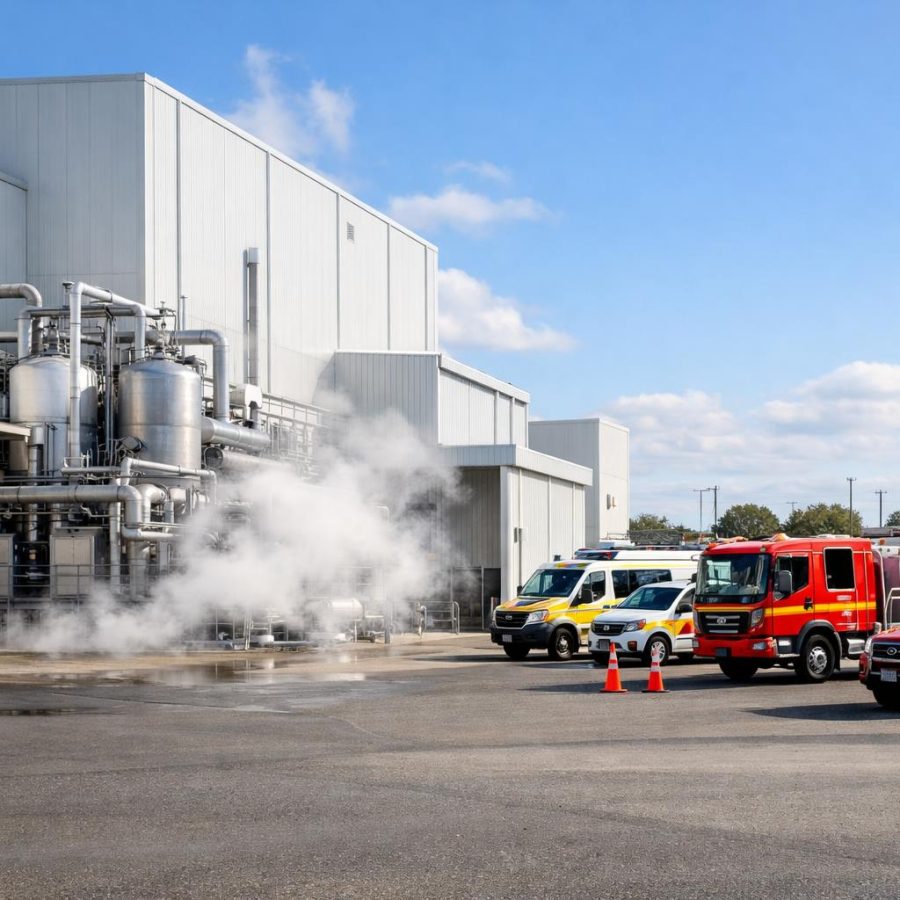
Floodwater can leave lithium-ion batteries dangerous even after the water has receded. A battery that looks fine on the outside may be damaged inside, and that hidden damage can lead to heat, smoke or fire hours, days or even weeks later.
Why flooded lithium batteries are still a fire risk
Lithium-ion batteries are now common in everyday life. They are used in e-bikes, e-scooters, power tools, mobility scooters, powered wheelchairs, home battery systems and electric vehicles. They are designed to store a lot of energy in a small space, which is useful, but it also means damage can become serious very quickly.
When floodwater enters a battery or reaches its protective casing, it can start a chain of damage that is not always obvious from the outside. Water may carry mud, salt, sewage or other contamination into places that should stay dry. The battery may still switch on for a while, or appear normal, but corrosion and internal faults can continue to develop after the flood.
The main danger is that water exposure can damage the battery’s internal structure and create short circuits. A short circuit is an unwanted path for electricity inside the battery. That can generate heat, cause chemical instability and eventually lead to smoke or fire. In some cases, the battery may fail later, after everyone thinks the danger has passed.
This is why flood recovery needs more than drying out floors and walls. Damaged batteries can remain hazardous long after the visible cleanup is done. The safest assumption is that floodwater and lithium batteries do not mix well, even when the device seems to keep working.
How fresh water, mud and salt water damage batteries
Not all floodwater causes damage in exactly the same way, but all of it should be treated with caution. Fresh water, muddy water and salt water can all get into battery housings, charging ports, switches and connections. If water gets inside, it can corrode metal parts and damage protective layers that help the battery operate safely.
Fresh water may seem less concerning than salt water, but it can still cause major problems. It can leave behind minerals and contaminants that affect electrical contacts. Muddy floodwater can be even worse because it may contain grit, organic material and pollution that get trapped around terminals, seals and vents. Once that contamination is inside, drying the outside of the device is not enough.
Salt water is particularly harmful because salt speeds up corrosion and can make conductive paths more likely. Corrosion can eat away at connectors, wiring and internal components. Even a small amount of corrosion may create resistance, heat or an internal short circuit over time. That is one reason batteries exposed to salt water need very cautious handling and professional attention.
Floodwater can also physically damage the casing or seals that protect the battery. A cracked, swollen or dented battery may allow moisture to keep entering. This can lead to gradual internal deterioration rather than immediate failure, which is why a battery may seem fine at first and then fail later.
For this reason, do not assume that a battery is safe just because it dried out or turned back on briefly. Water exposure can cause hidden damage that only becomes obvious later, especially once the battery is charged or put under load.
| Water type | Main risk | Practical concern |
|---|---|---|
| Fresh water | Corrosion and contamination | Can damage contacts and hidden parts inside the battery |
| Mud or contaminated floodwater | Grit, chemicals and trapped moisture | Can block vents, damage seals and increase internal faults |
| Salt water | Rapid corrosion and conductivity | Can speed up internal short circuits and delayed failure |
Why delayed fires can happen after the water has gone
One of the most important things to understand is that lithium-ion battery failure is not always immediate. A battery may be damaged during flooding and only show the problem later. That delayed failure is what makes flood-damaged batteries especially dangerous in homes, garages, sheds and work sites.
Corrosion can slowly weaken the battery’s internal parts. Moisture may remain trapped inside the casing, or chemicals may continue to react with battery materials after the flood. If internal insulation has been compromised, sections of the battery can come into contact with each other when they should not. This can create heat and unstable conditions.
Another risk is that damage becomes worse when the battery is charged, restarted or used again. A battery that appeared quiet during the cleanup may suddenly heat up once power is applied. That is why flooded batteries should never be charged, tested, restarted or reused by an untrained person.
Some batteries can enter a condition where they begin to fail slowly before a sudden thermal event. In simple terms, the battery can start to overheat internally before it is obvious from the outside. Warning signs may come early, but not always. Sometimes the first visible sign is smoke, vapour or fire.
This delayed risk applies across the most common lithium-powered products used in homes and workplaces. E-bikes, e-scooters and portable tools may be small, but they can still produce intense heat and fire if damaged. Larger systems, such as home battery storage and electric vehicles, can involve much greater hazards and should be left to specialists.
Warning signs that a flooded battery may be failing
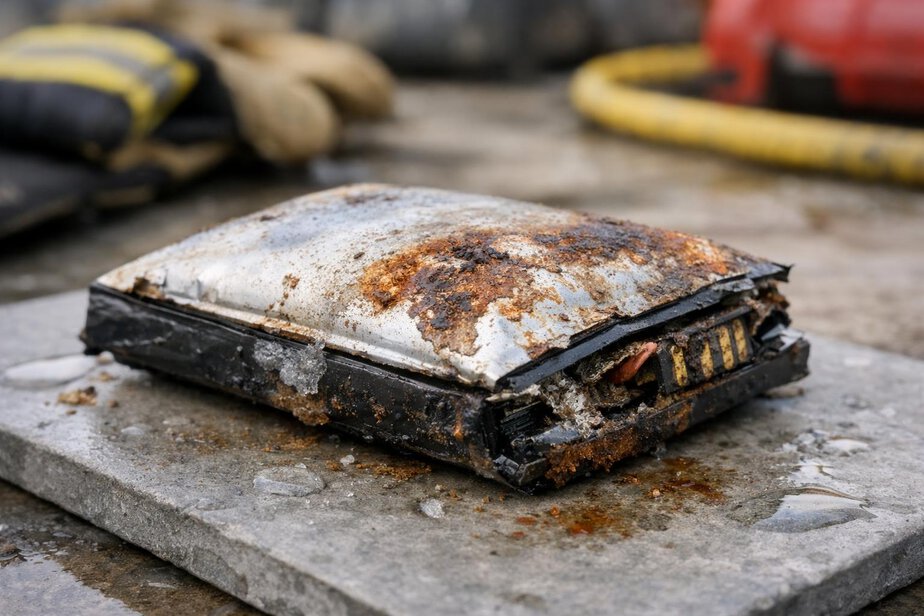
After flood exposure, keep a close eye on any lithium-ion battery or device that may have been wet. Some warning signs are obvious, while others can be subtle. Any one of these signs should be treated seriously, because they may show the battery is failing and could catch fire.
- Extreme heat: the battery or device feels unusually hot to touch, or is warming up without being used.
- Swelling or shape change: the casing looks bulged, puffed out or distorted.
- Leaking fluid: liquid, residue or dampness appears around the battery or device.
- Rust or discolouration: corrosion, staining or unusual marks around terminals, screws or casing.
- Strong or unusual smells: a sharp chemical smell or any odour that seems out of place.
- Smoke or vapour: visible smoke, mist or vapour from the battery or device.
- Popping, hissing or crackling sounds: noises that suggest the battery is venting or failing internally.
Do not ignore a battery just because the warning sign is small. A slight hiss, a faint smell or a little swelling can be an early sign of a serious problem. If the battery is in a hard-to-reach place, resist the urge to move it unless there is an immediate danger to life and you can do so without touching the battery itself.
It is also important to understand that no single warning sign proves a battery will fail immediately. But the presence of any one of these signs means the battery should not be used, charged or handled casually. The safest action is to isolate the area and get advice from the manufacturer, installer, service centre or another appropriately qualified person.
Safe actions for small portable devices
Small portable lithium-ion devices include e-bikes, e-scooters, power tools, battery packs and smaller mobility aids. These items are often stored in garages, sheds, laundry rooms or hallways after a flood, which means they may be easy to reach but still unsafe to use.
If a small portable device has been exposed to floodwater, the safest approach is simple: do not charge it, do not switch it on, do not test it and do not use it again until it has been assessed by a suitably qualified person. Even if the device seems dry and the battery still appears normal, hidden damage may remain.
For the immediate cleanup of a small portable device, focus on reducing risk rather than trying to recover the battery yourself.
- Keep the device away from heat, direct sunlight and anything flammable.
- Do not connect it to a charger or power source.
- Do not open, puncture, crush or dismantle the battery or casing.
- Do not shake, tap or try to “wake up” the battery.
- Keep children, pets and untrained people away from it.
- If safe to do so, place the device in an open, well-ventilated area away from buildings and vehicles while awaiting advice.
That last step must still be done carefully. Do not attempt to move a swollen, hot, smoking or leaking battery. If there is any sign of active failure, leave it where it is if moving it would expose you to greater danger. Then follow the emergency steps in the relevant section of this article and call Triple Zero (000) if there is smoke, fire or immediate danger.
Portable batteries should never be placed in household rubbish or recycling bins. They can start a fire inside a collection truck, transfer station or waste facility. Instead, contact your local council, the manufacturer or an approved hazardous-waste service for instructions on safe disposal or collection.
Why solar batteries, mobility devices and EVs need professional inspection
Some battery systems are not just portable devices. Home solar batteries, mobility scooters, powered wheelchairs and electric vehicles have more complex electrical systems, higher energy storage and different safety controls. After flooding, these products should be treated as professional inspection items rather than do-it-yourself jobs.
Home solar batteries may be connected to the electrical system of the house and, in some cases, to solar panels or inverters. If a flood has affected the battery or associated equipment, do not restart or reconnect the system. Follow the emergency shutdown procedure only when it is safe to do so, and only if you know the correct process for that installation. Then contact the manufacturer, installer or a qualified battery technician.
If the solar battery is damaged, hot, leaking or making noises, keep people away. Do not stand near it longer than needed, and do not try to inspect internal parts. A damaged home battery system can present electrical, chemical and fire hazards at the same time.
Mobility scooters and powered wheelchairs are essential for many people, but flood exposure can damage their batteries, controllers and wiring. Do not use the device until it has been assessed. This is especially important because these devices are often used close to the body and may be charged indoors. If the battery has been wet, the charger, leads and docking point may also be affected.
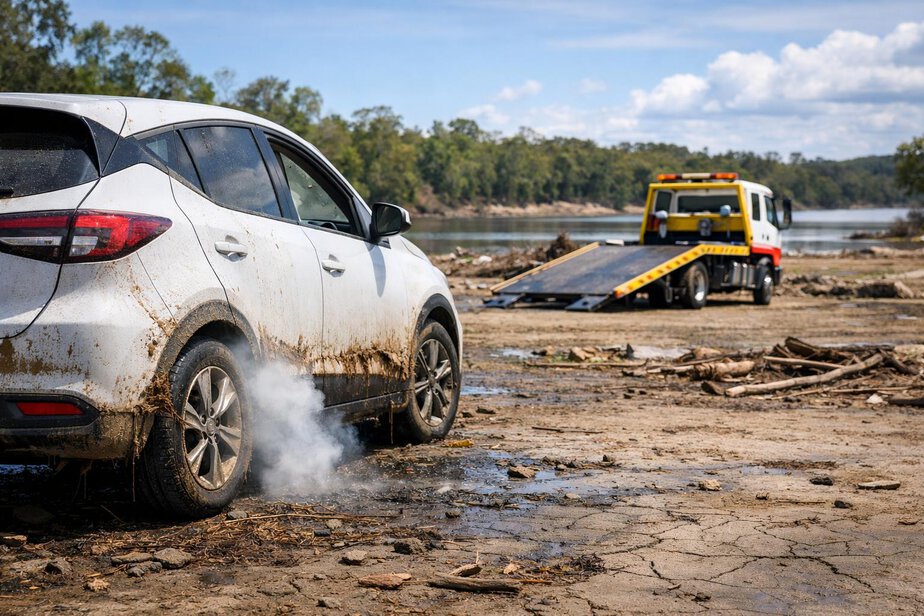
Electric vehicles present a different set of risks. If an EV has been submerged or seriously flood affected, do not charge it or attempt to drive it. Contact the vehicle manufacturer, service centre or a qualified recovery provider. Tell the towing company that the vehicle has been flood affected so they can plan the recovery safely.
A damaged EV battery may ignite hours, days or weeks after the original damage. That means an EV may look stable during the initial cleanup but still pose a later fire risk. If professional guidance says the vehicle must be stored before repair or assessment, it should be kept in an open area away from buildings and other vehicles, under professional direction.
Because these systems can involve high voltage and complex controls, the safest advice is simple: do not guess. Leave inspection, testing, shutdown decisions and recovery planning to people with the right training and equipment.
| Device type | What to avoid | Who should assess it |
|---|---|---|
| E-bikes, e-scooters, power tools | Charging, switching on, dismantling | Manufacturer, service centre or qualified technician |
| Mobility scooters, powered wheelchairs | Using, charging or repairing after flood exposure | Mobility equipment specialist or qualified technician |
| Home solar batteries | Restarting, reconnecting or bypassing shutdown steps | Manufacturer, installer or qualified battery technician |
| Electric vehicles | Driving, charging or towing without advice | Manufacturer, service centre or qualified recovery provider |
What to do if a battery starts smoking, heating or making unusual sounds
If a battery begins smoking, releasing vapour, overheating or making hissing, popping or crackling noises, treat it as an emergency. These are not normal signs of drying out. They can indicate that the battery is failing internally and could ignite.
Do not touch or move it. Moving a failing battery can increase the risk to you and may worsen the situation. If the battery is already hot or smoking, your priority is to get people away and reduce exposure to smoke and vapour.
- Move everyone away from the battery and the surrounding area.
- Avoid breathing smoke or vapour.
- Keep clear of any leaking fluid or damaged casing.
- Close doors if that can be done safely to help limit spread to other parts of the property.
- Call Triple Zero (000) if there is smoke, fire or immediate danger.
- Tell the operator that a lithium-ion battery is involved.
If there is no immediate smoke or fire but the battery is hot, swollen or making strange sounds, keep people away and get urgent professional advice from the manufacturer, installer or a qualified technician. Do not wait to see if it settles down. Early action is safer than hoping the battery will cool on its own.
Emergency responders need clear information if they attend a battery-related incident. Be ready to say what type of item is involved if you know it, whether it was flood affected, whether it is still connected to power, and whether there is smoke, heat, vapour or fire. Do not try to give technical detail you are not sure about. Simple, accurate information is most useful.
Safe isolation, storage and disposal after flood exposure
Once a flood-damaged lithium battery has been identified, the aim is to isolate risk and arrange proper disposal or inspection. The exact process may vary depending on the device and local arrangements, but there are some basic safety principles that apply widely.
First, keep the battery or device away from anything that could catch fire. That includes paper, cardboard, fuel, paint, clothing, bedding and other batteries. Keep it out of direct sun, away from heaters and away from places where people spend long periods of time.
Second, do not place the battery in household rubbish or recycling. Lithium-ion batteries can ignite during transport or while being processed as waste. This can create serious risks for waste workers and the wider community. Contact the local council, the manufacturer or an approved hazardous-waste service to ask how damaged batteries should be managed in your area.
Third, avoid any action that might damage the battery further. Do not open it, cut it, pry at it, drill into it, crush it or attempt to dry it out with heat. Do not attach makeshift cables, chargers or testing equipment. Those actions can make the battery unstable or cause a fire.
If a qualified person advises that a damaged battery or device should be isolated before collection, follow their instructions carefully. Keep written notes of what happened if you can do so safely, including whether the battery was submerged, whether it was in fresh or salt water, and whether it showed any signs of heating, swelling, odour, smoke or sound. That information may help the technician or responder assess the risk.
For larger items such as solar batteries and EVs, storage and disposal may require specialist coordination. Do not assume the regular roadside or household waste process is suitable. These items can be dangerous to move without the right equipment and guidance.
What emergency responders should be told
When emergency services, towing providers, electricians or battery technicians are involved, clear communication helps them manage the risk. A calm, factual report can save time and reduce the chance of anyone walking into danger.
Tell responders if the item is a lithium-ion battery, if it was exposed to floodwater, and whether it is a small portable device, a home battery system, a mobility device or an electric vehicle. If you know whether the water was fresh, muddy or salt water, mention that too. Even if you are unsure, say what you observed rather than guessing.
Important details to share include whether the battery is still connected to power, whether it has been charged since the flood, and whether there are any warning signs such as heat, swelling, leaking, rust, unusual smell, smoke, vapour or popping sounds. If the item is in a garage, under a house, in a shed or near other vehicles or combustibles, say so.
Also tell responders if there are other hazards nearby, such as gas bottles, solar panels, flooded switchboards, fuel containers or trapped water. They may need to plan an approach that avoids compounding the risk. Do not try to manage all of this yourself. Your role is to provide clear information and keep people away until trained help arrives.
A practical recovery checklist after floodwater recedes
After flooding, it helps to work through the recovery in a careful order. The point is not to rush batteries back into service. The point is to keep the property safe while damaged equipment is identified and removed from normal use.
- Assume any battery exposed to floodwater is damaged until assessed.
- Do not charge, restart, test or reuse flooded batteries.
- Keep batteries and devices away from heat, flames and flammable materials.
- Watch for warning signs such as heat, swelling, leaks, rust, smells, smoke or unusual sounds.
- Seek professional inspection for solar batteries, mobility devices and electric vehicles.
- Do not place damaged batteries in household rubbish or recycling.
- Contact the manufacturer, local council or approved hazardous-waste service for disposal guidance.
- Call Triple Zero (000) immediately if there is smoke, fire or immediate danger.
It is also worth checking other parts of the flooded property that may affect battery safety, such as wet power points, damaged extension leads, flooded chargers or broken switchboards. A battery may be only one part of a wider electrical hazard. If you are uncertain, pause and get advice before restoring power to any equipment.
For people returning to homes, sheds or workplaces after a flood, patience is one of the best safety tools. A battery that survived the flood may still fail later, and that failure can happen when no one is expecting it. Careful isolation now is better than a fire later.
Flood-damaged lithium batteries are a hidden risk because the damage may be delayed, not obvious. Treat any submerged battery as unsafe, keep people away from failing devices, and rely on qualified help for inspection, shutdown and disposal. Before publication or use, verify facts and local procedures with the relevant manufacturer, council or emergency agency, because local guidance may change.
FireRescue Training Hub
Access practical fire and emergency study support resources, downloads, checklists, audio guides, and member-only course content.
- Course library
- PDF downloads
- Audio guides
- Checklists
Study support only. Not accredited training or a replacement for workplace procedures.
About the author and safety review
Ken Walker
Former Station Officer and fire service educator
Former career firefighter with extensive career and volunteer fire service experience.
Qualifications: Associate Diploma of Applied Science in Fire Technology; Institute of Fire Engineers studies.
Author profilehttps://www.firerescue.com.au/about-us/