Aircraft can sometimes stop a small or newly reported fire from growing, but they usually cannot extinguish a large bushfire by themselves. Aerial water drops are a powerful tool, yet they work best as part of a wider suppression effort led by trained aviation and incident-management personnel and supported by ground crews.
The short answer: what aircraft can and cannot do
Many people see a water drop on the news and assume the fire has been beaten. Sometimes that is true for a very small fire. More often, the drop is only one step in a longer operation.
Aerial firefighting is best understood as a way to buy time, reduce fire intensity, protect people and assets, and help crews get control. It can slow a fire’s spread, cool a hot edge, knock down spot fires, and make it safer for firefighters to work on the ground. It can also help protect houses, critical infrastructure and isolated communities.
But aircraft are not magic. They do not remove all heat from burning ground. They do not usually put out every ember hidden under leaves, bark, logs or dense vegetation. They do not replace the need for ground crews to check, secure and mop up a fire area when it is safe to do so.
The strongest message from current Australian research is simple: aerial suppression is most effective when it is used early, for a clear purpose, and in combination with ground action. It is a tool for bushfire suppression, not a guaranteed solution on its own.
Why aerial firefighting matters in Australia
Australia’s bushfire environment is large, varied and difficult. Fires can start in steep country, along remote roads, near homes on the edge of towns, or in places that are hard to reach quickly by vehicle. In those situations, aircraft can act faster than ground crews and reach locations that may otherwise take a long time to access.
That speed matters. A small fire can change very quickly if it is not checked early. Wind, dry fuels, rough terrain and delayed access can allow a fire to grow from a manageable start into a much larger incident. Aircraft can sometimes interrupt that early growth.
Research in Australia has examined how aerial suppression is used in real operations, not just in theory. The Natural Hazards Research Australia and CSIRO Why Fly? project looked at Australian aerial suppression activity recorded between 2021 and 2025 and combined aircraft tracking information with information about fire behaviour, weather, fuels, terrain, risks, drop objectives and operational outcomes. Early findings presented at AFAC25 indicated that drops used to protect houses had very high success rates, and that drops on newly starting fires had a strong influence on restricting fire growth.
That does not mean aircraft can extinguish every bushfire. It does mean the role of aircraft is important, measurable and often highly effective when used well.
What aerial drops are used for
Aerial drops are not just about putting water on flames. In practice, they are used for several different tasks depending on the fire, the terrain and the incident plan.
- Stopping or restricting a newly starting fire.
- Slowing or stopping the spread of a new fire.
- Cooling an active section of fire.
- Extinguishing or reducing spot fires ahead of the main front.
- Protecting homes, firefighters and important infrastructure.
- Reducing fire intensity so ground crews can work more safely.
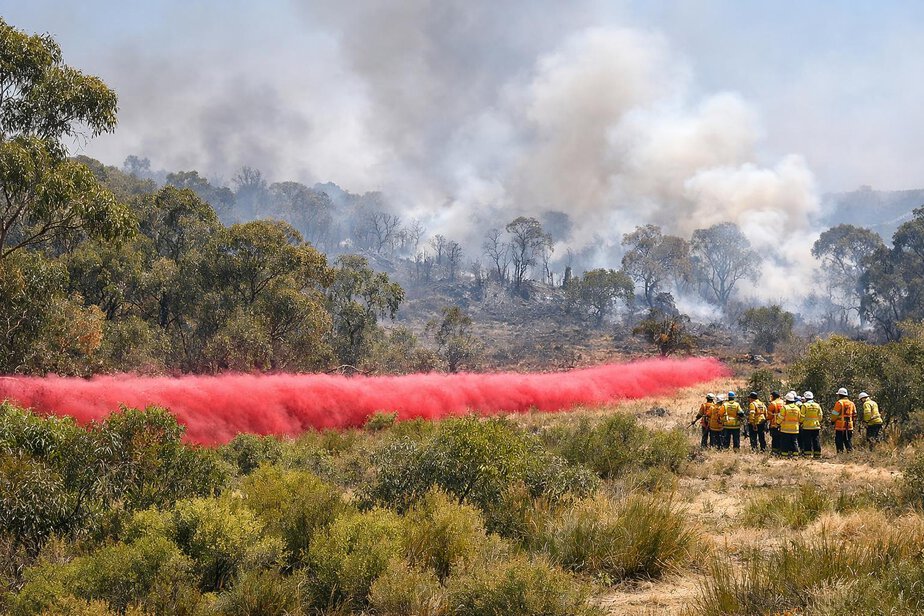
- Laying retardant ahead of a fire to slow its movement.
- Supporting crews working in steep, remote or difficult terrain.
These are different objectives, and they do not all require the same aircraft or product. A water drop might be suitable for a hot spot close to homes. A retardant line may be more useful if the aim is to influence fire spread across unburnt vegetation. Foam may be chosen when crews want water to stay on fuel for longer or spread more evenly.
The most important point is that every drop should have a clear operational purpose. Randomly dropping water where it looks dramatic is not the goal. The tactic must match the task.
How drops fit into the bigger response
Aircraft usually work alongside incident controllers, air attack supervisors, aircrew, tankers, dispatchers, local brigades, remote area teams and other support personnel. Trained aviation and incident-management personnel decide where aircraft should go, what product they should carry, and what task they should attempt.
Members of the public must never request, direct or interfere with aerial operations. A drop can look simple from the ground, but it is part of a coordinated incident plan that takes safety, airspace, weather, fuel types and ground access into account.
Water, foam and retardant: what is the difference?
People often use the word “water drop” for every aerial suppression action, but the products used in aircraft can be different and each has a different job.
| Product | What it does | Typical use |
|---|---|---|
| Water | Cools burning fuel and lowers temperature | Useful on flames, hot edges and small spot fires |
| Foam | Helps water spread, cling and remain on fuel longer | Useful where better coverage and retention may help |
| Retardant | Placed on unburnt vegetation to slow combustion | Useful for lines ahead of a fire or to protect assets |
Water acts mainly by cooling. It can be very effective on exposed flame and heat, but in dry, windy or steep conditions it may evaporate quickly, bounce off heavy fuel or run off before it fully penetrates the fire edge.
Foam can improve how well water spreads and sticks. That can be helpful where the target is uneven, porous or partly concealed. Foam is not a guarantee of success, but it can improve the chance that the applied liquid does useful work on the fire edge.
Retardant is different again. It is not mainly about cooling a fire that is already burning in front of the aircraft. Instead, it is usually placed on vegetation that has not yet burned. The aim is to make that fuel less likely to ignite easily and to slow the fire’s movement across that area.
Because the products behave differently, the right choice depends on the task. For example, a crew protecting a house may want a suppressant that helps keep heat down in the immediate area. A crew trying to shape the path of a fast-moving front may need a retardant line ahead of the fire.
The main aircraft types in simple terms
Different aircraft do different jobs. The best choice depends on speed, distance, terrain, reload time, accuracy and the task required. It is not enough to compare aircraft only by how much water they can carry.
Helicopters
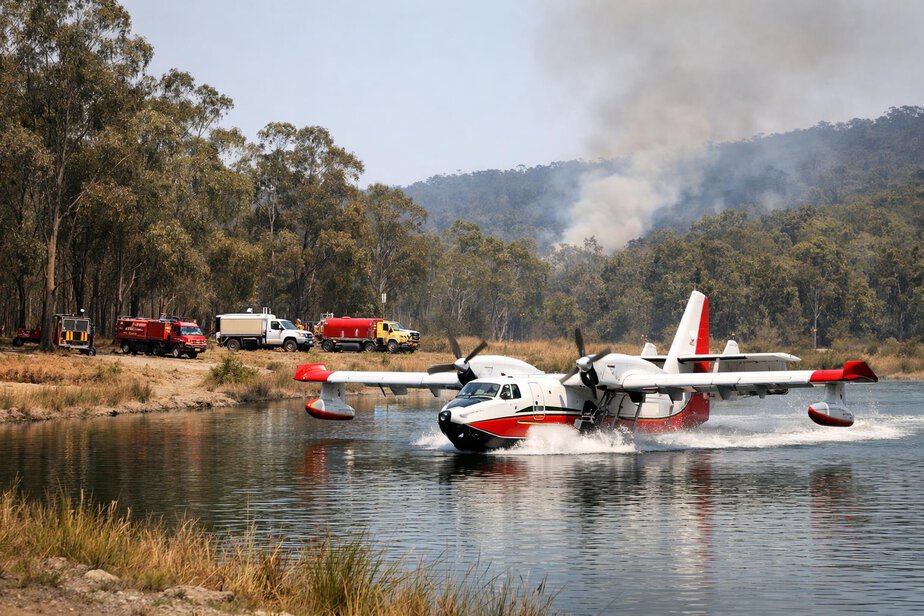
Helicopters are often valued for flexibility and precision. They can usually work close to the target, hover if needed, and make repeated drops over a small area. Many can collect water from suitable nearby sources, which can reduce turnaround time if a safe refill point is available.
Helicopters are often useful for targeted work such as protecting a cluster of homes, suppressing a spot fire, or cooling a hot edge in difficult terrain. Their ability to place water accurately is a major advantage.
Smaller fixed-wing aircraft
Smaller fixed-wing aircraft can respond quickly and work together in groups. They are often used to rapidly attack a new fire, assist with reconnaissance, or drop suppressants in support of other aircraft and ground crews. Their speed can be a major strength when the incident is still small or the fire edge is changing quickly.
These aircraft may be able to cycle faster than larger aircraft in some situations, especially if the base, loading arrangements and flight path are well matched to the incident.
Large air tankers
Large air tankers can place long lines of suppressant or retardant and are useful when the goal is to influence fire spread over a wider area. They are a major asset, but they depend on suitable bases, loading facilities and safe flying conditions. Distance to the fire, turnaround time and weather can all affect how useful they are on a given day.
A large tanker may carry more product, but that alone does not make it the best choice. A smaller aircraft that arrives earlier and drops more accurately may be more effective for the actual task at hand.
The right question is not “which aircraft carries the most?” It is “which aircraft can reach the fire quickly, operate safely, deliver the required product accurately and support the incident plan?”
Why some drops work better than others
Aerial suppression is a complex activity. Research describes the outcome as dependent on the aircraft, product, tactics, weather, terrain, fire behaviour, timing and availability of ground support. In plain language, a good drop in the wrong conditions may still fail, while a modest drop at the right moment may make a real difference.
- The fire intensity is too high. Very intense fire can overwhelm cooling or suppressing effects.
- Strong or changing winds move the drop away from its target. Wind can shift the suppressant before it lands or dries.
- Smoke reduces visibility. Pilots may be forced to operate with less precision or fewer safe options.
- Dense tree cover prevents enough water reaching the ground. The product may hang up in the canopy or miss the burning fuel below.
- Aircraft must travel a long distance to reload. A long turnaround can reduce the number of useful drops in a critical period.
- Terrain makes the approach unsafe. Valleys, ridges and sudden changes in slope can complicate flight paths.
- The fire has already developed a large and fast-moving front. Once a fire is large, an aircraft may only be able to slow selected parts.
- Ground crews cannot safely reach and secure the treated area. Without follow-up, fire can re-ignite from hidden heat.
These limitations do not mean aircraft are ineffective. They mean aerial firefighting has to be used with good judgement. A drop that looks spectacular may still be less useful than a quieter, well-timed run that supports the incident plan.
There is also a difference between appearing to stop flames and actually ending the fire. A drop may knock down visible fire on the surface, but heat can remain under branches, logs, bark and dense grass. If that heat is not checked later, the fire can start up again.
Why ground crews still matter after the aircraft leave
Ground crews remain essential because they can inspect the treated area, extinguish remaining hot spots and prevent sections from reigniting. They can work around logs, roots, tree bases, fence lines and other places where fire may continue to smoulder after the aircraft have moved on.
Aircraft can create an opportunity. Ground crews make that opportunity count.
This is especially important after a drop on a forest fire or in heavy fuel. Aerial suppression may reduce the intensity enough for firefighters to move in later, but the area still needs to be secured. If there is no follow-up, the fire can re-establish, escape containment or spot into nearby fuel.
That is why aircraft and ground crews work best together. Aircraft can shape the fire, and ground crews can finish the job where it is safe to do so.
In practice, aerial suppression is often about creating a manageable situation, not instantly ending the emergency.
That distinction matters to the public. A fire scene can look calm from a distance after a drop, but it may still be dangerous and active. The incident is not over until trained personnel say the area is secure.
A simple fictional example: a small grassfire near homes
Imagine a small grassfire starting near several homes on a hot, windy afternoon. The fire is still compact, but it is spreading fast enough to worry the local crews.
Aircraft arrive early and place drops along the fire edge. The drops slow the fire and reduce its intensity near the houses. The suppression effort does not end there. Ground crews use the extra time to establish hose lines, protect property and complete the suppression work.
In that scenario, the aircraft do not do everything. They do the part of the job that only aircraft can do quickly: they interrupt the fire’s progress, lower the threat to the homes and give crews a safer opportunity to work.
That is a good example of aerial firefighting at its best. The fire is still an emergency, but the outcome is much better because the response was early, coordinated and tied to a specific objective.
Now compare that with a large forest fire burning under severe conditions. In that case, aircraft may still be helpful, but the task changes. They may slow parts of the fire front, protect selected properties, improve conditions for crews, or support evacuations and containment efforts. They cannot simply cover the whole fire with water and expect it to go out.
The difference between those two situations is not just the size of the aircraft. It is the size, speed and behaviour of the fire itself, along with the weather, terrain and the time available to act.
What the latest Australian research suggests
Australian research has long indicated that aerial suppression can be particularly effective during the early stages of a fire. Historically, evidence about effectiveness on large and extended fires has been more limited, because large fires are much harder to study cleanly and the conditions vary so much from one incident to another.
The Why Fly? project has helped improve that evidence base by looking at operational drop data and linking it with fire behaviour, weather, fuels, terrain, risks, drop objectives and outcomes. That kind of work matters because it moves discussion away from guesswork and towards real-world evidence.
Early findings presented at AFAC25 suggested that drops used to protect houses had very high success rates and that drops on newly starting fires had a strong influence on restricting fire growth. Those are important results, but they should be read carefully. They do not mean every drop will succeed and they do not mean every fire can be stopped from the air.
They do support a practical conclusion: aerial suppression is often most valuable when it is early, targeted and matched to a clear operational aim. It is not just the presence of aircraft that matters. It is how, when and where they are used.
That is consistent with the broader research message that aerial suppression is a complex activity. The aircraft, product, tactics and conditions all shape the result. Good planning and coordination are just as important as aircraft availability.
For the public, the lesson is straightforward. If you see aircraft working on a bushfire, that usually means the incident is being attacked hard. It does not automatically mean the danger has passed, and it does not mean the fire can be ignored.
Public safety around aerial firefighting
Aircraft can only do their job safely if the public stays clear. Aerial operations are hazardous, and they involve low-flying aircraft, changing airspace and fast-moving incident activity. Public behaviour can either help or seriously hinder that work.
- Never enter a fire area to watch aircraft.
- Do not stand underneath or close to an expected drop.
- Follow warnings, road closures and evacuation directions.
- Never fly a drone near a bushfire or emergency operation.
Immediate life-threatening emergencies in Australia require Triple Zero (000). If you are unsure whether a fire is threatening you, do not wait for aircraft to appear or disappear before acting. Follow official warnings and leave early if instructed.
Drones deserve special attention. The Civil Aviation Safety Authority says drones must not be flown during emergency operations. An unauthorised drone can create a collision risk and may prevent firefighting aircraft from operating. Even a small drone can force aircraft to stop or change plans, which can reduce the effectiveness of the response and put crews at risk.
People should also avoid assuming that a drop area is safe to enter. Ash, falling branches, hidden embers, unstable ground and changing fire behaviour can all remain dangerous after aircraft have left. If the area is controlled or closed, stay out.
Five key messages about aerial water drops
- Aircraft are most valuable when they arrive early.
- Every drop must have a clear operational purpose.
- Weather, fire intensity and terrain affect the result.
- Aircraft and ground crews achieve the best results when working together.
- Aerial firefighting supports bushfire suppression but is not a guaranteed solution.
In practical terms, aerial firefighting is a fast, targeted and highly skilled part of bushfire response. It can slow a new fire, protect homes, suppress spot fires and support firefighters working in tough terrain. It is often most effective at the start of an incident, before the fire grows too large or too intense.
But the limits are just as important as the strengths. Water can evaporate or run off. Foam helps but does not solve every problem. Retardant must be placed strategically. Smoke, wind, distance, terrain and heavy fuel can all reduce effectiveness. And even after a good drop, ground crews still need to check and secure the area when it is safe to do so.
The best way to think about aerial firefighting is this: aircraft help create the opportunity to control a bushfire, while trained ground crews and incident management complete the response. When those parts work together, the result can be much better than either could achieve alone.
Before publication, verify facts, terminology and local procedures with current Australian fire agency guidance and incident-management arrangements.
FireRescue Training Hub
Access practical fire and emergency study support resources, downloads, checklists, audio guides, and member-only course content.
- Course library
- PDF downloads
- Audio guides
- Checklists
Study support only. Not accredited training or a replacement for workplace procedures.
About the author and safety review
Ken Walker
Former Station Officer and fire service educator
Former career firefighter with extensive career and volunteer fire service experience.
Qualifications: Associate Diploma of Applied Science in Fire Technology; Institute of Fire Engineers studies.
Author profilehttps://www.firerescue.com.au/about-us/