EMERGENCY PREPAREDNESS
Key Takeaways
Preparing for emergency alerts at night means acting calmly and having a clear plan. Knowing how to respond quickly can protect you and your family from harm during fires, floods, storms, or other urgent situations.
Stay informed through official Australian disaster-resilience/”>sources like Fire and Rescue NSW, Emergency WA, or the SES. Keep essential items accessible and ensure your phone and other devices are charged to receive alerts promptly.
Understanding Emergency Alerts at Night
Emergency alerts are vital messages issued by Australian emergency services to warn people about life-threatening events. These alerts can come through mobile phones, television broadcasts, radio, and electronic road signs. At night, when you are likely asleep, it is especially important to be prepared to respond promptly and safely.
Alerts may warn of bushfires, severe storms, flash floods, or other hazards. The tone and urgency may differ depending on the danger and location. For example, an alert for a rapidly spreading fire may require immediate evacuation, while a flood warning might urge you to move belongings to higher ground. In every case, following official advice is critical.
At night, our senses are dulled, and reaction times can be slower, which is why understanding the nature of alerts and what they signify helps reduce panic and confusion. Emergency services tailor their alert systems to ensure they are loud and persistent enough to wake even those in deep sleep. Familiarising yourself with the distinct sounds and tones of these alerts can help you identify them instantly.
Setting Up Your Home and Devices for Night Alerts
Keeping Devices Ready
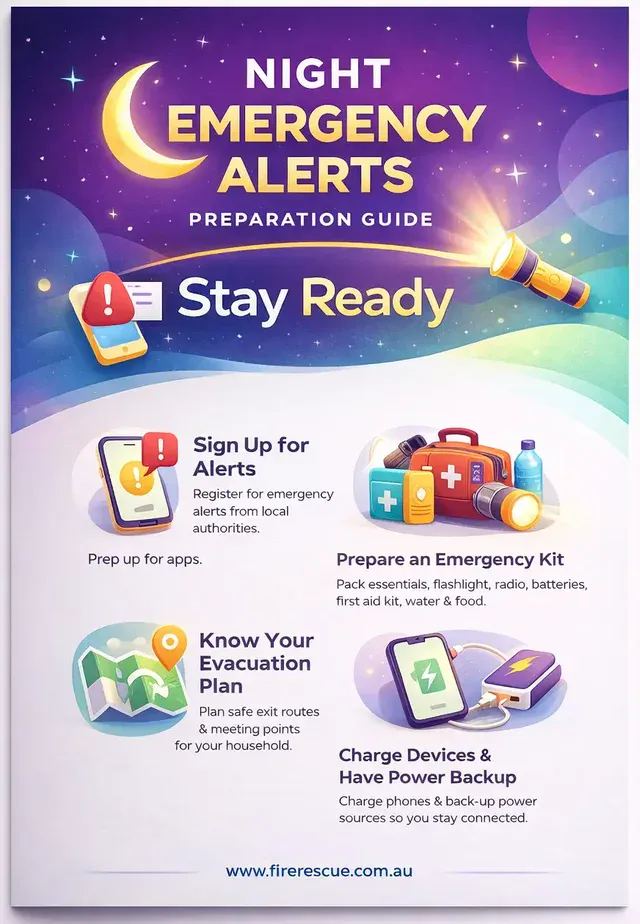
One of the first steps is ensuring your phone is always charged and within reach. Enable emergency alerts on your mobile device, and test your volume settings so alerts can be heard even if your phone is on silent. Many Australian states use the Emergency Alert system, which overrides silent modes for urgent warnings. Consider having a backup power source, such as a power bank, to keep devices charged during outages.
In addition to mobile phones, consider using multiple devices to increase your chances of receiving alerts. A battery-powered radio tuned to local emergency stations can provide continuous updates if power or mobile services fail. Smart home devices with alert capabilities may also be programmed to notify you audibly and visually. Regularly update your apps and device software to ensure compatibility with alert systems.
Prepare a Safe Sleep Environment
Arrange your bedroom so you can respond quickly. Keep a torch or flashlight and a whistle nearby. These items help in case of sudden evacuation in the dark or if you need to signal for assistance. Avoid keeping clutter near your bed to reduce tripping risks when moving around at night.
Consider installing night lights in hallways and near exits to illuminate your path without needing to fumble for switches. If you or family members wear hearing aids, explore alert devices that use vibration or flashing lights to wake you effectively. For those with limited mobility, keep mobility aids like canes or walkers within easy reach to facilitate quick movement.
Creating an Effective Nighttime Emergency Plan
Your emergency plan should include clear steps to follow if an alert sounds overnight. Discuss with all household members what to do, where to meet if you need to evacuate, and how to stay connected. This is especially important if you have children, elderly family members, or pets.
Identify safe rooms in your home that offer protection from fire or storms. These should have minimal windows and be easy to access quickly. Know multiple routes to rural-property-residents/”>leave your property in case one path is blocked.
Keep a printed copy of the emergency plan somewhere accessible, in case your phone is unavailable. Practice drills at night if possible, to familiarise everyone with the steps in low-visibility conditions.
Make sure your emergency plan accounts for the needs of all household members, including those with disabilities or special medical requirements. Designate roles such as who will gather pets, who checks on neighbours, or who is responsible for grabbing the emergency kit. Having a clear chain of responsibility reduces confusion when seconds count.
Essential Items to Have Ready Before Bed
Have a small emergency kit prepared and kept close to your bed. Include items such as water bottles, medication, important documents, a battery-powered radio, spare batteries, and basic first aid supplies. This kit should be easy to grab if you need to leave immediately.
If you live in a bushfire-prone area, keep fire blankets and protective clothing nearby. For flood risks, have waterproof boots and plastic bags ready. Tailor your kit to the specific hazards relevant to your location.
Consider also keeping a list of emergency contact numbers and local evacuation centres within your kit. Include cash in small denominations in case electronic payment methods fail. If you use glasses, hearing aids, or other assistive devices, keep spares handy. For families, ensure enough supplies for all members, including infants or pets, such as formula, pet food, and comfort items.
Staying Informed and Following Official Advice
Listen carefully to alerts and updates from official sources like the Bureau of Meteorology, <a href="https://www.firerescue.com.au/building-a-resilient-australia-advancing-emergency-readiness-in-2026/”>State Emergency Services (SES), and Fire and Rescue NSW. Avoid relying on social media rumour or unofficial reports, as these may cause confusion or delay your response.
If an alert advises you to evacuate, do so without delay. Pack only essential items and leave early to avoid traffic or blocked roads. If told to shelter, follow instructions closely and stay away from windows and external walls.
In life-threatening emergencies, dial 000 immediately to reach Fire/Rescue, Police, and Ambulance services. Make sure your location is clear when calling, as this helps responders arrive promptly.
Remember that emergency situations can evolve rapidly. Staying tuned to continuous updates allows you to adjust your actions as conditions change. If you have evacuated, do not return to your home until authorities declare it safe. Also, report any hazards or injuries to emergency services as soon as possible to assist in community response efforts.
If You Only Do Five Things
First, always keep your phone charged and alerts enabled so you won’t miss any warnings. Second, have a torch and whistle ready beside your bed to help you move safely and signal if needed. Third, prepare a simple emergency kit within arm’s reach containing water, medication, and important papers. Fourth, know your local official emergency services and follow their instructions carefully without delay. Fifth, plan your evacuation routes and safe spots ahead of time and ensure everyone in your home understands what to do at night.
Completing these five steps creates a foundation that significantly improves your safety and peace of mind. Regularly review and update your preparations to reflect any changes in your household or environment. Practising your plan builds confidence and ensures swift action when it matters most.
Who Does What in Australia?
Fire and Rescue services respond to fires and rescue operations, including bushfires and house fires. Police assist with law enforcement, traffic control, and public safety during emergencies. Ambulance services provide medical care and transport. The SES supports communities with storm, flood, and other natural disaster responses, often helping with evacuations and damage assessments. In a life-threatening emergency, always call 000 for immediate assistance.
Additional Tips for Nighttime Emergency Preparedness
Consider installing smoke alarms with a loud, distinctive tone that can wake sleepers even in deep sleep. Test your alarms regularly and replace batteries as needed. If you live in a rural or high-risk fire area, create and maintain a defendable space by clearing leaves and flammable materials around your home.
Stay aware of weather conditions through official channels, especially during fire season or severe weather events. Some states offer SMS alert subscriptions or dedicated apps to keep you informed. Share your emergency plan with neighbours and encourage them to prepare as well, as collective readiness enhances community safety.
Finally, remain calm and keep communication lines open with family members. Having a pre-arranged contact outside your immediate area can be helpful for sharing updates if local phone lines become overloaded.
It’s also wise to maintain a mental checklist of important tasks and items to manage during an emergency, such as turning off gas or electrical appliances if time permits. Being mentally prepared to act decisively reduces hesitation and can save lives. Remember, preparedness is an ongoing process – revisit your plans and supplies regularly to adapt to new circumstances or advice from authorities.
FireRescue Training Hub
Access practical fire and emergency study support resources, downloads, checklists, audio guides, and member-only course content.
- Course library
- PDF downloads
- Audio guides
- Checklists
Study support only. Not accredited training or a replacement for workplace procedures.
About the author and safety review
Ken Walker
Former Station Officer and fire service educator
Former career firefighter with extensive career and volunteer fire service experience.
Qualifications: Associate Diploma of Applied Science in Fire Technology; Institute of Fire Engineers studies.
Author profilehttps://www.firerescue.com.au/about-us/