Fire Rescue News & Updates
Extreme Rain Driving Safety Checklist
Driving during extreme rain conditions in Australia requires calm, practical preparation and knowledge. This safety checklist provides clear steps and tips you can use to navigate wet roads safely and avoid common hazards.
Key takeaways
Extreme rain can cause treacherous driving conditions including reduced visibility, slippery surfaces, and flooding. Preparing your vehicle, driving cautiously, and knowing who to call in emergencies are vital safety measures.
Fire and Rescue services are crucial for managing fire and rescue incidents, while the SES specialises in flood and storm emergencies. Police and Ambulance also play important roles in accident response. Dial 000 in any emergency.
Following a clear checklist before and during driving in heavy rain helps reduce risks and keeps you and other road users safer throughout the event.
Background and context
Australia’s climate in many regions brings intense rainstorms that can quickly turn roads hazardous. Flooded streets, slick surfaces, and poor visibility contribute to a significant rise in road incidents during extreme weather. Understanding the right preparation and response is essential for drivers to protect themselves and others.
Heavy rainfall not only affects urban areas but also rural and remote roads where drainage infrastructure may be limited. Drivers in these areas face unique challenges such as unexpected water crossings, debris on the road, and rapidly changing conditions. Awareness of local weather alerts and road closures is crucial for safe travel.
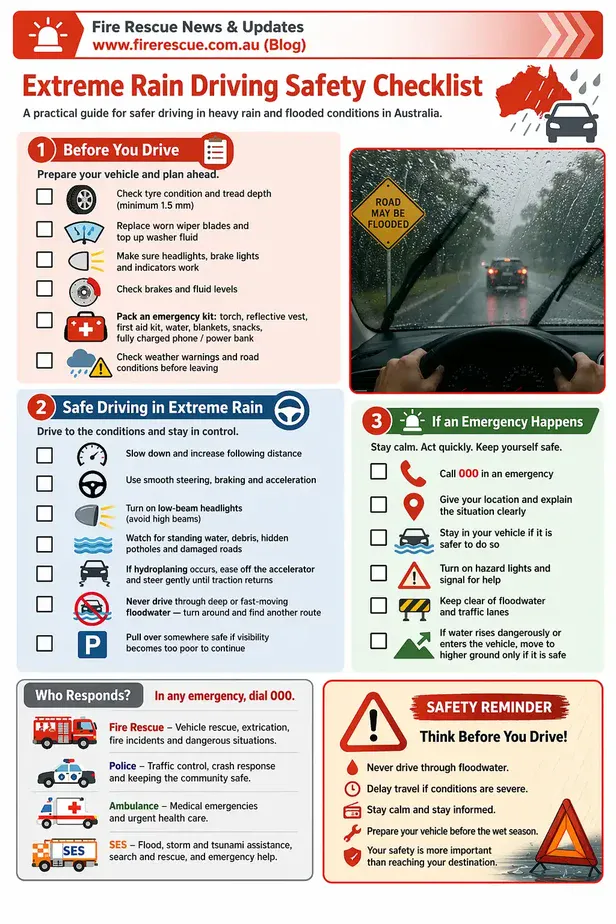
Extreme Rain Driving Safety Checklist for Australian Drivers
Stay safer in heavy rain and flooded conditions with this practical guide. Learn how to prepare your vehicle, reduce hydroplaning risk, respond calmly in an emergency, and know when to call 000.
- Vehicle checks before you leave
- Safe driving tips for heavy rain
- Floodwater and hydroplaning advice
- Emergency actions and who responds
Useful for Australian drivers during extreme rain events. Keep this guide handy before travel.
Preparing your vehicle before extreme rain
Check tyre condition and tread depth
Tyres are your vehicle’s primary contact with wet roads. Ensure they have sufficient tread depth to channel water away and reduce hydroplaning risk. Worn tyres greatly increase danger when driving on flooded or rain-slicked surfaces. It’s recommended to measure tread depth regularly and replace tyres when tread falls below 1.5mm, especially before the wet season arrives.
Inspect and replace wiper blades
Clear visibility is critical. Wiper blades that leave streaks or fail to clear the windshield properly must be replaced. Top up windscreen washer fluid with a water-repellent formula if available. Additionally, consider carrying a small squeegee or cloth to quickly clear fog or dirt buildup during stops.
Ensure lights are fully operational
Headlights, brake lights, indicators and hazard lights all need to be in perfect working order. They help you see the road and make your vehicle visible to others in poor conditions. Regularly clean your lights to remove grime and improve brightness. In heavy rain, using daytime running lights or low beams increases your visibility to other drivers.
Check brakes and fluid levels
Brakes must respond reliably. Have your brake pads, discs and fluids checked regularly, especially before seasons with heavy rain. Responsive brakes can prevent accidents when quick stops are necessary. Additionally, ensure your brake fluid is topped up and free of moisture which can reduce braking efficiency in wet conditions.
Prepare emergency supplies
Keep an emergency kit in your vehicle that includes items such as a torch, reflective vest, first aid kit, bottled water, blankets, and non-perishable snacks. Having a fully charged mobile phone and a portable power bank can also be lifesaving if you become stranded during a rainstorm.
Safe driving practices during extreme rain
Slow down and increase following distance
Wet roads reduce tyre grip and increase braking distance. Driving at reduced speeds and leaving extra space between vehicles gives you more time to react to hazards. In heavy rain, it’s wise to reduce your speed well below the posted limits to account for decreased traction and visibility.
Avoid sudden steering or braking
Abrupt movements risk skidding or losing control. Use smooth, gradual inputs to steering, accelerating and braking to maintain stability. When approaching corners, brake gently before entering the turn rather than during it to reduce the chance of sliding.
Beware of hydroplaning and flooded roads
If your vehicle begins to hydroplane, gently ease off the accelerator, avoid braking or steering sharply until traction returns. Never drive through deep or fast-moving water—turn around and find an alternate route. Water depth can be deceptive and may cause loss of control or engine failure. If you must cross shallow water, drive slowly and steadily to avoid creating waves that could stall your engine.
Use headlights but avoid high beams
Headlights improve visibility for you and others. High beams can reflect off rain and fog, reducing visibility. Use low beam headlights in heavy rain. Additionally, activate your rear fog lights if your vehicle is equipped with them, to help drivers behind you see your position more clearly.
Stay alert to road conditions and hazards
Watch for standing water, debris, fallen branches, and damaged road surfaces. Potholes may be hidden beneath water, posing a risk to tyres and suspension. Adjust your driving accordingly, and if conditions worsen, consider pulling over safely until it is safer to continue.
What to do if you encounter an emergency
Contact emergency services on 000
In the event of an accident, vehicle breakdown or flooding trapping you, call 000 immediately. Provide clear details of your location and the nature of the emergency. If mobile reception is poor, try to move to a higher location or near a major road to improve signal strength.
Know who responds to what
Fire and Rescue services attend fires, vehicle extrications and some rescue operations. Police manage traffic control, accident investigations and public safety. Ambulance attends to medical emergencies. The State Emergency Service (SES) specialises in flood rescues, storm damage and assisting communities during natural disasters. Understanding these roles helps you communicate effectively when calling for help.
Stay in your vehicle if safe
If trapped in floodwater, it is usually safer to remain in your vehicle unless water levels rise dangerously. Exiting a vehicle in moving water can be deadly. Await professional rescue services. If water begins to enter the vehicle or the car becomes unstable, seek higher ground if it can be done safely.
Use hazard lights and signal for help
Turn on your hazard lights to alert other drivers of your situation. If possible, display a distress signal such as a brightly coloured cloth or flashlight to attract attention. Avoid standing near traffic lanes or floodwaters while waiting for assistance.
Practical implications for Australian drivers
Australian drivers should treat extreme rain driving as a serious safety challenge. Preparing your vehicle and yourself before setting out is critical. Being alert to weather warnings, adjusting your speed, and avoiding flooded routes can prevent accidents and save lives.
Understanding the roles of emergency services helps you know who to contact and what to expect when needing assistance. Fire Rescue, SES, Police and Ambulance work together to protect communities during severe weather events.
By following this extreme rain driving safety checklist, you contribute to safer roads for everyone. Stay calm, stay informed, and prioritise safety whenever the skies open and the rain falls hard. Remember that sometimes the best decision is to delay travel or seek shelter until conditions improve.
In addition to vehicle and personal preparation, consider planning your route ahead and checking real-time traffic and weather updates. Many Australian states offer apps and websites with live road conditions and flood warnings, which can be invaluable tools during extreme weather.
Finally, educate passengers about rain driving risks and safety procedures. Ensuring everyone understands the importance of seat belts, remaining seated, and staying calm during emergencies enhances overall safety.
FireRescue Training Hub
Access practical fire and emergency study support resources, downloads, checklists, audio guides, and member-only course content.
- Course library
- PDF downloads
- Audio guides
- Checklists
Study support only. Not accredited training or a replacement for workplace procedures.
About the author and safety review
Ken Walker
Former Station Officer and fire service educator
Former career firefighter with extensive career and volunteer fire service experience.
Qualifications: Associate Diploma of Applied Science in Fire Technology; Institute of Fire Engineers studies.
Author profilehttps://www.firerescue.com.au/about-us/