Emergency Preparedness
Having a medical emergency plan in Australia is crucial for protecting your family and loved ones. Knowing the right steps to take, who to call, and what information to have ready can save precious time when seconds count.
This article provides practical guidance on creating a family medical emergency plan, tips on maintaining a medication list, and clear advice on quick actions during an emergency. Understanding the roles of emergency services such as Fire/Rescue, Police, Ambulance, and SES will also help you navigate any situation calmly and effectively.
Key Takeaways
A well-prepared medical emergency plan involves clear communication and documentation of essential health information for every family member. This includes allergies, medications, and any chronic conditions that emergency responders need to know.
Knowing when and how to call 000, and understanding the distinct roles of Ambulance, Fire/Rescue, Police, and SES, ensures you get the right help as quickly as possible during emergencies.
Aftercare basics such as monitoring recovery, communicating with health professionals, and updating your emergency plan are critical to long-term wellbeing after any medical crisis.
Background and Context
Australia faces a variety of medical emergencies ranging from cardiac events, strokes, allergic reactions, to injuries caused by accidents or natural disasters. Every household should have a tailored medical emergency plan that reflects the unique health needs of its members. Unlike general emergency plans that focus primarily on evacuation or fire safety, a medical emergency plan prioritises rapid access to lifesaving information and clear action steps.
In Australia, the triple-zero (000) number is the primary emergency contact for urgent medical, fire, or police assistance. Knowing when to call 000 and what information to provide can significantly influence the outcome of an emergency. Different emergency services have specific roles: Ambulance paramedics provide medical care and transportation, Fire/Rescue teams handle fires and some rescue operations, Police maintain safety and order, and the State Emergency Service (SES) assists during floods, storms, and other natural disasters.
Creating a medical emergency plan also involves educating family members about quick response actions, such as performing basic first aid or CPR until paramedics arrive. This proactive approach can help reduce anxiety and improve confidence in critical moments.
Medical emergencies can occur unexpectedly, and being prepared means considering a wide range of scenarios. This includes understanding common conditions such as asthma attacks, diabetic emergencies, seizures, or severe allergic reactions. Each requires specific responses and knowledge of appropriate first aid techniques. For example, knowing how to assist someone having a seizure or how to administer an epinephrine auto-injector (EpiPen) can be lifesaving.
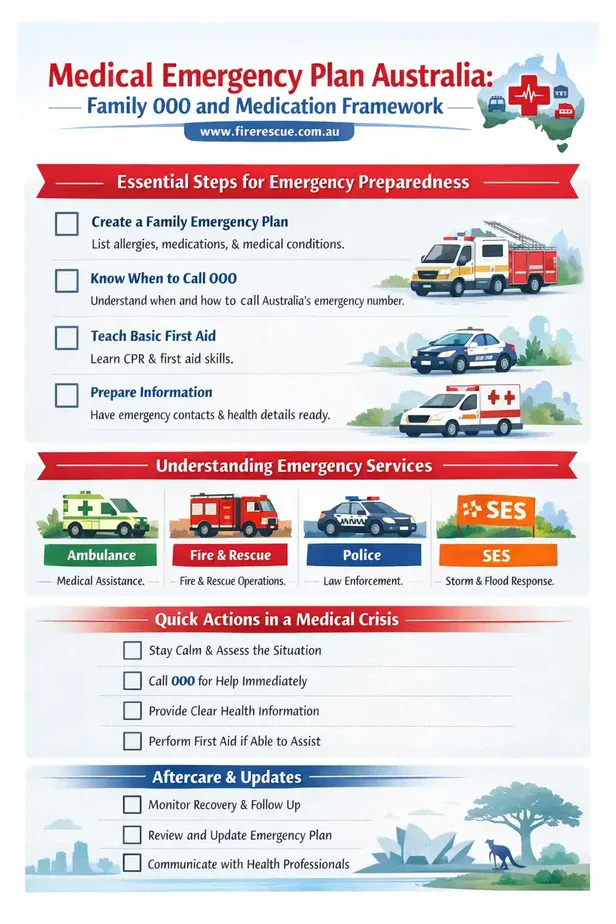
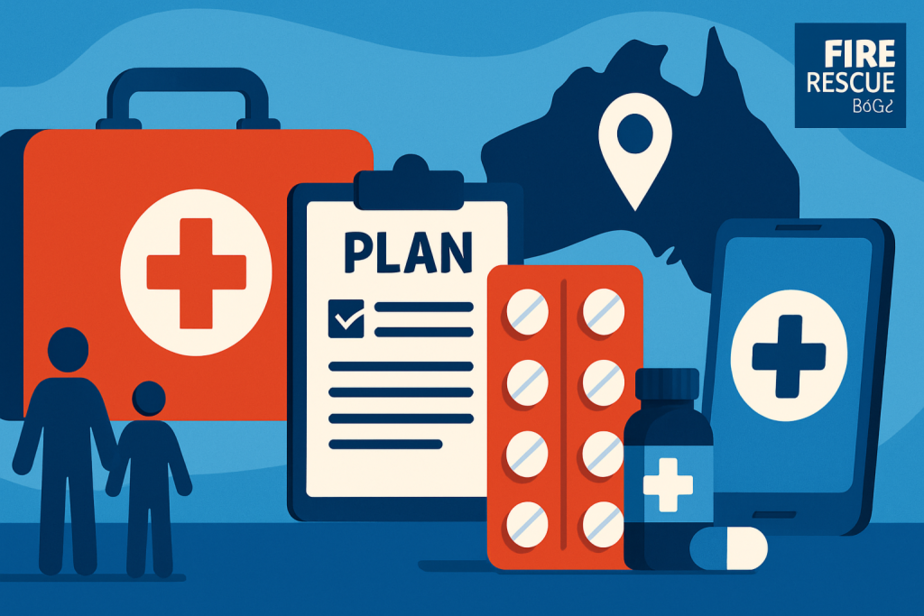
Medical Emergency Plan Australia
Help your household stay ready with a practical family guide covering emergency planning, medication details, quick response actions, and when to call 000.
Prepared for readers who want a clear, user-friendly emergency reference from firerescue.com.au.
Moreover, geographical factors in Australia, such as remote living or exposure to natural hazards like bushfires and floods, can complicate emergency response times. Families living in rural or regional areas should pay special attention to their medical emergency plans, including alternative communication methods and transport arrangements.
Cultural considerations also play a role in emergency preparedness. Australia’s diverse population means some families may require plans that consider language barriers, cultural sensitivities, or specific health practices. Engaging with community health services and local emergency providers can help tailor plans effectively.
In addition to physical health emergencies, mental health crises are increasingly recognised as critical situations requiring immediate attention. Families should consider including mental health emergency contacts and resources in their plans. This might involve crisis helplines, local mental health services, or trusted healthcare providers who can respond swiftly to psychological emergencies.
Emergency preparedness also benefits from awareness of seasonal risks. For instance, during the Australian summer, heatstroke and dehydration are common medical emergencies, particularly for vulnerable groups such as the elderly and young children. Including preventive measures and response plans for heat-related illnesses can further enhance family safety.
Furthermore, the increasing frequency of extreme weather events linked to climate change underscores the importance of having a robust medical emergency plan. Bushfires, floods, and storms not only pose direct physical risks but can also disrupt healthcare access and communication networks. Families should consider these factors when developing their plans, ensuring they have contingencies for power outages, limited transport options, and potential isolation.
Community involvement also enhances resilience. Participating in local emergency preparedness workshops, joining neighbourhood support groups, or volunteering with services like the SES builds knowledge and networks that can be invaluable during crises.
Another important aspect of preparedness is understanding how to access and navigate Australia’s healthcare system during emergencies. Familiarity with local hospitals, urgent care centres, and after-hours clinics can reduce delays in treatment. Some areas offer community health centres or Aboriginal medical services that provide culturally appropriate care, which should be included in your emergency plan.
Families with members who have disabilities or chronic illnesses should also coordinate with their healthcare providers to develop personalised emergency plans. This might include arranging for specialised transport, home medical equipment needs, or ensuring availability of medications during extended emergencies.
Developing Your Family Medical Emergency Plan
Documenting Essential Health Information
Start by gathering detailed health information for each family member. Include known allergies, current medications (including dosages and schedules), chronic medical conditions such as diabetes or asthma, previous surgeries, and any implanted medical devices. It is vital to update this list regularly and keep it accessible to all caregivers and emergency responders.
This medication list should also note the generic and brand names of drugs, as well as any over-the-counter supplements or remedies being used. Some medications may interact adversely during emergencies, so clear documentation helps paramedics make informed decisions quickly.
Beyond the basics
Include any recent hospitalisations, vaccination status, and advanced healthcare directives or powers of attorney that may affect emergency care. For children, note immunisation records and any special needs or developmental considerations.
Use a standard template or app designed for emergency health information to ensure all relevant details are captured comprehensively. Consider including photos of family members for identification in chaotic situations.
It is also wise to include emergency medical identification information, such as medical alert bracelets or necklaces, especially for individuals with critical conditions like diabetes, epilepsy, or severe allergies. These identifiers provide immediate clues to first responders when verbal communication is not possible.
Additionally, consider including information about any communication needs, such as preferred languages or assistive communication devices, to help emergency responders interact effectively with family members who may have hearing impairments, speech difficulties, or limited English proficiency.
Assigning Roles and Emergency Contacts
Identify a primary emergency contact outside the immediate household, such as a trusted friend or relative, who can be notified if something happens. Share the emergency plan details with this person and make sure everyone in the family knows how to reach them.
It’s also useful to designate who in the household is responsible for specific tasks during an emergency, such as calling 000, retrieving the medication list, or assisting children, elderly, or disabled family members.
In addition, plan for contingencies when key family members may be absent or unavailable. Establish a backup contact and ensure that all caregivers, including babysitters or elderly care providers, are familiar with the plan and their roles.
Communicate regularly with family members about the plan, hold practice drills if appropriate, and encourage questions to ensure everyone feels confident and prepared.
Consider creating a small, accessible emergency card or wallet insert for each family member containing critical information and emergency contacts. This can be especially helpful for children, elderly family members, or those with cognitive impairments who may need assistance in communicating during an emergency.
Furthermore, discuss with family members the importance of privacy and how to handle sensitive medical information, ensuring that everyone understands who should have access to the emergency plan and under what circumstances.
Preparing Emergency Supplies and Information Accessibility
Keep a printed copy of the medical emergency plan and medication list in a clearly marked location, such as on the fridge or near the phone. Consider also storing an electronic copy on a mobile device or cloud storage accessible by trusted family members.
Include essential emergency supplies such as a first aid kit, personal medications, a list of allergies, and a simplified action plan for common medical emergencies like asthma attacks or seizures. These preparations help bridge the time gap before professional help arrives.
Review your emergency supplies regularly to replace expired items and restock used materials. Consider additional items such as a torch, batteries, emergency contact cards, and a portable phone charger to enhance readiness.
For families with infants or elderly members
Include specialised supplies such as infant formula, hearing aids batteries, or mobility aids to ensure comfort and safety during emergencies.
It’s also beneficial to prepare a ‘grab bag’ or emergency kit that can be quickly taken if evacuation becomes necessary. This kit should contain not only medical and first aid supplies but also important documents, contact lists, and personal comfort items.
In today’s digital age, leveraging technology can improve accessibility of your emergency plan. Use password-protected apps or encrypted files to store sensitive health information, ensuring privacy while maintaining availability during emergencies.
Consider also integrating your medical emergency plan with smart home devices or medical alert systems that can notify emergency contacts automatically in certain situations. These technologies can offer an additional layer of security and rapid response capability.
Moreover, keep in mind that power outages or network failures can occur during natural disasters or large-scale emergencies. Having offline access to your emergency plan and critical contacts, such as printed copies or devices with offline capabilities, is essential for uninterrupted readiness.
Families should also establish a communication plan that includes meeting points and methods to reconnect if separated during an emergency. This can involve the use of SMS, social media check-ins, or designated safe locations, especially in areas prone to natural disasters.
Who to Call and When: Understanding 000 and Emergency Services Roles
Calling 000: The Australian Triple Zero Emergency Number
In any life-threatening medical emergency, the first step is to call 000 immediately. The 000 operator will ask which service you require: Ambulance, Fire, or Police. If unsure, simply explain the situation and the operator will direct your call appropriately.
Provide clear, calm information including the exact location, nature of the emergency, the patient’s condition, and any relevant medical history such as allergies or medication use. Stay on the line until the operator tells you it is safe to hang up.
Remember that the 000 service is free and accessible from mobile phones without credit or a SIM card. In areas with poor reception, try to move to a higher location or open space to improve signal strength.
In non-emergency situations, Australia also offers the 131 444 number to contact Police for assistance that does not require an immediate emergency response. Understanding these distinctions can help you direct calls appropriately and avoid overloading emergency lines.
Ambulance Services
Ambulance paramedics are trained to provide emergency medical treatment and transport patients to hospitals. They respond to a range of incidents including heart attacks, strokes, traumatic injuries, allergic reactions, and respiratory distress.
If you suspect a medical emergency, call 000 and request an Ambulance without delay. Paramedics will assess, stabilise, and provide care en route to medical facilities.
Ambulance services in Australia may also offer non-emergency transport or community paramedicine programs for chronic condition management, but these require prior arrangements and are separate from emergency response.
Many Ambulance services provide public education and training on recognising medical emergencies, CPR, and first aid. Engaging with these resources can empower families to act confidently before paramedics arrive.
Fire/Rescue Services
Fire/Rescue teams specialise in fire suppression, rescue operations, and hazardous material incidents. They may also assist in medical emergencies that involve entrapment or injuries caused by fire, motor vehicle accidents, or collapsed structures.
While they are not primary medical responders, Fire/Rescue crews often provide critical first aid support until Ambulance arrives.
In addition, Fire/Rescue services often engage in community education programs, teaching fire safety and basic life support skills that can enhance overall emergency preparedness.
During large-scale emergencies such as bushfires, Fire/Rescue teams coordinate evacuation efforts and provide vital information to the public. Their role extends beyond immediate response to include prevention and resilience-building within communities.
Police Services
Police respond to emergencies involving safety, security, and law enforcement. They secure scenes of accidents or medical emergencies, control crowds, and investigate incidents where injury or death may be involved.
Police can also assist with welfare checks and coordinate with Ambulance and Fire/Rescue services during complex emergencies.
Their presence can be crucial in managing traffic, preserving evidence, and providing reassurance to bystanders, allowing medical teams to operate efficiently.
In some rural areas, police may have additional responsibilities related to search and rescue operations, especially when other emergency services have limited reach.
State Emergency Service (SES)
The SES provides support during natural disasters such as floods, storms, and cyclones. They assist with evacuations, damage assessment, and sometimes rescue operations in hazardous conditions.
While they do not provide medical treatment, SES plays a vital role in ensuring community safety during environmental emergencies.
Volunteers form the backbone of the SES, often responding quickly to local incidents and providing essential support services that complement other emergency agencies.
SES also promotes community preparedness through education, training, and collaboration with local councils and emergency services, helping families better prepare for natural disasters that may impact medical emergencies.
Quick Actions to Take During a Medical Emergency
Assessing the Situation Calmly
The first priority is to ensure your own safety and that of the patient. Check for immediate dangers such as fire, electrical hazards, or traffic before approaching. If safe, try to determine the nature of the emergency by observing symptoms like unconsciousness, breathing difficulty, severe bleeding, or chest pain.
Keeping calm helps you think clearly and communicate effectively with emergency services. Take a deep breath and focus on gathering vital information that will assist responders.
If multiple people are present, assign someone to monitor the patient’s condition and others to prepare for emergency services arrival. This teamwork can improve the efficiency of your response.
Calling 000 and Communicating Clearly
Call 000 without delay. Speak clearly and provide your exact location including landmarks if necessary. Describe the emergency and the patient’s condition. Answer questions from the operator patiently and follow any instructions given, including performing CPR or first aid.
If possible, have someone else call 000 while you attend to the patient. This allows you to focus on providing immediate care while ensuring emergency services are alerted.
Remember to keep your phone line open and accessible. Emergency operators may provide critical guidance or ask for additional information while help is on the way.
Providing Basic First Aid
If trained, provide first aid within your skill limits. This may include controlling bleeding with clean cloths, placing the patient in the recovery position if unconscious but breathing, or using an epipen for severe allergic reactions.
Avoid moving the patient unnecessarily unless there is imminent danger. Keep them warm and reassured while waiting for professional help.
If you are not trained, the 000 operator can guide you through basic first aid steps. Consider enrolling in accredited first aid and CPR courses offered by recognised Australian providers to enhance your preparedness.
It is important to remember that first aid skills can deteriorate over time. Regular refresher courses help maintain confidence and competence. Many community organisations, workplaces, and schools offer these courses.
Additionally, learning how to manage specific emergencies such as choking, burns, or poisoning can be invaluable. First aid training often covers these scenarios, equipping you with the knowledge to act swiftly and appropriately.
Medication List Tips for Emergency Situations
An accurate medication list is one of the most valuable tools in a medical emergency. It enables responders to avoid harmful drug interactions and understand the patient’s treatment needs. Update this list whenever medications change and include the prescribing doctor’s contact details if possible.
Keep the list concise but comprehensive, including all prescription drugs, vitamins, and supplements. If any medications require refrigeration, note this as well.
Sharing this information with your GP and pharmacist helps maintain accuracy and ensures your emergency plan stays current.
In addition to listing medications, include information on medication allergies or adverse reactions, and note any recent changes in dosage or new prescriptions. This helps paramedics and doctors make quick, informed treatment decisions.
Consider using digital tools or apps designed for medication management that can be shared securely with healthcare providers and emergency contacts. Some apps offer reminders and updates that keep your list accurate in real time.
It is also advisable to keep a physical copy of your medication list in your wallet or purse, as digital devices may not always be accessible during an emergency. Including a list of chronic health conditions alongside medications can provide additional context to responders.
Furthermore, when preparing your medication list, consider including information on recent lab results or diagnostic tests that may be relevant during emergencies. For example, recent blood sugar readings for diabetics or INR levels for those on blood thinners can assist medical teams in tailoring treatment.
Aftercare Basics and Updating Your Plan
After a medical emergency, ongoing care and communication with health professionals are essential. Monitor recovery progress, attend follow-up appointments, and seek support for any physical or emotional challenges.
Use insights gained from the emergency to update your medical emergency plan. Note any new medications, allergies, or conditions diagnosed. Debrief with family members to improve preparedness for future incidents.
Remember that keeping your plan accessible and reviewed regularly is key to effective emergency response and peace of mind.
Emotional aftercare is also important. Medical emergencies can be traumatic, and family members may benefit from counselling or support groups. Recognising signs of stress or anxiety and seeking professional help can improve overall recovery and resilience.
Finally, consider sharing your updated plan with your wider community, including schools, workplaces, and neighbours, where appropriate. This network can provide additional support and ensure coordinated care during future emergencies.
In addition, reflecting on the emergency experience can guide improvements in home safety measures, such as installing smoke alarms, securing hazardous substances, or modifying living spaces to reduce fall risks. Prevention complements your emergency plan by reducing the likelihood of future incidents.
It is also beneficial to maintain a journal or log of medical emergencies and responses. Documenting what happened, how you responded, and what could be improved helps family members and healthcare providers refine the plan and enhances preparedness for future situations.
Additionally, families should consider post-emergency reviews with healthcare professionals to evaluate the effectiveness of the response and identify any gaps in care or communication. This collaboration can strengthen future emergency readiness.
Conclusion
A medical emergency plan tailored to your family’s needs is an invaluable part of Australian household safety. By documenting essential health details, understanding when and how to call 000, and knowing the roles of emergency services, you can respond confidently and effectively when emergencies arise.
Regularly updating your medication list and emergency plan ensures that both your family and emergency responders have the critical information needed to safeguard health and wellbeing. Preparation and calm action save lives.
Taking the time now to develop and practice your medical emergency plan can make all the difference in a crisis. Empower yourself and your loved ones with knowledge, clear communication, and readiness. In Australia’s diverse and sometimes challenging environment, a well-crafted plan is not just prudent—it is essential.
FireRescue Training Hub
Access practical fire and emergency study support resources, downloads, checklists, audio guides, and member-only course content.
- Course library
- PDF downloads
- Audio guides
- Checklists
Study support only. Not accredited training or a replacement for workplace procedures.
About the author and safety review
Ken Walker
Former Station Officer and fire service educator
Former career firefighter with extensive career and volunteer fire service experience.
Qualifications: Associate Diploma of Applied Science in Fire Technology; Institute of Fire Engineers studies.
Author profilehttps://www.firerescue.com.au/about-us/