Understanding tsunami evacuation route planning is vital for anyone living in coastal Australia. This guide offers straightforward advice to help families, workers and homes prepare effectively. Follow official advice and use the checklists to make sure your evacuation plan is ready when you need it most.
Tsunamis may be rare, but their impact can be devastating. Being prepared with clear routes and safe destinations can save lives. This article covers practical steps and roles of emergency services to help you stay safe.
What Is Tsunami Evacuation Route Planning?
Tsunami evacuation route planning means identifying the safest paths to leave a tsunami risk zone quickly and efficiently. It involves knowing where to go, how to get there, and what to take along. In Australia, coastal communities may face tsunami risks from distant earthquakes or local sea disturbances, so having a clear plan is essential.
Unlike other emergencies such as bushfires, tsunamis offer limited time to act. Planning your evacuation route ahead of time reduces confusion and delays during an actual event. This planning should cover homes, workplaces and schools, ensuring everyone knows the safest direction to head and the quickest way to high ground or designated safe zones.
Effective route planning also takes into account the possibility of infrastructure damage or blocked roads, which can occur during seismic events that precede or coincide with tsunamis. Therefore, having alternative evacuation paths and knowing multiple exit points can be critical to a successful evacuation.
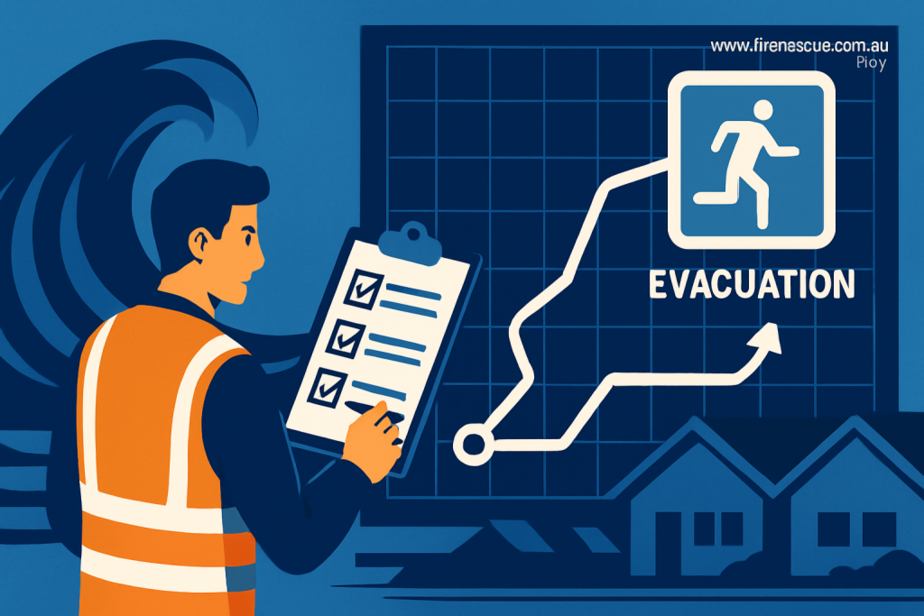
Moreover, understanding local geography and elevation changes can help in selecting routes that minimize risk from secondary hazards such as flooding or landslides that may accompany tsunami impacts.
Starting Your Plan: Know Your Local Risks and Routes
Your first step is to understand the tsunami risks in your area. Australian states and territories provide official tsunami hazard maps showing vulnerable locations. These maps are available from agencies such as Geoscience Australia and your state emergency service websites. Use these maps to identify if your home or workplace is within a tsunami risk zone.
Once you confirm risk exposure, locate the official tsunami evacuation routes. These routes are signposted in many coastal towns and suburbs. Follow these paths as they lead away from the coast toward higher ground or safe meeting points. Avoid low-lying areas, river mouths, or valleys that may channel water flow.
If your area lacks clear signage, plan your own route using high ground landmarks such as hills, ridges or inland areas well above sea level. Choose routes that are clear of heavy traffic bottlenecks during peak times and that you can access on foot if necessary.
It is also advisable to conduct a physical walk-through of your planned evacuation route before an emergency occurs. This practice helps identify any potential obstacles such as fences, construction zones, or areas prone to flooding that may hinder escape. Familiarity with the terrain can significantly reduce panic and hesitation during an actual evacuation.
Additionally, consider the time of day and weather conditions when planning your routes. Some paths may be safe and accessible in daylight but hazardous or confusing at night or during storms. Planning for different scenarios ensures your evacuation plan remains effective regardless of circumstances.
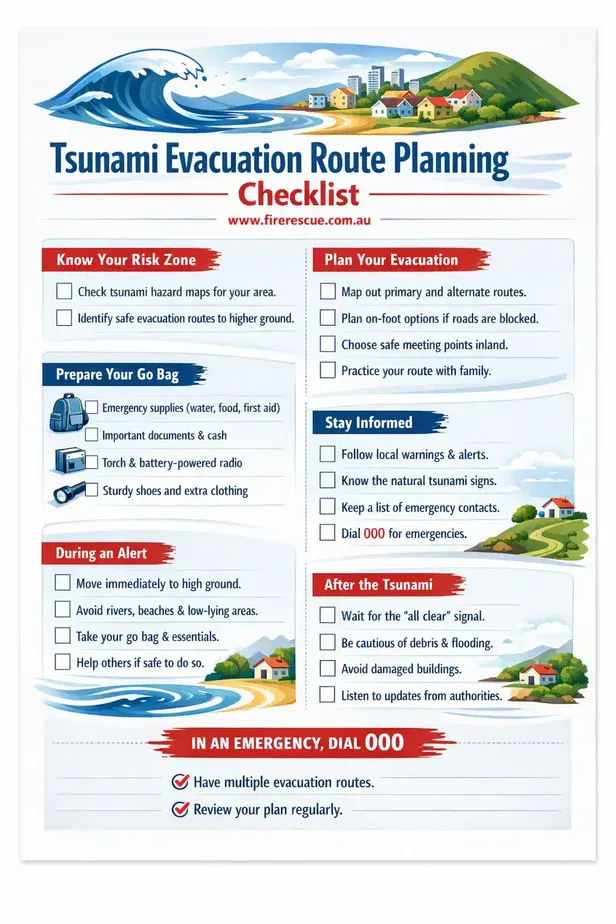
Tsunami Evacuation Route Planning Checklist
Print this one-page checklist and keep it ready at home, work, or in your emergency folder.
In a life-threatening emergency, call 000.
Preparing Your Household and Workplace
Share your tsunami evacuation route plan with everyone in your household and workplace. Practice the route regularly so it becomes familiar. Discuss what to do when an evacuation alert comes in, who will lead the group, and how to check everyone is accounted for.
Make sure your family and colleagues know to listen for official warnings via TV, radio, or smartphone alerts. In Australia, the Bureau of Meteorology and state emergency services issue tsunami warnings. Follow their instructions carefully. Do not rely on social media rumours or unconfirmed information.
Prepare an emergency kit with essentials such as bottled water, non-perishable food, a torch, a first aid kit, copies of important documents, mobile phone chargers, and a whistle. Store this kit near your main exit or a place everyone knows.
In workplaces, appoint a tsunami safety coordinator responsible for overseeing evacuation procedures and ensuring all employees understand the plan. Regular drills can help employees respond quickly and calmly during an emergency. Encourage open communication so any concerns about the evacuation plan can be addressed promptly.
For households with children or elderly members, tailor your plan to accommodate their specific needs. This may include arranging for assistance during evacuation or preparing additional supplies such as medications and mobility aids. Having a clear communication strategy, including meeting points and contact persons, ensures everyone stays connected.
During an Evacuation: Stay Calm and Follow Official Advice
When a tsunami warning is issued, act immediately. Put your evacuation plan into motion without delay. Use your pre-planned routes and avoid shortcuts or unknown paths, which may be blocked or dangerous.
Keep in mind that tsunamis can arrive minutes after the first signs, such as a strong earthquake or unusual sea behaviour. If you feel a strong earthquake near the coast, evacuate immediately even before an official warning is issued.
Do not stop to collect belongings or wait for others if it risks your safety. Prioritise getting to high ground or designated safe zones as quickly as possible. Listen to emergency services updates and instructions via official channels.
During evacuation, remain vigilant of your surroundings. Avoid crossing bridges, tunnels, or low-lying areas that may be compromised. If you encounter obstacles or hazards, seek the safest alternative route without hesitation. Keep communication devices charged and accessible to receive real-time updates.
It is equally important to assist those who may need help evacuating, such as neighbours with disabilities or young children, but only if doing so does not endanger your own safety. Coordinated community response can improve overall survival rates.
If You Only Do Five Things
Know if you live or work in a tsunami risk zone by checking official maps from Geoscience Australia and your local SES.
Identify and learn your nearest official tsunami evacuation routes or plan your own to the highest safe ground.
Share your evacuation plan with your family, coworkers, or housemates and practice it regularly.
Prepare a grab-and-go emergency kit with water, food, torch, and important documents kept near your exits.
Follow all official warnings and instructions from emergency services. In life-threatening situations, call 000 immediately.
Who does what in Australia
The roles of emergency services are clear and coordinated. Fire and Rescue services handle fires, rescues and some disaster responses. Police manage safety, traffic control and law enforcement during emergencies. Ambulance services provide medical aid and transport to hospitals. The State Emergency Service (SES) specialises in flood, storm and tsunami warnings and evacuations. It’s important to rely on these agencies for advice and assistance during a tsunami event. Always call 000 for any life-threatening emergencies.
These agencies work collaboratively with local councils and community groups to ensure evacuation routes are maintained and clearly marked. They also conduct public education campaigns to raise awareness about tsunami risks and preparedness measures. Engaging with these organisations through community meetings or online resources can enhance your understanding and readiness.
Extra Tips for Coastal Residents
Keep vehicles fuelled and ready for quick departure if you plan to use them during an evacuation. However, be prepared to leave them behind if roads become congested or unsafe.
Know your neighbours and discuss tsunami safety and plans. Helping each other can save lives, especially for the elderly or those with mobility challenges.
Stay informed year-round. Sign up for local emergency alerts and know where to find updates on natural hazard risks in your area.
Consider installing emergency signage or lighting along private access routes to assist evacuation at night or during low visibility. Additionally, have a family communication plan that includes meeting points and contact numbers in case you become separated.
Review and update your evacuation plans regularly, especially after significant changes such as moving house, new roadworks, or changes in local emergency procedures. Staying proactive ensures your plan remains relevant and effective.
Planning for Pets and Livestock
Include your pets in your evacuation plan. Know which shelters or safe places allow animals as many evacuation centres have restrictions. Prepare a pet emergency kit with food, water, leashes, carriers and basic medical supplies.
If you have livestock, develop strategies to move them to higher ground or safer paddocks well before any threat arrives. Consult local agricultural services or councils for advice on animal evacuation during tsunamis.
Practice moving pets and livestock as part of your drills to reduce stress and confusion during an actual emergency. Make sure identification tags or microchips are up to date, and keep records of vaccinations and ownership documents accessible.
After the Tsunami: Stay Safe and Follow Recovery Guidance
Do not return to evacuated areas until local authorities confirm it is safe. Damage to buildings, roads and utilities may pose serious risks.
Be aware of hazards such as contaminated water, downed power lines, and unstable structures. Follow official recovery instructions provided by Fire/Rescue, Police, SES and other agencies.
Report any injuries or emergencies by calling 000. Seek medical attention promptly if you experience any health issues following the event.
Recovery after a tsunami can be a lengthy process. Stay patient and support community efforts to rebuild safely. Avoid entering damaged buildings and heed warnings about aftershocks or secondary hazards that may follow the initial tsunami.
Engage with local support services for emotional and psychological help if needed. Natural disasters can have lasting mental health impacts, and seeking assistance is a sign of strength, not weakness.
FireRescue Training Hub
Access practical fire and emergency study support resources, downloads, checklists, audio guides, and member-only course content.
- Course library
- PDF downloads
- Audio guides
- Checklists
Study support only. Not accredited training or a replacement for workplace procedures.
About the author and safety review
Ken Walker
Former Station Officer and fire service educator
Former career firefighter with extensive career and volunteer fire service experience.
Qualifications: Associate Diploma of Applied Science in Fire Technology; Institute of Fire Engineers studies.
Author profilehttps://www.firerescue.com.au/about-us/