Aftershock Safety What To Do
After an earthquake, aftershocks can follow minutes, hours or even days later. Knowing aftershock safety what to do helps you stay calm and prepared when these tremors hit. This guide offers straightforward steps, checklists and tips tailored for Australians, so you can protect yourself, your loved ones, and your home.
The advice is practical and clear, with a focus on listening to official warnings from Fire/Rescue NSW, Police, SES and Ambulance services. Following these directions ensures your response is measured, safe and effective.
Understanding Aftershocks and Their Risks
An aftershock is a smaller earthquake that happens in the same area after a larger earthquake. They can cause additional damage to weakened structures, falling debris, and fires. In Australia, while major earthquakes are rare compared to other countries, certain regions such as Victoria, New South Wales and South Australia can still experience seismic activity moderate enough to cause concern.
Since aftershocks often occur without warning, knowing what to do is critical. They may be strong enough to cause injuries or obstruct emergency services if people are unprepared. Awareness and quick action can reduce risks significantly.

Photo by Surprising_Media via Pixabay
Key Aftershock Safety What To Do Immediately
If you feel an aftershock, drop to the ground, take cover under sturdy furniture or against an interior wall away from windows, and hold on until the shaking stops. This simple response reduces your chance of injury from falling objects or debris. Do not run outside during shaking, as falling glass or other hazards can cause harm.
Once the shaking ends, carefully check yourself and those around you for injuries. If anyone is hurt, call 000 immediately for Ambulance assistance. Take care when moving through your home as aftershocks may have weakened structures, caused gas leaks or started fires.
Check Your Surroundings
After an aftershock, inspect your home for damage. Look for cracks in walls, ceilings or foundations, broken windows, and signs of electrical or gas leaks. If you smell gas or hear a hissing sound, turn off the main gas valve and call your gas supplier or emergency services.
Avoid using matches, lighters, or electrical switches until you are sure there is no gas leak. Fires are a major risk after earthquakes and aftershocks, so remain vigilant, and if you detect smoke or flames, call Fire/Rescue on 000 without delay.
Stay Informed and Follow Official Advice
In the aftermath of an earthquake or aftershock, listen to local radio, TV, or official social media channels for updates. Agencies like Fire/Rescue NSW, the State Emergency Service (SES), Police, and Ambulance services provide warnings, instructions and emergency information specific to your area.
Do not rely on social media rumours or unofficial sources. Emergency services may advise evacuations, road closures, or shelter locations. Follow these instructions carefully to keep yourself and your community safe.
Preparing Your Home and Family for Aftershocks
Preparation is key to managing aftershock risks. Secure heavy furniture and appliances to walls, store breakables safely, and ensure your home’s gas, water and electrical systems are maintained. Have an emergency kit ready with water, food, torch, batteries, first aid supplies, and contact details.
Discuss with your family what to do during and after an earthquake, including safe places inside your home and agreed meeting points outside. Practice drop, cover and hold drills regularly so everyone is confident in their response.
Know When to Evacuate
If your home is unsafe due to structural damage or if emergency services advise evacuation, leave promptly but safely. Take your emergency kit, and inform someone outside your area of your plans. Follow designated routes and avoid damaged roads or bridges.
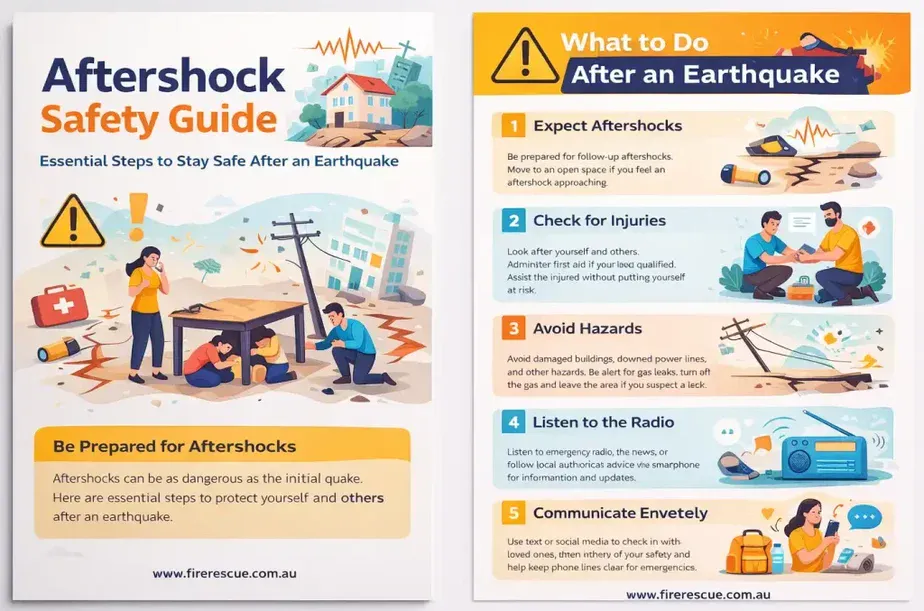
If You Only Do Five Things After an Aftershock
First, drop, cover and hold on during the shaking. Protect your head and neck and stay where you are until it stops.
Second, check for injuries and call 000 if anyone needs urgent medical help. Apply basic first aid if trained.
Third, inspect your home carefully for hazards like gas leaks, broken glass, or electrical damage. Shut off utilities if you suspect leaks or damage.
Fourth, stay informed by tuning in to official updates from Fire/Rescue, SES, Police and Ambulance. Follow their advice regarding safety zones or evacuations.
Fifth, remain calm and prepared for further aftershocks. Avoid unnecessary travel and keep your emergency kit close. Check on neighbours, especially elderly or vulnerable people.
Who Does What in Australia?
Fire/Rescue teams respond to fires, hazardous material incidents, and rescue operations after earthquakes. They also assist with fire safety checks and damage assessment.
Police maintain public order, secure affected areas, and help with evacuations and traffic control. They coordinate with other agencies during emergencies.
Ambulance services provide medical care and transport for injured people. They are critical in the immediate aftermath of an earthquake or aftershock.
State Emergency Service (SES) supports communities in disasters by conducting damage assessments, clearing debris, and assisting with rescues and temporary repairs.
In life-threatening emergencies, always call 000 immediately.
Final Thoughts on Aftershock Safety What To Do
Aftershocks can be unsettling and dangerous, but with clear knowledge and preparation, you can reduce your risk of injury and damage. Stay calm, follow proven safety steps, and keep connected to official emergency services and local authorities.
Remember, your safety is your best priority. Protecting your home and community starts with being informed and ready to act safely, calmly and quickly.
Additional Tips for Aftershock Safety and Recovery
Beyond the immediate aftermath, it is important to plan for the days following an earthquake. Aftershocks can continue for weeks or even months, so maintaining vigilance is essential. Keep emergency supplies replenished, and ensure your communication devices remain charged. Establish a communication plan with family and friends to confirm everyone’s safety.
Mental health is another critical factor following an earthquake and aftershocks. Experiencing repeated tremors can cause anxiety and stress. It’s important to seek support from community groups, counsellors, or health professionals if you or your loved ones feel overwhelmed. Sharing your experience and staying connected can help manage emotional impacts during recovery.
When assessing your property for damage, document any issues with photos or videos. This information can be vital for insurance claims and repair work. Contact your insurance provider promptly to understand the coverage and claim process related to earthquake and aftershock damage.
Community resilience plays a big role in recovery. Consider volunteering with local emergency services or community groups to assist neighbours who may need extra help, especially the elderly, disabled, or isolated individuals. Being part of a support network strengthens the entire community’s ability to cope with and recover from seismic events.
Finally, review and update your preparedness plans regularly. As seasons change or as your family situation evolves, make sure your emergency kits, contact lists, and safety procedures remain current. Continuous preparation helps ensure you are ready for any future earthquakes and aftershocks.
It’s also wise to familiarize yourself with the structural integrity of your home. Older buildings may not be designed to withstand seismic activity, so consulting a structural engineer can identify potential risks and recommend reinforcements. Simple modifications, like securing bookshelves and heavy appliances, can make a significant difference in reducing hazards during aftershocks.
In addition to personal preparedness, understanding community emergency plans is beneficial. Many councils and local governments have specific procedures for seismic events, including designated evacuation centres and support services. Engaging with these resources before an event can make your response smoother and more effective.
For those living in multi-story buildings or apartments, aftershock safety requires extra attention. Identify safe zones within your unit and be aware of emergency exits. Elevators should not be used during or immediately after aftershocks. Familiarize yourself with fire escape routes and keep your emergency supplies easily accessible.
Children and pets require special consideration. Teach children how to respond during aftershocks through age-appropriate drills and ensure pets are secured to prevent injury or escape. Keeping calm and reassuring loved ones helps maintain a safe environment for all household members.
Finally, consider the role of technology in aftershock safety. Several apps and alert systems provide real-time earthquake and aftershock notifications. Signing up for these alerts can give you precious seconds to take cover. Additionally, maintaining a battery-powered or hand-crank radio ensures you can receive vital information even during power outages.
FireRescue Training Hub
Access practical fire and emergency study support resources, downloads, checklists, audio guides, and member-only course content.
- Course library
- PDF downloads
- Audio guides
- Checklists
Study support only. Not accredited training or a replacement for workplace procedures.
About the author and safety review
Ken Walker
Former Station Officer and fire service educator
Former career firefighter with extensive career and volunteer fire service experience.
Qualifications: Associate Diploma of Applied Science in Fire Technology; Institute of Fire Engineers studies.
Author profilehttps://www.firerescue.com.au/about-us/