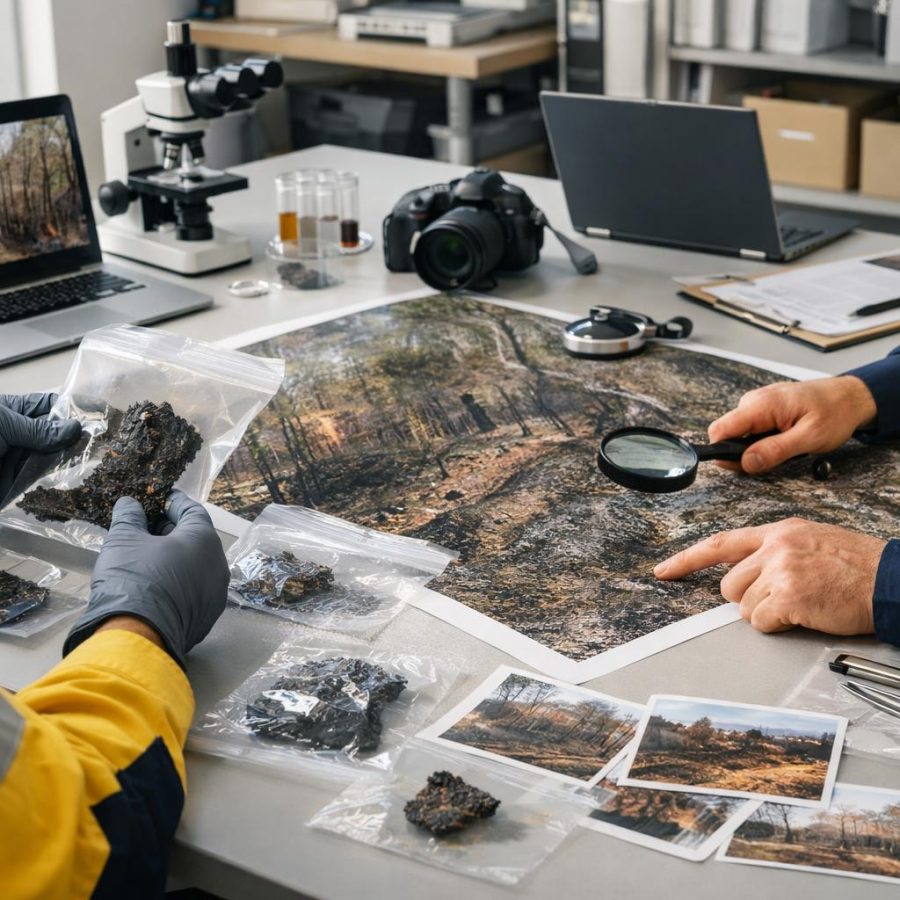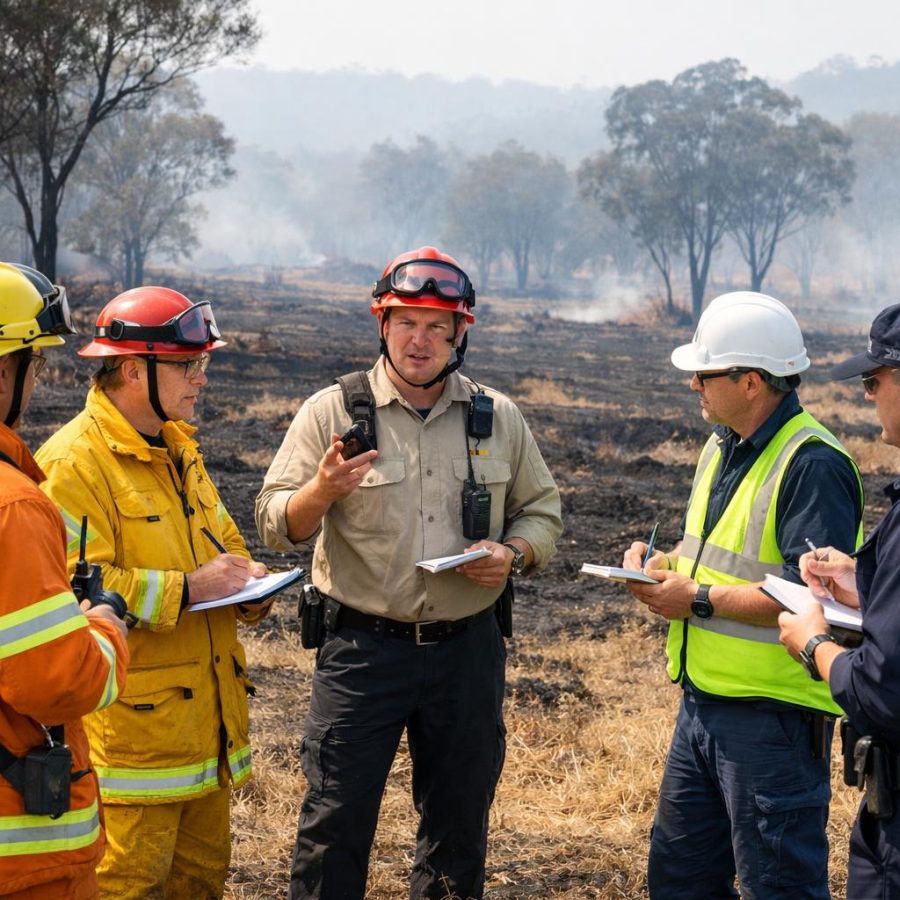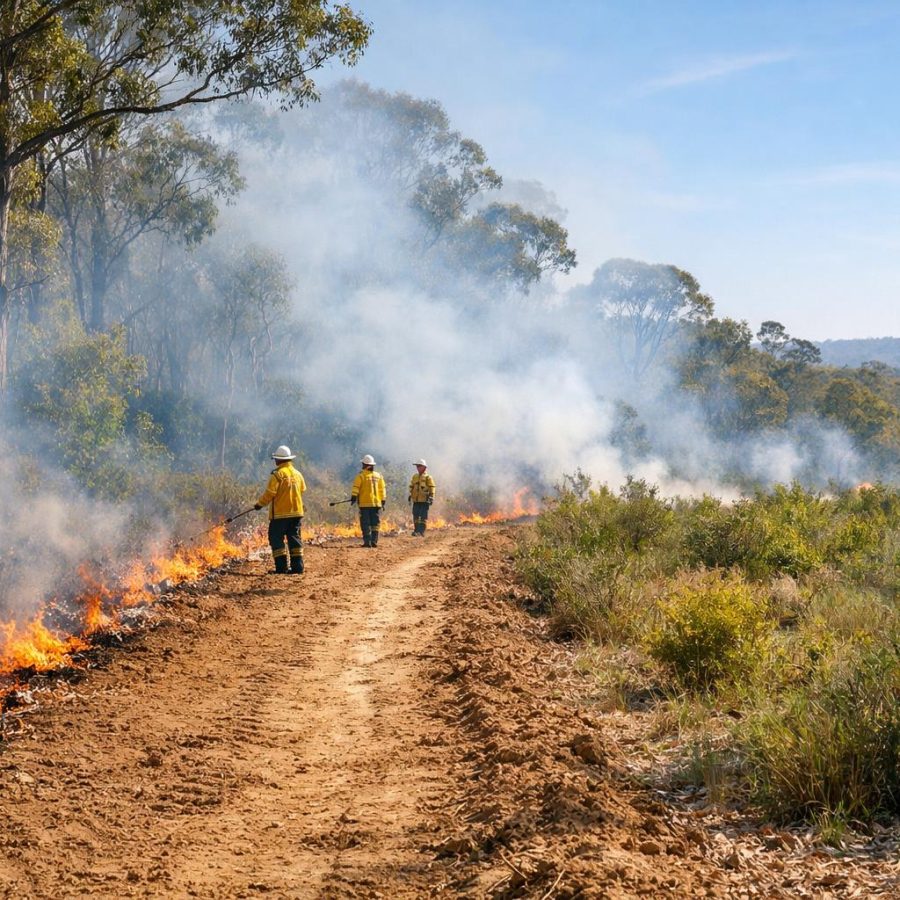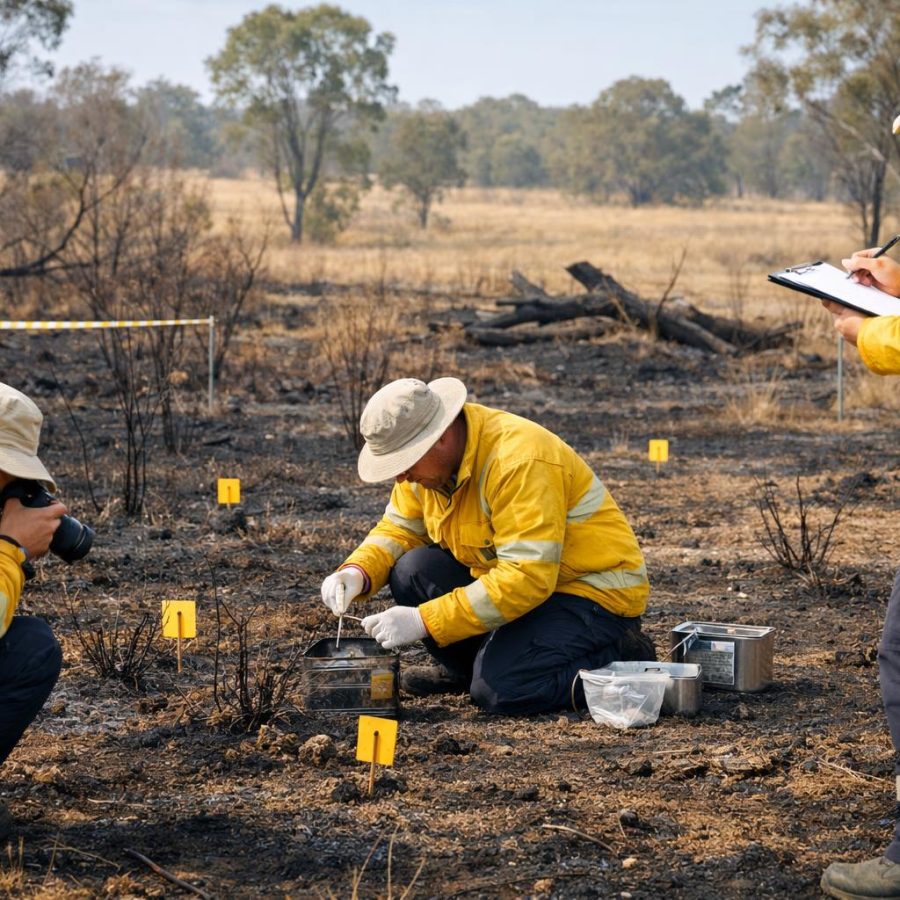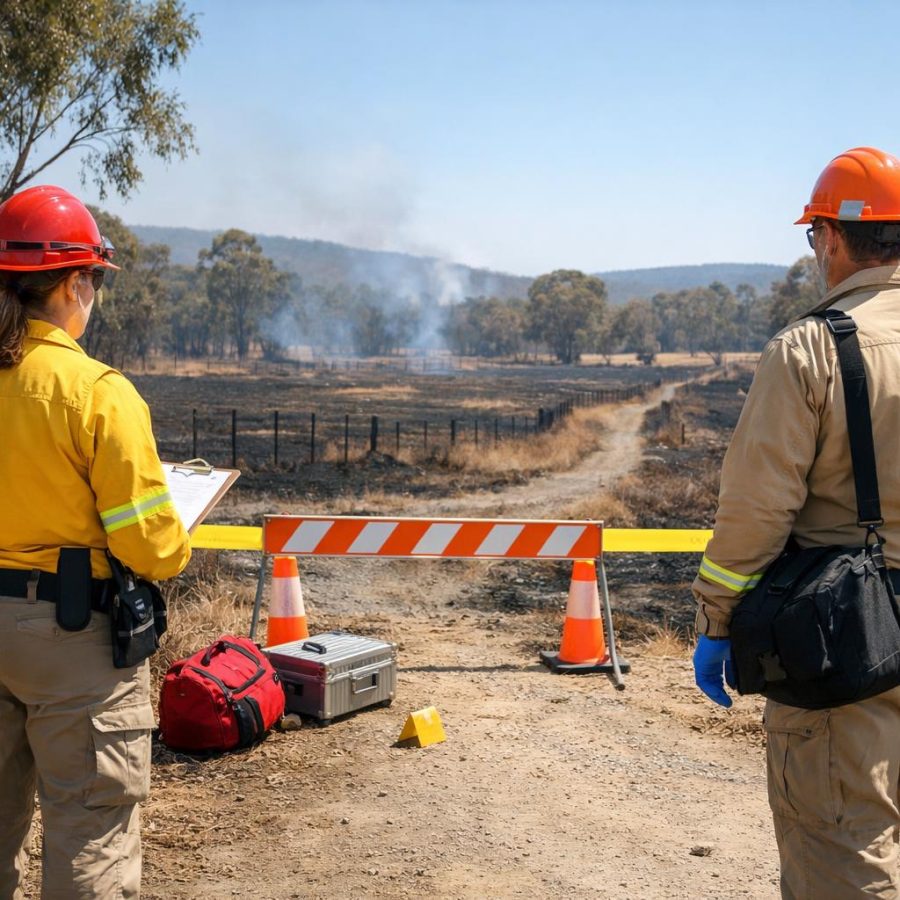
Fire research has achieved a great deal. It has improved our understanding of ignition, heat transfer, fire spread, firebrands, batteries, toxic gases, structural performance, fire-resistant materials, suppression, evacuation, digital building information and community preparedness. That work matters. But if we want fewer disasters, the next step is to connect this technical knowledge with the human, organisational and community failures that let fires grow into tragedies.
Fire science is advancing, and that progress matters
Recent fire safety research shows how broad and sophisticated the field has become. Laboratory testing, mathematical analysis, computer modelling and machine learning can all improve understanding of how fire starts, grows and spreads. Those tools also help engineers, product designers, emergency services and regulators make safer decisions.
This technical work is not a side issue. It is the foundation of fire science. Without it, we would know much less about how flames move through fuels, how heat damages materials, how smoke behaves, how batteries fail, how toxic gases spread, or how a structure responds under stress. The field has also helped develop safer products, better building systems and more effective suppression tools.
That is why any serious discussion of fire research must begin with respect for the science already done. Researchers have advanced the field through careful experiments, modelling and theory. They have made fire more measurable, more comparable and more understandable.
At the same time, the collection of 2026 Fire Safety Journal research points to a deeper question: are we studying fire in a way that is narrow compared with the real reasons disasters happen?
That question is not a criticism of individual studies. It is a question about priorities, framing and what counts as a problem worth researching.
Why laboratory studies and computer models remain essential
Laboratory experiments are valuable because they isolate variables. They allow researchers to test one material, one fuel arrangement, one battery configuration or one suppression method under controlled conditions. That makes it possible to identify mechanisms that would be difficult to see in the chaos of a live incident.
Computer models are equally important. They help researchers explore scenarios that would be dangerous, impossible or far too expensive to test in the field. Models can support building design, wildfire planning, evacuation analysis and incident decision support. They also help compare what might happen under different assumptions, such as wind shifts, fuel loads or suppression strategies.
Controlled work is especially useful when the aim is to understand a process. If the question is how a flame front behaves over a surface, how a battery cell vents under abuse, or how a firebrand ignites a roof material, then laboratory and modelling work are often the right tools.
But a model is still a simplification. It represents a selected question, a selected environment and a selected user need. That is not a weakness in itself. It is simply the nature of modelling. Problems begin when the model is treated as if it explains the whole disaster.
The same applies to experiments. A test may be carefully designed and highly informative, yet still represent only a fraction of the conditions in a real event. Real fires involve changing winds, mixed fuels, uneven terrain, structures, suppression activity, communication failures, fatigue, delay and uncertainty. A clean test rarely captures all of that at once.
Technical research therefore remains essential, but it should be understood as one part of the evidence base, not the whole picture.
What technical studies do well
- Identify mechanisms that drive ignition, spread and damage.
- Compare materials, systems and suppression approaches under consistent conditions.
- Support safer product design and building design.
- Test hypotheses before they are applied more widely in the field.
- Provide evidence for operational tools and planning assumptions.
Those strengths are real. The concern is not with technical fire science itself. The concern is with balance.
Understanding fire behaviour is not the same as preventing disaster
One of the strongest themes in the research collection is that fire behaviour can be studied in great detail without fully explaining why a community was exposed, why a building was vulnerable, why a warning did not work, or why people had no safe way out.
That distinction matters. Understanding fire behaviour answers questions such as: how hot did it get, how fast did it spread, what failed first, and what suppression action mattered most? Those are important questions.
Preventing disaster asks different questions. It asks why the risk was allowed to remain, who knew about it, who had responsibility to act, what prevented action, whether the warning system fitted the community, whether the transport network supported evacuation, whether maintenance was done, and whether previous lessons were actually applied.
A technically correct explanation of fire spread can still leave the deeper prevention problem untouched. For example, a model may show how fire moved through a landscape or structure, but it may not explain why homes were built in vulnerable locations, why vegetation management was incomplete, why a building defect was left unresolved, why a resident could not leave, or why the community had no practical refuge.
That is why the fire safety field must avoid treating disaster as if it were simply the result of a single ignition or a single failure. Real disasters are usually the end result of connected conditions.
Fire behaviour is only one part of the story. Disaster prevention depends on how people, institutions, places and decisions interact before the flames arrive.
The limits of small samples, hypothetical scenarios and post-event interviews
Many useful fire studies rely on small samples. That is common and often unavoidable in early-stage or qualitative research. However, small samples should be understood carefully. They can reveal patterns, but they cannot represent every community, building type, event or decision context.
The evacuation travel study in the supplied collection, for example, used 52 semi-structured interviews across three locations. It produced a useful conceptual framework and the authors recognised that future work needs empirical testing. That is a sensible and honest approach. Interviews can surface experience, but they cannot by themselves validate a whole model of behaviour.
The systemic vulnerability study used four focus-group interviews involving 12 nurses from Sweden’s specialist burn centres. It makes an important contribution because it looks beneath simple risk-factor lists and shows that severe fire injury can arise from physical, cognitive, economic, social and environmental factors interacting together. But the study also has limitations. The sample is small, and the findings are based on healthcare workers’ recollections rather than interviews with the people who were injured.
Those limits do not make the research unhelpful. They simply show why no single study should be treated as a complete account of fire-related harm.
Common research limits that matter
- Small samples that cannot represent all affected groups.
- Hypothetical scenarios that do not fully match real incident conditions.
- Post-event interviews that may miss stress, memory loss, fear, confusion or changing circumstances.
- Narrow participant groups that exclude residents, responders or decision-makers with direct operational experience.
- Short study windows that do not show long-term recovery, maintenance failure or repeat risk.
Good researchers often acknowledge these limits. The issue is that the broader research system still tends to reward technical precision more readily than real-world completeness.
Real fires are usually systems failures, not isolated events
Fire disasters rarely happen because of one mistake alone. They more often emerge from multiple connected failures. A hazardous weather event may coincide with fuel conditions, building weaknesses, poor maintenance, delayed warnings, transport limits, vulnerable residents, communications failures and unclear responsibility. When those conditions line up, disaster becomes much more likely.
This systems view is especially important because it shifts the focus away from a simple search for a single cause. If a community is exposed to fire, the question should not stop at what the flames did. It should continue to ask how the community became exposed in the first place.
That includes questions about planning, land use, infrastructure, inspections, evacuation options, warning systems, maintenance, tenancy, insurance, access to transport and support for people who face additional barriers. It also includes the role of organisations that may have known about a risk but failed to reduce it.
Real incidents often involve more than one organisation and more than one point of failure. Responsibility may be shared across property owners, managers, regulators, service providers, local government, state agencies and emergency services. If research stays too close to the fire itself, it can miss those layers of responsibility.
That does not mean every disaster has the same cause. It means that fire research should be designed to detect interaction, not just isolate one variable at a time.
Poverty, disability, ageing, health and isolation change fire risk
Some people face far more barriers than others when fire threatens. Poverty can limit housing choice, safe retrofitting, transport and the ability to replace damaged items. Disability can affect evacuation speed, communication access, power dependence and the need for assistance. Ageing can reduce mobility, hearing, memory or stamina. Chronic health conditions can make smoke exposure or heat more dangerous. Social isolation can mean fewer people notice the danger or know when a resident needs help.
Transport is another major issue. People without private vehicles may have fewer evacuation options. A person may know a warning is real and still lack a safe or realistic way to leave. Housing conditions also matter. Poor maintenance, overcrowding, insecure tenure, distance from services and limited access to repairs can all increase fire exposure.
These factors are not excuses for ignoring warnings. Emergency warnings remain important and should be taken seriously. But researchers should be careful about describing residents as simply non-compliant when they are making choices under constraints.
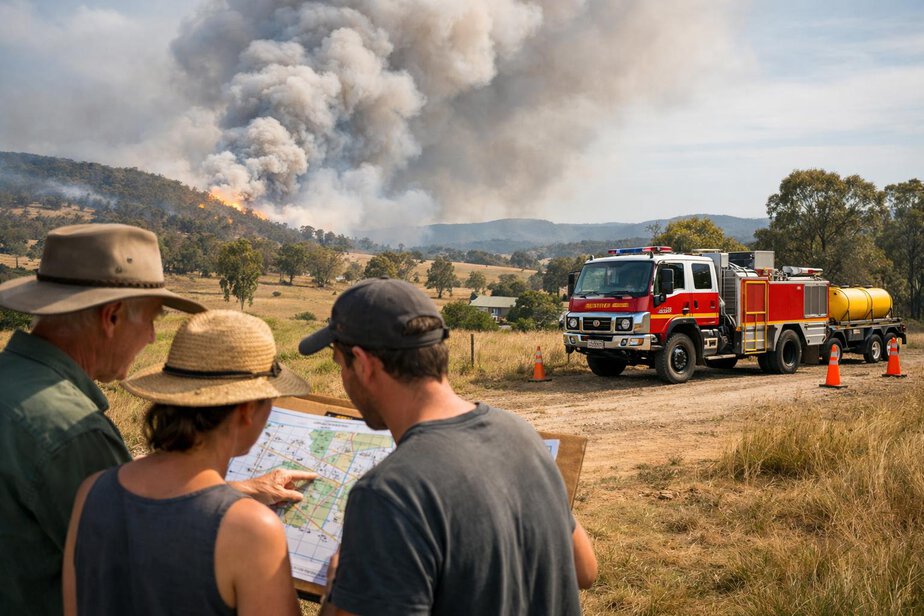
The Pomonal bushfire preparedness study is useful here. It drew on 28 resident interviews after the 2024 fire and found that people often combined official warnings with smoke, weather, local observations, trusted contacts and personal experience. That suggests that some decisions labelled as non-compliance may actually be attempts to assess changing local conditions in a practical way.
Researchers should examine why people delay, stay or choose different actions. The reasons can include animals, family responsibilities, disability, limited transport, previous warning experiences, unsafe roads, concerns about relief centres or uncertainty about where to go. Understanding those realities is essential if prevention is to be more than a one-size-fits-all message.
Planning, regulation, inspection and maintenance deserve far more attention
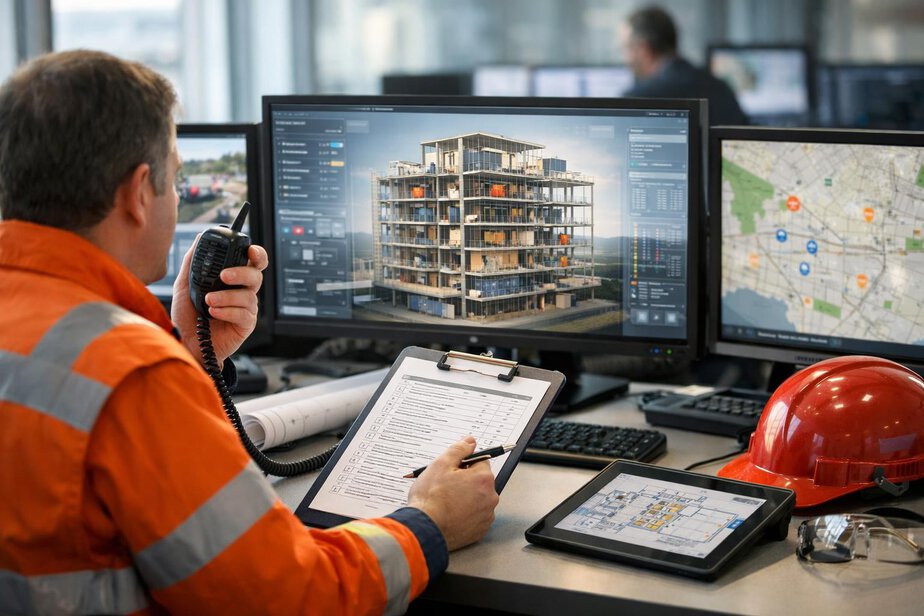
Fire prevention is often discussed as if it were mainly about individual preparedness. That is only part of the picture. Planning decisions, building regulation, inspection regimes, maintenance systems and organisational responsibility can all either reduce or amplify risk.
A building may look compliant on paper while remaining dangerous in practice. A community may receive warnings, yet still lack safe access routes, working infrastructure or appropriate support for people who need more time or assistance. A product may meet a technical requirement, yet still contribute to risk if maintenance, installation or use are poor.
This is where fire research needs to widen its lens. It should examine not only whether a safety measure exists, but whether it is maintained, enforced, understood and usable under real conditions. It should also ask whether those responsible for risk actually had the information and capacity to act.
Weakness in this part of the system is often hidden in plain sight. Inspection may be irregular. Responsibility may be fragmented. Records may be incomplete. Lessons from earlier incidents may not be translated into practice. These are not purely technical problems. They are governance problems.
| Research focus | Useful question | Common limitation |
|---|---|---|
| Technical fire behaviour | How did the fire spread? | May not explain why exposure was allowed to persist |
| Preparedness interviews | How did people describe their decisions? | May miss structural barriers and non-participant perspectives |
| Building information systems | Can commanders access useful information? | May not test workload, training or time pressure |
| Policy and regulation | What rules exist? | May not show whether rules work in practice |
Better prevention requires research that follows the chain from rule to practice to outcome.
Operational reports, coronial findings and firefighter experience are underused
The building fire-safety complexity review in the supplied collection examined 156 English-language peer-reviewed documents. That is a strong academic base, but it excluded grey literature such as expert reports. That is a normal academic boundary, yet it also shows a bigger issue: important operational evidence is often left outside the frame.
Future reviews and research programs should consider a wider evidence base. That could include royal commissions and public inquiries, coronial findings, fire investigation reports, operational debriefs, near-miss reports, building inspection and maintenance records, emergency call and dispatch information, community submissions, firefighter and incident-controller experience, and insurance or reconstruction information.
These sources are not perfect. They can be incomplete, uneven or context-specific. But they often contain information that laboratory studies cannot capture. They can show what people knew, what they did, what was missing, and where the system failed under pressure.
Firefighter experience is especially valuable. Frontline responders see how incidents actually unfold under time pressure, poor visibility, fatigue and incomplete information. Their observations can reveal practical barriers to implementation, training gaps, communication problems and equipment issues. If research does not learn from that experience, it risks staying detached from operational reality.
Research should also be careful about technology claims. The digital-building information study involved 47 incident commanders from Sweden, Finland and the United States, all male, and showed that organised building and sensor information has value. But more advanced predictive information was sometimes viewed as confusing or less reliable, especially when participants had not been trained in the system. That is a reminder that technology should be tested as part of an operational system, not as a standalone idea.
A practical future agenda for fire research
The most useful next step is not to abandon technical research. It is to connect technical work with the realities that determine whether people are actually safer.
A stronger future agenda would be interdisciplinary from the start. It should involve firefighters, communities, engineers, health professionals, planners, regulators, social services, First Nations representatives and people with disability. It should also include older people, low-income households, culturally diverse communities and people without private transport.
Research directions that would make a real difference
- Conduct more real-world field studies alongside laboratory and modelling work.
- Validate models against complex incidents, mixed fuels, buildings, terrain and suppression activity.
- Study entire fire-safety systems rather than isolated components.
- Include frontline firefighters and affected communities from the beginning of research design.
- Work with First Nations communities and recognise long-established knowledge of fire and land management.
- Examine why known safety measures are not implemented or maintained.
- Test technology during realistic exercises before relying on it operationally.
- Study communication failures, information overload, fatigue and decision-making under pressure.
- Compare official procedures with what people can realistically do during an emergency.
- Preserve local knowledge about roads, gates, water supplies, vulnerable residents and unusual fire behaviour.
- Link academic findings with inquiries, operational lessons and policy change.
- Create shared and appropriately protected datasets for independent testing and replication.
- Measure success by fewer deaths, injuries, destroyed homes and disrupted communities, not only by model accuracy or publication count.
- Report whether recommendations were adopted and whether they produced lasting improvement.
That agenda would make fire research more useful without weakening its technical base. In fact, it would make the technical work more relevant, because models, experiments and theories would be checked against how fire systems actually perform in the field.
Australian research has an important role here. More Australian field studies would help account for local housing types, landscapes, climate, infrastructure, community structures and emergency arrangements. Australian operational conditions should be represented in the evidence, not assumed from elsewhere.
A stronger fire science must measure real safety, not just technical success
The future of fire research should be judged by what it changes in the world. If a study improves model accuracy but does not help protect people, homes or communities, then its value is limited, even if the technical achievement is real. If a study reveals a mechanism but never connects that mechanism to planning, maintenance, communication or responsibility, then it only solves part of the problem.
That does not reduce the importance of science. It strengthens it. Research becomes more powerful when it is linked to the realities of public safety, emergency management and community vulnerability.
It is also important to remember that many disasters are preventable only if the right people receive the right information at the right time and are able to act on it. That requires more than fire behaviour knowledge. It requires workable systems, trusted communication, fair regulation, maintained infrastructure and support for people who face extra barriers.
Fire science has built a strong technical foundation. It has improved how we understand ignition, heat transfer, spread, suppression and structural performance. The next major advance must be to connect that knowledge with people, systems, decisions and real-world prevention.
That is the central challenge. The future of fire research is not a choice between engineering and people. Strong prevention requires both. By examining fire behaviour together with vulnerability, leadership, planning, maintenance, communication and responsibility, research can move from describing disasters to preventing them. Before publication, verify facts, context and local procedures carefully, because effective fire prevention depends on evidence that is current, practical and grounded in the real world.
FireRescue Training Hub
Access practical fire and emergency study support resources, downloads, checklists, audio guides, and member-only course content.
- Course library
- PDF downloads
- Audio guides
- Checklists
Study support only. Not accredited training or a replacement for workplace procedures.
About the author and safety review
Ken Walker
Former Station Officer and fire service educator
Former career firefighter with extensive career and volunteer fire service experience.
Qualifications: Associate Diploma of Applied Science in Fire Technology; Institute of Fire Engineers studies.
Author profilehttps://www.firerescue.com.au/about-us/