Fire & Rescue Insight
Structural Collapse Forecasting in Fire Conditions
Key takeaways:
Understanding how fire impacts structural integrity is essential for forecasting collapse and ensuring firefighter and public safety. This knowledge guides emergency response strategies and helps mitigate risk in complex fire scenarios.
Emergency responders in Australia must coordinate closely, with Fire/Rescue leading fire suppression and collapse risk assessment, while Police and SES manage scene control and rescue logistics. Calling 000 remains critical for rapid mobilisation of all services.
Background and context
Structural collapse during fire incidents poses one of the most significant hazards for firefighters and civilians alike. Fire weakens building materials, compromises load-bearing elements, and can cause sudden failure without warning. Forecasting such collapses requires an understanding of fire dynamics, structural engineering principles, and real-time observation under challenging conditions.
Fire incidents vary widely depending on building age, construction type, and occupancy. Older buildings may lack modern fireproofing and have more combustible materials, increasing collapse risk. High-rise structures introduce complexities with vertical load distribution and fire spread through shafts and service areas. Each scenario demands tailored assessment to anticipate structural behaviour under fire stress.
Furthermore, the geographical location and environmental conditions can influence fire behaviour and structural response. For example, in humid climates, moisture within materials can affect how heat transfers through structural components, potentially altering the timing and nature of collapse. Conversely, arid environments may accelerate fire spread and intensify heat exposure. Recognising these contextual factors is crucial for accurate forecasting and response planning.
affects-structural-integrity.webp”>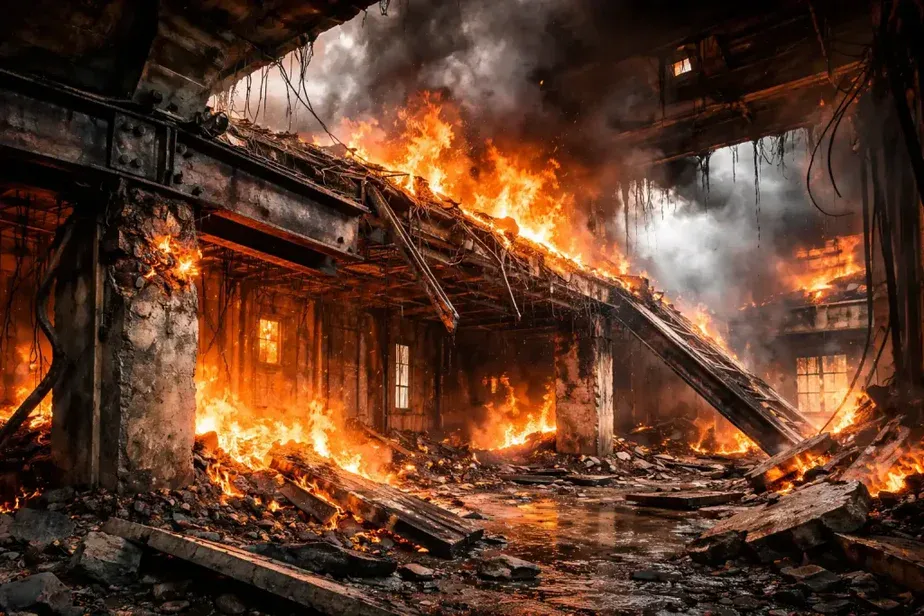
How fire affects structural integrity
Fire generates intense heat which degrades materials such as timber, steel, and concrete, each responding differently under elevated temperatures. Timber chars and loses cross-sectional area, steel softens and can lose strength rapidly above 500C, while concrete may spall, exposing reinforcing steel to heat and damaging its load-bearing capacity. The interplay of heat exposure duration, fire intensity, and building design determines when and where collapse is likely.
In addition to material degradation, fire can induce thermal expansion causing structural elements to deform and exert unexpected forces on connections and joints. For example, steel beams may elongate and push against walls or other supports, potentially causing buckling or joint failure. These secondary effects complicate collapse predictions and highlight the need for comprehensive understanding beyond simple material weakening.
Another important factor is the interaction between different materials within a structure. Composite structures, such as steel reinforced concrete or timber-steel hybrids, may experience differential expansion or contraction during fire exposure, leading to internal stresses and accelerated damage. Fireproofing materials and coatings also play a vital role in delaying degradation, but their effectiveness depends on proper installation and maintenance. Failure or damage to these protective layers can drastically shorten the time to collapse.
Stages of fire-induced structural weakening
Initially, fire causes superficial damage with limited structural impact. As heat penetrates deeper, critical load-bearing members weaken, potentially causing deformations such as sagging beams or cracked supports. Ultimately, if the fire is unchecked, full collapse can occur. Emergency responders must recognise signs of progressive deterioration to anticipate failure and adjust tactics accordingly.
Monitoring early indicators like unusual noises (creaking or popping), visible warping, or sudden shifts in smoke patterns can provide vital clues. These warning signs often precede structural failure by minutes or even seconds. Training responders to detect and interpret these subtle cues enhances situational awareness and survival chances.
Additionally, the progression of fire damage can be influenced by the availability of oxygen, ventilation conditions, and firefighting interventions. Changes in ventilation can accelerate fire growth or cause flashover, rapidly increasing structural stress. Understanding these dynamic interactions helps responders anticipate sudden shifts in collapse potential and adapt their operations accordingly.
Forecasting collapse during fire operations
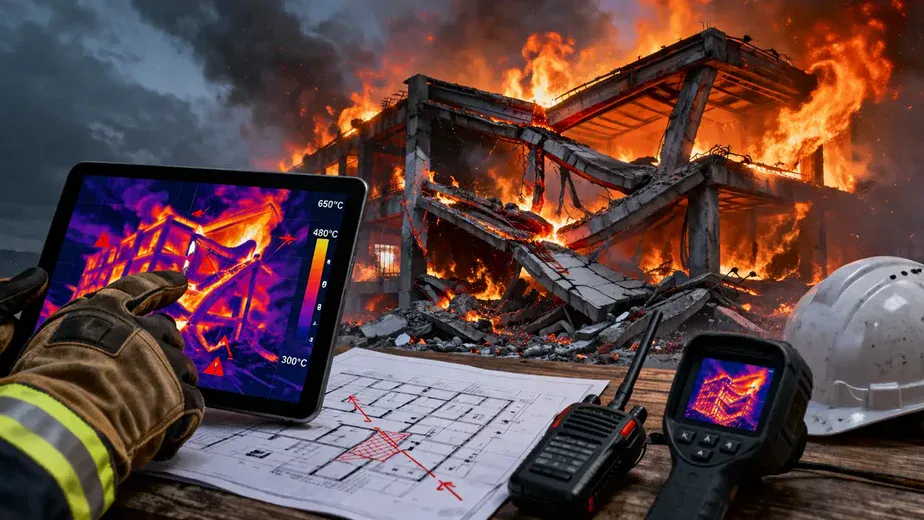
Accurate collapse forecasting combines pre-incident knowledge, on-scene assessment, and monitoring tools. Firefighters and incident commanders use building plans, construction type, and fire behaviour indicators to predict risk zones. Observation of fire spread, smoke patterns, and structural movement informs decisions on safe approach and withdrawal points.
Pre-incident planning is fundamental. Fire services often conduct surveys of critical infrastructure and high-risk buildings, compiling data on construction materials, load paths, and known vulnerabilities. This intelligence supports rapid decision-making during emergencies, especially when time and visibility are limited.
During active fire operations, continuous reassessment is essential. Incident commanders must integrate observations from multiple sources, including firefighters inside the structure, thermal imaging operators, and structural engineers if available. This collaborative approach enables timely identification of escalating collapse risks, allowing for dynamic adjustment of tactics such as repositioning crews or altering ventilation strategies to reduce structural stress.
Use of technology and modelling
Advances in thermal imaging, structural sensors, and computer modelling increasingly support collapse forecasting. Thermal cameras reveal hidden heat spots compromising structural elements, while sensor data can detect unusual vibrations or shifts. Computer simulations, informed by fire science and engineering, help predict how fires will affect specific structural components over time, allowing more proactive risk management.
Emerging technologies such as drones equipped with infrared cameras provide aerial perspectives, enabling safer and more comprehensive assessments without putting personnel at risk. Integration of sensor networks within smart buildings also offers real-time structural health monitoring, potentially alerting responders to imminent collapse before visible signs emerge.
Furthermore, advances in artificial intelligence and machine learning are beginning to assist in interpreting complex data from sensors and simulations. These tools can identify patterns and predict collapse scenarios faster than human analysis alone, providing decision-makers with critical insights during high-pressure situations. As these technologies mature, their integration into standard operational protocols promises to enhance safety and efficiency.
Structural Collapse Forecasting in Fire Conditions
Practical guidance to help readers better understand warning signs, risk factors, and safer decision-making around potential structural collapse during fire conditions.
- Clear, practical checklist format
- Easy to view on phone or desktop
- Useful for planning and awareness
- Fast PDF access for saving or printing
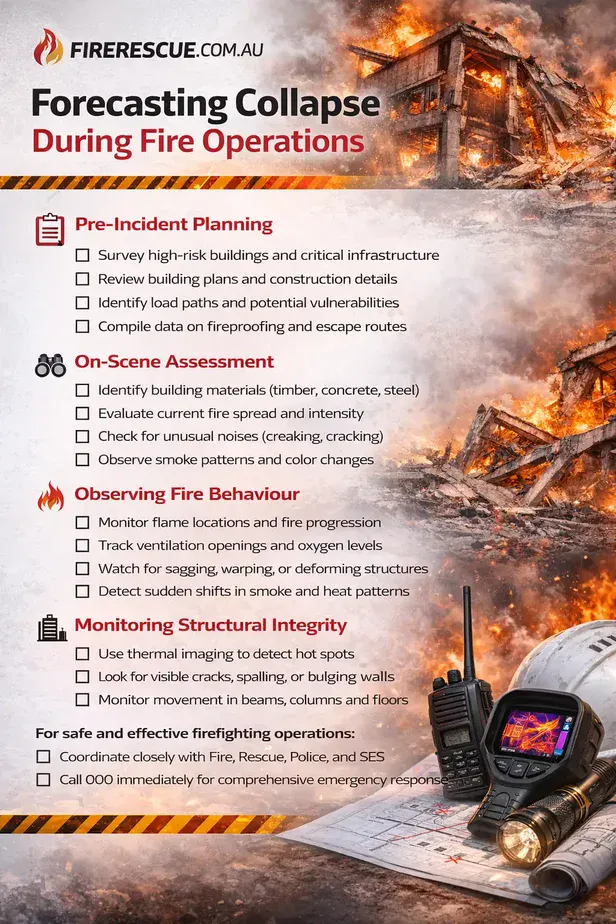
Roles and responsibilities in emergency response
In Australia, the initial call to 000 activates a coordinated response from Fire/Rescue, Police, Ambulance, and the State Emergency Service (SES), each with defined roles. Fire/Rescue leads fire suppression, structural assessment, and rescue efforts within the hazard zone. Police secure the perimeter, manage traffic, and assist with evacuations. Ambulance services provide medical care to injured persons. SES supports with specialised rescue and logistical assistance, especially in complex collapse or entrapment scenarios.
Coordination among agencies is facilitated through incident command systems that establish clear communication channels and delineate responsibilities. Regular joint training exercises help build interoperability and trust, ensuring that when an actual incident occurs, teams operate seamlessly toward common objectives. This collaboration is vital in managing the dynamic and hazardous environment of fire-induced structural collapse.
Additionally, the involvement of structural engineers and fire behaviour specialists during major incidents can provide expert analysis and guidance. Their input helps refine risk assessments, inform tactical decisions, and support post-incident investigations. Agencies are increasingly recognising the value of integrating these specialists into incident management teams to improve outcomes.
Practical implications for firefighters and responders
Understanding structural collapse forecasting improves safety by informing risk-based decision making. Firefighters must constantly evaluate structural conditions, communicate changes, and maintain escape routes. Incident commanders should integrate real-time data with experience to adjust operational plans. Training and exercises focused on recognising collapse indicators and using forecasting tools are vital to reducing casualties.
Personal protective equipment (PPE) and situational awareness are critical components of safety protocols. Responders should avoid entering or remaining in areas where collapse risk is high unless absolutely necessary, and always have secondary egress options. Post-incident reviews also contribute to improving forecasting accuracy and operational tactics by analysing what signs were present and how effectively they were interpreted.
Moreover, mental resilience and stress management are essential for responders working under the pressures of collapse risk. The unpredictability and potential rapid deterioration of structural conditions can create high-stress environments. Providing psychological support and promoting teamwork help maintain focus and decision-making quality during critical moments.
Community awareness and prevention
Beyond emergency services, educating building owners, occupants, and the public about fire safety and structural risks can lessen collapse incidents. Proper building maintenance, early fire detection, and effective evacuation protocols contribute to reducing the likelihood of catastrophic structural failures during fires.
Building codes and regulations also play a preventative role by mandating fire-resistant materials, structural reinforcements, and clear emergency egress paths. Community engagement initiatives, such as fire safety workshops and distribution of informational materials, empower individuals to take proactive steps. This holistic approach strengthens overall resilience against fire-related structural hazards.
In addition, fostering a culture of safety within communities encourages reporting of hazards such as compromised structural elements or malfunctioning fire detection systems. Collaboration between local authorities, fire services, and residents ensures timely maintenance and compliance with safety standards. This proactive involvement reduces the burden on emergency responders and enhances collective preparedness.
Summary
Structural collapse forecasting in fire conditions is a critical aspect of modern firefighting and emergency response. Through the integration of scientific understanding, technological tools, and coordinated multi-agency efforts, responders can better anticipate hazards, protect lives, and manage complex incidents safely and effectively. Remember, in any emergency situation, calling 000 is the first step to ensure the right services arrive promptly and work together to handle the incident with expertise.
Ongoing research and development in fire science and structural engineering continue to enhance forecasting capabilities. As new materials and construction methods evolve, so too must the strategies and tools used by emergency responders. Commitment to continuous learning, investment in technology, and strong interagency collaboration remain essential to safeguarding communities against the devastating consequences of fire-induced structural collapse.
FireRescue Training Hub
Access practical fire and emergency study support resources, downloads, checklists, audio guides, and member-only course content.
- Course library
- PDF downloads
- Audio guides
- Checklists
Study support only. Not accredited training or a replacement for workplace procedures.
About the author and safety review
Ken Walker
Former Station Officer and fire service educator
Former career firefighter with extensive career and volunteer fire service experience.
Qualifications: Associate Diploma of Applied Science in Fire Technology; Institute of Fire Engineers studies.
Author profilehttps://www.firerescue.com.au/about-us/