EMERGENCY PREPAREDNESS
Having a 72-hour emergency kit in Australia is essential for weathering sudden events safely. This kit supports you and your family for the critical first three days after a disaster, such as bushfires, floods or storms.
This guide covers what you need, how to prepare, and where to find trusted official advice. Simple actions and the right kit can make a big difference in emergencies.
Audio Guide
72-Hour Emergency Kit Australia
A simple audio version of the guide for bushfires, floods and storms.
Why a 72-hour Emergency Kit Matters in Australia
Australia’s wide climate range and frequent natural hazards mean emergencies can happen with little warning. Whether it’s a bushfire moving quickly through a community or flash flooding after heavy rain, having supplies ready can help you stay safe. Emergency services like Fire and Rescue NSW, local SES units and ambulance crews do their best, but initial help may take time to arrive. A 72-hour emergency kit gives you the resources to be self-reliant during those critical hours.
This kit is not just about survival basics. It supports your health, comfort and communication until help arrives or conditions improve. In Australia, where communities can be isolated by distance or road closures, your kit can reduce stress and risk. Preparing a kit also keeps you alert to your environment and local warnings, helping you act quickly and safely.
Moreover, the unpredictable nature of Australian weather patterns, influenced by phenomena such as El Niño and La Niña, can intensify natural disasters. This variability underscores the importance of being prepared year-round. Having a 72-hour emergency kit ready means you can respond effectively not only to the obvious seasonal threats but also to unexpected events that may arise.
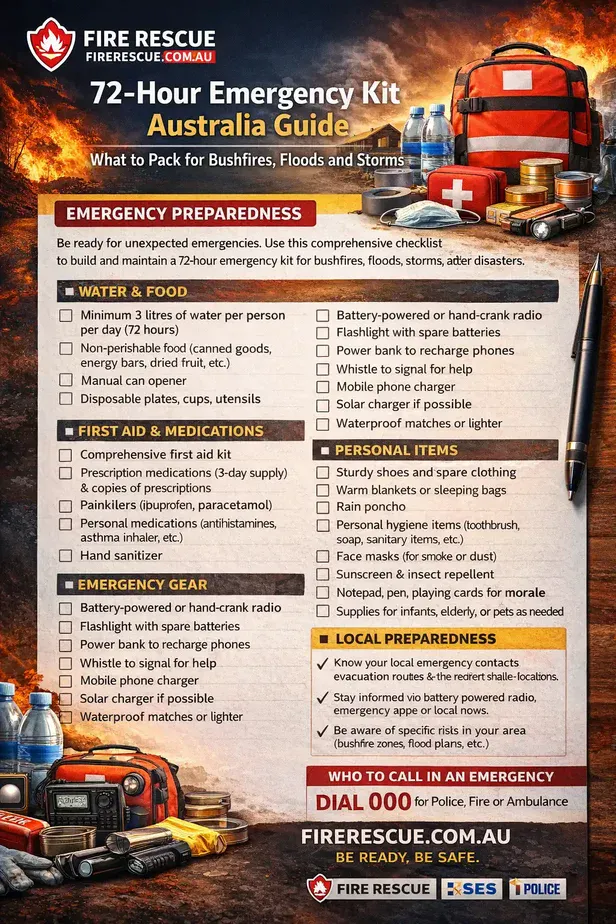
Start with water—store at least three litres per person per day in sealed containers. Hydration is vital in hot Australian climates, especially during bushfire seasons. Next, pack enough non-perishable food to last three days. Choose items easily eaten without cooking, such as canned goods, energy bars or dried fruit. Include a manual can opener if needed.
Your kit should contain a battery-powered or hand-crank radio to receive official bulletins from services like the Bureau of Meteorology or emergency alerts from Fire and Rescue. Add a torch with spare batteries, a whistle to signal for help, and basic first aid supplies. Remember to include any prescription medications and copies of important documents stored in waterproof bags.
Clothing and bedding items are important, especially in cooler months. Pack sturdy shoes, warm blankets, and rain protection. Personal hygiene items such as soap, toothbrushes, and sanitary products keep you comfortable and reduce health risks. Include tools like a multi-tool, duct tape and plastic sheeting for temporary repairs or shelter.
Don’t forget to prepare for communication. Keep a charged power bank for phones and emergency contact lists written on paper. Knowing your evacuation routes and having a plan for pets is also part of comprehensive readiness.
In addition to these essentials, consider including comfort and mental health aids such as a small notebook and pen, books, or playing cards. Emergencies can be stressful, and these items can help maintain morale, especially for children. Also, consider including insect repellent and sunscreen to protect against Australia’s outdoor elements.
Special considerations for Australian conditions
Bushfire-prone areas should include masks or cloths to filter smoke. Flood risks mean waterproof bags and elevated storage for gear. Heatwaves require sun protection like hats, sunscreen and electrolyte solutions. Tailor your kit to your local hazards.
Given Australia’s vast and varied landscape, it’s also wise to adapt your kit based on your specific environment. For example, those living in remote or rural areas might add extra fuel for generators or additional water purification methods. Coastal residents may want to include flotation devices or waterproof boots. Urban dwellers, meanwhile, might prioritise easy-to-carry kits due to the likelihood of quick evacuations.
How to Prepare and Maintain Your Emergency Kit
Gather your supplies gradually and store them in an easy-to-carry container, like a sturdy backpack or plastic tub. Make sure everyone in your household knows where the kit is kept. Check expiry dates on food, water and medications every six months and replace as needed. Rotate supplies to keep them fresh.
Practice using your kit items so you are familiar with how to operate radios, torches, and first aid materials. Review your family’s emergency plan regularly and update your contact lists. Listen to local authorities on Fire and Rescue NSW, SES and Police websites or broadcasts for seasonal advice and warnings.
It’s also recommended to involve all family members, including children, in the preparation and maintenance process. This engagement fosters confidence and ensures everyone understands the importance of each item and the overall emergency plan. Conducting regular drills simulating evacuation or shelter-in-place scenarios can help identify gaps and improve readiness.
If You Only Do Five Things
First, pack at least three days’ worth of water and non-perishable food for each person. Without water and food, your ability to stay safe quickly deteriorates, especially in hot Australian conditions.
Second, have a reliable way to receive official emergency information, such as a battery-powered or hand-crank radio. Knowing the current situation helps you make informed decisions.
Third, include a basic first aid kit and any personal medications. Immediate treatment for injuries or health conditions can prevent complications.
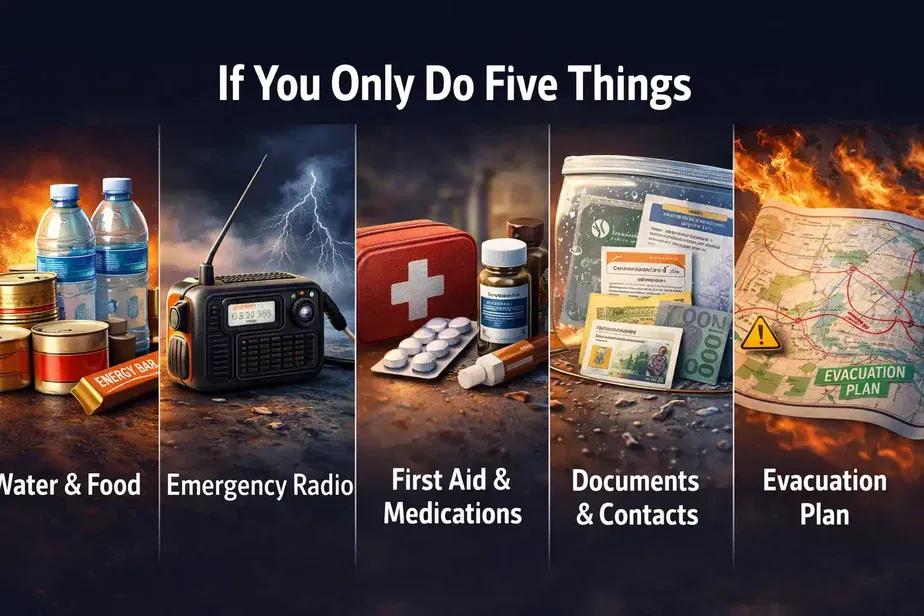
Fourth, prepare personal documents and emergency contact details in waterproof packaging. This ensures you can access essential information if you must evacuate.
Fifth, know your local evacuation plans and routes. Having a plan reduces panic and confusion during an emergency.
While these five actions form the core of emergency preparedness, expanding your kit and knowledge beyond them will further enhance your safety. Consider adding items that cater to specific needs, such as baby supplies, pet food, or items for elderly family members. The goal is to create a kit that is both comprehensive and tailored to your household.
Who Does What in Australia
Fire and Rescue Services handle bushfires, structural fires, road crashes and rescues. They provide expert firefighting and emergency response.
Police maintain public safety, manage evacuations, investigate incidents and enforce emergency orders.
State Emergency Service (SES) specialises in flood rescue, storm damage, and helping communities prepare and recover from disasters.
Ambulance provides medical emergencies and patient transport, crucial for health crises during disasters.
If you face a life-threatening emergency, dial 000 immediately for Police, Fire or Ambulance assistance.
Additional Tips for Emergency Safety
Stay informed by registering for local emergency alert services. Many councils and state governments offer SMS or app alerts that provide real-time warnings. Follow official social media accounts for updates.
During a bushfire threat, follow Fire and Rescue NSW and Rural Fire Service advice closely. If advised to evacuate early, do so promptly and take your emergency kit with you. If sheltering at home, prepare a safe room and close all windows and doors to reduce smoke entry.
In flood-prone areas, never attempt to drive or walk through floodwaters. Move to higher ground and wait for SES instructions. Keep your kit accessible in case of rapid evacuation.
Regularly review your emergency plan with family members, including children. Practice what to do during alarms or alerts to build confidence and reduce fear.
Remember, your 72-hour emergency kit is part of a broader approach to safety. Combine it with home fire safety measures, such as working smoke alarms and clear property maintenance, to enhance overall protection.
Finally, consider community engagement as a vital component of emergency preparedness. Joining local neighbourhood groups or emergency preparedness workshops can provide valuable knowledge and support. Sharing resources and information strengthens resilience and fosters a collective response during crises.
FireRescue Training Hub
Access practical fire and emergency study support resources, downloads, checklists, audio guides, and member-only course content.
- Course library
- PDF downloads
- Audio guides
- Checklists
Study support only. Not accredited training or a replacement for workplace procedures.
About the author and safety review
Ken Walker
Former Station Officer and fire service educator
Former career firefighter with extensive career and volunteer fire service experience.
Qualifications: Associate Diploma of Applied Science in Fire Technology; Institute of Fire Engineers studies.
Author profilehttps://www.firerescue.com.au/about-us/