fire safety insight
Key Takeaways
Hospital evacuation during fire or disaster requires thorough preparation, clear communication, and coordinated teamwork among staff and emergency services. Protecting vulnerable patients and maintaining safety throughout the process is critical.
Australian agencies including Fire and Rescue NSW or CFA, Police, SES, and Ambulance services work together during emergencies. Planning and regular drills involving these organisations improve response effectiveness.
Always follow official advice, heed local warnings, and call triple zero (000) immediately when life is at risk. Preparedness saves lives and reduces risks during hospital emergencies.
Understanding Hospital Evacuation During Fire Or Disaster
Hospitals are complex environments where many patients depend on life-supporting equipment, specialised care, and controlled conditions. When fire or a disaster strikes, evacuating such facilities is a significant challenge. The key is to prioritise patient safety, ensure staff coordination, and communicate effectively with emergency services.
In Australia, hospital evacuation plans are designed to cover scenarios like fires, floods, power outages, or chemical spills. The process involves a staged evacuation approach that assesses risks and patient conditions before moving them. Evacuation may be partial or full depending on the severity.
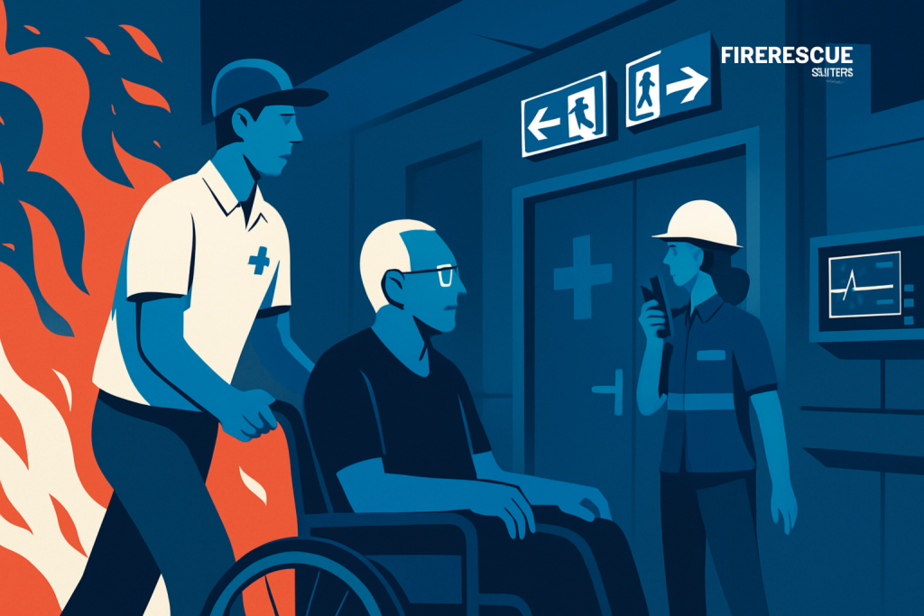
Staff training, regular drills, and clear protocols are essential to execute evacuation smoothly. Coordination with Fire Rescue services, Ambulance, Police, and SES ensures a rapid, organised response and patient transport to safe locations.
Hospitals also integrate modern technology such as fire detection systems, automated alarms, and smoke control mechanisms to quickly identify hazards and initiate evacuation procedures. These systems are tested frequently to ensure reliability during an emergency.
Moreover, evacuation planning must consider the unique architecture of each hospital, including multiple floors, specialised wards, and restricted access areas. This complexity necessitates tailored evacuation routes and patient movement strategies that minimise exposure to danger while maintaining continuity of care.
Planning and Preparedness for Effective Evacuation
Effective hospital evacuation begins long before an incident occurs. Emergency planning should include detailed maps, evacuation routes, patient prioritisation criteria, and communication systems. Australian hospitals are required to comply with national safety standards that guide these preparations.
A well-rehearsed plan clearly defines roles for clinical staff, security, and facility managers. It includes liaison arrangements with emergency services such as Fire and Rescue NSW, the CFA in Victoria, Queensland Fire and Emergency Services, Ambulance services, and the SES for flood or storm response.
Key to planning is recognising that some patients cannot be moved easily. Evacuation decisions must balance urgency and feasibility. Supporting infrastructure like power backup, smoke control systems, and communication networks also influence how an evacuation unfolds.
Emergency plans also incorporate contingencies for power failures, ensuring that critical medical devices continue to operate via generators or battery backups. This is vital for patients reliant on ventilators, dialysis machines, or other life-sustaining technologies.
Additionally, plans consider the availability of transport vehicles and staging areas for patient transfer. Coordination with local health networks ensures that receiving facilities are prepared to accept evacuated patients promptly and safely.
Training Staff and Conducting Drills
Regular training exercises help clinical and non-clinical staff stay familiar with procedures. Simulated evacuations test communication and resource allocation under pressure. In Australia, many hospitals work with local Fire and Rescue brigades to run joint drills, which improves mutual understanding and response speed.
These drills should replicate various scenarios including fires in critical care units, mass casualty events, and infrastructure failures. Staff should be confident in patient evacuation methods, including use of evacuation chairs, stretchers, and specialised transport equipment.
Beyond physical drills, hospitals also conduct tabletop exercises where teams discuss hypothetical scenarios and decision-making processes. This approach helps identify gaps in protocols and improves coordination between departments and external agencies.
Continuous education on evolving risks, new technologies, and updated regulations is essential. Staff should be encouraged to provide feedback on drills and share experiences to foster a culture of safety and preparedness.
Roles and Responsibilities During Evacuation
During a fire or disaster, a clear command structure activates immediately. Hospital Incident Controllers coordinate internal resources and communicate with external emergency agencies. Fire and Rescue services lead firefighting and smoke control efforts, while Ambulance NSW or local ambulance services manage patient transport.
Police assist by managing crowds, securing perimeters, and facilitating traffic control to allow ambulances free passage. The SES may provide support particularly in flood, storm, or structural damage situations, assisting with patient rescue and transport in difficult conditions.
Hospital staff maintain patient care, prepare medical records for transfer, and manage evacuation routes to avoid bottlenecks. Communication between all parties reduces confusion and ensures everyone knows their tasks.
Each team member has specific duties, from clinical staff who ensure patient stability during moves, to administrative personnel who coordinate documentation and family notifications. Security staff focus on controlling access and protecting hospital property during chaotic situations.
Leadership roles include overseeing resource allocation such as oxygen supplies, stretchers, and transport vehicles. Incident controllers monitor the evolving situation and adapt plans as needed, ensuring flexibility and resilience.
Communication and Information Flow
Reliable communication systems are vital. Hospitals use dedicated emergency lines, radios, and alarm systems to alert staff. Updates from Fire and Rescue and Ambulance services keep hospital command informed of changing conditions. Public announcements and signage help guide patients and visitors.
In Australia, emergency services share information via integrated communication platforms, ensuring coordinated efforts across agencies. Hospitals should test these systems regularly as part of their preparedness checks.
Technology plays a key role in communication, with some hospitals employing mass notification systems that send alerts directly to staff mobile devices. This ensures rapid dissemination of critical information during evolving emergencies.
Clear signage within hospital premises directs evacuation routes, assembly points, and emergency exits. These visual aids assist patients, visitors, and staff in navigating safely when normal operations are disrupted.
Patient Safety and Prioritisation
Not all patients can be evacuated with equal urgency. Those in intensive care, requiring ventilators, or with mobility challenges need special attention. Hospitals categorise patients based on their medical condition, mobility, and equipment needs to prioritise evacuations effectively.
Transport options range from manual carries and wheelchairs to ambulance transfers. Staff must ensure continuous care during movement, including oxygen supply and monitoring. In extreme cases, some patients may remain in protected areas if immediate evacuation is too risky.
Family and visitor communication is also critical. Hospitals establish systems to keep relatives informed, reducing panic and confusion during evacuation.
Specialised equipment such as evacuation sleds or chairs designed for stair descent are crucial tools in safely moving immobile patients. Staff trained in their use can significantly reduce evacuation times and physical strain.
Moreover, patient records and medication information must be accurately transferred to receiving facilities to maintain continuity of care. Digital records and portable data systems aid this process, reducing errors and delays.
Recovery and Returning to Normal Operations
Once the immediate danger passes, hospitals focus on recovery. This includes damage assessment, cleaning, restoring services, and gradually returning patients to their rooms or transferring them to alternative care locations.
Debriefing staff helps identify lessons learned to improve future responses. Australian hospital safety regulations require formal reporting and review after evacuation events.
Psychological support for staff, patients, and families is also important following traumatic incidents. Hospitals coordinate with mental health services to provide counselling and assistance.
Restoration efforts often involve multidisciplinary teams including engineers, infection control specialists, and clinical leaders to ensure the hospital environment is safe and fully functional. This process can take days or weeks depending on the extent of damage.
Communication with the public about the hospital’s status, alternative care options, and expected timelines for reopening is essential to maintain community trust and manage patient flow effectively.
If You Only Do Five Things
Ensure you know the hospital’s evacuation plan and your role in it. Regularly participate in drills and training sessions to be confident during emergencies.
Prioritise patient safety by understanding their conditions and needs before moving them. Avoid panic and proceed calmly and methodically.
Maintain clear communication with colleagues and emergency services. Use established channels to share updates and ask for help when needed.
Call triple zero (000) immediately if you are involved in or witness a life-threatening hospital fire or disaster. Help will arrive promptly from Fire and Rescue, Ambulance, Police, or SES.
Follow official instructions and local warnings at all times. Do not attempt to self-evacuate patients without proper coordination and support.
Who does what in Australia
Fire and Rescue services (such as Fire and Rescue NSW or CFA in Victoria) are responsible for fighting fires and managing hazardous materials incidents. They lead emergency responses within buildings and on site.
Police manage public safety, secure the area, and control traffic to enable smooth access for emergency vehicles and keep bystanders safe.
Ambulance services provide medical care and patient transport to hospitals or alternative care locations. They work closely with hospital staff during evacuations.
The State Emergency Service (SES) supports situations involving floods, storms, or structural damage. They assist with rescue operations and logistics when normal access routes are compromised.
FireRescue Training Hub
Access practical fire and emergency study support resources, downloads, checklists, audio guides, and member-only course content.
- Course library
- PDF downloads
- Audio guides
- Checklists
Study support only. Not accredited training or a replacement for workplace procedures.
About the author and safety review
Ken Walker
Former Station Officer and fire service educator
Former career firefighter with extensive career and volunteer fire service experience.
Qualifications: Associate Diploma of Applied Science in Fire Technology; Institute of Fire Engineers studies.
Author profilehttps://www.firerescue.com.au/about-us/