Fire Safety Essentials
Creating a defendable space around your home is one of the most important steps to protect your property from bushfires. This checklist will guide you through practical clearing tasks to reduce fuel hazards, helping to slow or stop fire spread near your house or workplace.
Follow local authority advice and make clear plans before you begin. Defendable space is about safety for people and property, so regular maintenance and awareness are key to staying prepared in fire-prone areas.
What Is Defendable Space and Why Does It Matter?
Defendable space is the area around your home or workplace where protection-in-australia-challenges/”>vegetation and other flammable materials are cleared or reduced to slow the spread of fire. This space helps firefighters protect your property and gives you more time to react if a fire approaches. In Australia, where bushfires are a common hazard, managing this space is critical to safety.
Without a clear defendable space, fires can easily move from trees, shrubs, or dry grass directly to structures. Clearing this area reduces fuel, lowers radiant heat, and limits ember attack, which is when burning pieces of debris land on or near your home.
Moreover, a well-maintained defendable space can significantly improve the effectiveness of firefighting efforts. It creates safer access points for fire crews and equipment, protection-in-australia/”>reducing the risk for emergency responders and increasing the chances of saving your property. The psychological reassurance of having this protective buffer also helps homeowners feel more confident in their bushfire preparedness.
Key Zones for Clearing Defendable Space
Immediate Zone: 0-10 Metres Around Buildings
This is the most vital area to keep free of flammable material. Trees should be well spaced, and grass should be short and green wherever possible. Remove dead leaves, twigs, and bark. Keep gutters clean and ensure your roof and walls are free of debris.
In addition to clearing vegetation, consider installing ember-proof vents and screens around your home. Embers can travel long distances and ignite materials in roof spaces and under floors. Keeping this immediate zone tidy and free from clutter, such as firewood piles or outdoor furniture cushions, further minimizes fire risk.
Intermediate Zone: 10-30 Metres From Buildings
Manage vegetation to reduce fire intensity. Thin trees so they are at least two to three metres apart, and remove lower branches up to about two metres off the ground. Clear areas of dense shrubs and keep grass maintained.
This zone is crucial for breaking up fuel continuity. By reducing dense vegetation and maintaining spacing, you reduce the likelihood of fire climbing into tree canopies and spreading rapidly. Consider creating firebreaks or access paths in this area to assist both firefighting operations and your own evacuation routes.
Extended Zone: 30-100 Metres
This area provides extra protection by reducing the overall fuel load on your property. Larger trees can remain but should be well spaced, with cleared undergrowth. Focus on reducing dense bush and long grass to slow fire spread.
While the extended zone is less intensive to manage, its role in slowing fire progression is vital. Maintaining this zone helps prevent large-scale fires from reaching your immediate and intermediate zones with full intensity. Regularly inspect and manage this area, particularly before fire season, to ensure it remains effective.
Steps for Clearing Defendable Space
Assess Your Property
Start by walking around your home and identifying areas where vegetation is thick or close to structures. Check roof lines, gutters, decks and sheds. Look for dense shrubs, low-hanging branches and piles of leaves or wood. Taking photos can help track progress over time.
Use this assessment to prioritise work, focusing first on areas that present the highest risk. It’s also helpful to review your property from different angles, including aerial views from drones or maps if available, to identify hidden fuel loads or potential ember traps.
Remove Dead or Dry Vegetation
Dead leaves, fallen branches, dry grass and bark provide excellent fuel for fire. Collect and dispose of these materials safely. Clean gutters regularly, especially before the fire season. Clear debris from under decks and around fences.
Consider composting or chipping green waste where possible, but avoid leaving piles of mulch near structures. Safe disposal through council green waste collections or licensed facilities helps prevent accidental fires during hot, dry periods.
Trim Trees and Shrubs Properly
Remove lower branches up to two metres to prevent fire climbing. Space trees so their canopies do not touch. Thin out dense shrubs and remove those growing too close to your home. Avoid planting highly flammable species near buildings.
Regular pruning not only reduces fire risk but promotes healthier plant growth. Maintain a diversity of plant species to decrease the chance of widespread fire damage. When removing branches or shrubs, use clean cuts and dispose of debris promptly to avoid creating new fuel hazards.
Maintain Your Lawn and Garden
Keep grass mown and watered where possible during the fire season. Avoid excessive mulch near the house as it can catch fire easily. Use gravel or stone around vulnerable areas instead. Regularly rake up leaves and bark to keep the ground clear.
Implementing irrigation systems or strategically watering gardens can help maintain green, less flammable vegetation. Consider fire-resistant garden designs that incorporate low-growing plants and hard surfaces to create natural firebreaks.
Fire-Resistant Landscaping Tips
Choose plants that are less likely to burn. Many Australian native species have low flammability and can be good choices if properly spaced and maintained. Avoid tall, resinous or oily plants near your home.
Use hard surfaces such as stone pathways, gravel beds and lawns as natural firebreaks. Avoid large bark or wood chip mulch close to buildings. Create clear zones around vents, windows and doors to reduce ember entry points.
Incorporating fire-resistant plants alongside rock gardens, water features, and metal edging can further enhance the safety and aesthetics of your landscape. Regularly inspect plants for dead material and maintain adequate spacing to prevent fire from easily spreading between vegetation.
If You Only Do Five Things
First, clear all dead leaves, twigs and bark from your roof, gutters and around your home. This removes easy fuel that embers can ignite.
Second, trim lower branches on trees to at least two metres above the ground, helping stop fires climbing into the canopy.
Third, mow grass regularly and keep it short during fire season to reduce fine fuels near your property.
Fourth, space trees and shrubs so they aren’t crowded, preventing fire from easily jumping between plants.
Fifth, follow all local fire authority advice and warnings to keep your property and family safe. Prepare early and maintain your defendable space every year.
Safety and Legal Considerations
Before starting any clearing work, check with your local council or fire authority about regulations and permits. Some areas have restrictions on tree removal or clearing native vegetation. Always follow safety guidelines when using tools or machinery, and consider professional help for large jobs.
Remember, your defendable space is a key part of your overall bushfire plan. Combine it with preparation inside your home, emergency kits, and clear evacuation routes. Staying informed through official channels will help you respond promptly and effectively in a fire emergency.
Additionally, always wear appropriate protective gear such as gloves, eye protection, and sturdy footwear when performing clearing tasks. Be mindful of weather conditions and avoid clearing on very hot, windy days to reduce the risk of accidental fire ignition. Engaging with community fire safety programs and neighbours can also boost collective preparedness and resilience.
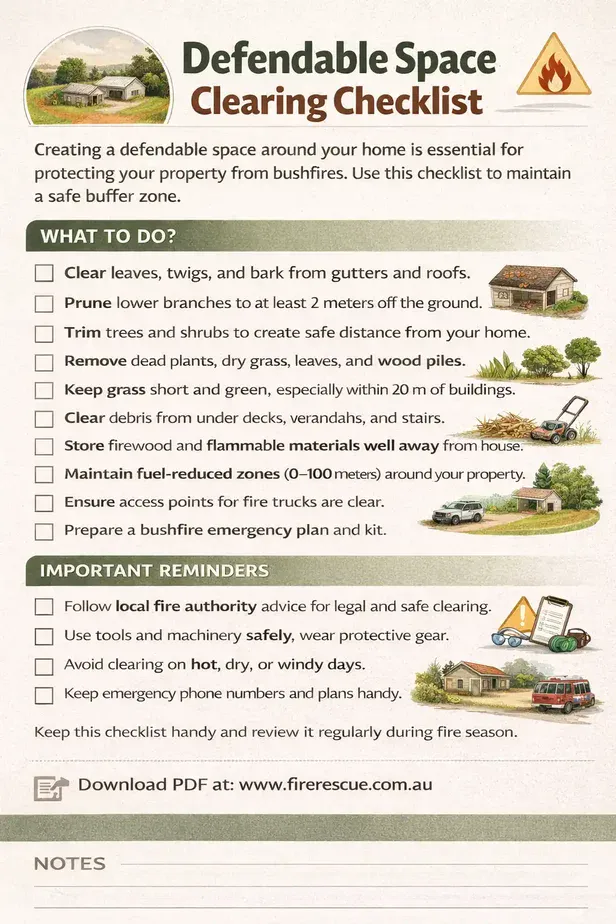
Printable Defendable Space Clearing Checklist
Use the checklist below to plan your clearing tasks and keep track of your progress. Regularly updating this list before and during fire season ensures your property stays safe all year round.
FireRescue Training Hub
Access practical fire and emergency study support resources, downloads, checklists, audio guides, and member-only course content.
- Course library
- PDF downloads
- Audio guides
- Checklists
Study support only. Not accredited training or a replacement for workplace procedures.
About the author and safety review
Ken Walker
Former Station Officer and fire service educator
Former career firefighter with extensive career and volunteer fire service experience.
Qualifications: Associate Diploma of Applied Science in Fire Technology; Institute of Fire Engineers studies.
Author profilehttps://www.firerescue.com.au/about-us/