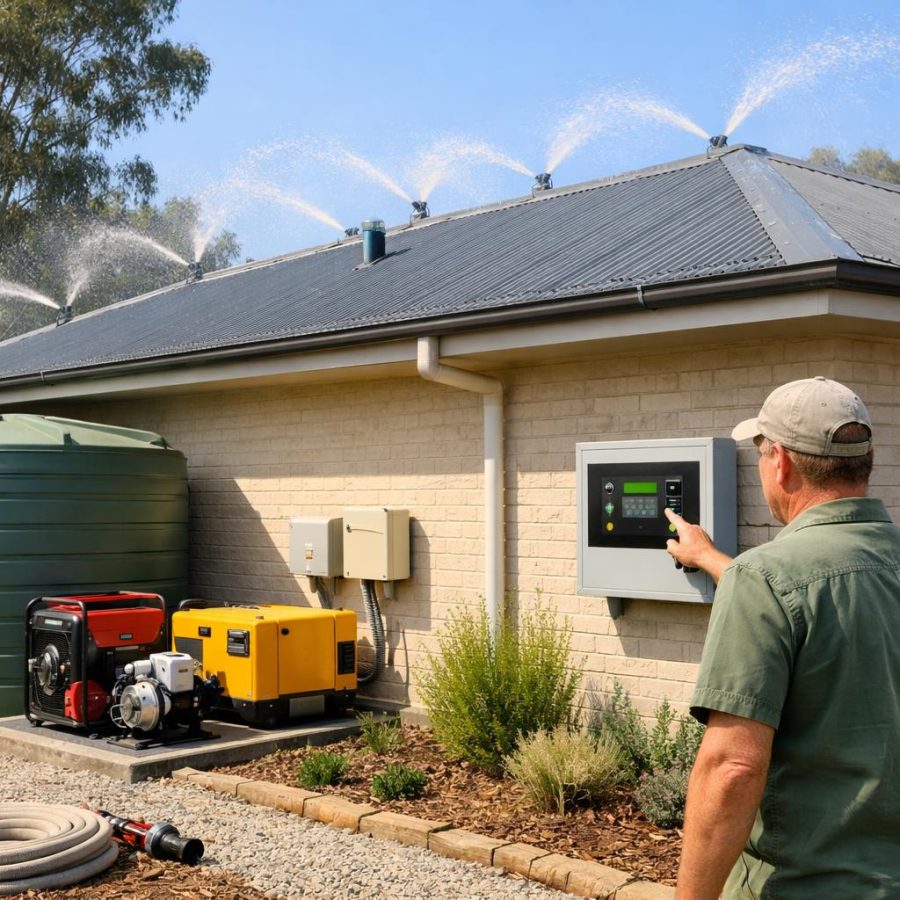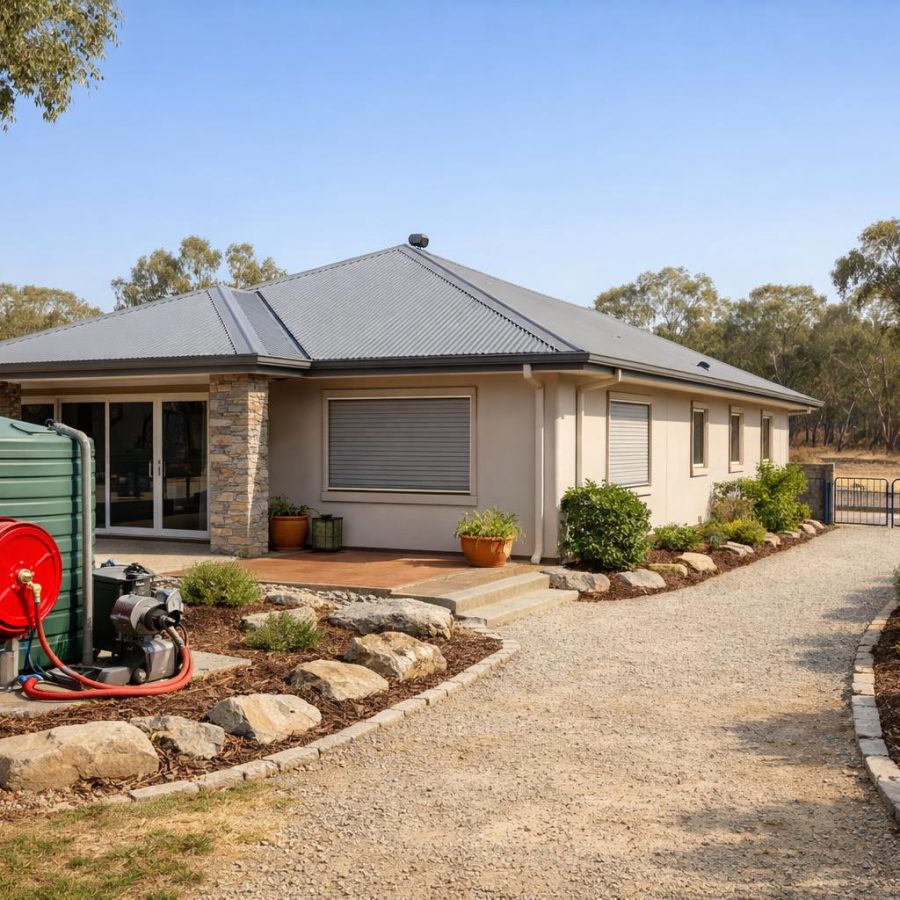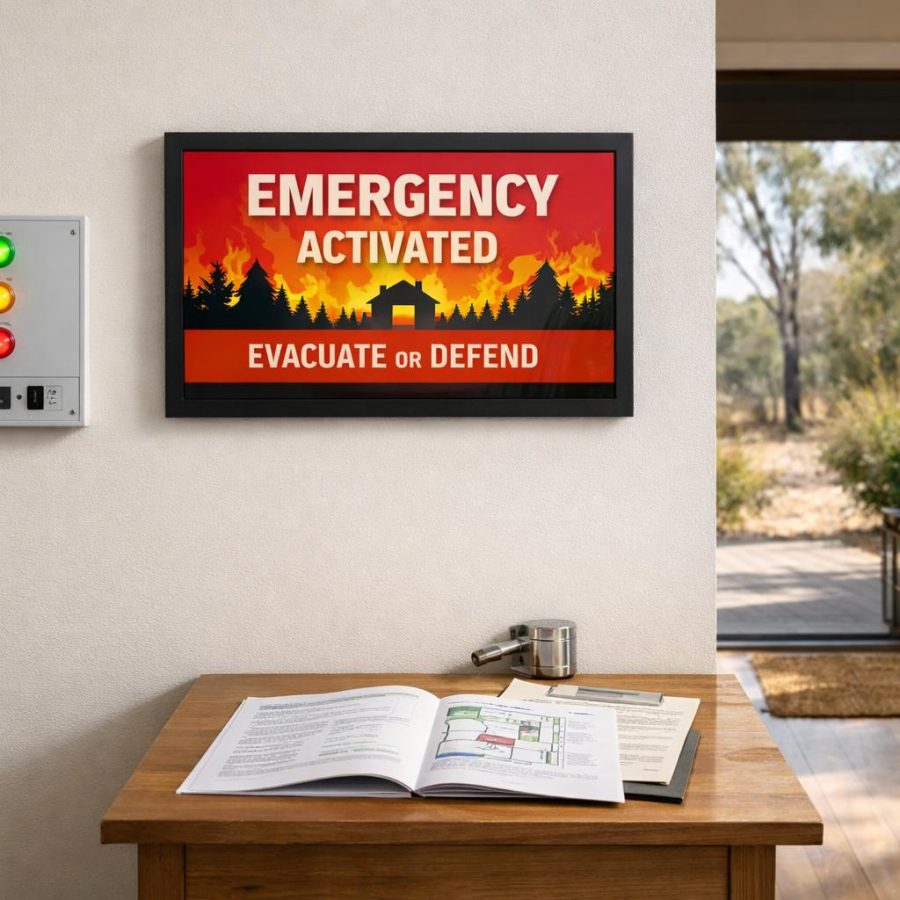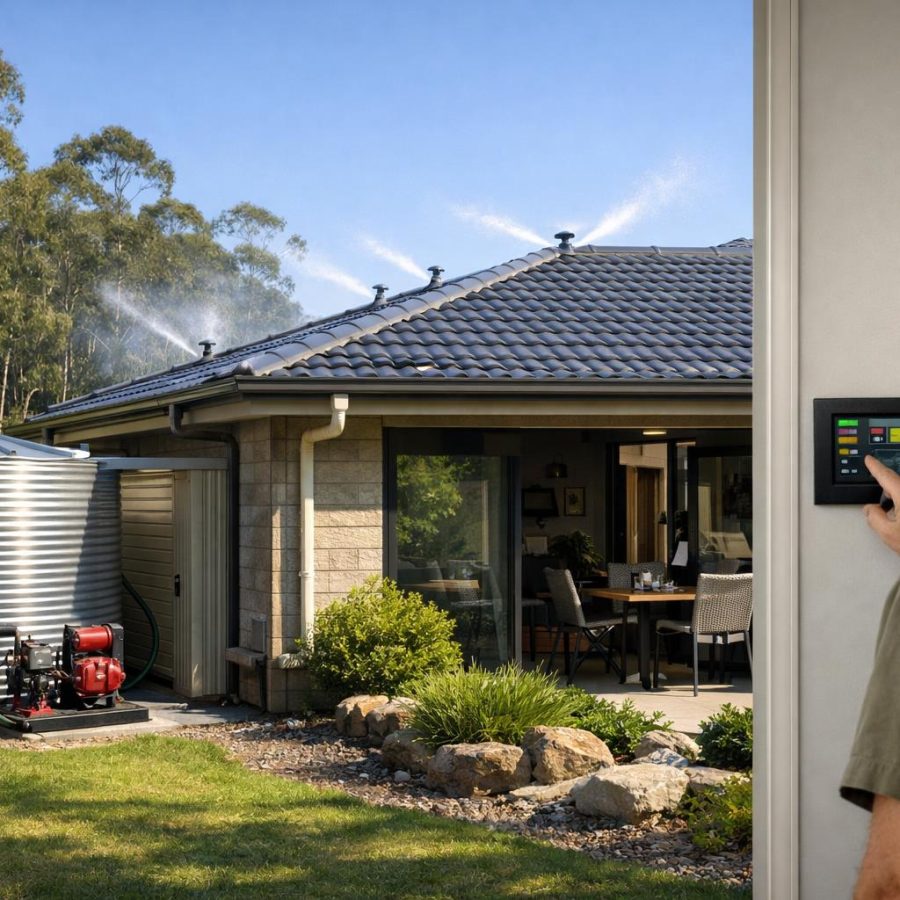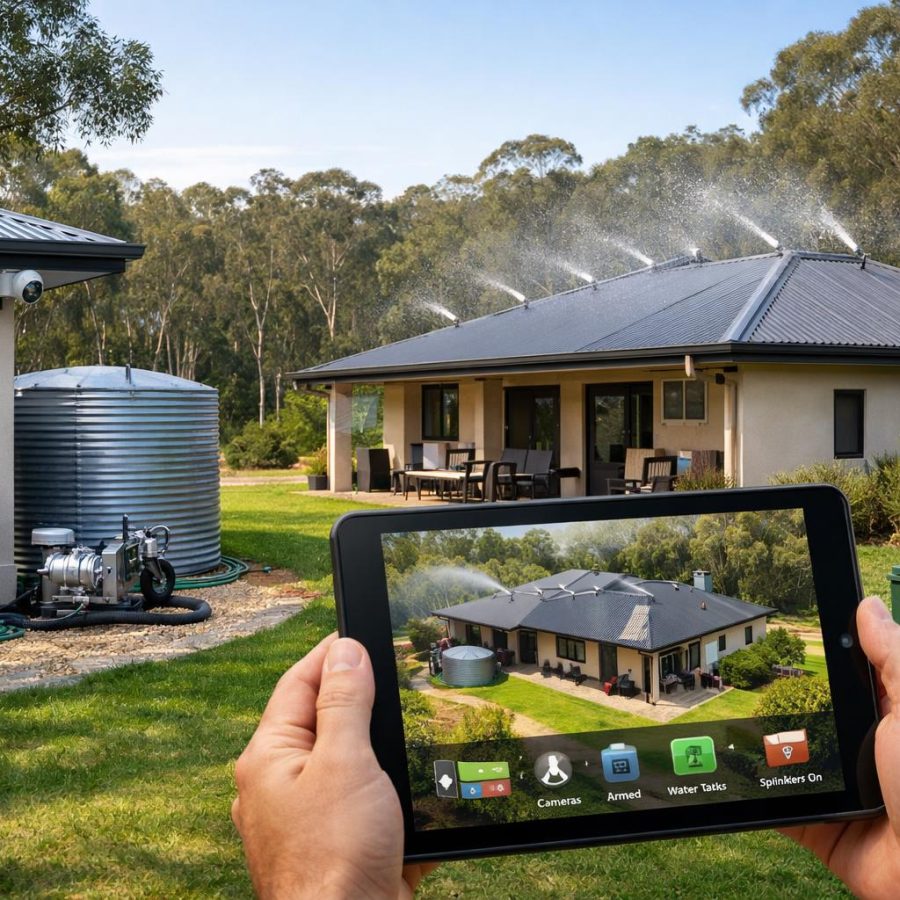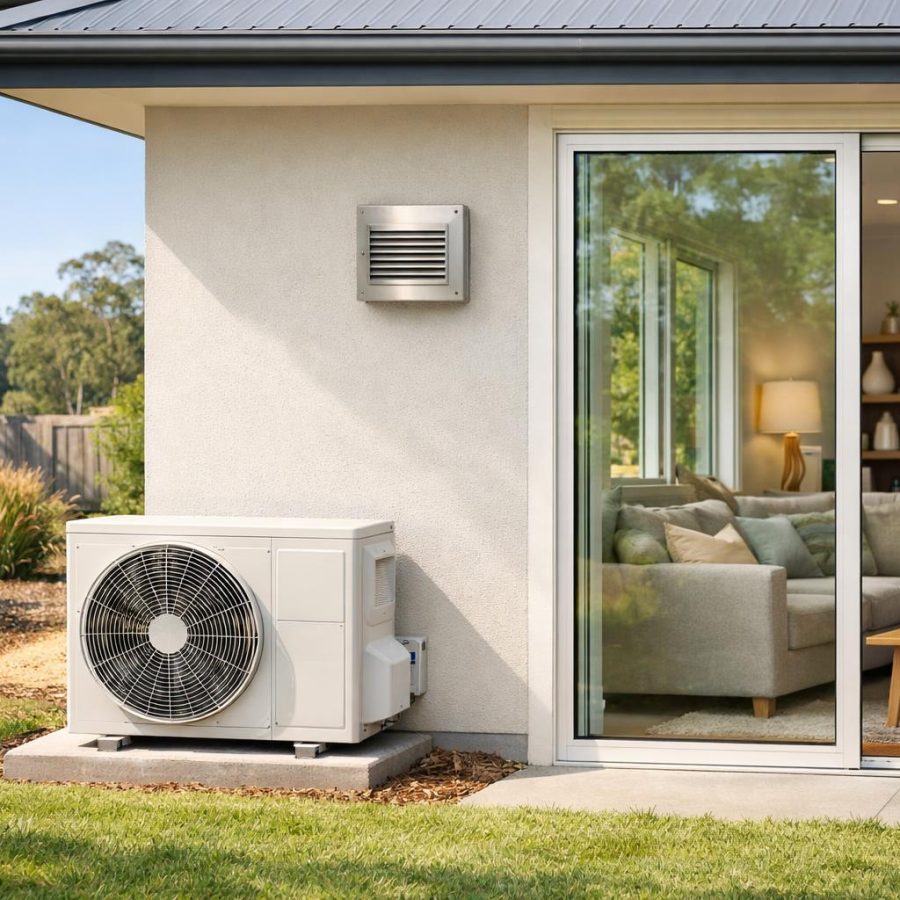
Catastrophic Fire Danger changes the job of a residential bushfire protection system. The people leave early, the property is confirmed empty, and the house shifts into Unattended Protection Mode so it can continue defending itself without anyone staying behind.
This is Part 19 of the Integrated Residential Bushfire Protection System series. It focuses on the day when the fire risk is so severe that the safety boundary is clear: this is not an occupant-shelter design target. Under Catastrophic conditions, the system must never suggest that anyone should remain at the property just because pumps, sprinklers, cameras or backup power are operating.
For ordinary homeowners, the core message is simple. On Catastrophic days, people leave early. The house stays behind and protects itself automatically.
What Catastrophic Fire Danger means for a home system
Catastrophic Fire Danger is the most severe fire weather category used in Australia. For a household, that means the risk is beyond normal “stay and defend” thinking. Strong winds, extreme heat, low humidity and fast-moving fire can combine with hazards such as embers, smoke, debris, structural damage, power failure, dust, communications outages and blocked roads.
The important design principle is that Catastrophic days sit outside the intended occupant-shelter design target. The system may still protect the building, but it must not be presented as a safe place for people to remain. The human decision is evacuation. The property decision is unattended protection.
This distinction matters because a sophisticated protection system can create a false sense of security if the boundary is not clear. Homeowners must understand that automatic protection is there to reduce damage to the building and improve response options, not to turn a house into a refuge during catastrophic fire conditions.
When Unattended Protection Mode starts
Unattended Protection Mode begins only when two things are true. First, Catastrophic conditions are forecast or declared. Second, the property is confirmed unoccupied. That confirmation step is important. The system should not shift into unattended operation unless the residence is genuinely empty and the occupants are no longer relying on it for survival.
Once that mode is active, the system changes purpose. It no longer tries to support human occupancy. Instead, it focuses on preserving the structure, the protection hardware and the best possible conditions for firefighters who may later arrive at the property.
The mode change should be clear and deliberate in the control logic. It should also be visible in any local display or remote status summary. A homeowner should be able to see that the property has moved from normal operation into an emergency unattended state, with essential systems prioritised and non-essential loads shed.
What should trigger the mode change
- Catastrophic Fire Danger has been forecast or declared by the relevant authority.
- The household has already evacuated or otherwise confirmed the property is empty.
- The system has been checked into the correct emergency configuration.
- Local controllers have confirmed they are ready to operate without internet or mobile coverage.
That last point is essential. Core protection must not depend on cloud services, live connectivity or an app that may stop working during the event. The system needs to keep making decisions locally.
Core unattended functions that must keep running
Once Unattended Protection Mode is active, the house should keep watching, deciding and responding. The main functions do not stop just because the people have left. In fact, many of them become more important once no one is inside.
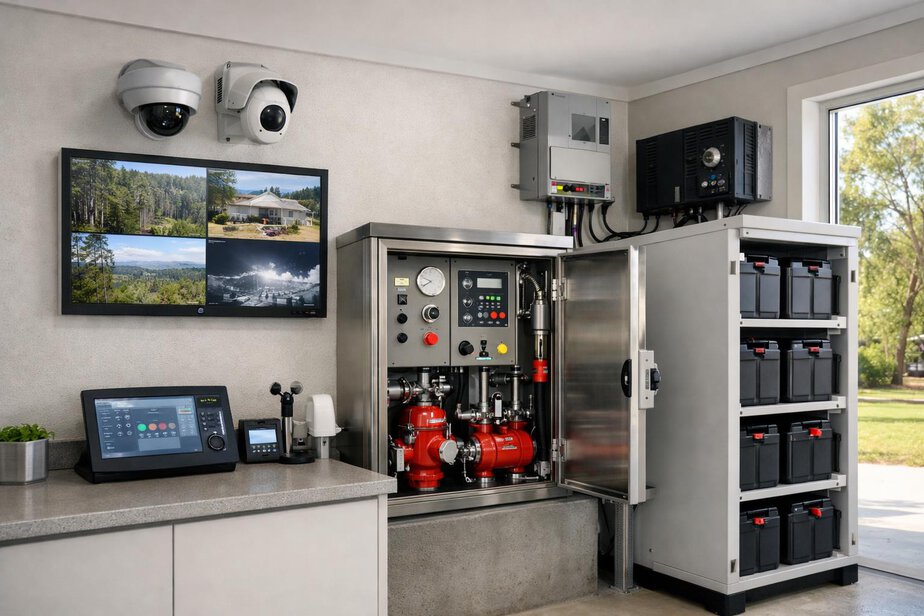
The continued functions should include smoke and heat detection, local weather monitoring, pumps, smart sprinkler zones, gutter and ground protection, cameras, local recording, remote alerts, backup power, generator operation and automatic water management. These systems should work together as a coordinated set rather than as separate gadgets.
Local monitoring should remain the first layer of intelligence. If smoke increases, heat rises, wind shifts or a new threat direction appears, the system should adapt without waiting for a remote command. This is particularly important if communications fail, because a bushfire event can easily knock out internet and mobile coverage.
Why local control matters
A bushfire protection system that depends on cloud logic alone is weak in the very conditions when it is needed most. During a catastrophic event, networks may be unavailable, congested or unstable. A local controller can still read sensors, select zones, start pumps, isolate faults and keep recording. That is the level of resilience a homeowner should seek.
- Smoke and heat sensors continue to trigger local responses.
- Weather inputs can help refine zone selection and timing.
- Sprinkler and water control logic should stay on site.
- Camera recording should continue locally even if remote viewing drops out.
- Fault handling should remain automatic where possible.
Water strategy under direct fire attack
Water management changes when direct fire attack is confirmed. The system can use stronger water application than it would under lower threat levels, but it still must manage the available supply carefully. The goal is not to simply run every zone continuously. The goal is to use water where it matters most and preserve enough reserve for critical protection and firefighter use where possible.
That means the system should prioritise the highest-threat zones first. It should also protect the pump and equipment room, the dedicated water tank, the controllers and essential power equipment, and the firefighter water connection. These elements are the backbone of the whole protection system. If they fail, the rest of the property becomes much harder to defend.
The exact application pattern will depend on the site, the fire direction, the wind and the available water. A good system should be able to adjust its own priorities as the threat changes, rather than locking into a single pattern. If the fire front shifts, the most threatened side of the house may change quickly.
Water priorities during Unattended Protection Mode
| Priority | Why it matters | Typical action |
|---|---|---|
| Highest-threat zones | These areas face the first and strongest attack | Increase water where heat, smoke or wind-driven embers are worst |
| Pump and equipment room | Loss of equipment can shut the whole system down | Keep this area defended and monitored |
| Dedicated water tank | The system needs a reserve to keep operating | Manage draw-down carefully |
| Controllers and essential power equipment | Automation depends on stable control hardware | Protect against heat and ember ingress |
| Firefighter water connection | Crews may need a reliable connection later | Preserve access and functionality where possible |
The system should be able to isolate a sprinkler zone if it develops a major leak, then continue protecting the remaining zones. That fault-handling step prevents one broken line from draining the entire reserve. It also helps preserve water for more valuable protection tasks.
Water use should remain defensible. In other words, the system should continue to ask: where does the next litre do the most useful work? That simple question is a strong guide during a long and dangerous event.
Power strategy when the house is empty
When the property is confirmed empty, the electrical plan changes as well. Most non-essential household loads should be shed. That reduces demand and helps make sure the system has enough capacity left for the pumps, controllers, sensors and external protection zones that matter most.
Selected circuits such as refrigeration may remain where practical, but only if they do not compromise the emergency load plan. The priority is to keep the bushfire protection system alive and responsive. If there is a choice between convenience and protection, protection wins.
The positive-pressure indoor air system should shut down once no occupants remain inside. That makes sense because the system no longer needs to support indoor breathing safety for people who have evacuated. Its power can then be redirected to the outdoor protection load.
Generator and backup power expectations
Backup power should be sized to support the planned complete fire-protection load, not just a partial subset. Generator capacity must remain sufficient for the full emergency role the property is expected to perform. A practical design should also include a minimum generator fuel endurance of 8 hours at the expected emergency load.
That fuel reserve is important because Catastrophic days can last longer than expected, and access for refuelling may be impossible. The system should therefore be designed to keep operating through a meaningful emergency window without immediate human intervention.
- Keep pumps and controllers on priority supply.
- Maintain sensor and communications power where possible.
- Load-shed non-essential circuits as soon as the property is empty.
- Confirm generator start, transfer and running status locally.
- Track fuel and runtime as part of the status summary.
Gas systems and isolation decisions
Gas handling should be treated carefully and individually. Automatic gas isolation is optional, not a standard feature. It should never be assumed to suit every property in the same way.
For LPG systems, the installation should comply with applicable Australian requirements. For mains gas, any automatic isolation should depend on the individual property, the system design and engineering judgement. The right answer will vary from site to site, so this is not a one-size-fits-all feature.
From a bushfire-protection perspective, the main design question is whether gas isolation supports the overall emergency strategy without creating other problems. That decision belongs in proper site-specific design and should be verified by appropriately qualified professionals.
Homeowners should not improvise around gas controls during a fire emergency. The emergency focus should remain on evacuation, official warnings and leaving the property to the automated system.
Cameras, alerts and remote visibility
Camera recording should continue during Unattended Protection Mode, and event logging should increase rather than decrease. That includes recording sensor activity, zone operation, pump status, water consumption, power events and faults. These records help the homeowner understand what happened and can also support post-event review.
Remote viewing should still be available when communications are working. If internet or mobile coverage fails, the system should not stop functioning. It should continue operating locally and keep recording to on-site storage. Remote access is a useful extra, not the backbone of the design.
The alerting system should send a simple status summary when Unattended Protection Mode starts. The summary should focus on the essentials and avoid clutter. The homeowner needs to know the water remaining, pump availability, active zones, power source, any major faults and the highest-threat area.
What a useful status summary should include
- Water remaining in the dedicated emergency supply.
- Pump availability and whether backup power is active.
- Which protection zones are currently operating.
- What power source is feeding the system.
- Any major fault or isolation event.
- The highest-threat area being defended.
Optional trusted-contact notifications may also be used. These can help family members or nominated neighbours understand that the house is in unattended emergency mode. However, the system should not rely on third parties to keep it functioning or making decisions.
Post-fire patrol mode after the main threat passes
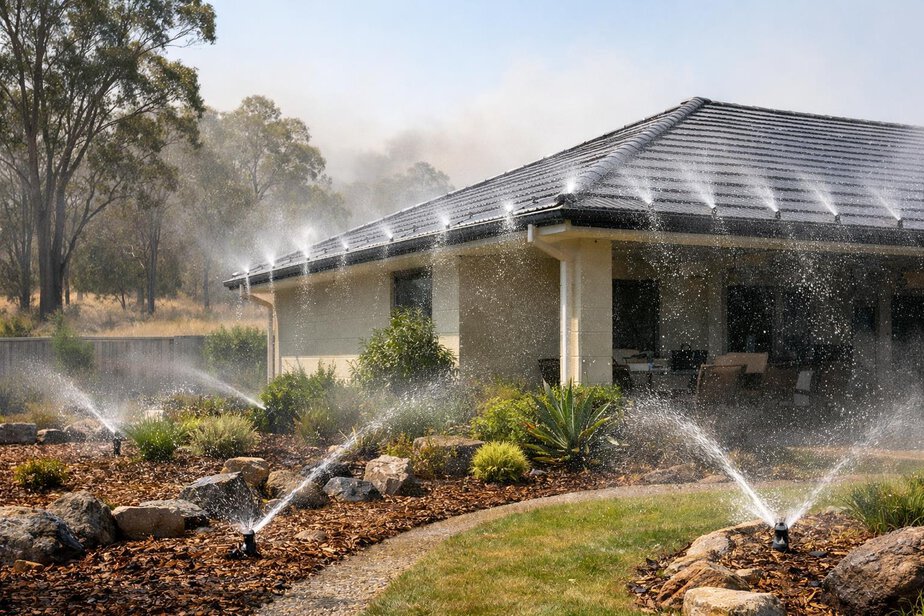
The end of the main fire front does not mean the emergency is over. After the immediate threat passes, the system should not return straight to normal. It should automatically enter Post-Fire Patrol Mode for several hours.
This is the period when embers can still ignite material, hot spots can flare up again and damaged components can create new risk. The system should therefore continue smoke and heat monitoring, camera recording, hot-spot detection, pump and power monitoring, and automatic sprinkler response if new confirmed heat or smoke is detected.
Post-Fire Patrol Mode is a cautious transition. It recognises that bushfire events often have a second act. The house may look quiet, but danger can remain hidden in gutters, wall cavities, roof spaces, debris piles and damaged external areas.
What should keep running in patrol mode
- Smoke and heat detection.
- Camera recording and event logging.
- Hot-spot monitoring around the building and yard.
- Pump and backup power supervision.
- Automatic sprinkler response if new confirmed ignition indicators appear.
Once conditions stabilise, the system can send a post-event summary. That summary should help the owner understand how long the system operated, what water and power were used, whether any faults occurred and whether the property still needs inspection before normal services resume.
How the homeowner should think about Catastrophic-day operation
Homeowners should think of this mode as a handover. Before the event, the household prepares, stages and confirms the system. As the Catastrophic warning approaches, the people leave. After that, the property protection system becomes the active defender of the building.
That handover only works if it is planned in advance. The family should know how to confirm evacuation, how to leave the property in the intended emergency state and how to understand the status summary that arrives later. The system should be simple enough that stress does not break the logic.
There are also limits that should be stated plainly. Catastrophic conditions may involve hazards beyond fire. Extreme wind, falling trees, flying debris, structural damage, dust, failed power infrastructure and blocked roads can all affect the property. No system can guarantee survival of the building under those conditions.
That is why the design principle matters so much: remove people from the Catastrophic-day risk while allowing the property protection system to continue operating independently. The system is there to improve resilience, not to invite delay or hesitation.
Catastrophic-day protection should never be used as a reason to stay. The right choice for people is to leave early. The right choice for the house is to keep working automatically.
Practical homeowner checklist for Catastrophic days
Good design still needs good preparation. The following checklist is not a substitute for official advice, but it is a practical way to think about the handover from occupied mode to unattended mode.
- Confirm the relevant fire danger advice and official warnings.
- Leave early while roads and visibility are still usable.
- Make sure the property is confirmed unoccupied before unattended protection is expected to start.
- Check that local controllers, sensors, cameras, pumps and backup power are set for emergency operation.
- Confirm the system does not depend on internet or mobile coverage to keep running.
- Ensure the water reserve and pump status are in the intended emergency state.
- Verify that the positive-pressure indoor air system will be shut down once the house is empty.
- Review the expected status summary and trusted-contact plan.
After the event, do not rush back before authorities say it is safe or practical to do so. Post-fire hazards can remain serious even when flames are no longer visible. The system may still be in patrol mode and may still detect heat or smoke.
Once access is possible, a careful inspection and professional review can help identify any damage, water use, equipment faults or maintenance needs before the home returns to normal service.
Conclusion: leave early, let the house work
Catastrophic Fire Danger demands a hard line. People leave early. The house does not become a shelter for occupants. Instead, once the property is confirmed empty, the system shifts into Unattended Protection Mode and continues doing the best possible job for the structure, the equipment and the potential arriving firefighters.
In that mode, local control matters most. The system keeps monitoring smoke, heat and weather, manages pumps and water, protects the highest-threat zones, continues recording locally and adapts to failures without relying on internet or mobile coverage. After the main fire threat passes, it remains in Post-Fire Patrol Mode for several hours so that ember-caused flare-ups can still be caught.
The principle is straightforward and should stay central in every design conversation: on Catastrophic days, people leave early, and the house stays behind and protects itself automatically. Before publication or installation decisions are made, verify local requirements, qualified design advice and the procedures that apply in your area.
FireRescue Training Hub
Access practical fire and emergency study support resources, downloads, checklists, audio guides, and member-only course content.
- Course library
- PDF downloads
- Audio guides
- Checklists
Study support only. Not accredited training or a replacement for workplace procedures.
About the author and safety review
Ken Walker
Former Station Officer and fire service educator
Former career firefighter with extensive career and volunteer fire service experience.
Qualifications: Associate Diploma of Applied Science in Fire Technology; Institute of Fire Engineers studies.
Author profilehttps://www.firerescue.com.au/about-us/