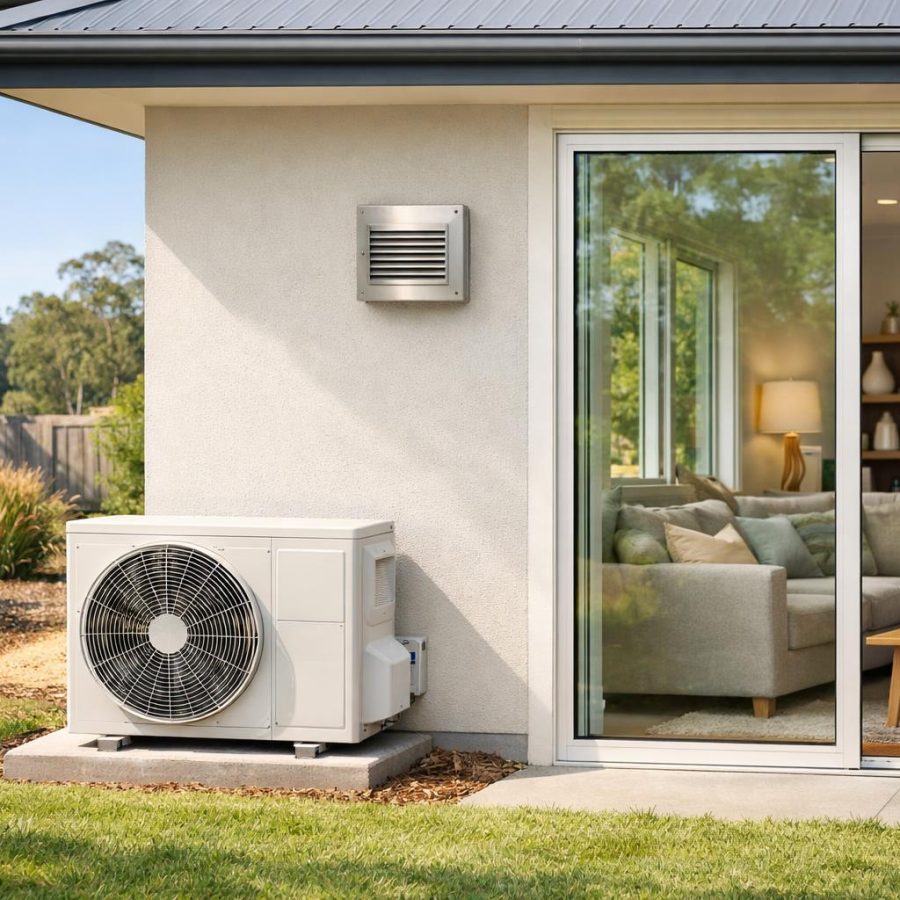
A bushfire protection system is only useful if it is still ready when the fire season arrives. Part 16 focuses on automatic testing and maintenance, so the system can check itself, explain problems in plain English and stay ready without relying on a homeowner’s memory.
Why automatic testing matters in a residential bushfire system
Integrated bushfire protection systems combine several parts that may sit unused for long periods. Pumps, valves, generators, batteries, filters, sensors and controllers can look fine from the outside while still becoming unreliable through age, corrosion, low fuel, blocked filters or software faults. That is why testing needs to be built into the system itself.
The goal is simple: the homeowner should not need to remember how to test every component or understand technical fault codes. The system should test itself on a schedule, report what it finds in plain language and keep the remaining protection operating wherever possible.
This part of the series covers the testing and maintenance layer of the overall system readiness model. Its role is important, but limited. It contributes to readiness by helping the system stay functional and visible. It does not guarantee house survival and it does not replace good building design, fuel management, emergency planning or timely evacuation.
Keep the testing schedule simple for homeowners
The testing schedule should be easy to understand and easy to live with. Residents should be able to choose the exact day and time for routine checks, within sensible limits set by the system or the installer. That matters because people are more likely to accept testing if it happens at a predictable time.
During the Fire Danger Period, the system should perform a basic automatic health check fortnightly. Outside the Fire Danger Period, it should perform the same basic health check every two months. This helps catch problems without creating unnecessary wear, noise or resource use.
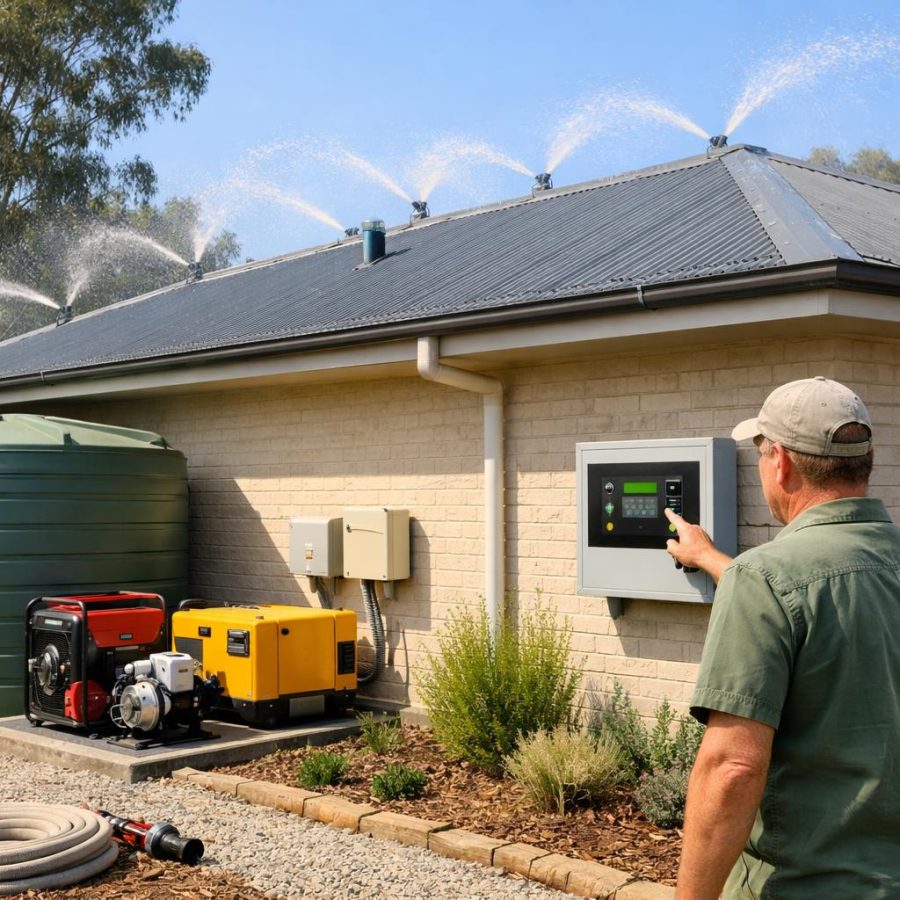
The basic health check should be light-touch. It should confirm that the system is awake, the main controls are responding, reserves appear adequate and critical devices are not already reporting faults. It should not waste water or fuel by running full protection tests when the property may already face real fire threat.
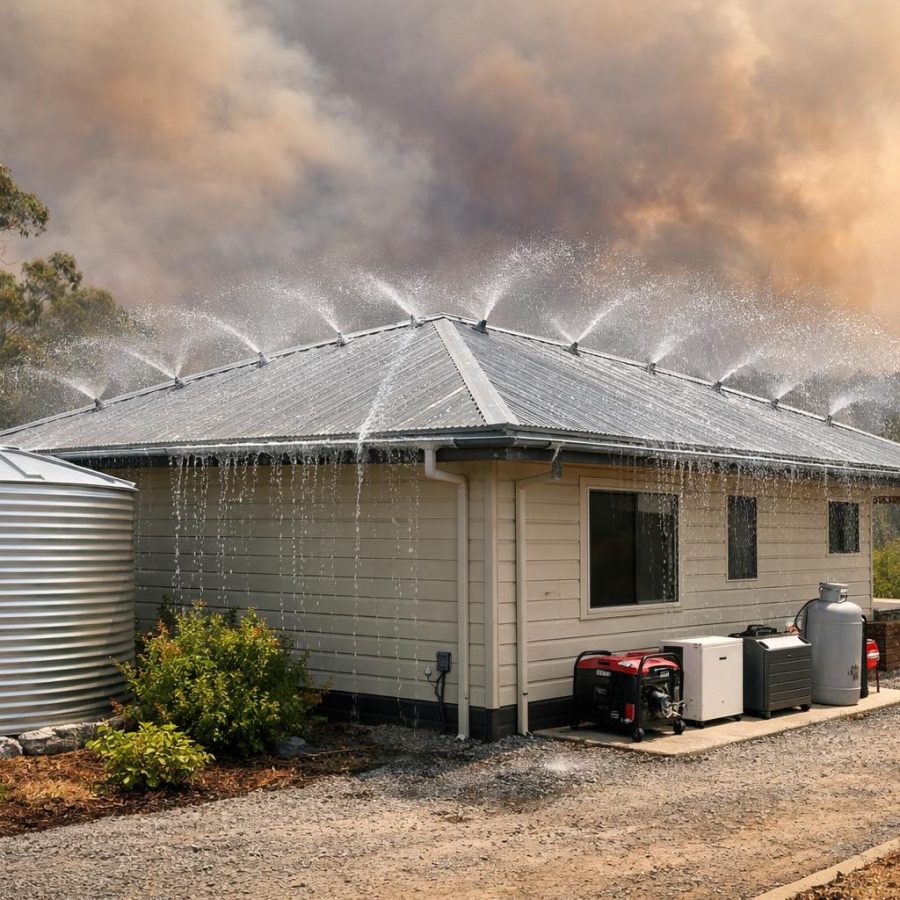
A full wet test is different. During the Fire Danger Period, the system should perform a monthly full wet test, unless conditions make that unsafe or impractical. The wet test is intended to prove that the whole system works together, not just that individual parts can be switched on in isolation.
| Test type | When | Purpose |
|---|---|---|
| Basic health check | Fortnightly during Fire Danger Period; every two months outside it | Confirm the system is responsive and not showing obvious faults |
| Full wet test | Monthly during Fire Danger Period | Verify pumps, valves, pressure, flow, controllers and backup power together |
| System Ready Test | Before a high-risk day | Give the resident a one-button pre-season or pre-event readiness check |
These checks should be scheduled automatically, but the resident should always be able to see when the next test is due and what it is meant to do.
What a basic automatic health check should cover
The basic health check is the system’s quick self-review. It should be simple, quiet and safe. Its purpose is to identify obvious readiness issues before they grow into a larger failure.
A sensible basic health check can include the following:
- controller status and communication
- power availability and backup power readiness
- battery charge level
- generator readiness indicators
- water tank level
- filter condition
- key fault messages from pumps, valves or sensors
- positive-pressure or clean-air readiness where fitted
The system should allow the resident to choose the exact day and time for this health check, especially outside the emergency season when it is easier to plan around household use. It should also avoid running at inconvenient times such as very early morning unless the resident has chosen that.
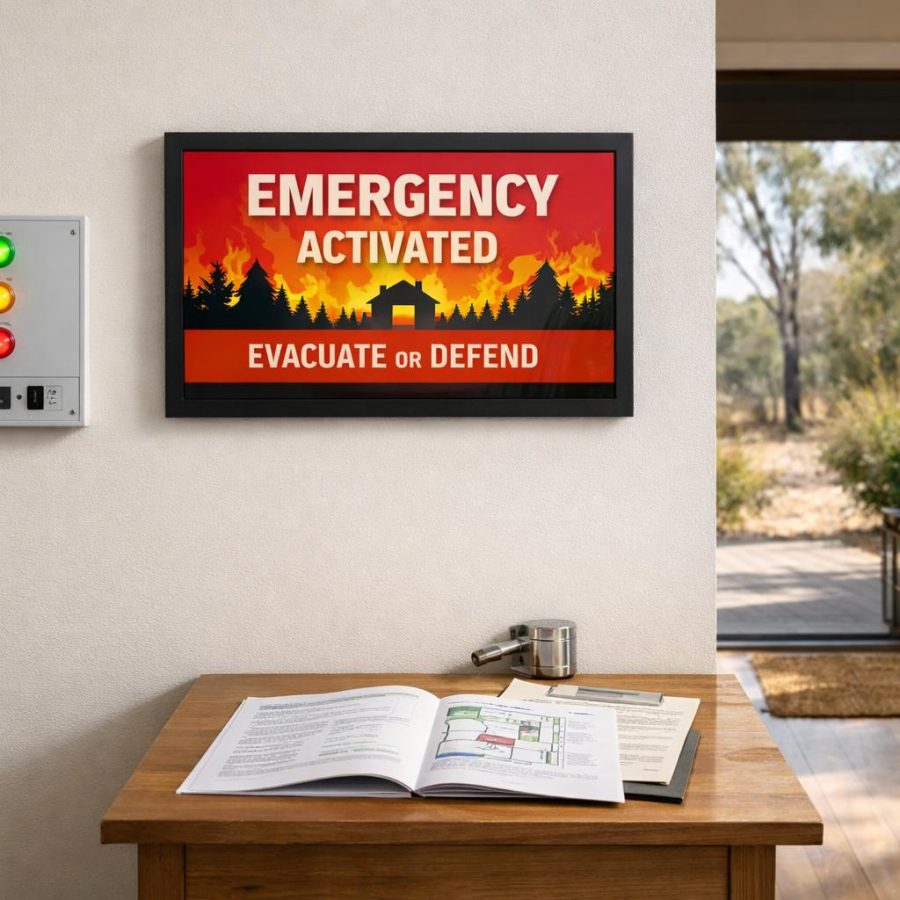
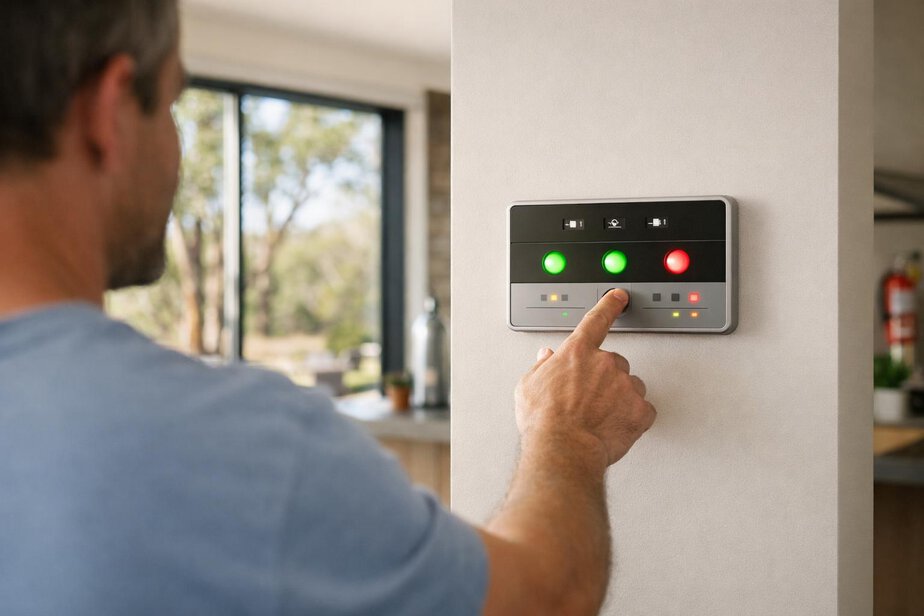
The system should present the outcome in a simple status format:
- GREEN — READY
- AMBER — ATTENTION REQUIRED
- RED — PROTECTION REDUCED
That colour status should always be paired with a plain-English message. For example: “Generator service due in 14 days.” Or: “Battery charge low. Check charging system.” Or: “Filter condition needs attention.”
How the monthly full wet test should work
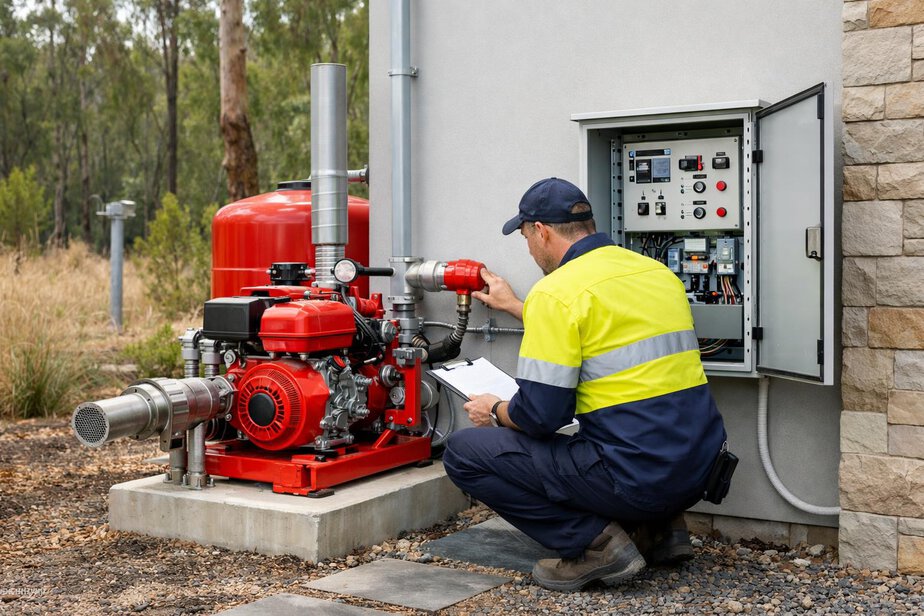
The monthly full wet test is the most important automated proof that the system works as an integrated whole. It should not just confirm that parts exist. It should confirm that the parts can operate together under realistic conditions.
During the Fire Danger Period, the wet test should verify the following functions:
- generator start
- battery transfer
- fire pumps
- valves
- selected sprinkler zones
- flow
- pressure
- controllers
- fault reporting
- positive-pressure or clean-air system operation
Before the test begins, the system should check the reserves that matter most. That means confirming tank level, generator fuel, battery charge, filter condition and positive-pressure readiness where that equipment is fitted. If those reserves are not sufficient, the test should not proceed as though everything is normal.
The aim is to avoid unnecessary consumption of water or fuel when those resources may soon be needed for a real event. The system should be conservative, especially during periods of high fire risk.
The wet test should also be designed to prove coordination. A pump may run well on its own, and a valve may move correctly on its own, but that does not mean the whole protection chain is ready. The full wet test should show that the system can start, shift power if needed, build pressure, deliver flow and report any fault in a way the resident can understand.
Where practical, the test should isolate a failed component rather than disabling the whole system. If one sprinkler zone or one sensor fails, the rest of the protection should remain available. One fault should not create an unnecessary total shutdown.
When the system should postpone wet testing
There are times when automatic testing should step back and wait. A wet test is useful, but it should not create avoidable risk or waste scarce reserves when the property may need them.
The system should automatically postpone the wet test if fire danger is high, if there is a nearby active fire, or if the system is already in Alert or Fire Mode. In those circumstances, the property may be better protected by conserving water, fuel and battery charge than by completing a scheduled test.
The system should make the postponement visible to the resident in plain English. A helpful message might be: “Wet test postponed because fire risk is high.” Or: “Wet test delayed because the system is in Alert Mode.”
If a postponed test is rescheduled, the new time should also be easy to see. Residents should not need to search through menus or interpret technical logs to know whether the monthly test actually happened.
Postponement is not a failure. It is a practical safety choice. The key is that the system should explain why it delayed testing and should return to the schedule once conditions are suitable again.
Positive-pressure and clean-air systems must be included
If the property includes a positive-pressure or clean-air system, it should not be treated as an optional extra. It is part of the overall protection chain and should be included in automatic testing.
The automatic test should check:
- fan operation
- airflow
- pressure control
- filter condition
- PM2.5 and CO sensors where fitted
- operation on backup power
These checks matter because clean-air systems are meant to support safer conditions inside the home when smoke or contaminated air becomes a serious problem. A fan that runs but does not maintain airflow, or a filter that is too blocked to perform, may give a false sense of security.
Backup power operation also matters. A positive-pressure system that only works on mains power may be less useful during bushfire conditions, when power interruptions are more likely. The test should confirm that the system can stay functional if the main supply is lost and backup power is engaged.
As with the rest of the protection system, the resident should see the result in plain language. A message such as “Air filter needs replacement” or “Backup power not available for clean-air fan” is far more useful than a fault number alone.
Maintenance tracking should be automatic and easy to read
Maintenance is easier to do when the system tells you what is due before it becomes urgent. The homeowner should not have to keep a separate notebook, calendar reminders or spreadsheet to know when the system needs attention.
The system should automatically track maintenance due dates for:
- pumps
- generator
- batteries
- filters
- sensors
- valves
- controllers
- positive-pressure equipment
That tracking should be paired with the same simple status language used for testing. Green means ready. Amber means attention is required soon. Red means protection is reduced and action is needed.
Plain-English alerts are essential. Useful messages include:
- “Generator service due in 14 days.”
- “Battery health low. Book inspection.”
- “Filter replacement due.”
- “Valve response delayed. Service required.”
- “Pressure sensor fault. Check system.”
The purpose is not to overwhelm the homeowner with technical detail. The purpose is to make maintenance visible, timely and understandable. If a resident can read the message and know what to do next, the system is doing its job well.
Keep a local maintenance history for confidence and handover
A simple local maintenance history is valuable for residents, technicians and future property owners. It gives the household a record of how the system has behaved over time and can help explain recurring issues, repairs or component replacement.
The history should store:
- automatic tests
- faults
- repairs
- services
- parts replaced
- commissioning results
This history does not need to be complicated. It should be easy to review and should remain local to the property’s system records. The aim is to keep a practical log of readiness, not to create a burden for the homeowner.
Maintenance history can also help a technician make sense of a current issue. For example, if a pump fault repeats after a recent repair, the history may show whether the problem is new, ongoing or linked to another part of the system. That can save time and reduce unnecessary repeat work.
Good records also help when a property changes hands. A new owner benefits from seeing what has been serviced, what parts have been replaced and whether commissioning was completed properly. That supports safer ongoing use of the system.
The System Ready Test should be simple for high-risk days
Before a forecast high-risk day, residents should have access to a one-button System Ready Test. This test should be designed for ordinary homeowners, not technicians. It should give a quick, clear answer on whether the system is ready enough for the day ahead.
The test should check the most important protection functions without requiring the resident to navigate technical menus. It should also display the current readiness status and any action needed if something is not right.
If a fault is found, the system should do four things:
- Explain the problem in plain English.
- Tell the resident what action is required.
- Isolate the failed component where possible.
- Keep the remaining protection operating.
That approach matters because it prevents one local problem from disabling the entire system. If the battery charger fails, the backup supply should be handled as safely as possible while the rest of the system continues where it can. If one sensor fails, the system should avoid turning the whole installation into a dead stop unless that is genuinely necessary for safety.
Residents should be reminded that the System Ready Test is a quick readiness tool, not a replacement for professional inspection or emergency planning. If conditions are unsafe, the right action may still be to leave early and follow local emergency advice.
Professional servicing remains essential every two years
Automatic testing is useful, but it does not replace hands-on inspection. The system still needs professional servicing at least every two years. That service should look for things an automatic test may not see, such as corrosion, damaged pipework, physical wear, loose fittings, blocked components, heat damage or deterioration after storms or renovations.
Professional servicing should also inspect the parts that are often exposed to environmental stress, including sprinkler heads, filters, electrical equipment, batteries, valves and any positive-pressure hardware. Bushfire pipework exposed to the outside environment should remain metal or another suitably fire-resistant material. Plastic or heat-sensitive components remain potential failure points and should be treated carefully.
Some situations may justify extra servicing sooner than the two-year interval. Examples include after a fire event, a major storm, a significant equipment fault or major building works. Local conditions, manufacturer guidance and the installed equipment itself may also require a different schedule.
It is important to say clearly that automatic testing and professional servicing work together. One does not cancel the need for the other. The automatic system keeps watch between services, while the technician checks the physical condition and integrity of the installation.
Design for clarity, not complexity
The best testing and maintenance system is the one a homeowner can understand at a glance. That means fewer technical terms, fewer hidden states and fewer decisions left to memory. It also means the system should make the right information visible before the fire season, not after a problem has already started.
A practical homeowner interface should show three things clearly: what the system status is, what has changed, and what action is required. If the display shows Green, Amber or Red, the resident should immediately know whether the system is ready, needs attention or has reduced protection.
The same principle should apply to maintenance reminders and test results. A message such as “Pump service due soon” is better than a technical code. A message such as “Wet test postponed because fire risk is high” is better than silence.
Clear testing and maintenance also support better behaviour in the rest of the household. If the residents trust that the system will tell them when something is due, they are more likely to act early, book servicing and check readiness before a high-risk day.
Part 16 is therefore about more than servicing schedules. It is about creating a system that looks after itself as much as possible, while still giving the homeowner simple, practical information in time to act.
The practical conclusion is straightforward: automatic testing, plain-English maintenance alerts, simple status colours and regular professional servicing should work together so the system stays visible, understandable and ready before the bushfire season peaks. Before publication or installation, always verify the final design against local conditions, manufacturer instructions and the latest local procedures.
FireRescue Training Hub
Access practical fire and emergency study support resources, downloads, checklists, audio guides, and member-only course content.
- Course library
- PDF downloads
- Audio guides
- Checklists
Study support only. Not accredited training or a replacement for workplace procedures.
About the author and safety review
Ken Walker
Former Station Officer and fire service educator
Former career firefighter with extensive career and volunteer fire service experience.
Qualifications: Associate Diploma of Applied Science in Fire Technology; Institute of Fire Engineers studies.
Author profilehttps://www.firerescue.com.au/about-us/