Australia is one of the world’s most fire-prone countries, but bushfire risk is not the same everywhere or every year. Weather, vegetation, fuel moisture, slope, ignition, access and the condition of a property all influence what happens when a fire starts.
For property owners, the most useful bushfire facts are the ones that change decisions: how to understand today’s Fire Danger Rating, why embers destroy homes, how to reduce avoidable fuel around a building, what BAL means, where official warnings come from and when leaving early becomes the safest choice.
A prepared property has a better chance of surviving a bushfire, but no house, garden, water supply or piece of equipment can guarantee survival. Leaving early before a fire threatens your area remains the safest general public option. During an emergency, follow current warnings and directions from the responsible fire and emergency authorities.
This guide replaces older unsupported fire statistics, US-style clearance distances, outdated public information sources and broad household-firefighting advice. It now reflects Australia’s current Fire Danger Ratings, current bushfire science, ember-attack guidance, BAL information, 2026 building/planning developments, AusAlert and current leave-early advice.
Ten Australian bushfire facts property owners should know
- Australia does not have one single fire season. Peak fire danger varies by region, and dangerous fire weather occurs somewhere in Australia during much of the year.
- The current public Fire Danger Ratings are Moderate, High, Extreme and Catastrophic. No Rating is used on days of minimal risk.
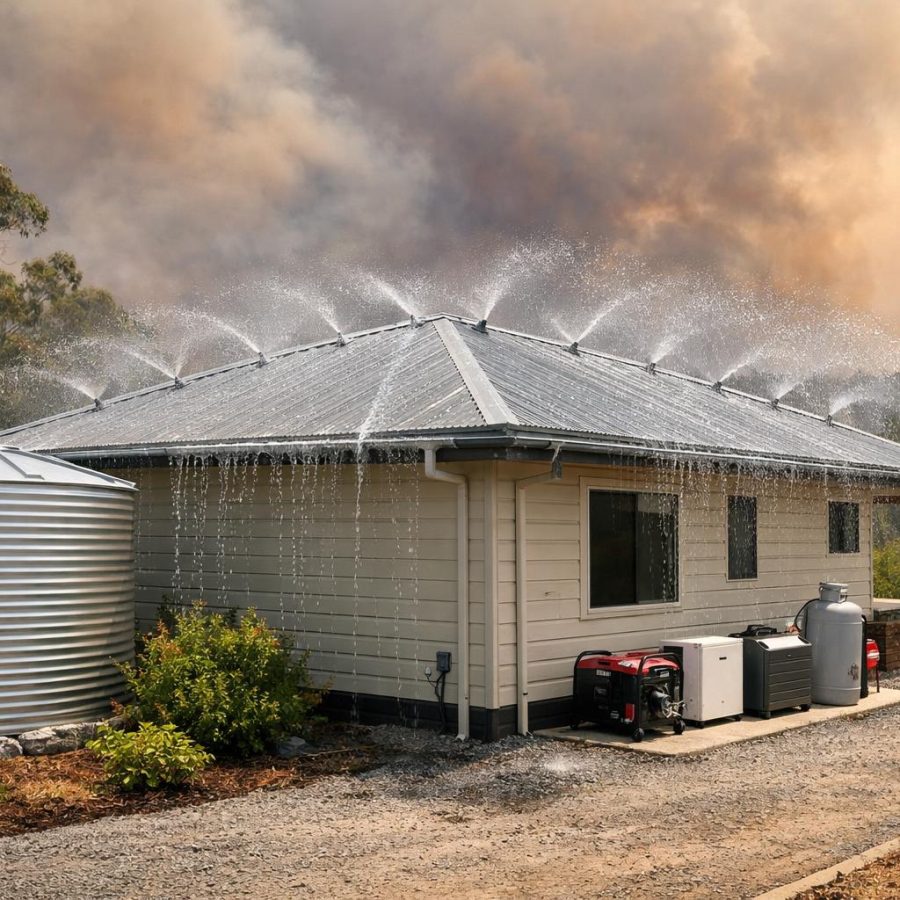
- Embers are a major cause of house loss. They can arrive before the fire front and ignite material around or inside buildings.
- Fire behaviour is driven by more than temperature. Wind, humidity, fuel, fuel dryness and topography all matter.
- Extreme fire weather has increased across large parts of Australia. CSIRO and the Bureau of Meteorology also report longer fire seasons.
- A well-prepared home is not a fireproof home. Preparation reduces avoidable weaknesses but cannot remove bushfire risk.
- BAL has six categories. They run from BAL-LOW to BAL-FZ and influence building requirements where the planning/building system requires them.
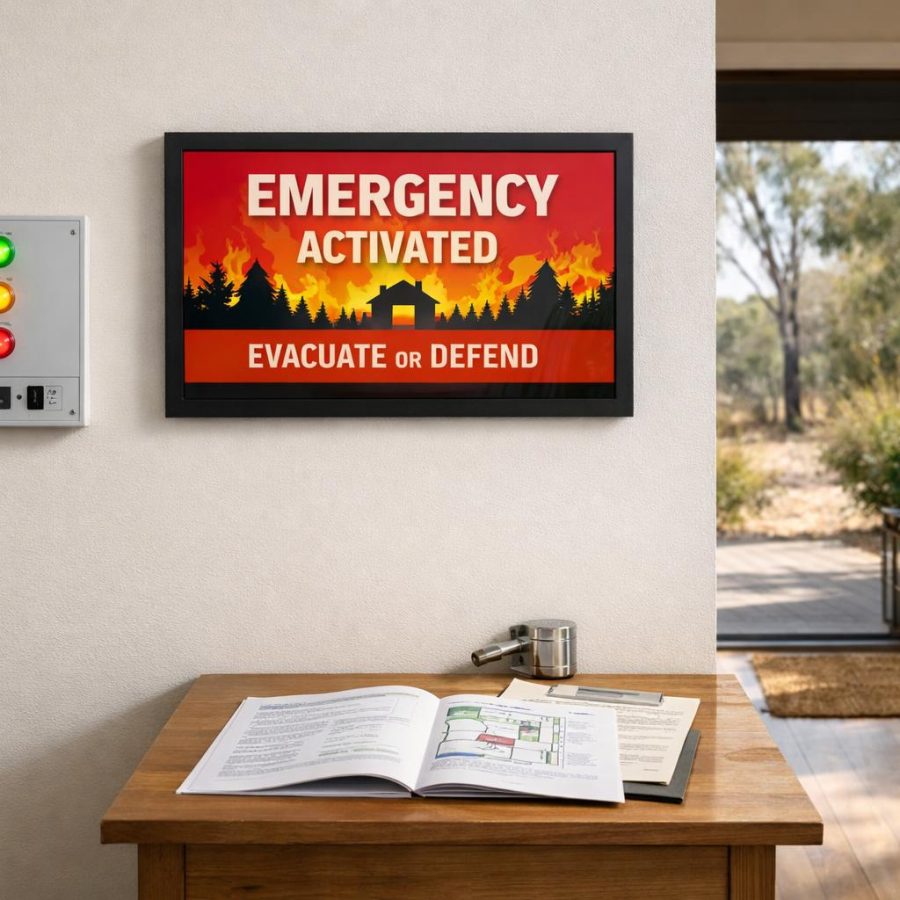
- Warnings are one part of your plan. Do not wait for an Emergency Warning if your pre-planned trigger to leave has already been reached.
- Fire trucks cannot be guaranteed for every property. Major fires can create many competing life-safety priorities.
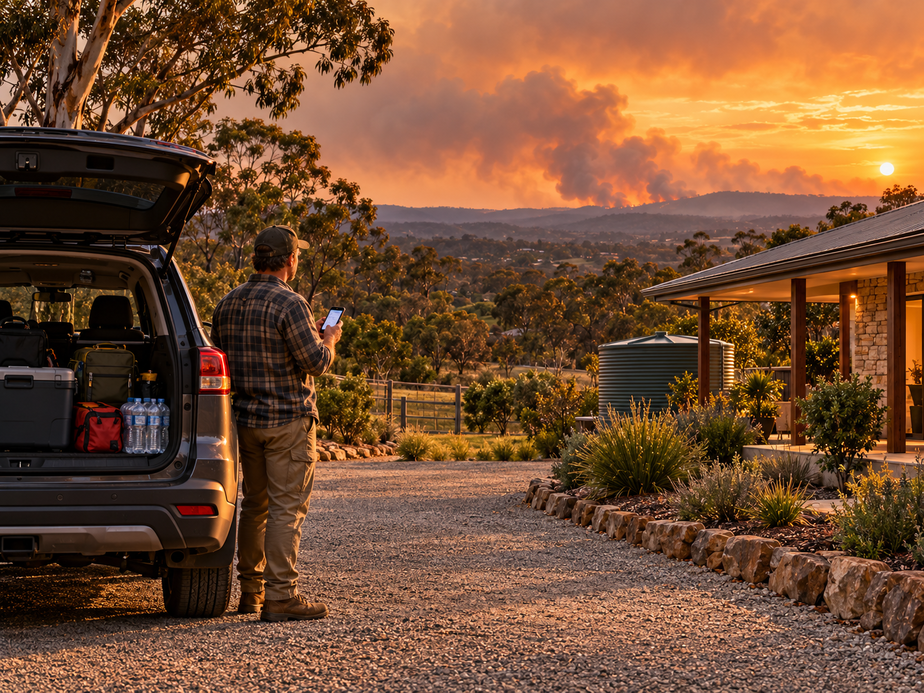
- Leaving early gives you more choices. Late evacuation can expose people to smoke, falling trees, fire, traffic and blocked roads.
Fire Danger Ratings: use the current Australian system
Fire Danger Ratings describe how dangerous a fire could be if one starts. They are designed to help the community decide what action to take before conditions become dangerous.
| Rating | What it means for you |
|---|---|
| No Rating | Minimal risk. No proactive community action is required, but fires can still occur. |
| Moderate | Plan and prepare. |
| High | Be ready to act. |
| Extreme | Take action now to protect your life and property. |
| Catastrophic | For your survival, leave bushfire risk areas. |
Older terms such as Very High, Severe and Code Red are not part of the current public rating system.
A Fire Danger Period, Bush Fire Danger Period or Total Fire Ban is a separate legal or administrative control. The terminology and rules vary by state and territory. Check the daily rating and the current restrictions that apply where you live, work or travel.
Why bushfire risk is changing
CSIRO and the Bureau of Meteorology’s latest published State of the Climate report shows an increase in extreme fire weather and longer fire seasons across large parts of Australia since the 1950s.
That does not mean every part of Australia experiences more fires every year. Actual fire occurrence depends on ignition, vegetation, recent rainfall, fuel dryness, wind, terrain and fire management.
The pattern also differs by region. Hot, dry and windy conditions are especially important in southern and eastern forest regions. In northern and inland Australia, wet periods can grow large grass fuel loads that later dry and support extensive grassfires.
The practical lesson is straightforward: use current local forecasts and Fire Danger Ratings rather than assuming this season will behave like the one you remember from ten or twenty years ago.
Ember attack: one of the biggest threats to homes
A bushfire does not need to reach the walls of a house as a continuous flame front to destroy it. CFA identifies embers as a major reason homes and buildings ignite during bushfires.
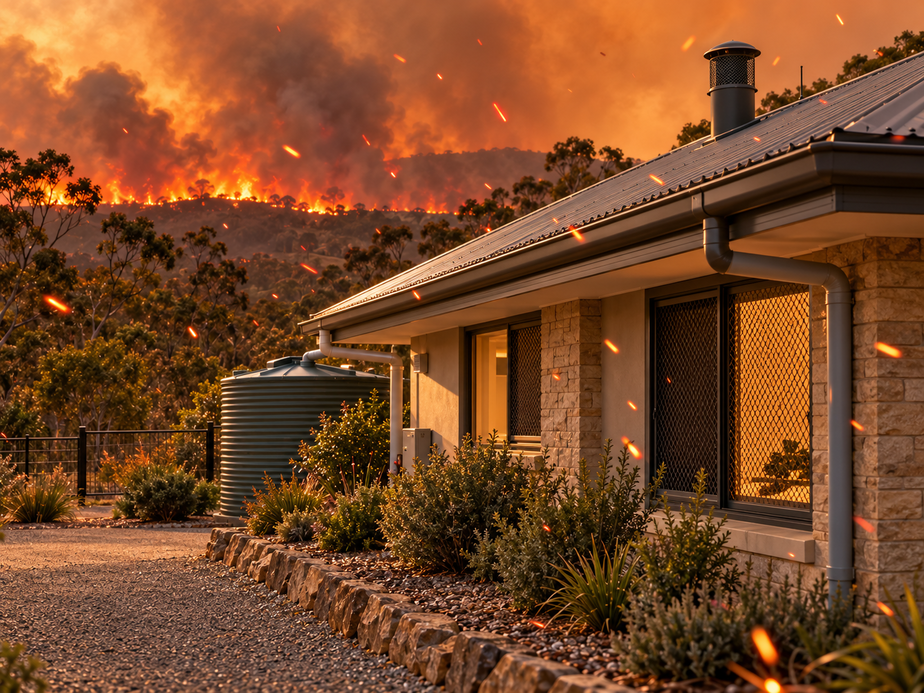
Burning leaves, bark and twigs can be carried by wind ahead of the main fire. When they land in dry grass, leaf litter, garden beds, timber, gutters, decks, doorways or building gaps, they can start spot fires.
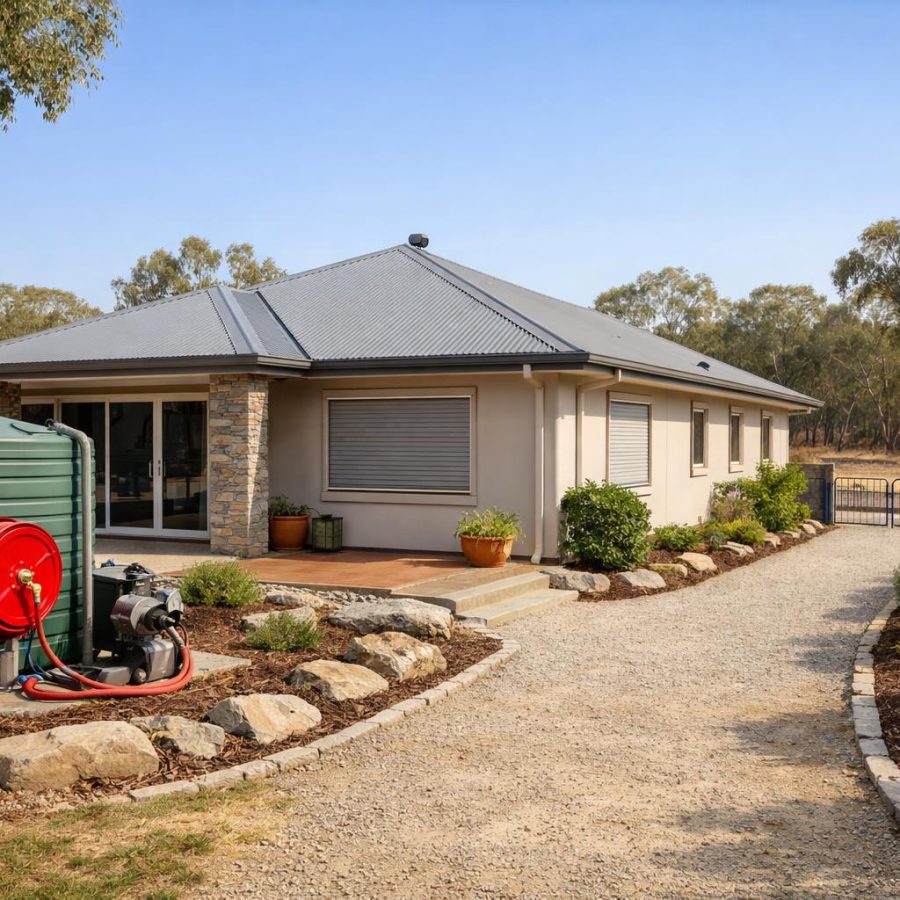
Gutters, roof valleys, gaps around doors and windows, under decks, roof spaces, garden mulch, doormats, stored timber and piles of dry vegetation deserve particular attention before the fire season and before dangerous fire-weather days.
Preparing the property: reduce avoidable weaknesses
There is no single Australian clearance distance that is appropriate for every property. The right approach depends on the site’s vegetation, slope, planning controls, building requirements and the wider landscape.
Current CFA and NSW RFS advice consistently emphasises practical, repeated maintenance.
- Clean leaves and twigs from gutters and roof valleys.
- Keep grass maintained and remove accumulations of dry fine fuel.
- Remove dead vegetation and manage shrubs and trees around buildings where local rules permit.
- Repair obvious gaps or damaged parts of the building that can allow ember entry.
- Use suitable metal screens or mesh where required by the building or retrofit design.
- Move woodpiles, outdoor furniture, doormats and other easily ignited items away from buildings before dangerous days.
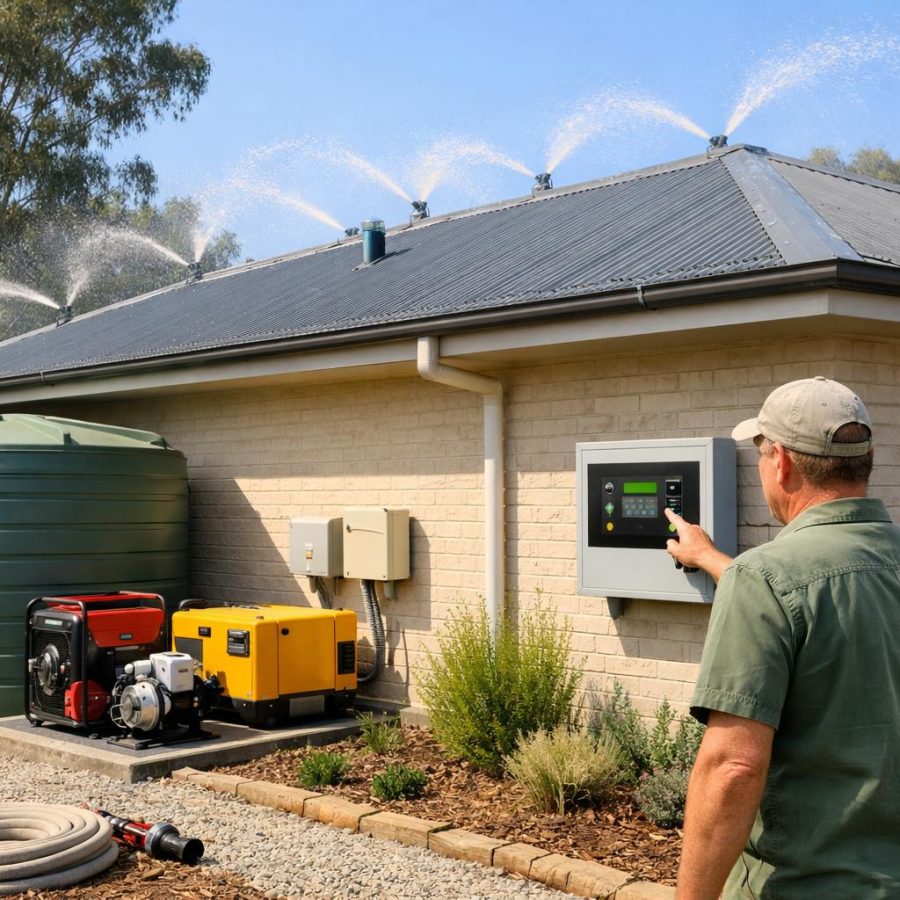
- Maintain pumps, tanks, hoses or sprinkler systems that form part of your plan.
- Keep access routes, gates and property identification usable for residents and emergency vehicles.
Preparation should be done well before a fire threatens the area. Do not delay leaving in order to complete last-minute property jobs once your trigger has been reached.
BAL and bushfire-resilient construction
Bushfire Attack Level, or BAL, describes the predicted level of bushfire attack at a building site. It can influence construction requirements where the planning and building system requires it.
| BAL | General exposure |
|---|---|
| BAL-LOW | Lowest bushfire exposure. |
| BAL-12.5 | Primarily ember exposure with lower radiant heat. |
| BAL-19 | Increasing ember and radiant-heat exposure. |
| BAL-29 | High exposure to embers, debris and radiant heat. |
| BAL-40 | Very high exposure, with possible flame contact. |
| BAL-FZ | Flame Zone: direct flame exposure may occur. |
AS 3959:2018 remains the current published Australian Standard for construction in bushfire-prone areas as of October 2026. Standards Australia has also released new 2026 bushfire construction handbooks, including a free homeowner handbook.
Building and planning requirements vary between jurisdictions. Victoria, for example, updated its bushfire planning provisions through Amendment VC248 in May 2026. Property owners should check the current requirements that apply to the actual site.
A BAL assessment and bushfire construction measures can improve resilience. They do not guarantee that a building will survive every bushfire.
Your bushfire plan matters more than equipment
A good property plan answers the important questions before the day becomes stressful: when will you leave, where will you go, how will you get there, what will you take, who needs help and what is the backup route?
CFA states that leaving early is the safest option. For people in high fire-risk areas, it advises leaving the night before or by 10 am on Extreme or Catastrophic days.
Do not wait until you see flames, smell smoke or receive an Emergency Warning if your own plan already tells you it is time to leave.
For more detail, see Bushfire Safety in Australia: When to Leave Early and What to Do if You’re Trapped.
Do not assume you can stay and defend
The idea that a property owner can simply decide to stay because they own hoses, pumps or a water tank is dangerous.
CFA currently says it does not recommend staying to defend a property. Active defence can involve hours of hard physical work in heat, smoke, wind and darkness, with possible failure of power, water and communications.
Never plan to stay and defend on a Catastrophic day. On Extreme days, people in high fire-risk areas should strongly consider leaving early.
A general online article cannot determine whether a particular person, building, access route or water supply is suitable for active defence. Anyone considering that strategy should use the current guidance and assessment material from their own fire authority.
Warnings: use more than one trusted source
During dangerous weather, monitor official information rather than relying on social media screenshots or a single app.
- Your state or territory emergency website or app.
- Your fire service‘s current incident and warning information.
- Bureau of Meteorology forecasts and warnings.
- ABC Emergency broadcasting.
- AusAlert when a message is issued to your area.
AusAlert became ready for operational use in October 2026 following community and national testing. It uses cell-broadcast technology to send messages to compatible devices in affected areas.
No warning system removes the need for a pre-planned trigger. Fires can start and spread quickly, and warning information can change as the incident develops.
Smoke is also a health hazard
Bushfire smoke contains fine particles and gases. It can irritate healthy people and can be more serious for people with heart or lung conditions, older people, pregnant people and young children.
A correctly fitted P2 or N95 respirator can reduce inhalation of some fine particles. It does not filter carbon monoxide and does not make a dangerous fire environment safe.
If smoke is affecting your area but fire is not immediately threatening you, follow current health and emergency advice. If anyone has severe breathing difficulty or another life-threatening emergency, call Triple Zero (000).
After the fire: do not assume the property is safe
A burnt property can contain hazards long after visible flames are gone. Structures may be unstable, trees may fall, electrical systems may be damaged and ash may contain hazardous material.
Tank water can also be contaminated by ash and debris. Fire-damaged asbestos-containing materials require special care and should not be disturbed casually.
Only return when authorities advise it is safe, and use current health, council, utility and recovery guidance for the property.
Common bushfire myths
Myth: No Rating means no fire risk.
Fact: It means the daily risk is minimal and no proactive community action is required. Fires can still occur.
Myth: A high BAL home is fireproof.
Fact: BAL informs construction requirements for predicted bushfire attack. It does not guarantee survival.
Myth: If I have a tank and pump, I can stay.
Fact: Equipment can fail, water can run out and the physical conditions can overwhelm untrained occupants.
Myth: I will get a warning before I need to leave.
Fact: Your plan may require you to leave before any formal warning is issued.
Myth: Clearing a fixed distance around every Australian home is the answer.
Fact: Defendable space and vegetation requirements are site- and jurisdiction-specific.
Operational perspective
The properties that give occupants and firefighters the best options are usually the ones where simple weaknesses have been dealt with early: vegetation and fine fuel are maintained, the address and access are clear, gates can be opened, the building has fewer obvious ember-entry points, water arrangements are understood and the household already knows when it will leave.
Major bushfires create competing priorities. Crews may be committed to rescues, community protection, road closures, structure fires, evacuation support and other life-safety tasks. A fire truck cannot be promised for every house.
One of the most important decisions a property owner can make is therefore made before any appliance arrives: prepare early, understand the conditions and leave while safe choices are still available.
Property-owner bushfire checklist
- Know whether the property is in a bushfire-prone area or planning overlay.
- Understand your BAL where it applies.
- Check the current Fire Danger Rating during fire season.
- Keep gutters, roofs, decks and the area around buildings clear of fine fuel.
- Check obvious gaps and ember-entry points.
- Maintain vegetation, access, gates and property identification.
- Prepare for loss of power, mobile coverage and mains water.
- Include children, older people, people with disability, pets and livestock in the plan.
- Know where you will go and at least one backup route.
- Leave early when your plan or official guidance tells you it is time to go.
Frequently asked questions
Moderate, High, Extreme and Catastrophic. No Rating is used on days of minimal risk.
Several mechanisms can damage a home, including flame, radiant heat and wind, but ember attack is a major cause of building ignition and should be a central part of property preparation.
There is no single national distance for every property. Requirements depend on vegetation, slope, site conditions and state or territory planning/building rules. Use the current guidance that applies to the property.
No. BAL is primarily a building and site-exposure assessment. It is not a personal survival guarantee and should not be used as a reason to remain during dangerous conditions.
No. If your bushfire plan says it is time to leave, act on that trigger. Leaving early means leaving before fire threatens the area, not waiting until the situation is already dangerous.
The key message
Understand the risk. Maintain the property. Reduce ember-entry points. Use the right building and planning pathway. Know the Fire Danger Rating. Monitor official warnings. Make a realistic plan. And when the conditions or your trigger say it is time to go, leave early.
Related FireRescue guides
- CSIRO & Bureau of Meteorology — State of the Climate
- Bureau of Meteorology — Fire weather: what you need to know
- CFA — Fire Danger Ratings
- CFA — Ember attack
- NSW RFS — Prepare your home
- NSW RFS — Bush Fire Attack Levels
- Standards Australia — Bushfire construction handbooks
- AusAlert — National emergency warning system
- Victorian Department of Health — Bushfires and public health
Ken Walker — former Station Officer and fire-service educator with career and volunteer firefighting experience.
This guide combines current Australian public-safety, bushfire-science, planning and building sources with an operational firefighting perspective. State and territory rules differ, so site-specific building, planning and emergency advice should always be checked locally.
This article provides general educational information for an Australian audience. It does not determine whether a property is safe to defend, does not replace a site-specific BAL assessment or planning/building advice, and does not replace current emergency warnings or directions. Bushfire conditions can change rapidly. If life is in immediate danger, call Triple Zero (000).
FireRescue Training Hub
Access practical fire and emergency study support resources, downloads, checklists, audio guides, and member-only course content.
- Course library
- PDF downloads
- Audio guides
- Checklists
Study support only. Not accredited training or a replacement for workplace procedures.
About the author and safety review
Ken Walker
Former Station Officer and fire service educator
Former career firefighter with extensive career and volunteer fire service experience.
Qualifications: Associate Diploma of Applied Science in Fire Technology; Institute of Fire Engineers studies.
Author profilehttps://www.firerescue.com.au/about-us/