FireRescue Course Series • Part 2 of 6
Structural Collapse Scene Assessment — Hazards, Size Up and Dynamic Risk
Structural collapse scene assessment helps a first response USAR team slow the scene down, read the hazards and report what matters before rescue work moves closer to danger.
Dynamic Risk Assessment
Exclusion Zones
- Conduct worksite scene reconnaissance and size up.
- Identify structural, environmental and situational hazards.
- Report findings to supervisors and rescue team members.
- Support exclusion zones and approved marking systems.
0 of 7 sections refreshed
Learning summary
What Part 2 builds
You learn to read the worksite before moving closer to collapse hazards.
You keep checking hazards because the scene can change without warning.
You look for damaged structures, collapse patterns and possible survivable voids.
You report hazards, resource needs and changes through the approved chain.
The USAR SAFE Cycle in scene assessment
Part 2 focuses on the assessment stage. The team uses the USAR SAFE Cycle to connect observation, risk control, reporting, exclusion zones and safe decision-making.
Structural collapse scene assessment starts with careful reconnaissance
Structural collapse scene assessment begins with looking, listening and reporting. The aim is not to rush forward. The aim is to understand the worksite before the team commits people and equipment.
Structural collapse scene assessment is one of the most important safety habits in first response USAR work. A collapsed or damaged structure can look still, yet still be unstable. A surface that appears solid may hide a void, sharp debris, damaged utilities or a weak floor area.
Reconnaissance means the team conducts an organised look at the worksite. It supports size up, hazard identification and planning. At this level, you are not acting alone. You are supporting a supervised team and reporting what you see through approved channels.
The first scan should be calm and controlled. Look at the whole area before focusing on one part. Notice access routes, bystanders, damaged walls, overhead hazards, unstable ground, smoke, dust, water flow, debris piles and possible casualty locations.
Next, compare what you see with the briefing. The original information may not match the scene. For example, a report may mention one trapped person, but the building use and time of day may suggest more people could be nearby.
Your first job is to help the team understand the scene. You observe, stay inside safe boundaries and report clearly. Good reconnaissance helps prevent unsafe movement.
Size up is a shared team picture
Size up is the process of building a useful picture of the incident. It includes what has happened, what is still dangerous, who may be affected and what resources may be needed. It also includes what the team should not do yet.
A useful size up does not need dramatic language. It needs clear facts. For example, report that a wall is leaning, a utility line is damaged, a stairwell is blocked or a section appears unsafe. Keep the message simple and direct.
As conditions change, the size up must also change. A new crack, falling debris, changing weather or new casualty information can affect the plan. Therefore, scene assessment is not a one-time task. It continues until the operation is complete.
Dynamic risk assessment keeps the team alert
Dynamic risk assessment means the team keeps identifying, analysing, treating and monitoring hazards as the incident changes. It is a practical habit, not a paperwork exercise only.
At a structural collapse incident, risk can change quickly. A responder may move debris and expose a sharp edge. Rain may make rubble slippery. A damaged wall may shift. Dust may reduce visibility. Noise may make verbal warnings harder to hear.
Dynamic risk assessment helps the team respond to these changes. It asks a simple set of questions. What is the hazard? Who could be harmed? What control is already in place? What control is missing? Who needs to know?
This process supports safe work practices under WHS/OHS requirements. It also helps the team decide when to stop, when to change tactics and when to request additional people or specialist equipment.
A first responder should never keep a concern quiet because they feel junior. If you see a hazard, report it. Your observation may be the detail that prevents a secondary incident.
Ask yourself
- Has the structure changed?
- Has the weather changed?
- Has the casualty information changed?
- Has equipment created a new hazard?
- Has the team moved outside the agreed boundary?
Report clearly
- What you saw.
- Where it is.
- Who may be affected.
- Whether the risk is increasing.
- What support may be needed.
Risk control is active
Risk control is not just naming a hazard. The team must do something useful with the information. That may mean creating an exclusion zone, changing access, moving equipment, improving communication or stopping work until the supervisor confirms the next step.
Sometimes the safest action is to pause. Pausing can feel slow, especially when a casualty may be nearby. However, uncontrolled movement into unstable debris can injure responders and delay the rescue.
A controlled team can still act quickly. The difference is that action follows a safer plan. Speed without control is not rescue readiness. It is risk.
Recognise structural and environmental hazards
Damaged structures create many hazards. Some are obvious. Others are hidden under debris, behind walls, below floor level or above the team.
The course includes awareness of situational and environmental hazards. These can include adverse weather, below-debris hazards, biological hazards, hazardous materials, overhead hazards, structural instability, surface hazards and utilities.
Structural instability is a major concern. Cracked walls, leaning sections, displaced supports, hanging materials, sagging floors and moving debris can all suggest danger. Do not assume a damaged building has finished collapsing.
Secondary collapse is another key risk. This means further collapse after the first event. It may be caused by damaged load paths, vibration, weather, movement, rescue activity or other changes. Even small shifts can be serious.
Overhead hazards need constant attention. Loose roofing, glass, signs, bricks, concrete, cables and fittings can fall. Responders often focus on the ground and casualty area. However, danger can come from above.
Common mistake
Only looking at the casualty area.
Safer choice:
Scan above, below, around and behind the work area.
Common mistake
Assuming debris is stable because it is not moving.
Safer choice:
Treat damaged structures as unstable until assessed under procedure.
Common mistake
Ignoring weather during assessment.
Safer choice:
Consider rain, wind, heat, cold and visibility as active risk factors.
Utilities and hazardous materials
Utilities can create serious risks. Electricity, gas, water and damaged service lines may be present. A broken pipe, exposed cable or smell of gas must be reported immediately through the approved chain.
Hazardous materials may also be present. A commercial site, workshop, garage, farm building or storage area may contain chemicals, fuels, batteries or contaminated items. The first responder’s role is to recognise signs and report concerns, not improvise specialist hazardous materials work.
Biological hazards and hygiene risks also matter. Blood, dust, sewage, animal waste, sharp contaminated materials and decomposing organic matter can be present in collapse settings. PPE, hygiene precautions and correct reporting help reduce exposure.
Building use, occupancy and time of day help guide casualty thinking
Assessment is not only about the damaged structure. It also includes who may have been inside, where they may have been and whether the time of day changes the likely casualty picture.
A first response USAR team considers building use, type of occupancy and time of day. These factors help estimate whether people may be present and where surface or lightly trapped casualties may be located.
For example, a shop during business hours may have staff, customers and delivery workers. A home at night may have sleeping occupants. A school, office, warehouse or community building may each create a different casualty pattern.
This information does not replace a search. Instead, it helps guide a safer and more organised approach. It can help the team ask better questions, choose likely search areas and report where additional resources may be needed.
Witness information can be useful, but it must be treated carefully. People may be stressed, confused or missing details. Collect the information, pass it on and allow the team to compare it with other intelligence.
Who was likely to be here, where were they likely to be, and what hazards may now block safe access to them?
Survivable voids and collapse patterns
The course includes awareness of collapse patterns and survivable voids. A survivable void is a space where a person may still be alive after collapse. At this level, the key task is to recognise the possibility and report it through the team structure.
Do not tunnel, force entry or disturb debris beyond your approval and capability. Movement of debris can change the structure, harm a casualty or remove evidence. If a void or casualty location is suspected, report it clearly and wait for the approved plan.
Collapse patterns may give clues about likely spaces, blocked routes and risk areas. However, damaged structures can be deceptive. Therefore, any interpretation must remain cautious and tied to organisational procedures.
Exclusion zones and marking systems protect the worksite
Exclusion zones and marking systems help responders control movement, share warnings and reduce confusion around damaged structures.
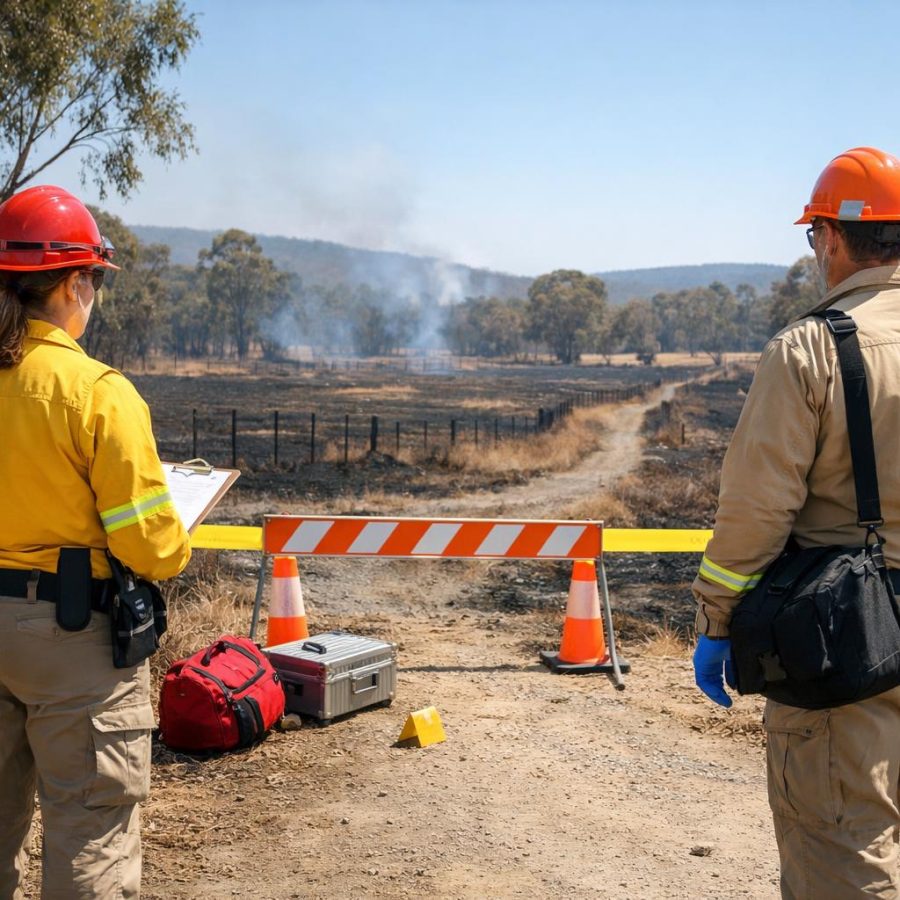
Exclusion zones separate people from hazards. They help keep bystanders, unauthorised personnel and sometimes even rescue team members away from dangerous areas. A zone may change as the incident develops.
Marking systems help communicate important information. They may identify searched areas, hazards, sectors, boundaries or other operational details. The course expects use of approved marking systems in accordance with organisational procedures.
A first responder must respect these systems. Do not cross a boundary because it looks quiet. Do not remove or change a mark unless authorised. Do not create your own system because it seems easier.
Clear marking and boundaries also support later parts of the rescue. They can help search teams avoid duplication, help supervisors track progress and help the team preserve the scene where possible.
Exclusion zones help control
- Unstable structures.
- Falling debris areas.
- Hazardous materials concerns.
- Utility hazards.
- Vehicle and equipment movement.
- Search and rescue work areas.
Marking systems may support
- Sector boundaries.
- Search progress.
- Known hazards.
- Casualty information.
- Access control.
- Team communication.
Boundaries are active safety tools
A boundary is not just tape, paint, cones or signage. It is a decision. It tells people that risk has been identified and movement must be controlled.
If you see someone crossing a boundary unsafely, report it. If a boundary no longer matches the hazard, report that too. Good responders keep the control measures alive.
Clear communication links assessment to action
Assessment only helps if the right people receive the right information. Clear communication keeps the supervisor, team and nearby agencies connected.
The course expects communication with primary response team members using approved systems, methods, techniques, terminology and warning systems. This matters because collapse scenes can be noisy, crowded and fast moving.
Good communication is short, clear and useful. Avoid long stories when a hazard must be reported. Give the location, the hazard, the possible effect and any immediate concern. Then wait for direction.
Communication also includes liaison with other response organisations or agencies in proximity. At a real incident, fire, rescue, ambulance, police, utilities, council, engineers or other personnel may be nearby. The team must avoid mixed messages and work through the command structure.
Approved warning systems help the team respond quickly to danger. Every responder should understand the warning method used at the scene. If you do not understand it, ask before entering a work area.
“Supervisor, I can see loose brickwork above the front entry on the left side. It appears unstable and is over the planned access path.”
Report needs for extra support
Scene assessment may show that the current team needs additional personnel or specialist equipment. This is not a failure. It is a sign that the team is reading the risk honestly.
At Category 1 first response level, knowing when to ask for help is a strength. Some tasks may move beyond the capability of available equipment or the assigned team. Report the need early so the incident can be managed safely.
Part 2 ends with this principle: assessment guides action. If the assessment changes, the action must change too.
Scenario drill
Size up at a damaged community hall
Your supervised USAR first response team arrives at a damaged community hall after a severe weather event. A wall near the front entrance is cracked. A bystander says two people were inside earlier. You also notice water running across the floor near damaged electrical fittings.
Knowledge check
Part 2 quick quiz
1. What is the main purpose of scene reconnaissance?
2. What does dynamic risk assessment require?
3. What should you do if a task needs equipment beyond your team’s capability?
60-second refresher
Say it out loud
- I conduct reconnaissance before moving closer to collapse hazards.
- I look above, below, around and behind the work area.
- I treat damaged structures as unstable until assessed under procedure.
- I use dynamic risk assessment as conditions change.
- I respect exclusion zones and approved marking systems.
- I report hazards, casualty intelligence and resource needs clearly.
- I stay inside my supervised Category 1 first response role.
Next article in the series
Part 3 of 6: Surface Search and Casualty Location — Intelligence, Calling, Listening and Reporting
Next, you will move from scene assessment into surface search. Part 3 explains casualty intelligence, systematic search, calling and listening, approved communication and reporting casualty condition.
FireRescue Training Hub
Access practical fire and emergency study support resources, downloads, checklists, audio guides, and member-only course content.
- Course library
- PDF downloads
- Audio guides
- Checklists
Study support only. Not accredited training or a replacement for workplace procedures.
About the author and safety review
Ken Walker
Former Station Officer and fire service educator
Former career firefighter with extensive career and volunteer fire service experience.
Qualifications: Associate Diploma of Applied Science in Fire Technology; Institute of Fire Engineers studies.
Author profilehttps://www.firerescue.com.au/about-us/