Getting lost in the Australian outback can become life-threatening very quickly, especially when heat, distance and poor phone coverage work against you. The safest response is usually simple: stop moving, protect yourself from the weather, conserve water and energy, and make yourself easier to find.
Why the outback becomes dangerous so fast
The Australian outback can look open and obvious, but it is one of the hardest environments to survive in once you are disoriented. Heat can build rapidly during the day, nights can be cold, and distances between roads, stations, tracks and towns can be far greater than they appear on a map.
Loss of direction is not just a navigation problem. It can become a medical emergency because people often react by walking farther, sweating more, panicking, and using up water and battery power too quickly. That combination can turn a survivable situation into a serious rescue.
The biggest early risks are dehydration, heat stress, exposure, injury and being harder to locate. Once you are uncertain of where you are, your first job is to prevent the situation from getting worse.
The first actions to take when you realise you are lost
If you think you are lost, stop immediately. Do not keep driving or walking just to see if you recognise something. Calm down, sit if needed, and take a few slow breaths before you make any decisions. Panic burns energy and leads to poor choices.
Then do the following in order:
- Stop and assess. Check where you last knew your location and how much daylight, water and battery you have left.
- Make yourself safe. Get out of direct sun or bad weather if you can do so without moving far away from your current position.
- Stay with your vehicle if you have one. A vehicle is easier to find than a person and usually provides shade, storage and a visible landmark.
- Use your phone sparingly. Turn on power-saving mode, close unused apps and keep the device available for calls, texts and location sharing.
- Signal early. Do not wait until conditions get worse before trying to alert others.
If there is any chance you may not be found quickly, assume you need to conserve resources from the start. It is much easier to ration water and shade early than to recover from severe dehydration later.
Stay with your vehicle or shelter whenever possible
In many outback survival situations, the best decision is to stay near your vehicle. A car, ute or truck is a large, easier-to-spot object. It can also store water, shade tools, spare clothing, a torch and first aid supplies. If rescuers are searching a wide area, a stationary vehicle is often far more visible than a person on foot.
When staying put is usually the safer choice
- You are unsure where you are.
- The area is remote and travel options are limited.
- Your vehicle is reasonably intact and not in immediate danger.
- You have some water, food or shade.
- Your phone, radio or beacon may still work.
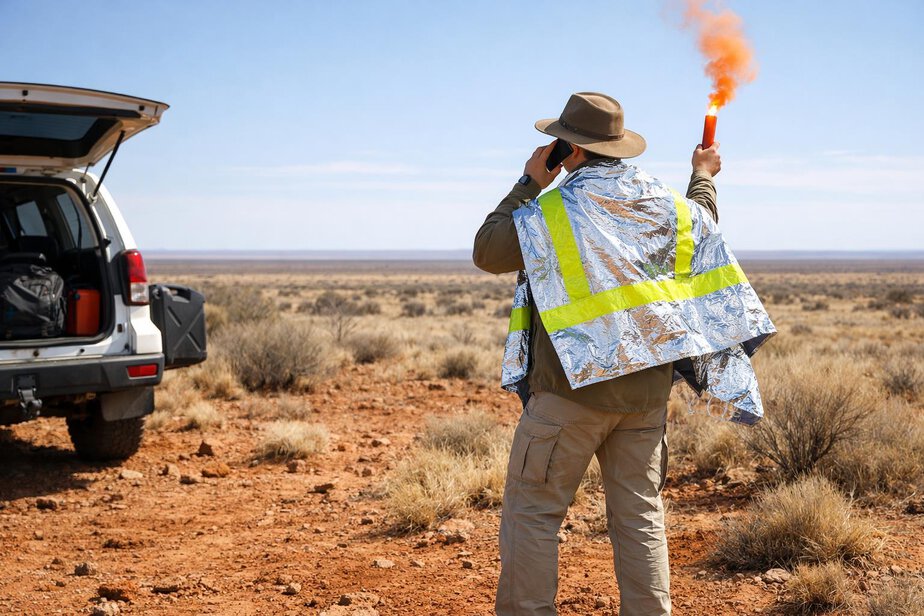
Make the vehicle easier to see from the air and from the ground. Use bright clothing, a tarp, reflective items or the vehicle’s hazard lights if safe and practical. Keep a clear, visible signal near the vehicle, but do not create a fire unless you are trained, it is safe, and fire conditions allow it. In dry Australian conditions, fire can spread fast and create a new emergency.
If you must leave the vehicle for a short time, keep the return route obvious. In a featureless landscape, a person can become disoriented very quickly even after only a short walk.
How to signal for help and increase the chance of rescue
Rescue starts when someone knows you are missing. Your task is to make that as easy as possible. Use every safe and legal method available to communicate your position and need for help.
Use the tools you have
- Mobile phone: Call Triple Zero (000) if there is immediate danger. Even if coverage is poor, the phone may still connect to an available network. Texts or messages may sometimes send when calls do not.
- Satellite phone: If available, use it early and follow the device instructions.
- Personal locator beacon or emergency beacon: Activate it as soon as you genuinely need rescue, then leave it on unless the device instructions say otherwise.
- Vehicle or hand-held radio: Use according to the device’s instructions and your own training.
- Visual signals: Use a torch, mirror, high-visibility clothing, a ground signal or hazard lights where safe.
Before a trip, tell a trusted person your route, destination, expected return time and what to do if you do not check in. That simple planning can trigger a search much earlier.
What rescuers need to know
When you can communicate, give clear facts: who you are, how many people are with you, your best estimate of location, what landmarks you can see, whether anyone is injured, and what supplies you have. Short, plain details help emergency services decide how to respond.
| Information to give | Why it helps |
|---|---|
| Exact or best-guess location | Helps narrow the search area |
| Number of people | Supports the right rescue plan |
| Injuries or illness | Flags urgency and medical needs |
| Water, food and shade available | Helps assess immediate risk |
| Vehicle type and colour | Makes you easier to identify |
What to expect from emergency services
In a real outback incident, response can involve several different agencies and may take time because of distance, access, weather and communication limits. Depending on the situation, help may include police, ambulance, local rescue groups, volunteer units, aviation resources and other trained search and rescue personnel. The exact mix will depend on the location, risk level and available assets.
Emergency services typically work by gathering your last known position, checking phone or beacon information if available, and then planning the safest way to reach you. If you have activated a beacon or made a call, rescuers may use your device signal, map information, route details, roadside clues and any landmark descriptions you provide.
You should expect that:
- Rescue may be slower than in a city or town.
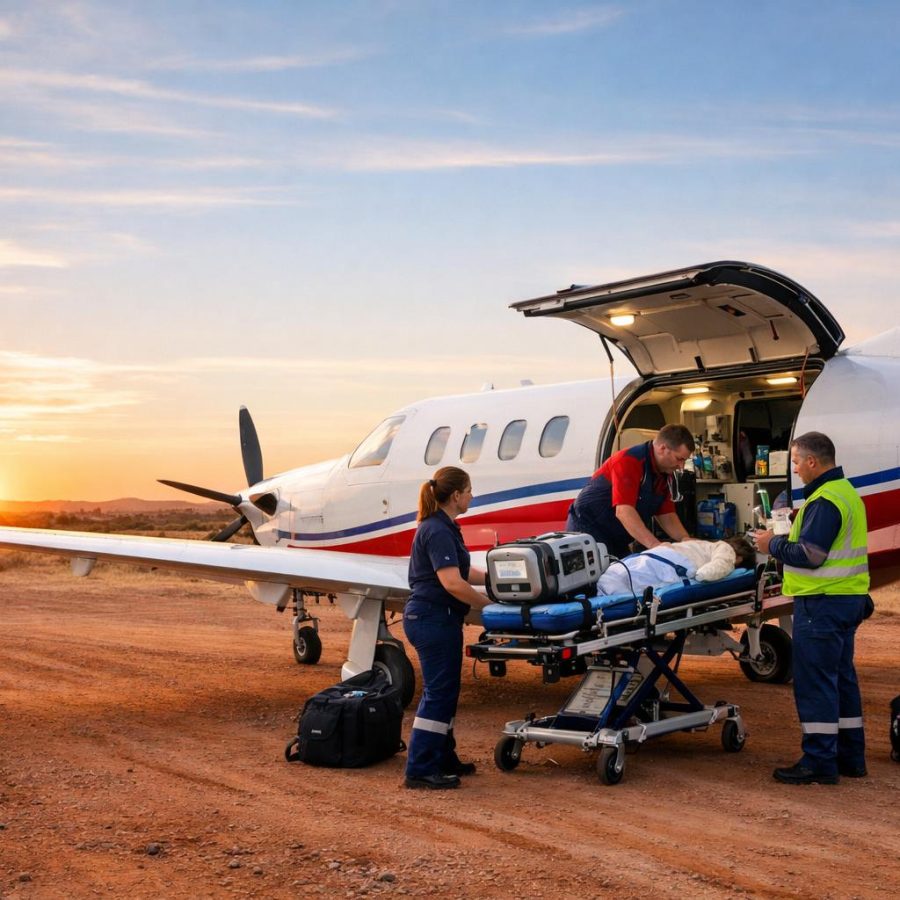
- Aircraft may be used if roads or tracks are limited.
- Crews may first confirm your location before approaching directly.
- You may be asked to stay where you are until they arrive.
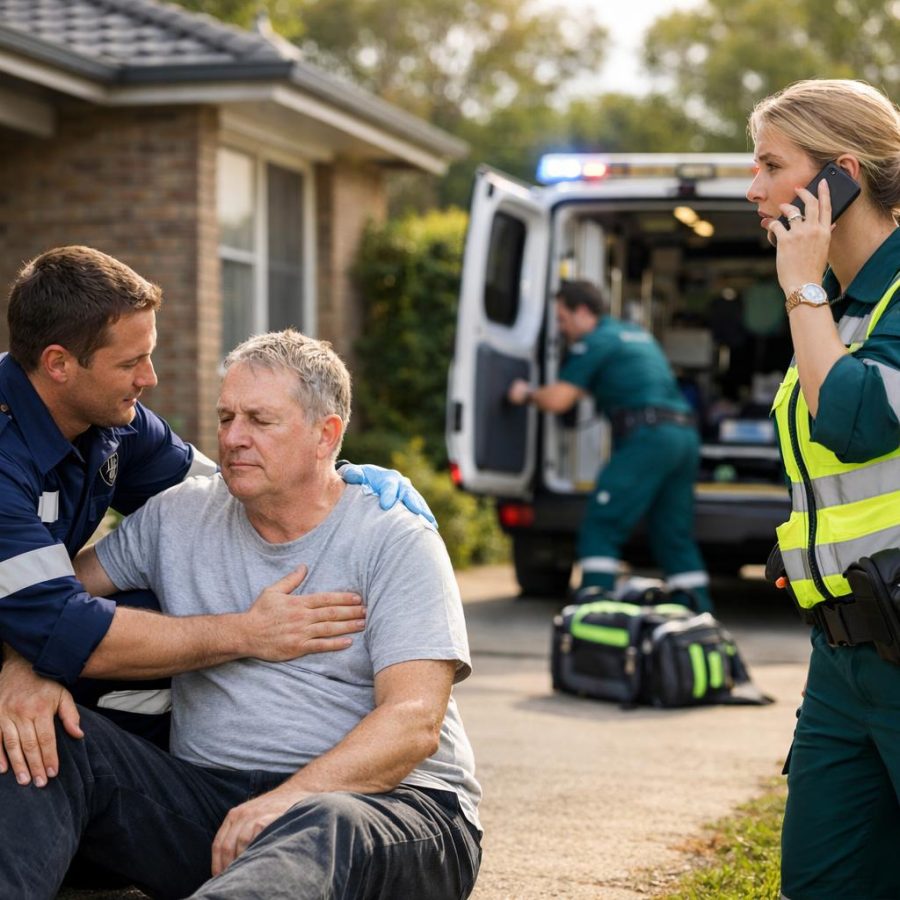
- Medical care may begin on scene before transport is arranged.
Public members should not attempt risky self-rescue missions for others unless they are trained, equipped and authorised to do so. In remote areas, unnecessary extra movement can create more missing persons and increase the number of people exposed to danger.
What not to do in a survival situation
Many bad outcomes in the outback come from avoidable decisions made in the first hour. If you want the best chance of survival, avoid these common mistakes.
Never do these unless a trained authority tells you to
- Do not keep walking blindly. Travelling without a clear plan can take you farther from help.
- Do not leave a functioning vehicle lightly. A vehicle is often your best shelter and signal platform.
- Do not split up the group. Separation makes accounting for people harder and can increase risk.
- Do not ration water by overexerting yourself. Sitting in shade is usually better than marching in the heat.
- Do not start a fire for signal unless conditions and your skill level make it safe. Fire can spread, especially in dry country.
- Do not drink unsafe water sources without proper treatment. Some sources may worsen illness and dehydration.
- Do not rely on a single battery-powered device. Save power and use backup signalling methods.
- Do not ignore injuries. Even minor wounds can worsen when combined with heat and limited water.
It is also wise not to eat or drink unfamiliar plants, animals or liquids as a survival shortcut. In the outback, mistaken identification can create another emergency very quickly. If you are not trained to assess a safe food or water source, focus on conserving what you already have and getting found.
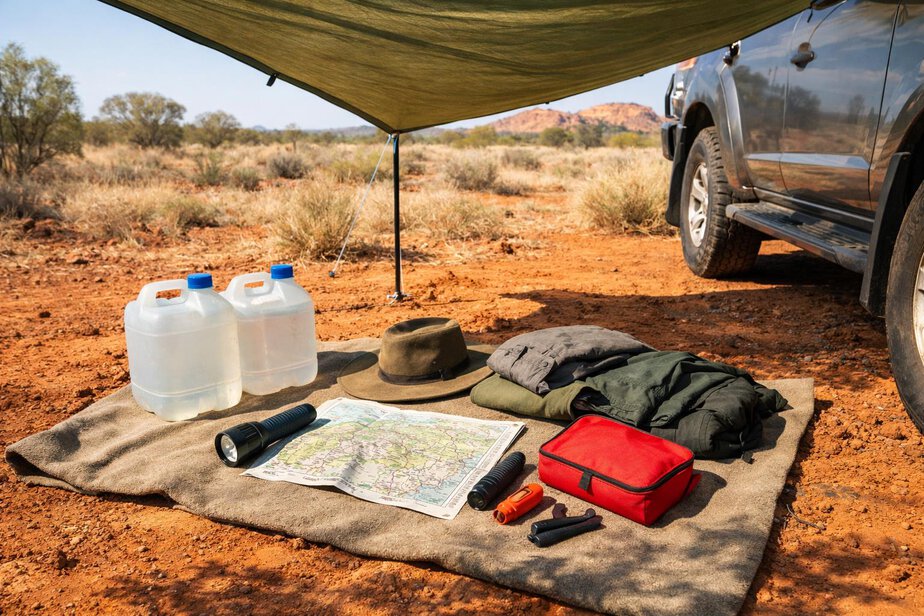
Water, shade, heat and energy management
In the Australian outback, survival is often about buying time. That means slowing down your body’s water loss and reducing heat exposure as much as possible.
Protect yourself from the sun
- Use shade from the vehicle, a tarp, a tree or a ridge where safe.
- Cover your head, neck and skin with light clothing.
- Rest during the hottest part of the day whenever possible.
- Keep movement to a minimum.
Ration your effort
Use strength only when it serves a clear purpose, such as improving a signal or moving to safer shade without going far. Unnecessary walking, lifting and searching can quickly deplete the energy you need to stay alert and make good decisions.
Water should be treated as a critical resource. Sip carefully if needed, but avoid wasteful or panic drinking. If you have several people, discuss a fair plan early so no one uses supplies out of anxiety. Children, older people and anyone injured may need closer monitoring because they can deteriorate faster.
As the day changes, keep checking the environment. Cold nights can be as dangerous as the daytime heat, so have clothing ready to reduce heat loss after sunset. If you have a blanket, tarp or spare layer, keep it dry and accessible.
Planning before a trip makes rescue faster
The best survival strategy starts before you go into remote country. Good preparation reduces the chance of getting lost and makes rescue much faster if something goes wrong.
Before leaving, do these things
- Tell someone where you are going, your route and when you expect to return.
- Check fuel, spare tyres, water, food, recovery gear and communications.
- Carry a charged phone, backup power and a device suited to remote travel if you have one.
- Study maps and understand how little service may be available.
- Carry clothing, sun protection and basic first aid supplies.
- Know how to describe your vehicle and itinerary if you need help.
If you are travelling with others, agree on what to do if someone becomes separated from the group. A simple rule such as “stay with the vehicle and wait” can prevent confusion in a crisis. Make sure everyone understands where the beacon, water and first aid kit are stored.
For businesses, tour operators and remote workers, procedures should also cover check-in times, vehicle readiness, escalation if a call is missed and who is authorised to contact emergency services. Clear planning before departure reduces uncertainty once the pressure is on.
A simple survival checklist if you are lost now
If you need a quick reminder, use this order:
- Stop moving unless staying where you are is unsafe.
- Get shade and reduce heat exposure.
- Stay with the vehicle or another obvious shelter.
- Call Triple Zero (000) if there is immediate danger.
- Activate a beacon if you have one and need rescue.
- Use signals that make you visible from the air and ground.
- Conserve water, food, battery and energy.
- Keep the group together and reassess often.
Those steps will not solve every situation, but they do address the most common reasons people become harder to rescue or more unwell while waiting.
Final thoughts
If you are lost in the Australian outback, the safest response is usually not dramatic. It is disciplined, calm and practical: stop, shelter, signal, conserve and wait to be found. Your vehicle, phone, beacon and visible signals can all help rescuers reach you sooner, but only if you use them early and wisely.
Most importantly, never assume you need to solve the problem alone by walking farther into unknown country. In remote Australia, staying put and making yourself easy to find is often the best survival decision. Always verify current advice, local procedures and equipment requirements before publication or travel, because conditions and emergency arrangements can change.
FireRescue Training Hub
Access practical fire and emergency study support resources, downloads, checklists, audio guides, and member-only course content.
- Course library
- PDF downloads
- Audio guides
- Checklists
Study support only. Not accredited training or a replacement for workplace procedures.
About the author and safety review
Ken Walker
Former Station Officer and fire service educator
Former career firefighter with extensive career and volunteer fire service experience.
Qualifications: Associate Diploma of Applied Science in Fire Technology; Institute of Fire Engineers studies.
Author profilehttps://www.firerescue.com.au/about-us/