The Royal Flying Doctor Service is one of the most important parts of Australia’s emergency response system. In a country with vast distances, remote roads and isolated communities, it helps bridge the gap between an emergency and the care a patient needs, often by getting medical teams into places where other help would take too long to arrive.
Why the Flying Doctor matters in Australia
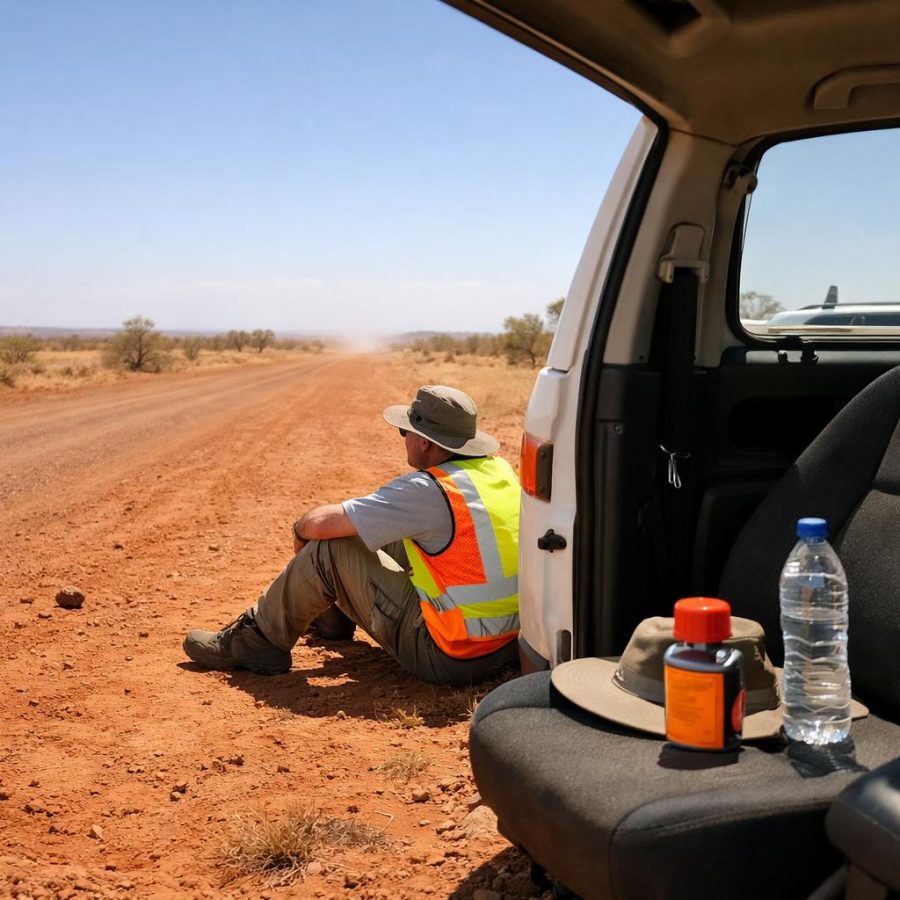
Australia’s geography creates a unique emergency response challenge. Some communities are hours from the nearest hospital, and major incidents can occur far from specialist care, ambulance stations or even sealed roads. In that setting, the Flying Doctor provides a practical link between the scene, local health workers, ambulance crews and metropolitan hospitals.
The service is not limited to dramatic rescues. It also supports routine but critical work such as patient transfers, after-hours medical advice, chronic disease care and outreach to remote communities. That wider role matters because many emergencies are easier to manage when the underlying health system is already connected and prepared.
For emergency services, the Flying Doctor can be the difference between delayed treatment and timely intervention. It may assist after vehicle crashes, medical emergencies in isolated towns, mining incidents, agricultural injuries, marine or outback events, and major incidents where local resources are stretched.
A brief history and how the service evolved
The Royal Flying Doctor Service began in the late 1920s in response to a simple but difficult problem: many Australians were living too far from doctors to receive timely care. Early aviation and radio technology made it possible to create a new kind of health service, one that could reach patients where roads and rail lines could not.
Over time, the service evolved from a small experimental network into a national organisation with multiple bases and a wide range of aircraft and clinical capabilities. The basic idea, however, remains the same: use aviation, telecommunications and medical expertise to bring help to the patient, or move the patient to the help.
That history is important because it explains why the service is so well suited to Australian conditions. It grew from practical need rather than from a single emergency type, which is why it now supports remote health care, interhospital transfers, retrieval work and community services as well as response to sudden incidents.
The service also reflects a long tradition of cooperation between communities, volunteers, clinicians, pilots and government partners. In remote Australia, emergency care is rarely the work of one agency alone. It depends on coordination before, during and after the flight.
What the Flying Doctor actually does
Many people think of the Flying Doctor only in terms of dramatic rescues, but its work is broader and more structured. In emergency management terms, it supports prevention, preparedness, response and recovery.
Common roles in the field
- Aeromedical retrieval: collecting patients from remote or regional locations and transferring them to hospitals with the right level of care.
- Emergency response support: helping after sudden incidents where local services need specialist medical or aviation support.
- Interhospital transfers: moving patients between hospitals when they need specialist treatment, imaging, surgery or intensive care.
- Remote primary care: providing clinics, outreach and telehealth support in communities with limited access to doctors.
- Advice and coordination: linking remote nurses, ambulance officers and local clinicians with doctors who can help guide care decisions.
In a major incident, the service may also help with patient triage, transport priorities and coordination across agencies. That does not mean it replaces local ambulance, fire or police services. Instead, it adds aviation and medical capability where those agencies need support.
How the service fits with ambulance, fire and police
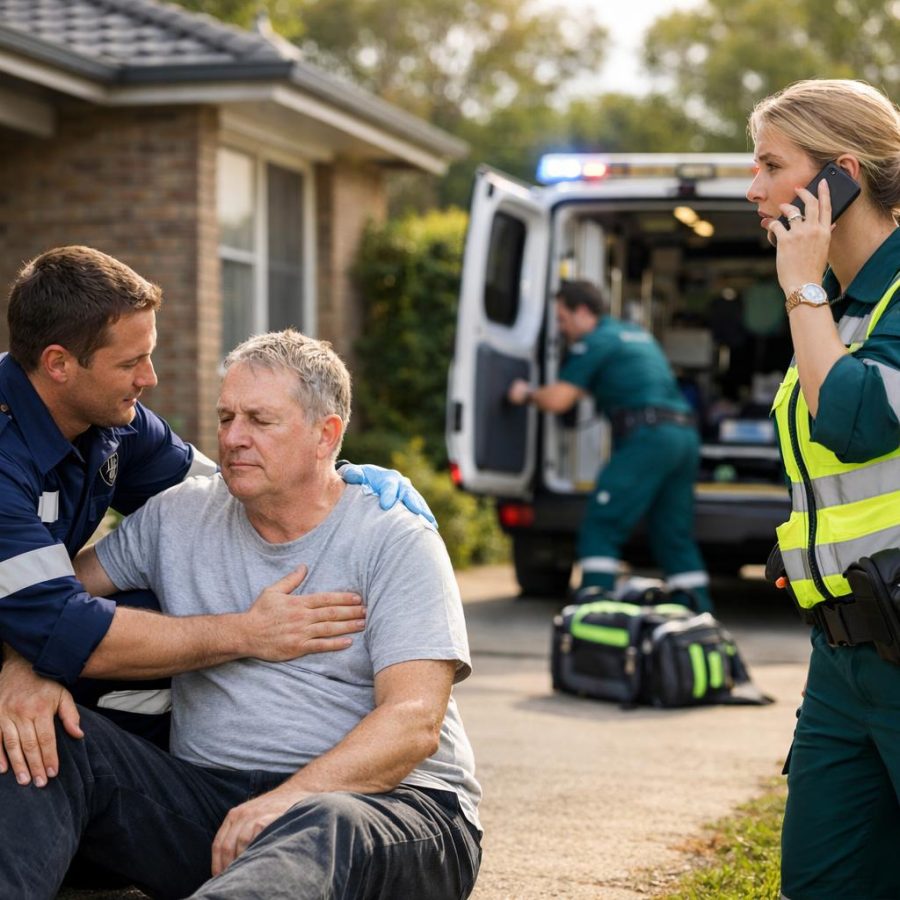
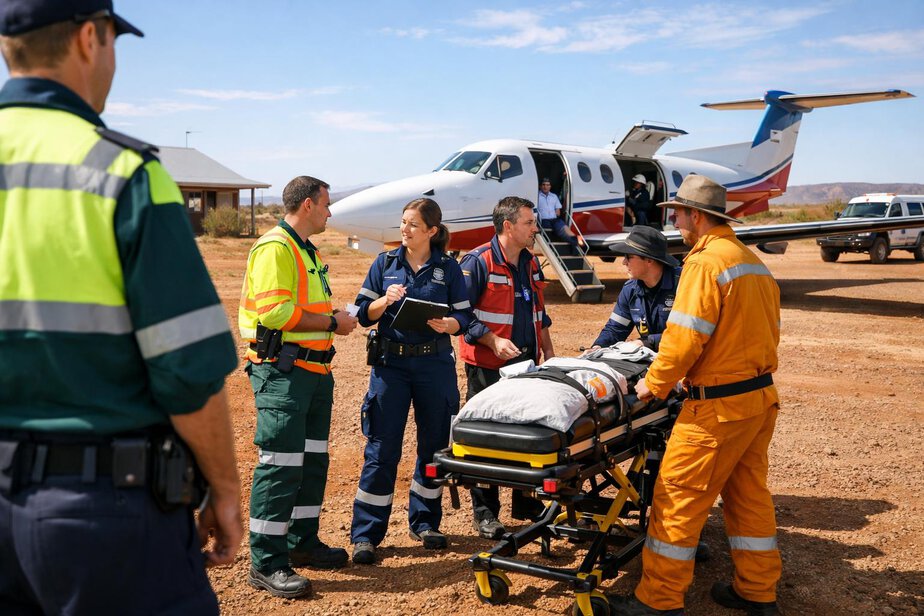
In a remote response, the first people on scene may be local residents, volunteer brigades, nurses, station staff, police or ambulance officers. The Flying Doctor usually enters the picture when aviation transport, higher-level medical care or specialist coordination is needed.
Emergency services can work together in several ways. Local crews may stabilise the scene, provide initial treatment and request aeromedical support. The Flying Doctor team then helps assess whether a patient can safely fly, what clinical support is needed during transport and which receiving hospital is most appropriate.
The service also relies on clear scene management. Aircraft need a suitable landing area, safe access routes, good communications and awareness of hazards such as power lines, dust, darkness, wildlife and unstable surfaces. In some situations, fire or police personnel may be required to secure the area or manage bystanders while medical teams work.
For planned transfer missions, the coordination may be quieter but just as important. Information about patient condition, weather, fuel, runway length and destination capability all influences the mission. That is why experienced dispatch and clinical coordination matter as much as the flight itself.
Who makes up a Flying Doctor team
The service depends on a mix of operational, clinical and support staff. Their roles are different, but they are designed to work as a single system.
Key personnel
- Pilots: responsible for safe flight operations, aircraft handling, route planning and weather decisions.
- Aeromedical doctors: provide advanced medical assessment, treatment and retrieval decision-making.
- Remote area nurses: deliver frontline clinical care, often in isolated communities or during transfers.
- Retrieval or critical care clinicians: support patients who may need close monitoring, oxygen, medications or specialist transport care.
- Flight nurses and medical escorts: manage patient care in the aircraft cabin under established protocols.
- Dispatch and coordination staff: organise missions, communications, aircraft availability and hospital links.
- Engineers and maintenance personnel: ensure aircraft remain airworthy and mission-ready.
- Telehealth and support staff: help remote communities access medical advice and follow-up care.
Each role is specialised. A safe aeromedical mission depends on pilots making conservative aviation decisions, clinicians making timely medical decisions and coordination staff making sure the mission is practical before it starts.
That team structure is especially important in the outback, where distance, weather and limited landing options can quickly turn a simple transfer into a complex operation.
Aircraft, speed and mission range
The Royal Flying Doctor Service uses aircraft selected for specific mission profiles. Some are suited to longer regional runs, while others can access shorter or more challenging airstrips. The exact fleet can vary by location and may change over time, but the general approach is to match aircraft capability to the task.
Typical aircraft are designed for reliability, medical fit-out and the ability to carry patients, crew and equipment safely across long distances. They may be pressurised for comfort and clinical stability on longer flights, although not every aircraft is the same.
Speed matters because in retrieval work every minute can count. While performance varies by aircraft type, a fast fixed-wing aeromedical aircraft can cover very large distances much more quickly than road transport, particularly in remote regions where driving times can be many hours or even days. The service uses aircraft speed as part of a broader time-critical system that includes alerting, mobilisation, loading, flying and handover at the receiving hospital.
Aircraft capability is not only about top speed. Range, fuel load, cabin access, stretcher configuration, the ability to operate from short or unsealed strips, and the availability of night operations all affect whether a mission is suitable. In remote Australia, those factors often matter more than raw speed alone.
| Capability | Why it matters |
|---|---|
| Range | Determines how far the aircraft can travel between bases, communities and hospitals. |
| Cabin layout | Allows clinicians to work on the patient during flight. |
| Runway access | Helps reach remote airstrips and regional airports. |
| Medical fit-out | Supports oxygen, monitoring and treatment during transfer. |
| Dispatch flexibility | Helps match the right aircraft to the patient and conditions. |
Helicopters may also be used in some aeromedical systems, but the Flying Doctor is widely known for its fixed-wing capability across large distances. The key point is that aircraft are chosen for mission suitability, not simply for speed.
Medical equipment carried on board
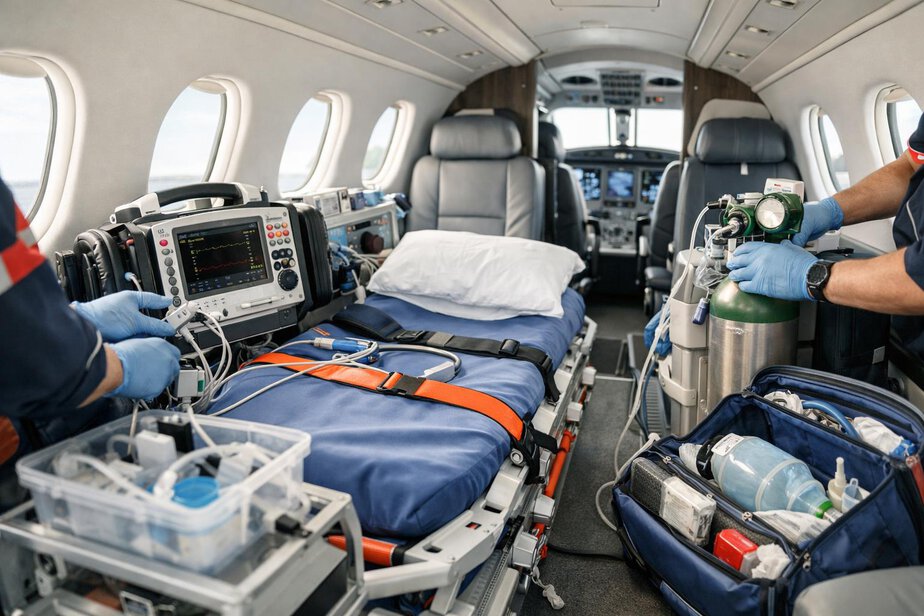
A Flying Doctor aircraft is more than transport. It is a clinical space with equipment designed to maintain care while in the air. The exact fit-out depends on the aircraft and mission, but a retrieval aircraft may carry monitoring devices, oxygen systems, suction, medications, stretchers, infusion pumps and other treatment equipment.
Equipment needs to be secure, reliable and suitable for flight conditions. Turbulence, vibration, cabin noise and space limitations affect how clinicians work. For that reason, aircraft medical equipment is selected and secured differently from equipment used in a hospital ward.
Common categories of equipment
- Monitoring: heart rate, oxygen saturation, blood pressure and other vital signs.
- Airway and breathing support: oxygen and equipment to help manage breathing problems.
- Circulation support: intravenous fluids, pumps and related supplies where clinically appropriate.
- Patient packaging: stretchers, restraint systems and securing devices for safe transport.
- Communication equipment: radios, phones and systems to link with dispatch and hospitals.
- Infection control supplies: protective items and cleaning materials for patient safety.
Not every mission requires the same kit. A lower-acuity transfer may need only limited equipment, while a critical care retrieval can require a much more advanced set-up and a larger clinical team. That adaptability is one reason the service is so valuable in remote operations.
Training and capability of the personnel
Flying Doctor personnel need both clinical skill and the ability to work in demanding operational settings. Training is therefore broader than standard hospital practice. Staff must understand remote medicine, aviation risk, communication discipline and the practical limits of working in confined spaces.
Clinical staff commonly have experience in emergency care, retrieval medicine, intensive care, rural and remote health, or pre-hospital practice. They may complete additional training in aeromedical procedures, patient transfer, team resource management and working under flight conditions.
Examples of specialised training areas
- Aeromedical safety: how to work safely around aircraft, airstrips and moving machinery.
- Remote retrieval practice: managing patients when hospitals, laboratories and specialist services are far away.
- Advanced patient monitoring: recognising changes in condition during transport.
- Communication and handover: relaying clear clinical information between local teams, crews and hospitals.
- Fatigue and situational awareness: staying effective during long missions, night work and changing weather.
- Cabin-based clinical care: delivering treatment in a noisy, moving and space-limited environment.
Pilots also undergo extensive aviation training and recurrent checks. In aeromedical work, pilots need to balance safety, weather, airport conditions, fuel planning and operational pressures. A good aeromedical decision is often the one that protects the patient by protecting the crew and aircraft first.
For local responders, this specialist training means the Flying Doctor can arrive as a highly prepared team rather than a last-minute improvisation. That is a major advantage in the field.
How a mission usually works from call to handover
Although every case is different, a typical mission follows a careful sequence. The steps may seem simple, but each one helps reduce risk and improve patient care.
- Initial request: a local clinician, ambulance service, hospital or emergency agency requests assistance.
- Clinical review: the patient’s condition is assessed to determine urgency and transport needs.
- Aviation check: aircraft availability, weather, runway access and operational safety are considered.
- Mission approval: the team decides whether the flight can proceed and what resources are needed.
- Patient preparation: the patient is stabilised as far as possible before transport.
- Flight and in-transit care: clinicians monitor and treat the patient during the journey.
- Hospital handover: the patient is transferred to the receiving team with clear clinical information.
That process depends on disciplined communication. In remote work, small misunderstandings can create delays or risk. Good handover practice is therefore just as important as the aircraft itself.
Why the service remains critical to emergency management
The Royal Flying Doctor Service is critical because Australia’s emergency risks are not confined to cities. Road trauma, bushfires, farming injuries, heat-related illness, chronic disease complications and sudden medical emergencies can all happen in places where transport options are limited.
As a result, the service supports more than individual patients. It strengthens whole communities by improving access, confidence and resilience. Remote clinics can call for advice. Local responders can escalate care earlier. Patients can receive specialist transfer without waiting for road transport that may not be feasible.
In emergency management terms, that means the service helps reduce vulnerability before incidents become worse. It is a response asset, but it is also a preparedness asset.
For anyone involved in public safety, the main lesson is clear: in remote Australia, aviation and medicine are often part of the same response chain. The Flying Doctor exists to keep that chain intact when distance would otherwise break it.
Practical lessons for communities and responders
There are several sensible lessons for remote communities, local businesses, stations and emergency volunteers.
- Know who to call first in a life-threatening emergency: Triple Zero (000).
- Keep airstrip, access road and property location information up to date.
- Make sure local staff understand landing zone safety and communications.
- Maintain radios, phones and backup power where possible.
- Share clear information about patient condition, hazards and weather.
- Do not delay local first aid, basic life support or ambulance activation while waiting for aeromedical support.
For responders, the best outcomes usually come from early activation, accurate information and patient stabilisation before transfer. For communities, the best outcomes come from knowing the Flying Doctor is a specialist partner, not an all-purpose replacement for immediate local action.
Conclusion
The Royal Flying Doctor Service is a cornerstone of Australian emergency care because it solves a uniquely Australian problem: how to deliver timely medical support across huge distances and isolated terrain. Its value comes from the combination of skilled personnel, reliable aircraft, specialised equipment and disciplined coordination with ambulance, fire, police and hospital teams.
From history to modern aeromedical retrieval, the service shows how emergency management must adapt to geography. For remote Australia, it is not an optional extra. It is a critical link in the chain of survival and ongoing care.
Before publication, verify current operational details, aircraft capability and local procedures with the relevant service, because arrangements and resources can change over time.
FireRescue Training Hub
Access practical fire and emergency study support resources, downloads, checklists, audio guides, and member-only course content.
- Course library
- PDF downloads
- Audio guides
- Checklists
Study support only. Not accredited training or a replacement for workplace procedures.
About the author and safety review
Ken Walker
Former Station Officer and fire service educator
Former career firefighter with extensive career and volunteer fire service experience.
Qualifications: Associate Diploma of Applied Science in Fire Technology; Institute of Fire Engineers studies.
Author profilehttps://www.firerescue.com.au/about-us/