Fire Safety Basics
Key Takeaways
Understanding smoke alarm placement in Australia is essential for protecting your home and family. Proper installation helps ensure early warning in case of fire, which can save lives and reduce property damage.
This guide outlines clear, practical steps for placing smoke alarms in homes and workplaces, aligned with Australian standards and advice from fire safety authorities. Use it to check your current setup or plan improvements.
Why Smoke Alarm Placement Matters
Smoke alarms are one of the simplest and most effective ways to protect lives during a fire. However, where you install them is just as important as having them at all. Poor placement can delay detection or cause false alarms, reducing their effectiveness. Australian standards set out clear guidance to help homeowners and businesses place alarms correctly, so everyone in the space can be alerted quickly to danger.
Installing smoke alarms in the right locations can mean the difference between life and death. Fire can spread rapidly, and early detection is crucial to allow occupants to evacuate safely. Incorrect placement not only risks delayed warnings but can also lead to complacency if alarms frequently trigger false alerts, causing residents to disable or ignore them.
Australian Standards and Legal Requirements
In Australia, smoke alarm installation must follow the Building Code of Australia (BCA) and AS 3786 standards. Most states and territories have laws requiring smoke alarms in all homes, including rental properties. These rules specify the type of alarms allowed, how many you need, and their placement. Compliance reduces risk and ensures alarms work as intended in emergencies.
Fire and Rescue NSW, Country Fire Authority (Victoria), Queensland Fire and Emergency Services, and other state agencies provide practical advice aligned with these standards. It’s important to check local regulations, as requirements may vary slightly across states.
Legal requirements also specify the types of smoke alarms permitted. For example, photoelectric alarms are generally recommended over ionisation alarms due to their better performance in detecting smouldering fires. Many states now mandate interconnected smoke alarms, meaning when one alarm sounds, all alarms in the home will alert simultaneously. This interconnection is especially important in larger homes or multi-level buildings.
Where to Place Smoke Alarms in Australian Homes
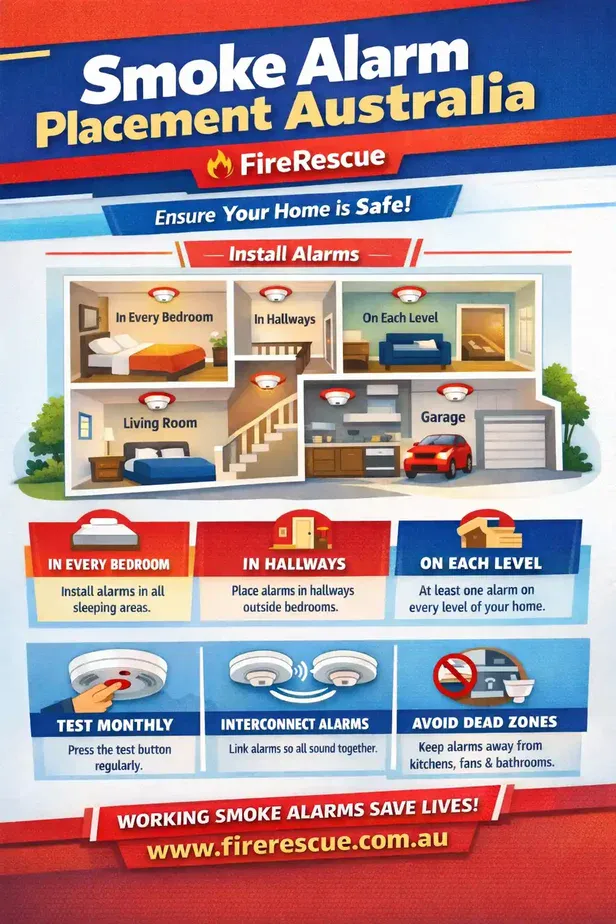
The main rule is to install smoke alarms on every level of your home, including the basement and the attic if they are used regularly. Place alarms inside bedrooms and in hallways that connect sleeping areas. This coverage ensures early warning during the night, when people are most at risk.
Alarms should be mounted on the ceiling or high on walls, as smoke rises. Avoid placing them too close to kitchens or bathrooms where steam or cooking fumes might cause false alarms. Typically, a distance of at least 3 metres from cooking appliances is recommended.
The Australian Standard AS 3786 advises mounting alarms at least 300mm away from walls if on the ceiling and between 100mm and 300mm below the ceiling if on a wall. Keep alarms clear of windows, doors, or ducts where drafts could interfere with smoke detection.
In addition, avoid placing smoke alarms near ceiling fans or air conditioning vents, as airflow can disperse smoke and delay detection. It is also important that smoke alarms are not installed in dead air spaces, such as the apex of vaulted ceilings or where the ceiling meets the wall, as smoke may not reach the alarm promptly.
Special Considerations for Different Room Types
Bedrooms and Sleeping Areas
It’s critical to have smoke alarms installed inside every bedroom or sleeping area and in nearby corridors. This helps ensure that even someone with a hearing impairment or deep sleeper gets an early warning. For those with hearing challenges, consider alarms with strobe lights or vibrating pads.
Furthermore, the placement should consider furniture layout to ensure alarms are not obstructed. For instance, avoid installing alarms near air vents or windows that might cause fresh air to disperse smoke away from the detector. Properly placed alarms inside bedrooms provide the earliest possible alert, crucial for safe evacuation.
Living Areas and Common Spaces
Install alarms in living rooms, family rooms, and other common spaces. These areas can be sources of fire hazards, and early detection protects everyone inside. Also, place alarms near stairwells to cover vertical spaces effectively.
In multi-level homes, stairwells act as conduits for smoke and fire to spread quickly between floors. Installing alarms near staircases ensures that smoke rising through these vertical pathways triggers alarms promptly, alerting occupants on all levels. Living areas often contain electrical equipment, heaters, or open flames, making them important locations for smoke detection.
Kitchens and Bathrooms
Avoid placing smoke alarms directly inside kitchens or bathrooms due to steam and cooking smoke triggering false alarms. Instead, position alarms at least 3 metres away, such as in hallways leading out of the kitchen. This keeps alarms reliable and reduces nuisance activations.
For kitchens, consider using heat detectors in addition to smoke alarms. Heat detectors respond to rapid temperature increases and are less likely to be set off by cooking fumes or steam. This combination can improve overall detection while minimising false alarms.
Smoke Alarm Placement in Workplaces and Commercial Settings
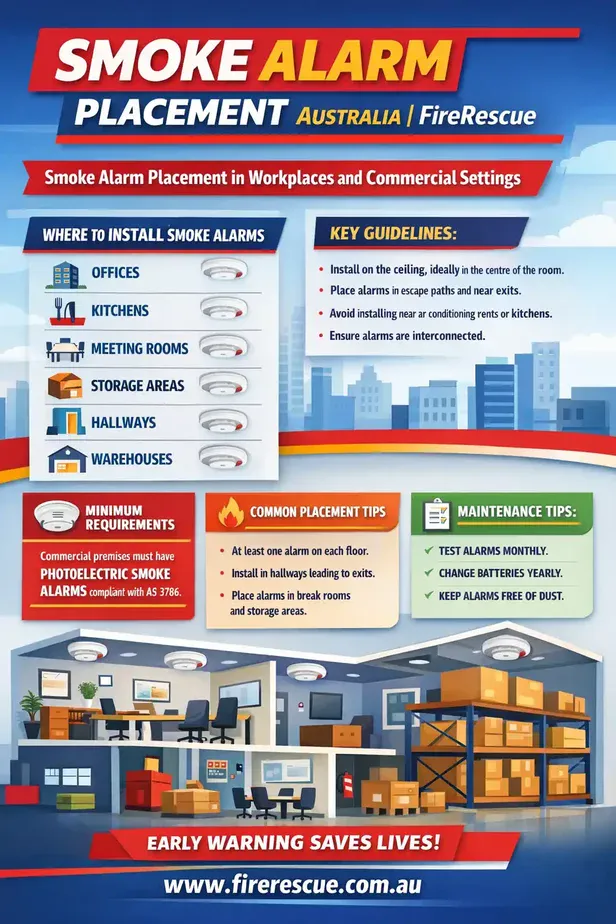
In workplaces, smoke alarm placement must follow the building’s fire safety plan and comply with Australian Standards as well as local fire authority regulations. Typical locations include hallways, exit paths, storage areas, and spaces where electrical equipment is used. Regular testing and maintenance are crucial to ensure alarms function correctly under all conditions.
Employers should liaise with Fire and Rescue services and follow any state-specific requirements, such as those outlined by Safe Work Australia, to safeguard employees and visitors. Smoke alarms are part of a wider emergency preparedness strategy that includes fire extinguishers, clear evacuation routes, and regular drills.
Commercial buildings may also incorporate advanced fire detection systems integrated with fire alarm panels, which can monitor multiple detectors, control emergency lighting, and notify emergency services automatically. Smoke alarms in these settings often need to meet higher sensitivity and durability standards due to industrial hazards or high occupant loads.
Maintenance and Testing of Smoke Alarms
Correct placement is only the first step; regular maintenance is essential. Test alarms monthly by pressing their test button, and replace batteries at least once a year or as soon as the low battery warning sounds. For hardwired alarms, check the backup battery regularly.
Clean smoke alarms using a vacuum or soft brush to remove dust and cobwebs. Avoid spraying aerosols near them. Replace smoke alarms every 10 years or according to manufacturer instructions. Keeping alarms in good working order ensures they respond reliably when needed.
It is also important to keep a maintenance log to track testing dates, battery replacements, and any repairs or replacements. This practice is particularly useful for rental properties and workplaces, where compliance with regulations must be documented. Additionally, if your smoke alarm starts to chirp unexpectedly, it may indicate a need for immediate battery replacement or that the alarm is nearing the end of its life.
If You Only Do Five Things
First, ensure you have at least one smoke alarm on every level of your home, including inside bedrooms and sleeping areas. Second, install alarms on ceilings or high on walls, away from kitchens and bathrooms, following the 3-metre rule to avoid false alarms. Third, test your smoke alarms monthly and replace batteries annually or when needed. Fourth, clean alarms regularly to prevent dust buildup that can impede function. Fifth, replace your smoke alarms every 10 years or as recommended to maintain full effectiveness.
Adhering to these five key actions significantly improves your chances of early fire detection and safe evacuation. Remember, smoke alarms are only effective if they are functional, correctly positioned, and regularly maintained.
Who Does What in Australia
Fire/Rescue
Fire and Rescue services in each state and territory handle fire emergencies, rescues, fire prevention, and education. They inspect smoke alarms for compliance and respond to fire calls.
Police
Police assist with emergency response, including crowd control and investigations related to fires, arson, or other incidents.
Ambulance
Ambulance services provide medical care and transport for people injured in fires or other emergencies.
SES (State Emergency Service)
SES responds to floods, storms, and other natural disasters, supporting communities alongside other emergency services.
When there is a life-threatening emergency, always call triple zero (000) immediately for police, fire, or ambulance help.
Following official advice from Fire/Rescue and state authorities ensures your smoke alarm system works well and is part of a broader home and workplace safety plan. Stay informed about local warnings and updates to keep your family and colleagues safe.
Additional Tips for Smoke Alarm Safety
Consider interconnected smoke alarms that sound all alarms throughout the home when one is triggered. This gives an earlier warning to everyone. Also, check if your home’s electrical system supports hardwired alarms with battery backup for extra reliability.
In multi-unit buildings like apartments and townhouses, check with your body corporate or strata manager about communal smoke alarm systems and individual unit requirements. These setups often have additional safety features and maintenance routines.
For new homes or renovations, work with qualified electricians and builders who understand Australian smoke alarm regulations. Proper installation during construction or upgrades is easier and ensures compliance from the start.
Additionally, consider smoke alarms with smart technology features, such as mobile app alerts or integration with home automation systems. These advanced alarms can notify you remotely in the event of a fire or low battery, adding an extra layer of safety, especially for those frequently away from home.
Remember, smoke alarms are one part of a complete fire safety strategy. Plan and practice escape routes, keep fire extinguishers handy, and stay alert to fire risks such as overloaded power points or unattended candles. A well-rounded approach to fire safety can save lives and protect your property.
FireRescue Training Hub
Access practical fire and emergency study support resources, downloads, checklists, audio guides, and member-only course content.
- Course library
- PDF downloads
- Audio guides
- Checklists
Study support only. Not accredited training or a replacement for workplace procedures.
About the author and safety review
Ken Walker
Former Station Officer and fire service educator
Former career firefighter with extensive career and volunteer fire service experience.
Qualifications: Associate Diploma of Applied Science in Fire Technology; Institute of Fire Engineers studies.
Author profilehttps://www.firerescue.com.au/about-us/