Fire Safety Analysis
Understanding Backdraft Behaviour: Critical Insights for Firefighters and Emergency Responders
Backdrafts are among the most dangerous phenomena in structural firefighting, caused by rapid reintroduction of oxygen into an oxygen-depleted, fuel-rich environment. Understanding their behaviour is essential for the safety of firefighters and occupants alike.
This analysis highlights key warning signs, the physics behind backdrafts, and practical response considerations tailored for Australian conditions and emergency services.
Effective coordination between Fire & Rescue services, police, ambulance, and the State Emergency Service (SES) ensures the best outcomes when backdraft risks are present.
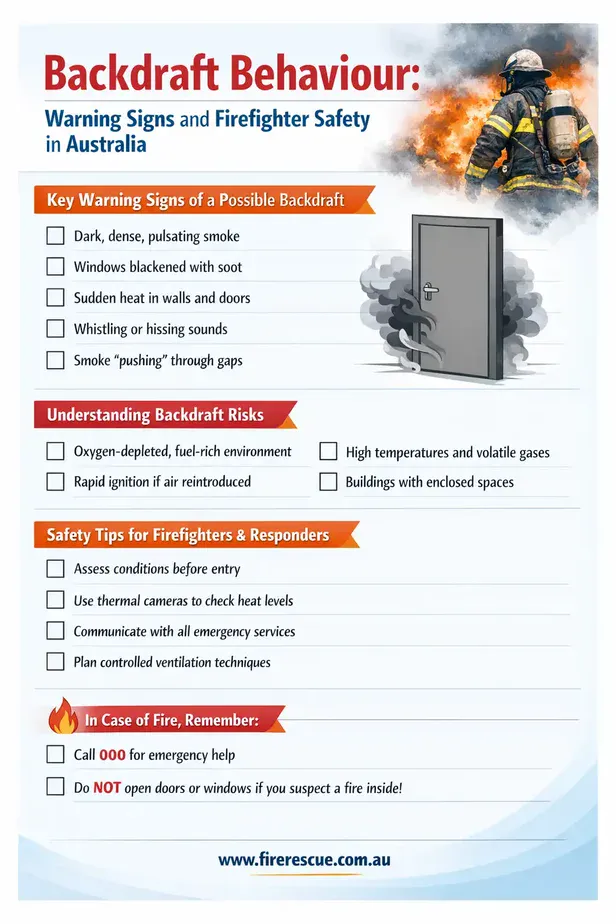
Backdraft Safety Brochure for Firefighters and Responders
Download the brochure for a fast, practical overview of backdraft warning signs, response priorities, safer entry awareness, and key reminders for Australian fire emergencies.
- Clear warning signs
- Fast safety reminders
- Simple one-page format
- Easy to save or share
Emergency: If there is immediate danger, call 000.
Background and Context
A backdraft occurs when a fire in an enclosed space consumes most of the available oxygen, causing incomplete combustion and accumulation of unburnt pyrolysis products. When oxygen is suddenly reintroduced—such as by opening a door or breaking a window—these hot gases can ignite explosively. This phenomenon can rapidly escalate a fire, threatening structural integrity and endangering lives.
In Australia, where residential and commercial buildings often feature enclosed spaces with varying ventilation profiles, recognising and mitigating backdraft risks during firefighting is crucial. Firefighters and responders train extensively to detect the subtle signs of backdraft potential, including smoke behaviour, temperature changes, and structural sounds.
Backdrafts are not only a hazard due to their explosive nature but also because they can be unpredictable. The dynamic conditions inside a burning structure can change rapidly, making it essential for firefighters to continuously assess the environment. Australian firefighting protocols incorporate scenario-based training to help crews make split-second decisions when signs of backdraft are present.
Further complicating backdraft scenarios in Australia is the diversity of building materials and architectural styles found across urban and rural settings. Older constructions with timber frames and limited ventilation contrasts with modern buildings featuring synthetic materials and complex HVAC systems, which can influence fire behaviour and backdraft risk. Fire services consistently update their operational guidelines to address these variations.
The Science Behind Backdraft Behaviour
Fuel-rich Atmosphere and Oxygen Depletion
During a fire confined in a closed space, oxygen levels drop rapidly while combustible gases and smoke accumulate. Because combustion is incomplete, the fuel-rich atmosphere contains flammable vapours and high temperatures but lacks sufficient oxygen to sustain an open flame.
This buildup of unburnt gases creates a volatile environment. The gases, often including carbon monoxide, hydrogen, and hydrocarbons, are highly flammable and can ignite suddenly. The temperature inside the compartment remains high due to ongoing pyrolysis, which breaks down solid materials into these combustible gases.
Recent research in fire dynamics has also shown that the layering of gases inside a compartment plays a critical role. Hot gases tend to stratify near the ceiling, creating a gradient of temperature and gas composition. This stratification means that the conditions for a backdraft may be present even when lower levels of the room appear less hazardous, requiring firefighters to understand three-dimensional fire environments.
Rapid Oxygen Reintroduction and Ignition
If a door or window is opened, fresh air rushes in, mixing with the hot combustible gases. This creates an explosive environment where ignition can occur almost instantaneously, producing a blast of flame and pressure that can injure or trap firefighters and occupants.
The sudden ignition releases a large amount of energy, causing a rapid pressure increase and flame front propagation. This pressure wave can cause structural damage, blow out windows, and throw debris, posing significant risks. Recognising this potential is vital for safe firefighting tactics.
Advancements in computational fluid dynamics (CFD) modelling have allowed Australian fire researchers to simulate backdraft events with greater precision. These models help predict how different ventilation openings and fire loads impact flame spread and pressure changes. Such insights inform training and operational decisions, enhancing firefighter safety during real incidents.
Warning Signs of Potential Backdraft
Experienced firefighters look for signs such as yellowish or brown smoke that appears pulsing or smoke that is forced out of small openings under pressure. Additionally, the absence of visible flames but high heat and smoke density can indicate a smouldering fire inside, increasing backdraft risk.
Other indicators include smoke-stained windows, a sudden inward movement of smoke when an opening is made, and the sound of a hissing or whistling airflow. These signs help responders anticipate the explosive potential before making entry or ventilation decisions.
It is important to note that these warning signs may not always be obvious, especially in low-visibility conditions or when smoke is obscured by building features. Therefore, firefighters are trained to combine sensory observations with technological tools such as thermal imaging and gas detection to assess backdraft risks comprehensively.
Practical Implications for Australian Emergency Responders
Effective backdraft risk management requires not only technical knowledge but coordination between emergency services. Fire & Rescue NSW and other state agencies emphasise structured ventilation tactics and cautious entry to reduce backdraft likelihood.
In any suspected backdraft scenario, firefighters should approach openings carefully, use thermal imaging cameras to assess internal conditions, and coordinate ventilation to prevent sudden oxygen surges. If you are a member of the public and discover smoke or fire, immediately call 000 to report the emergency. Fire & Rescue will lead firefighting efforts, supported by police who manage scene safety and ambulance personnel who attend medical emergencies. Depending on location and situation, the SES may assist in evacuation or infrastructure support.
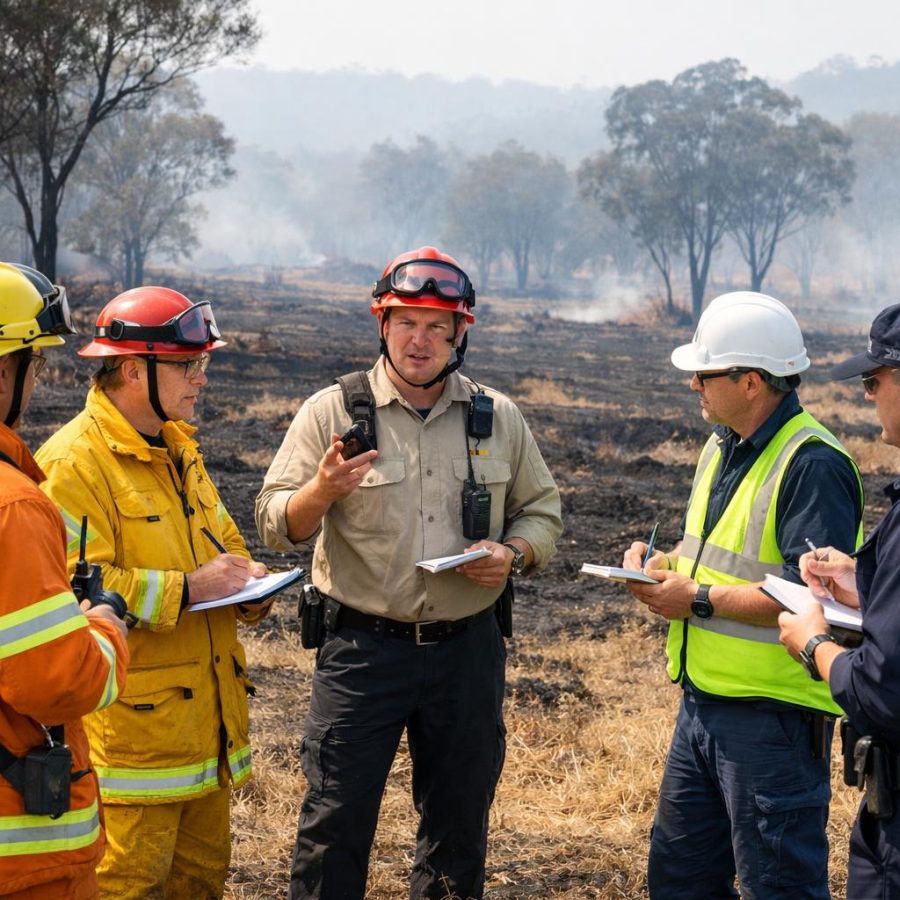
Australian firefighting protocols also stress the importance of continuous communication on scene. Incident commanders monitor evolving conditions and adjust tactics, such as delaying entry or modifying ventilation openings, to mitigate backdraft risks. Training exercises simulate backdraft conditions to improve team readiness and decision-making under pressure.
Moreover, the integration of modern technology, such as drones equipped with thermal sensors, is becoming more common in Australia. These tools provide aerial views and temperature data, allowing commanders to better understand fire dynamics and identify potential backdraft zones without exposing personnel to unnecessary danger.
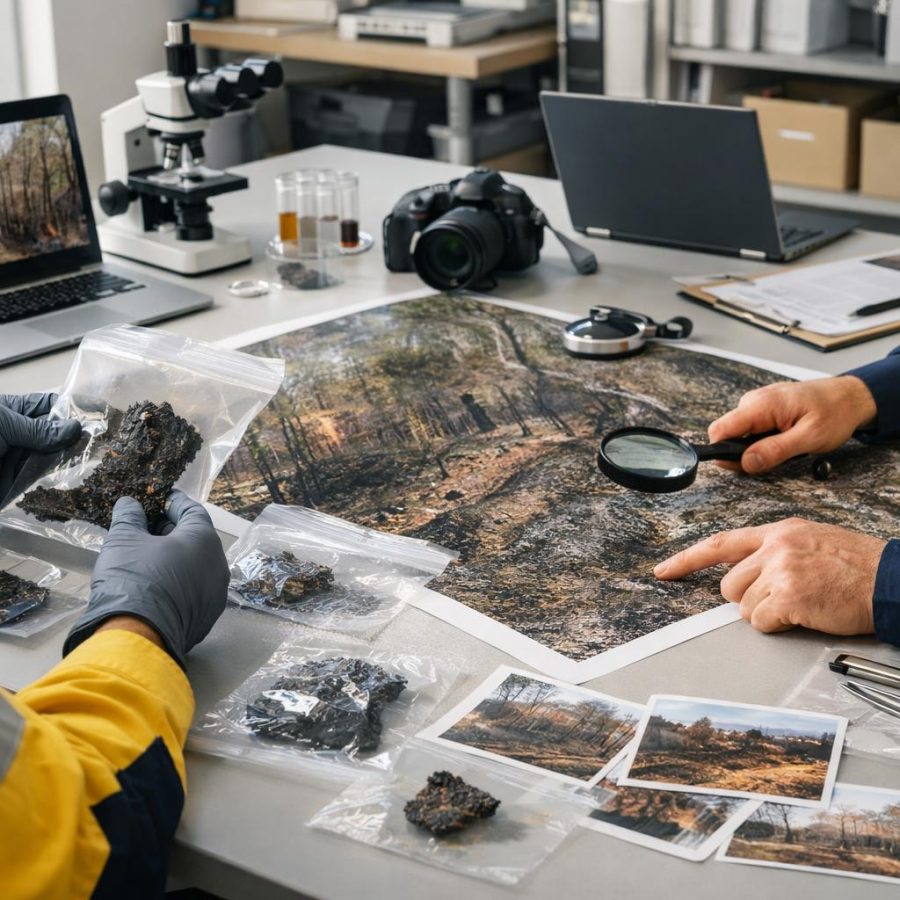
Understanding backdraft behaviour also informs post-fire investigation and safety assessments. Structural stability may be compromised following an explosive event, and all personnel should maintain vigilance for secondary hazards.
Australian emergency services also collaborate with research institutions to continuously improve backdraft understanding. Field studies and controlled burns provide valuable data on fire behaviour in Australian building contexts, supporting evidence-based updates to operational procedures and safety standards.
Additionally, psychological preparedness is recognised as a key factor in managing backdraft incidents. Firefighters undergo mental resilience training to handle the stress and unpredictability of such dangerous events, ensuring clearer judgment and teamwork during emergencies.
Key Takeaways for Firefighters and the Public
Backdrafts are dangerous, caused by sudden reintroduction of oxygen into an oxygen-deprived, fuel-laden environment. Recognising signs like dense, pulsing smoke and absence of flames is critical.
For firefighters, cautious ventilation and use of thermal imaging are essential safety measures. Coordination with police, ambulance, and SES ensures comprehensive incident management.
For the public, calling 000 immediately upon fire detection is vital. Avoid opening doors or windows that could trigger a backdraft. Follow instructions from emergency personnel for your safety.
Backdraft behaviour analysis remains a cornerstone of fire safety and emergency response training in Australia. Ongoing education and practical drills help ensure responders and communities are prepared to manage these hazards calmly and effectively.
As urban development continues and building materials evolve, understanding backdraft dynamics becomes even more important. Modern construction may incorporate synthetic materials whose combustion properties differ from traditional timber, potentially affecting backdraft behaviour. Australian fire services continuously update training and research to adapt to these changes, ensuring firefighter safety and effective fire suppression.
Community awareness campaigns also play a role in prevention. Educating the public about fire risks, safe evacuation practices, and the dangers of backdraft contributes to reducing casualties and property damage. The collaboration between emergency services and local communities is fundamental to building resilience against fire emergencies.
Looking ahead, the integration of smart building technologies may offer additional tools for backdraft risk reduction. Sensors monitoring air quality, temperature, and smoke could provide early warnings to occupants and emergency services. As these systems become more prevalent across Australian buildings, they hold promise to enhance both prevention and response to dangerous fire phenomena like backdraft.
FireRescue Training Hub
Access practical fire and emergency study support resources, downloads, checklists, audio guides, and member-only course content.
- Course library
- PDF downloads
- Audio guides
- Checklists
Study support only. Not accredited training or a replacement for workplace procedures.
About the author and safety review
Ken Walker
Former Station Officer and fire service educator
Former career firefighter with extensive career and volunteer fire service experience.
Qualifications: Associate Diploma of Applied Science in Fire Technology; Institute of Fire Engineers studies.
Author profilehttps://www.firerescue.com.au/about-us/