Electric fences can become a serious hazard during bushfires and grassfires. Dry grass, damaged wires, solar energisers and fallen fence lines can all create ignition risks, shock hazards and obstacles for firefighters and landholders working under pressure.
Why electric fences matter in a fire
Electric fences are common on rural and semi-rural properties, and they can help protect stock, manage access and support everyday farm work. During a bushfire or grassfire, though, the same system can create problems if it is still live, partially damaged or hidden by smoke and flame.
There are two main risks. The first is fire ignition. If a fence wire is close to dry grass, weeds or other combustible material, heat or arcing can help start a fire. The second is electrical danger. Wires that have been damaged, fallen over or tangled in debris may still be energised and can shock anyone who touches them.
These risks matter even more when responders are moving fast, visibility is low and fences are hard to see. A system that is safe on a normal day may become unsafe very quickly once flames, heat and wind affect the property.
How fences can start or spread fire
Fire agencies advise that electric fences should be kept clear of grass, weeds and other vegetation. When fence wires sit too close to dry fuel, sparks can jump between wires or from the fence to nearby material. Even a small spark may be enough to ignite very dry grass in the right conditions.
This is why fence maintenance is part of fire preparedness, not just stock management. A fence line buried in long grass can become a hazard, especially on hot, windy days when fire spread can be rapid and unpredictable.
Common fire-related problems
- Dry grass or weeds touching live fence wires.
- Combustible material piled around the energiser or battery.
- Fence wires arcing after damage from wind, fire, falling branches or vehicles.
- Insulators damaged by heat, allowing current to travel where it should not.
- Tangled wire lying across dry vegetation or near tracks used by responders.
Solar and battery-powered energisers need special attention
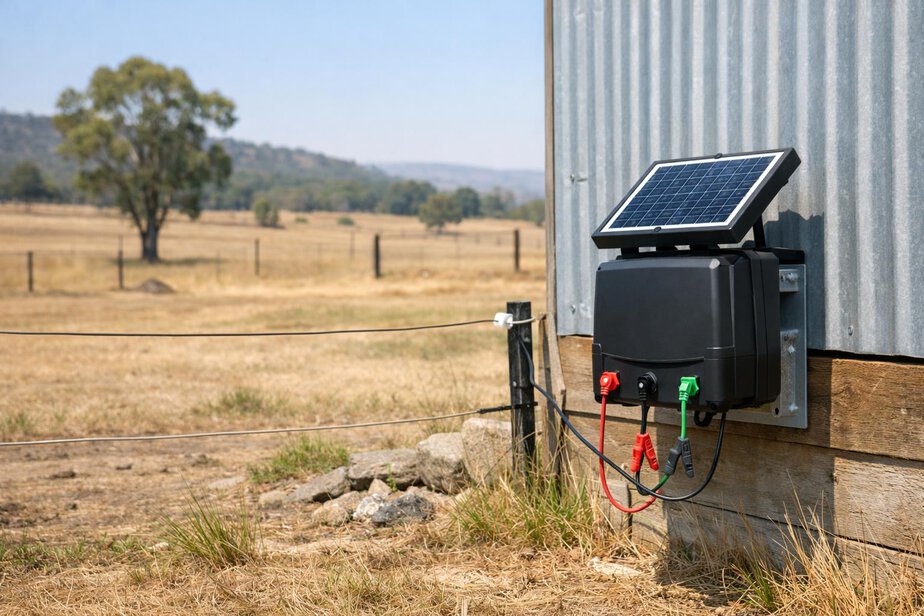
Many properties now use solar or battery-powered energisers. These can keep operating even when normal mains electricity is unavailable, which means a fence may remain live during an emergency unless it is deliberately switched off and isolated.
Owners should not assume that a power outage has made the fence safe. If the system has its own battery, solar panel or backup supply, it may continue to deliver a charge. Fire and emergency crews may also encounter multiple fence systems on one property, so every energiser should be checked individually.
Follow the manufacturer’s shutdown and isolation instructions for the specific unit installed. If those instructions are not available at the time, treat the system as live until you can confirm it has been isolated safely.
What property owners should do before fire season
Preparation before the fire danger period is the safest time to manage electric fence risk. Simple steps can make a major difference if a fire starts nearby or if you need to leave the property quickly.
Practical preparation checklist
- Keep grass, weeds and other vegetation away from fence wires.
- Clear combustible material from around energisers, batteries and solar gear.
- Check that insulators, posts and wire tension are in good condition.
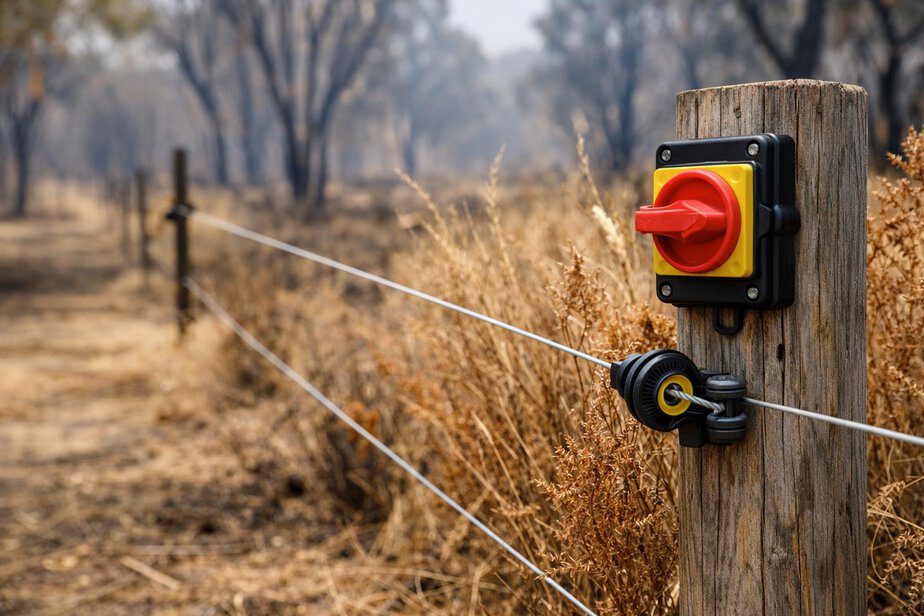
- Confirm that isolation switches are easy to find and clearly labelled.
- Record electric fence locations in your property’s bushfire plan.
- Make sure family members, staff and contractors know where the fence systems are.
- Review the manufacturer’s instructions for shutdown and restart.
It is also sensible to think about how fences will be seen in smoke, darkness or during a sudden evacuation. If a line is hard to notice in daylight, it may be even harder to identify during an emergency.
Label energisers, isolation points and fence lines clearly
Good labelling helps owners, workers and responders make faster decisions. Clear, simple marking can reduce confusion and lower the risk of someone touching a live fence by mistake.
Label the energiser location so it can be found quickly. Mark the isolation switch in a way that is easy to understand under stress. If there are several fence systems on the property, identify each one separately. Fence lines that cross access roads, lanes or boundary areas should also be noted in the property plan.
Use durable, weather-resistant labels or signs suitable for outdoor use. Keep them visible, but do not place them where they could become an additional fuel source or interfere with access.
How to shut down an electric fence safely
During extreme fire danger or Total Fire Ban conditions, switching off electric fences is common practice. Agriculture Victoria also recommends switching off electric fence energisers where extreme fire danger is expected. CFA advice similarly supports turning fences off during high-risk conditions.
Always follow the manufacturer’s instructions and any local workplace procedures. The exact shutdown process will vary between systems, especially where solar panels, battery storage or multiple fence zones are involved.
General shutdown steps for owners
- Locate the energiser and isolation switch before fire conditions arrive.
- Switch off the energiser using the correct control point.
- Isolate any battery or backup power source as instructed by the manufacturer.
- Confirm the fence is no longer operating before leaving the area, if it is safe to do so.
- Do not rely on assumptions, such as a nearby power failure, to mean the fence is dead.
Never attempt repairs, wire movement or dismantling during active fire conditions. If a fence is damaged, treat it as a hazard until you can check it properly after the danger has passed.
What responders need to know on arrival
Property owners should tell firefighters or other responders that electric fencing is installed. This is an important part of situational awareness, especially where fences may cross driveways, paddocks, boundary lines or containment areas.
If possible, provide quick information about:
- where the energiser is located,
- which fence lines are live,
- how the system is switched off,
- whether there is solar or battery backup, and
- any known damaged or fallen sections.
This information may help responders choose safer access routes and avoid unexpected shock risks. It can also reduce delays if they need to move equipment, protect assets or access threatened structures.
Owners should not try to direct operational decisions. Instead, provide clear facts about the fence system and allow trained and authorised responders to assess how it affects their work.
Damaged, fallen or tangled wires after a fire
After a bushfire or grassfire, fence lines can look harmless while still holding electrical charge. Heat may have damaged insulators, wires may have broken loose, and debris can hide live sections on the ground.
Treat fallen, damaged or tangled wires as energised until the system is confirmed isolated. Do not cut, move or repair wires until the energiser has been safely isolated and the fence is verified as no longer live.
People should also avoid stepping over damaged fence lines where possible. Smoke, ash and poor visibility can make it difficult to see where wire ends, broken posts or sharp metal pieces are located.
Post-fire checks before restarting
- Inspect the energiser for heat damage, water damage or impact damage.
- Check the battery and any solar charging components.
- Look at fence wire, joints, posts and insulators.
- Examine the earth system and connections.
- Make sure vegetation and debris have been cleared from the fence line.
Do not restart the system until it has been checked carefully and you are confident it is safe and working as intended.
Build electric fence safety into your bushfire plan
Electric fences should be included in the same bushfire planning as stock movement, emergency contacts, water supply and property access. A good plan does not need to be complicated, but it should be specific enough that someone else could understand it if you were not there.
Include the location of every energiser, isolation point and major fence line. Note whether the system is mains-powered, battery-powered or solar-powered. If there are several gates or zones, identify which ones may need to be opened or isolated first.
It is also wise to review the plan before each fire season and after any major property changes. New fencing, new power systems or changes to paddock layout can all affect how the fence should be managed in an emergency.
Stay safe, stay clear and verify before reusing the fence
Electric fences can play an important role on rural properties, but they need active management before, during and after bushfires and grassfires. Keep vegetation away from wires, label equipment clearly, tell responders where the hazards are and switch systems off when fire danger is severe.
Most importantly, never touch damaged fencing until the system has been confirmed isolated. If in doubt, treat every fallen or damaged wire as live and wait for proper inspection by someone who is trained and authorised to assess it.
Before publication or use, verify current CFA advice, manufacturer instructions and local workplace procedures, as these may change over time and differ by property or equipment type.
FireRescue Training Hub
Access practical fire and emergency study support resources, downloads, checklists, audio guides, and member-only course content.
- Course library
- PDF downloads
- Audio guides
- Checklists
Study support only. Not accredited training or a replacement for workplace procedures.
About the author and safety review
Ken Walker
Former Station Officer and fire service educator
Former career firefighter with extensive career and volunteer fire service experience.
Qualifications: Associate Diploma of Applied Science in Fire Technology; Institute of Fire Engineers studies.
Author profilehttps://www.firerescue.com.au/about-us/