FireRescue Australia Insight
Understanding Disaster Communication System Resilience
In the face of natural disasters and emergencies, the resilience of disaster communication systems is crucial for effective response and public safety. Australia’s varied climate and geography mean that fire, flood, storm and other hazards can quickly disrupt normal communication channels, making robust and adaptive systems essential for emergency services and communities alike.
Key takeaways
Disaster communication system resilience depends on integrating advanced fire research, reliable infrastructure, and coordinated emergency planning. It is vital to understand the distinct roles of emergency services—Fire/Rescue, Police, Ambulance, and the State Emergency Service (SES)—to streamline response efforts.
Technological innovations and community preparedness are equally important to ensure timely, accurate information flow during crises. Australians should familiarise themselves with emergency protocols, including who to call (000) and what information to provide.
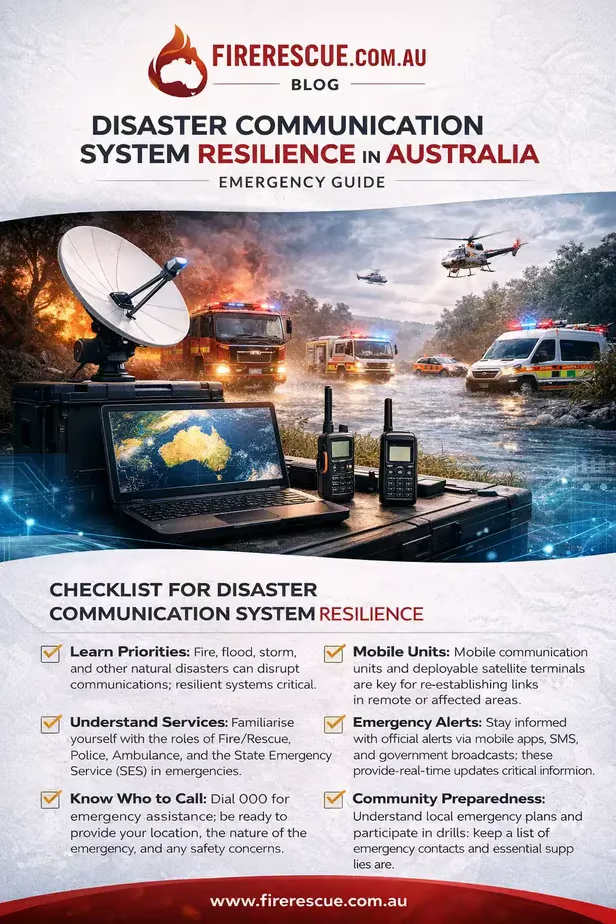
Disaster Communication System Resilience in Australia
Learn how resilient communication systems support emergency services, public warnings, and community preparedness during major incidents across Australia.
- Clear and practical emergency guide
- Mobile friendly PDF download
- Helpful public safety resource from FireRescue
Trusted community safety content from www.firerescue.com.au
Background and Context
Australia’s disaster landscape is complex and dynamic, ranging from bushfires and cyclones to floods and storms. Over decades, fire research institutes and emergency management agencies have contributed significant insights into how communication systems can be made more resilient. The goal is to maintain uninterrupted communication channels even under the stress of widespread infrastructure damage.
Resilience in this context means not only withstanding physical damage but also rapidly restoring function after disruption. It involves multiple layers: technological redundancy, operational protocols, inter-agency coordination and community engagement. Australia’s emergency services have developed frameworks that emphasise collaboration and clear communication pathways to mitigate risks associated with communication failure.
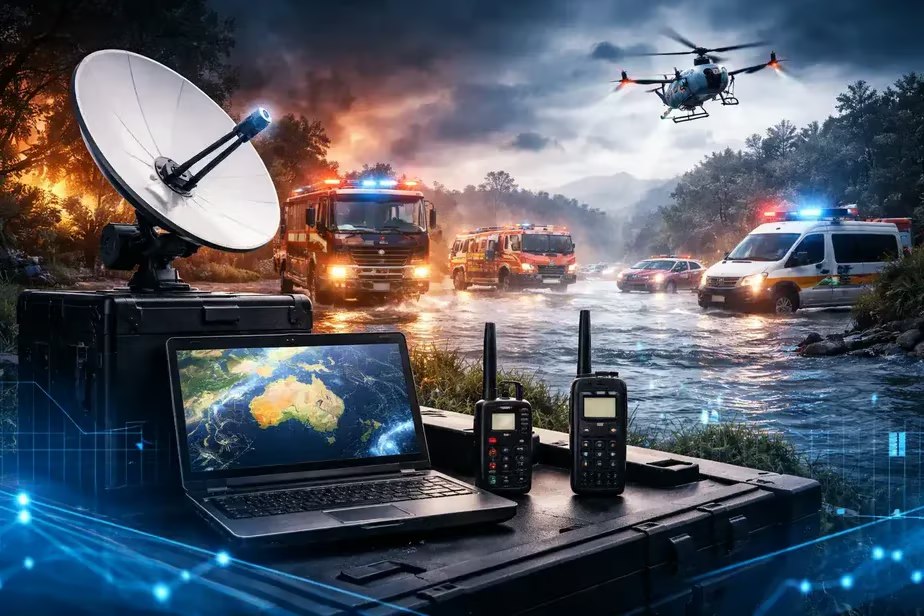
The challenges faced in maintaining communication resilience are compounded by the vastness and remoteness of much of Australia’s territory. Remote communities often experience limited telecommunications infrastructure, which can be further compromised during natural disasters. To address this, emergency services have invested in mobile communication units and deployable satellite terminals that can be rapidly transported to affected areas to re-establish communication links. These mobile units ensure that command centres remain connected with field teams, even when conventional infrastructure is offline.
Moreover, the increasing frequency and intensity of climate-related events have underscored the need for continual evolution in communication resilience strategies. Emergency agencies are now incorporating climate projections and hazard mapping into their communication infrastructure planning. This proactive approach allows for the anticipation of potential weak points in the system and the pre-deployment of resources to vulnerable regions, enhancing readiness before disasters strike.
Technological Foundations of Resilience
Modern disaster communication systems utilise a blend of radio networks, satellite links, mobile data, and internet-based platforms. Fire and rescue services often rely on dedicated radio frequencies designed to operate independently of public cellular networks, which may become overloaded or damaged during emergencies.
Satellite communication offers a critical backup, enabling coordination in remote and severely affected areas where terrestrial infrastructure is compromised. Additionally, emergency alerts broadcast via government platforms and mobile apps enhance public awareness and can be updated in real time. These technologies are complemented by fire research-driven innovations aimed at improving signal reliability and interoperability between agencies.
Emerging technologies such as mesh networking and drone-based communication relays are also being explored and integrated into disaster response strategies. Mesh networks enable devices to connect directly to each other without relying on centralized infrastructure, creating an ad-hoc communication grid that can function in areas where traditional networks fail. Drones equipped with communication payloads can quickly establish temporary coverage in disaster zones, providing critical links for first responders and affected communities. These advancements represent a significant step forward in enhancing system flexibility and resilience.
In addition to these technologies, artificial intelligence and machine learning tools are beginning to play a role in disaster communication resilience. AI-driven analytics can predict network congestion points and optimize the routing of data traffic during emergencies. Furthermore, automated systems can help filter and verify incoming information to emergency call centres, ensuring that responders receive accurate and actionable data promptly. This integration of AI enhances both the speed and quality of communication during critical incidents.
Operational Coordination Among Emergency Services
A resilient communication system is only as effective as the operational coordination it supports. In Australia, the emergency call number 000 is the central gateway for urgent assistance. Callers are directed to the appropriate service depending on the nature of the emergency.
Fire and Rescue services focus on fire suppression, rescue operations and hazardous material incidents. The Police provide law enforcement, crowd control and investigation, while Ambulance services deliver medical response and patient transport. The State Emergency Service (SES) specialises in flood rescue, storm damage response and community support during natural disasters.
Effective disaster communication requires seamless information flow across these agencies. Joint training exercises, shared communication protocols and interoperable equipment enhance real-time collaboration. In the field, personnel depend on reliable radios and digital messaging to coordinate resources and report conditions.
Inter-agency communication is further supported by the use of common operational picture (COP) software platforms that provide a unified, real-time overview of the incident. These platforms integrate data feeds from various sources including GPS tracking, weather updates, and field reports, allowing commanders to make informed decisions promptly. The ability to visualize and share situational awareness across agencies reduces confusion and duplication of efforts during critical response phases.
Further strengthening operational coordination is the establishment of regional and national communication hubs that facilitate information exchange across jurisdictions. These hubs act as nerve centres during large-scale emergencies, linking local, state and federal agencies. By centralising communication efforts, they help synchronise resource deployment and avoid bottlenecks that can delay response times.
Community Role and Public Messaging
Resilience also extends beyond emergency services to include community preparedness. Public messaging systems must deliver clear, actionable information about what to do, where to go, and who to contact. Australians are encouraged to keep emergency contact numbers handy and understand the distinctions between services to avoid delays.
During disasters, misinformation can spread quickly, so trusted official channels are vital. Authorities use social media, emergency apps, radio and television to provide updates. These platforms require robust infrastructure to function during peak demand and adverse conditions.
Community engagement initiatives include educating residents on how to verify information sources and discouraging the sharing of unverified reports that may cause panic. Additionally, community liaison officers act as bridges between emergency services and local populations, helping to disseminate accurate information and gather ground-level feedback. These measures foster trust and enhance overall system resilience by ensuring that public messaging is both reliable and responsive to community needs.
Another vital aspect of public messaging resilience lies in accessibility. Emergency communications are increasingly designed to accommodate diverse audiences, including people with disabilities, non-English speakers, and culturally diverse communities. Translation services, sign language interpretation, and easy-to-understand messaging formats help ensure that critical information reaches all segments of the population effectively, reducing vulnerability during crises.
Practical Implications for Emergency Planning
For emergency managers and planners, enhancing disaster communication system resilience is an ongoing priority. This includes investing in redundant communication infrastructure, ensuring interoperability of devices across agencies, and continuously updating training and protocols based on lessons learned from recent events and fire research findings.
Communities should be engaged in preparedness activities, including drills and education about emergency communication etiquette. Simple steps like maintaining charged mobile devices, knowing the 000 emergency number, and understanding which service to contact can make a significant difference when seconds count.
Fire and Rescue Queensland, NSW Rural Fire Service, Victoria’s Country Fire Authority, and other agencies across Australia continually adapt their communication strategies to meet emerging challenges. Their work underscores the importance of resilience not just in technology, but in people and processes dedicated to safeguarding communities.
Moreover, emergency planning increasingly incorporates scenario-based simulations that test the communication system’s robustness under various disaster conditions. These exercises highlight potential vulnerabilities and provide opportunities to refine contingency plans. Collaboration with telecommunications providers is also critical, ensuring priority access to networks for emergency services during high-traffic periods and infrastructure outages.
Future-focused planning also involves investing in community-based communication networks. These grassroots initiatives empower local groups to establish their own communication capabilities, which can be crucial when official systems are overwhelmed or compromised. By fostering local ownership and resilience, these networks create an additional layer of support that complements formal emergency services.
Conclusion
Disaster communication system resilience is a cornerstone of effective emergency response in Australia. It blends advanced technology, inter-agency cooperation, fire research innovation and community engagement. While no system is infallible, ongoing efforts to strengthen communication networks and protocols ensure that when disaster strikes, emergency services and the public remain connected and informed.
Australians are reminded to familiarise themselves with emergency numbers, understand the roles of Fire/Rescue, Police, Ambulance and SES, and to follow official advice during incidents. Together, these steps contribute to a more resilient national disaster communication framework capable of saving lives and protecting property.
FireRescue Training Hub
Access practical fire and emergency study support resources, downloads, checklists, audio guides, and member-only course content.
- Course library
- PDF downloads
- Audio guides
- Checklists
Study support only. Not accredited training or a replacement for workplace procedures.
About the author and safety review
Ken Walker
Former Station Officer and fire service educator
Former career firefighter with extensive career and volunteer fire service experience.
Qualifications: Associate Diploma of Applied Science in Fire Technology; Institute of Fire Engineers studies.
Author profilehttps://www.firerescue.com.au/about-us/