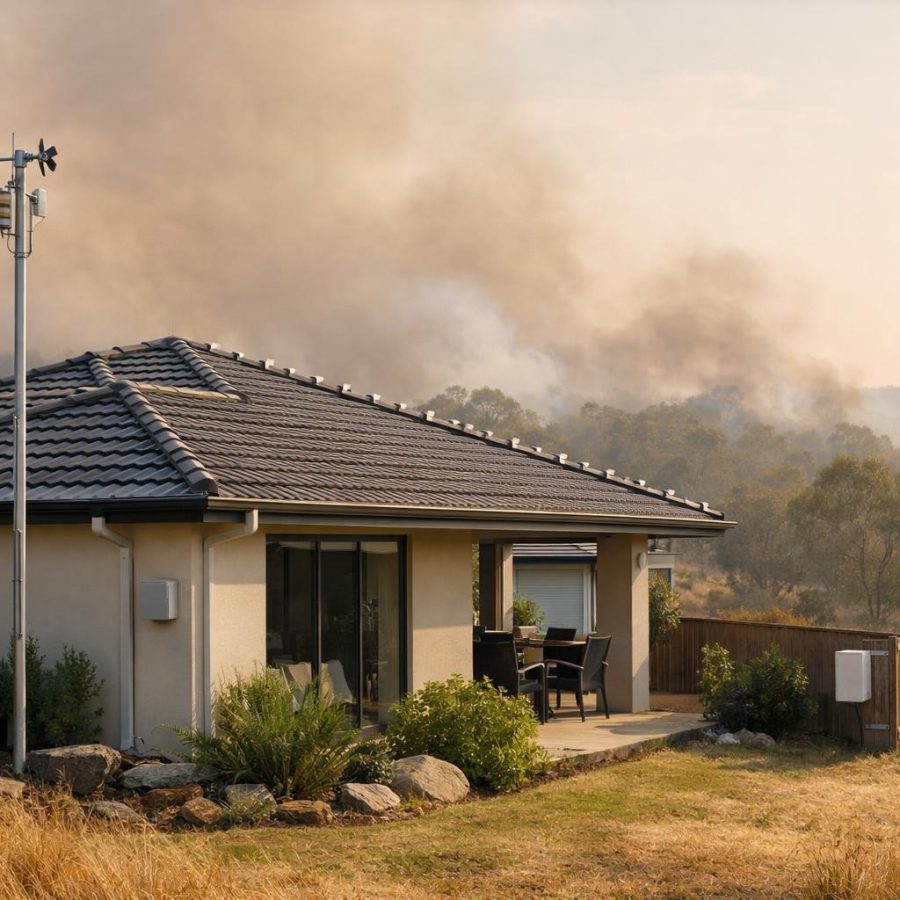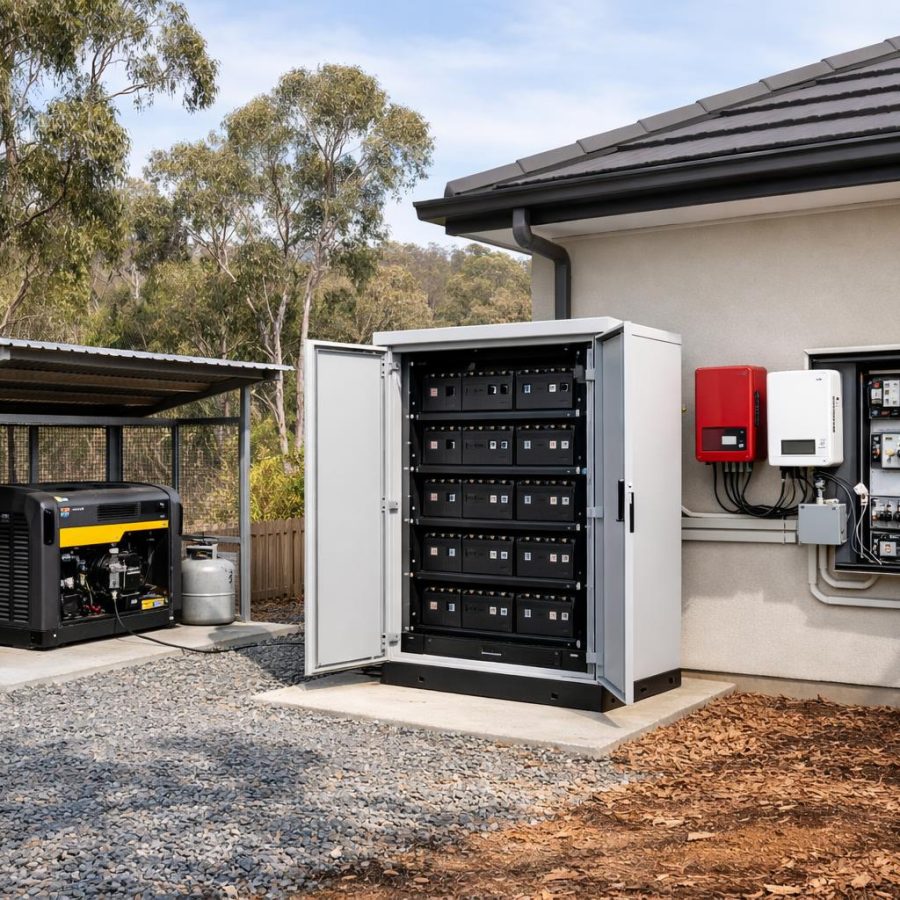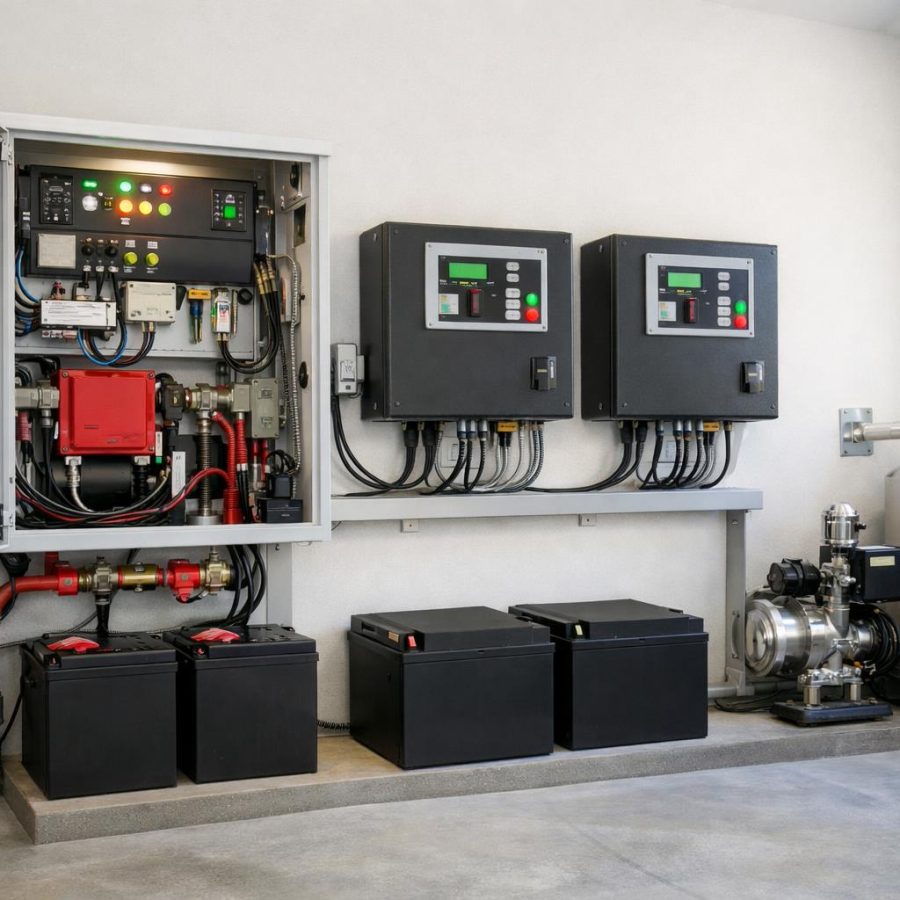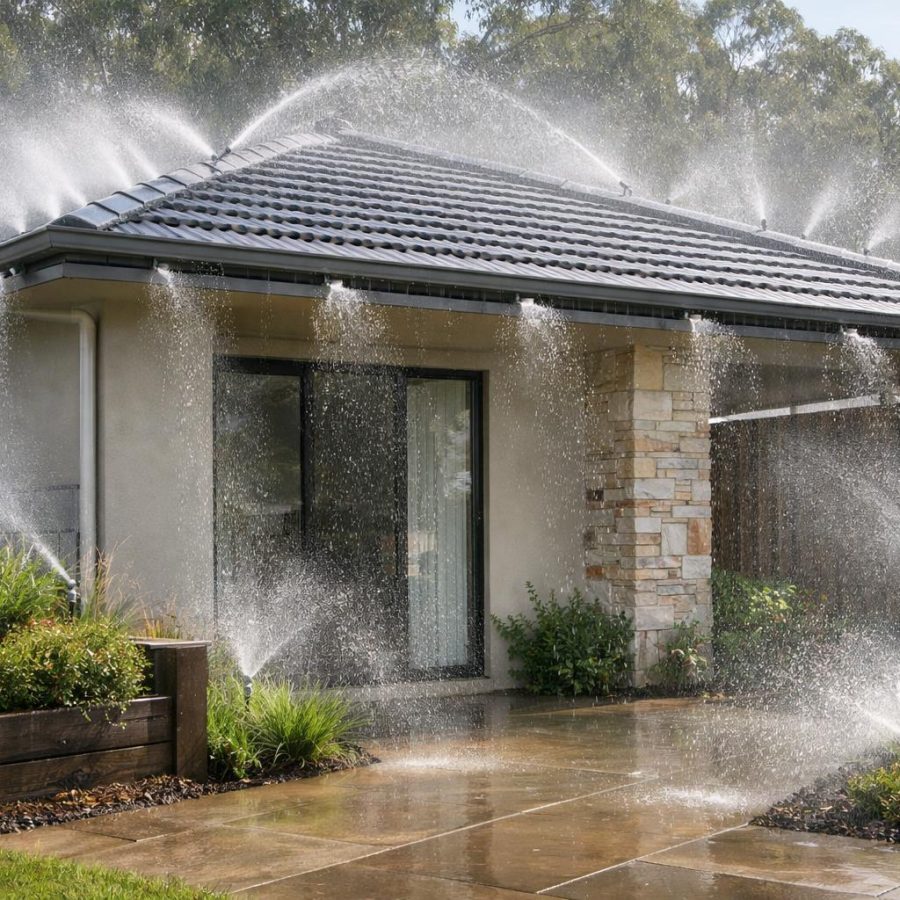
Keeping indoor air as clean and safe as practical during a bushfire does not require a specialist laboratory-grade system in most homes. A simpler and more affordable approach is to use the home’s normal reverse-cycle air-conditioning as the base, add a small filtered outside-air fan for slight positive pressure, and let automatic controls manage smoke conditions without asking residents to make complex decisions.
Why indoor air protection matters in a bushfire
Smoke can make a house uncomfortable very quickly, but the main concern is not comfort alone. Fine smoke particles, especially PM2.5, can enter the home through gaps, open doors, vents and poorly sealed building elements. Carbon monoxide is a separate hazard and must also be monitored because it can become dangerous in some circumstances.
This part of the integrated residential bushfire protection system focuses on protecting the whole house as the basic indoor refuge. That is an important design choice. A house should not rely only on one sealed room if the rest of the home may still be needed for safe movement, care of children, or access to exits.
This air-protection system is one part of the broader bushfire readiness model and contributes a modest share of overall protection. It should be treated as a useful layer, not a standalone guarantee. Building sealing, ember protection, safe exits, water supply, power backup and resident planning all still matter.
Use the home’s normal reverse-cycle system as the foundation
The preferred approach is to start with the HVAC system the home already uses. Most domestic reverse-cycle systems can heat, cool and recirculate indoor air. That makes them a practical foundation because residents already understand them, trades are familiar with them, and routine servicing is usually available.
Why this is better than a specialist-only system
- It is usually cheaper to install and maintain.
- It uses familiar household equipment.
- It can support day-to-day comfort as well as bushfire readiness.
- It avoids unnecessary complexity for ordinary homeowners.
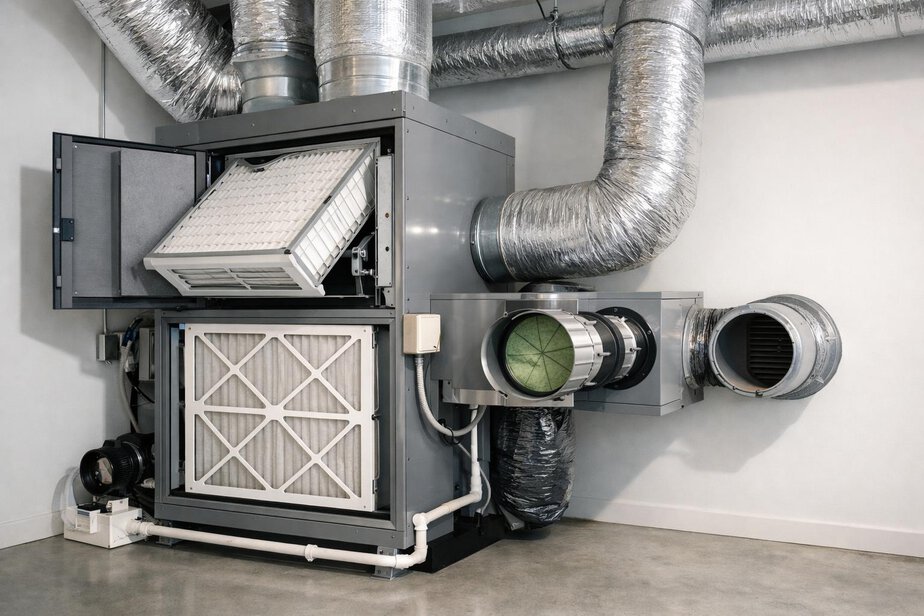
Most domestic reverse-cycle systems recirculate indoor air and do not create positive pressure by themselves. That is why a small filtered outside-air fan is added. The fan introduces a controlled amount of clean outside air when conditions allow, while the main HVAC system keeps the air moving through filtration and recirculation.
For ducted homes, the filtered outside-air supply should be integrated into the ducted system where practical. That allows cleaner air to distribute more evenly through the house. For homes using split systems, a small standalone filtered outside-air unit can perform the same basic role without requiring a full ducted installation.
How slight positive pressure helps during smoke
Slight positive pressure means the indoor air pressure is kept a little higher than outside air pressure. In simple terms, this helps reduce the tendency for smoky air to leak into the house through small gaps. It does not stop every leak, and it cannot compensate for a badly sealed home, but it can help reduce infiltration when used with good building seals and proper opening protection.
The key is balance. The house should breathe enough to avoid pressure problems, but not so freely that smoke flows in uncontrolled. The filtered outside-air fan should be sized and controlled to provide only a small, steady positive pressure where practical.
What automatic pressure control should do
- Confirm that smoke conditions near the house justify protective operation.
- Run the reverse-cycle system in recirculation mode where appropriate.
- Introduce filtered outside air at a low, controlled rate.
- Maintain slight positive pressure without over-pressurising the building.
- Adjust automatically if smoke levels change.
Building sealing remains important. Positive pressure cannot fix major gaps, open windows, unsealed penetrations or poorly protected vents. The system should work with ember-resistant construction and suitable doors, windows and vents, not replace them.
Filtration and monitoring should be standard
High-efficiency particle filtration should be part of the standard design. The aim is to reduce indoor smoke particles whenever the system is operating. Filtration is valuable both for everyday dust and for bushfire smoke events, and it supports the system’s recirculation mode.
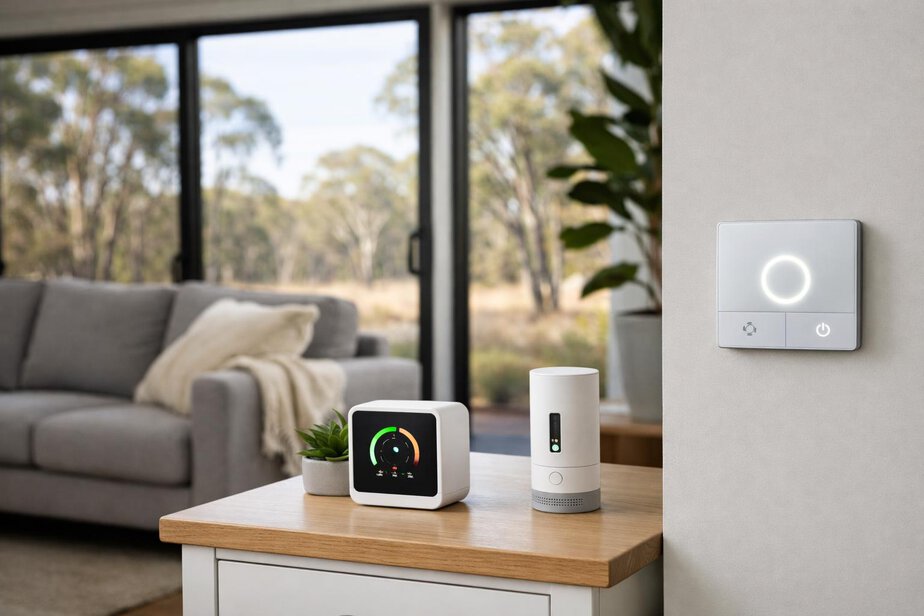
Indoor air monitoring should be simple, reliable and easy to understand. At minimum, the home should monitor PM2.5 and carbon monoxide indoors. Outside air conditions should also be monitored where practical so the system can decide how much outside air to admit.
| What to monitor | Why it matters | How the system should respond |
|---|---|---|
| Indoor PM2.5 | Shows smoke particle levels inside the home | Increase filtration, reduce smoke entry, and alert residents if needed |
| Indoor carbon monoxide | Warns of a potentially dangerous combustion gas | Alert residents and shift to the safest practical air-handling response |
| Outside PM2.5 | Indicates smoke intensity near the home | Reduce outside-air intake when smoke rises |
| Outside carbon monoxide | Helps identify unsafe smoke conditions where practical | Limit outside air while maintaining safe recirculation and filtration |
The important point is that the system should not blindly maximise outside-air intake during severe smoke conditions. If outside PM2.5 or carbon monoxide becomes too high, the controls should reduce outside-air intake while still keeping slight positive pressure where practical and maintaining safe recirculation.
Clean Air Mode should be simple for residents
Residents should not need to understand HVAC controls in order to get better protection during a smoke event. A Clean Air override should be easy to use and should do something obvious: increase safe recirculation and filtration while keeping the air-protection logic running in the background.
The override should be designed for ordinary homeowners, not technicians. It should reduce confusion at the time people are most likely to be stressed. If the home has automatic controls, the override can be a simple button or clearly labelled setting that shifts the system into a more protective indoor-air mode.
What Clean Air Mode should avoid
- It should not require the resident to manage dampers, fan curves or pressure settings.
- It should not depend on internet or mobile coverage.
- It should not disable safety monitoring.
- It should not increase outside-air intake when outside smoke is worsening.
If indoor air quality becomes unsafe despite filtration, the system should alert residents clearly and provide simple instructions. Those instructions should be kept short and practical, such as moving to a safer area, checking whether doors and windows are closed, and following local emergency advice. Immediate life-threatening emergencies in Australia require Triple Zero (000).
Use a whole-house approach first, with an optional cleaner-air area
The basic design should protect the whole house rather than rely on one refuge room. That is usually more practical for families because people can move through the home without losing access to the protected indoor environment.
An optional upgrade may include a dedicated cleaner-air area. If provided, it can have separate PM2.5 and carbon monoxide monitoring, emergency lighting and a clearly identified direct external exit. This can be useful for homes with more vulnerable occupants or for households that want an extra layer of protection.
That point matters. A refuge is only useful if people can leave it safely. The cleaner-air area should be treated as an option, not a substitute for overall home protection, and it should never create a false sense of security.
Power priority, backup operation and generator sizing
Positive-pressure ventilation is essential, but it should sit below pumps, controllers and sensors in the electrical priority list. In a bushfire, the system must preserve the components that directly support fire suppression, system control and resident safety.
If battery power becomes limited, the system should reduce ventilation demand before reducing critical fire-pump or control power. That means the home can continue to protect the most important functions even if non-essential loads need to be trimmed.
What the generator should support
- Pumps
- Controllers
- Sensors
- Ventilation
- Communications
- Essential lighting
The backup generator should be sized for the complete planned bushfire-system electrical load, not just a single appliance. Minimum fuel endurance should still meet the overall system design requirement, and the air-protection system should be included in that planning from the start. A good system is not one that works only when the power is perfect; it is one that continues to operate when conditions are difficult.
Commissioning, testing and maintenance should be built in
The air-protection system should be part of automatic self-testing and full commissioning. That includes verifying that the system can actually do what it is designed to do before a bushfire happens.
Items to test
- Airflow through the system
- Indoor pressure response
- Filtration performance
- PM2.5 sensors
- Carbon monoxide sensors
- Automatic reduction of outside-air intake when smoke is high
- Clean Air override operation
- Operation on backup power
Testing should be practical and repeatable. A system that cannot be checked easily is more likely to drift out of service. Filters must also be accessible for routine replacement, and controls should be simple enough for ordinary HVAC trades to install and maintain.
Final HVAC, filtration and pressure design should be completed by appropriately qualified professionals. That is especially important when ducted systems, pressure control, generator integration and safety alarms are all linked together.
Keep the design simple, affordable and realistic
The most useful bushfire indoor-air system is not the most complex one. It is the one that ordinary households can afford, understand and maintain. A home that uses existing reverse-cycle air-conditioning, a small filtered outside-air fan, automatic pressure control and clear indoor-air monitoring can achieve a practical level of protection without turning the house into a specialist facility.
This approach works best when it is integrated with the rest of the residential bushfire protection system. Smoke control, ember protection, water supply, power backup, communication, safe exits and resident planning all support each other. No single layer does everything.
In short, keep the air as clean and safe as practical, use normal household HVAC wherever possible, and add simple bushfire-specific protection where it makes a real difference. Verify the final design against local conditions, equipment capability and current procedures before publication or installation.
FireRescue Training Hub
Access practical fire and emergency study support resources, downloads, checklists, audio guides, and member-only course content.
- Course library
- PDF downloads
- Audio guides
- Checklists
Study support only. Not accredited training or a replacement for workplace procedures.
About the author and safety review
Ken Walker
Former Station Officer and fire service educator
Former career firefighter with extensive career and volunteer fire service experience.
Qualifications: Associate Diploma of Applied Science in Fire Technology; Institute of Fire Engineers studies.
Author profilehttps://www.firerescue.com.au/about-us/