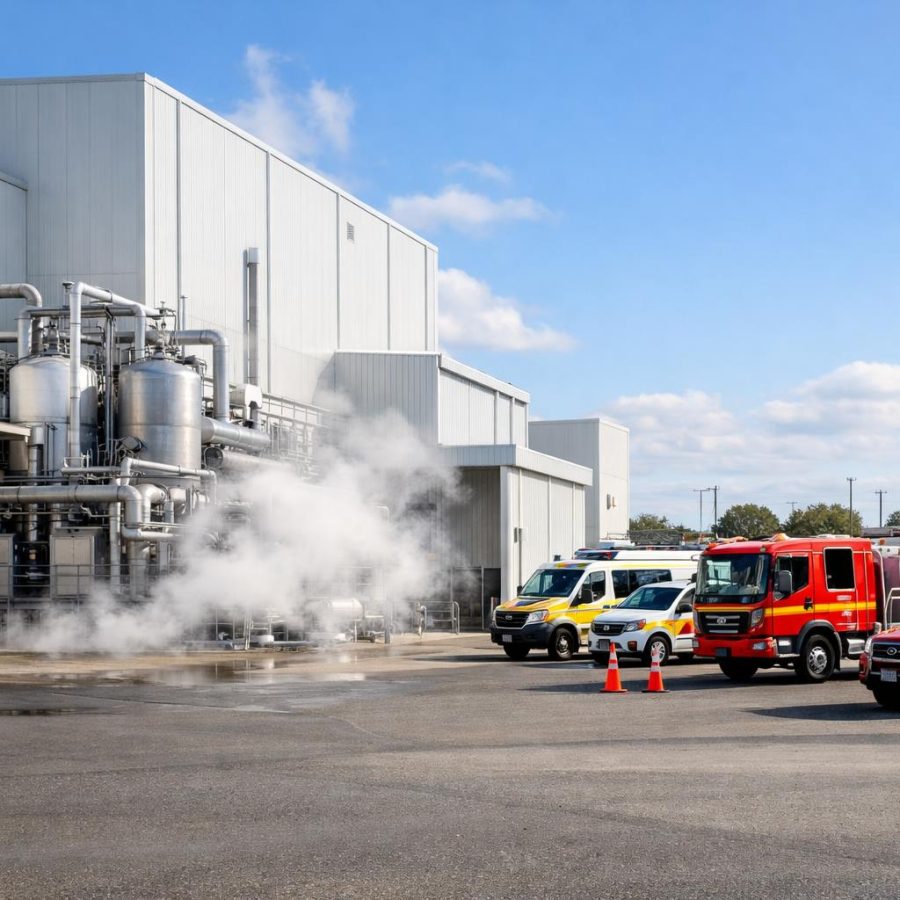
Emergency planning for an autistic person or a sensory-sensitive family member works best when it is calm, respectful and practical. The aim is not to force someone to cope with a crisis in a generic way, but to build a plan around what helps them feel safe, understand what is happening and move through an emergency with as little distress as possible.
Every autistic person has different needs. Some people may be highly distressed by loud alarms, flashing lights or crowded evacuation centres. Others may struggle with sudden changes to routine, unclear instructions or unfamiliar responders. Some may not use spoken language, while others may speak clearly but find it hard to process information when stressed. A good emergency plan starts with the person, not with assumptions.
If there is an immediate life-threatening emergency in Australia, call Triple Zero (000). For everything else, the best preparation is to think ahead, practise gently and make the plan easy to follow under pressure.
Start with the person, not the label
An emergency plan for an autistic person should be built around individual strengths, stressors and supports. The fact that someone is autistic does not automatically tell you what will help them during a fire, storm, power outage or evacuation. Families should ask the person what makes them feel safe, what upsets them, and what helps them communicate when they are overwhelmed.
Useful questions include:
- What sounds, lights, smells or crowds are hardest to handle?
- What usually helps when you feel anxious or overloaded?
- Do you prefer pictures, short written steps, spoken reminders or all three?
- How do you want people to communicate with you in an emergency?
- Which items help you stay calm or understand what is happening?
- Where do you feel safest if you need to leave home quickly?
Keep the discussion simple and calm. Some people may answer immediately. Others may need time, visual prompts or several short conversations. It can also help to involve support workers, teachers, therapists or other trusted people who understand the person’s communication style and daily routines.
Respect communication in all its forms
Never assume a person who cannot speak does not understand what is happening. Many autistic people use alternative communication, communicate selectively, or need extra time to respond. In a high-stress situation, a person may not be able to answer questions quickly even if they understand everything being said.
Allow for different ways of communicating, such as pointing, writing, typing, picture symbols, communication cards or yes and no signals. Make sure all family members and regular carers know how the person communicates best.
Build a simple visual emergency plan
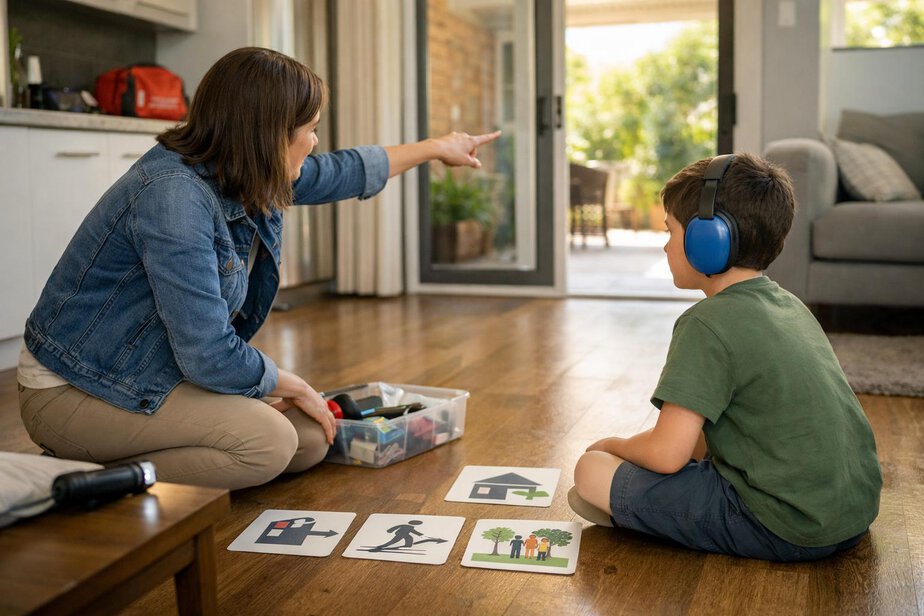
A visual emergency plan can make a big difference, especially when stress makes spoken instructions harder to follow. The goal is to show what happens first, next and last in a clear, predictable way. Keep it simple, direct and familiar.
A basic visual plan may include:
- A picture or word for the emergency type, such as fire, storm or power failure.
- The action to take first, such as get the grab bag, put on shoes or move to the safe exit.
- The safe exit route from the home or building.
- The meeting place outside.
- The person to contact if family members get separated.
- The next place to go, such as a car, a neighbour’s home or an evacuation centre.
If the person learns best visually, place the plan somewhere easy to see, and keep a smaller copy in a bag or wallet. Use short wording, simple symbols or photos taken from the actual home if that helps. Some families find it useful to make two versions: one for staying indoors during a short disruption, and one for leaving quickly.
| Plan element | What to include | Why it helps |
|---|---|---|
| First step | A clear action such as “put on headphones” or “take medication bag” | Reduces hesitation and confusion |
| Exit route | Best door, path or stairwell | Makes leaving more predictable |
| Meeting point | A specific place outside the home | Helps families regroup |
| Communication | Card, device or yes/no system | Supports understanding under stress |
It is also worth making the plan practical for different times of day. A plan that works in daylight may need adjustment for night-time, when someone is tired, half asleep or disoriented. If possible, practise with and without lights, with normal shoes, and with the items the person would actually use.
Prepare for alarms, sirens and flashing lights
Loud alarms, sirens, smoke detector sounds and flashing emergency lights can be overwhelming for sensory-sensitive people. The aim is not to force tolerance. The aim is to reduce distress and make the warning manageable enough that the person can respond.
Practical ways to prepare include:
- Keeping noise-reducing headphones or ear protection in an easy-to-reach place.
- Practising with recorded alarm sounds at a very low volume if the person agrees.
- Showing the person what an alarm device looks like before an emergency happens.
- Explaining that flashing lights may appear during some emergencies and that they are a signal to move or follow instructions.
- Identifying a place in the home where the person may feel slightly less exposed to sound and light while still being able to evacuate safely.
For some people, it is useful to pair the alarm sound with a step-by-step response card. For example, the card might say: stop, look, put on headphones, get bag, leave by the front door. The exact steps should match the person’s abilities and the layout of the home.
If the person is very sensitive to light, include sunglasses or a cap in the emergency kit if they tolerate these items. If flashing lights are likely in the area, discuss in advance how to turn away from the source, look down or move with a trusted adult.
Use practice sessions that are gradual and safe
Practising an evacuation plan is important, but practice should never be rushed or done in a way that causes severe distress. The best approach is gradual exposure to the plan, with clear warning, short steps and plenty of breaks. A person is more likely to use a plan under pressure if they have rehearsed it in a way that felt safe and predictable.
Start with very small steps. For example:
- Look at the visual plan together.
- Walk to the exit without any urgency.
- Pick up the grab bag.
- Put on headphones or other comfort items.
- Walk from the room to the front gate.
- Practise the full route with calm encouragement.
Some families find it helpful to practise at a time when the person is already settled, not during a busy or tiring part of the day. Keep practice short. End on a success rather than pushing through distress. If the person needs a reward or recovery activity afterwards, include that in the plan.
Remember that the purpose of practice is confidence, not performance. If a drill becomes upsetting, stop and reset. Rehearse at a smaller level next time. A person who can manage one step successfully is building a stronger foundation than someone pushed through a stressful drill and left frightened of the whole process.
Make routine changes easier to understand
Many autistic people rely on routine to stay regulated. Emergencies disrupt routine by definition, so preparation should reduce surprise where possible. Explain in advance what could change: meals may be delayed, people may gather in new places, lights may stay on, and sleep may be interrupted. Use words that are honest but not alarming.
Simple statements can help, such as:
- “If the alarm sounds, we leave together.”
- “We may need to go somewhere different for a while.”
- “Your bag will stay with you.”
- “If plans change, I will tell you what is happening next.”
Pack a sensory-friendly emergency kit
A well-prepared emergency kit can reduce distress, support communication and make a temporary move much easier. For an autistic or sensory-sensitive person, the kit should include practical items as well as comfort items that help with regulation and familiarity.
Common items to consider include:
- Medications and a current list of doses and instructions, prepared by the family or health professional as appropriate.
- Noise-reducing headphones, earplugs or other hearing protection that the person already accepts.
- Comfort items such as a preferred toy, blanket, book, fidget item or object with a familiar texture.
- Water, snacks and any diet-specific items the person reliably tolerates.
- A charger, power bank or battery backup for communication devices if relevant.
- A written communication card or wallet card.
- Spare clothes, socks and any personal care items that reduce distress.
- Important contact details for family, carers, support people and health professionals.
Store the kit where it is easy to reach in a hurry. If the person uses the kit regularly, refresh items often so nothing important is missing when it is needed. Try to keep the contents consistent, because familiarity matters. If an item changes, let the person know first if possible.
Create a communication card and a contact plan
A communication card can be very useful if someone becomes overwhelmed, stops speaking, is separated from family, or needs to explain needs quickly to responders or support staff. Keep it brief, easy to read and easy to hand over. The card should not try to explain everything about the person. It should focus on the most important information for an emergency.
Useful information may include:
- The person’s name.
- Preferred name, if different.
- How they communicate, such as speaking, writing, pointing, typing or yes/no signals.
- Any sensory triggers, such as loud noise, touch or flashing lights.
- Important safety needs, such as needing time to process instructions or needing a support person present.
- Allergies or essential medications, if relevant.
- Emergency contacts.
The card can also include a short message for responders, for example: “I may not speak when distressed. Please give me time and use simple sentences.” Keep wording respectful and practical.
It can help to share copies of the communication plan with trusted people who may be involved during an emergency, such as family members, neighbours, teachers, carers or workplace support people. The more familiar the message is before an emergency, the easier it may be to use in a real event.
Tell emergency responders about sensory and communication needs
Where possible, warn emergency responders about the person’s sensory, communication or behavioural needs. This may happen through the 000 call, through an accompanying adult, or through local emergency instructions if a service offers a way to share relevant information. Keep details short and focused on what helps.
For example, it may help to say that the person:
- may not respond verbally under stress
- needs simple, direct instructions
- is sensitive to loud noise and bright light
- may need extra time to process directions
- is more settled when a familiar support person stays nearby, if that is safe and allowed
Families should follow instructions from emergency services and current local emergency warnings. If responders give directions that differ from the family plan, the immediate emergency instructions must come first.
Think through evacuation centres and unfamiliar places
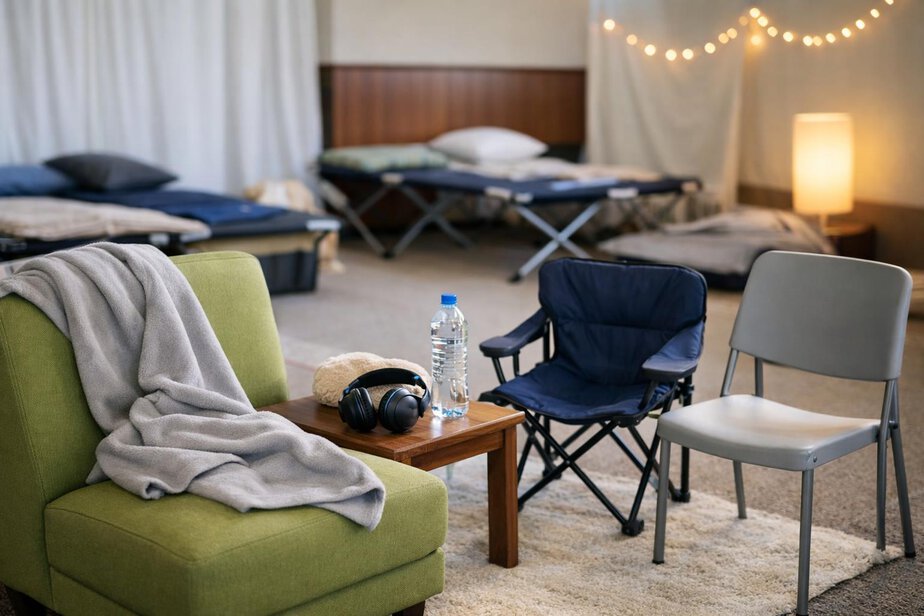
Evacuation centres, community halls, relief centres and temporary accommodation can all be difficult for someone who is sensitive to noise, light, crowding or unfamiliar routines. Planning ahead can reduce the shock of arriving somewhere new.
If you can, identify in advance the type of place the person may use if they cannot stay at home. This may include a relative’s house, a friend’s home, a motel arranged through official channels, or an evacuation centre. The exact options will depend on the emergency and local arrangements.
When thinking about an evacuation centre, ask practical questions such as:
- Is there likely to be a quieter area?
- Will there be a place to sit away from the main flow of people?
- Can the person keep their headphones or comfort items with them?
- How will food, medication and toileting needs be managed?
- Is there a way to reduce exposure to noise, waiting lines or bright lighting?
Quiet areas may not always be available, but identifying them where possible can help with planning. If the person needs a break, one trusted adult should stay aware of where they are and how to bring them back into the main space when ready. In some situations, a car, shaded outdoor area or quieter room may be easier than the busiest part of the centre.
Plan for the first hour as carefully as the whole day. For many autistic or sensory-sensitive people, the arrival period is when overload is most likely.
It may also help to rehearse what happens on arrival: who speaks first, where to go, what to show, and where the person can sit. If the person is likely to become non-verbal or shut down, think ahead about how to keep communication simple and respectful.
Handle behaviour, distress and safety with care
During a crisis, distress can look different from person to person. Some autistic people may become quiet and withdrawn. Others may pace, repeat words, cover their ears, resist touch or attempt to leave a noisy area. These responses are often signs of overload, fear or confusion, not bad behaviour.
The most helpful response is usually to reduce demands, lower sensory input and use familiar supports. Speak calmly. Use short sentences. Give one instruction at a time. Offer choices only if the person can process them. Keep physical contact to what the person accepts and what is necessary for safety.
Where possible, avoid restraint. Do not use restraint unless it is required to prevent immediate serious harm, and only within the limits of lawful and appropriate practice. Families should not try to restrain someone as a first response to distress. Instead, focus on moving away from the trigger, reducing noise, and using known calming strategies.
It may help to remember that a person who appears unable to cooperate may actually be overloaded and unable to process what is being asked. Patience can be a safety tool. So can planning.
Review the plan regularly and keep it realistic
An emergency plan should not sit untouched in a drawer. Families should review it regularly and update it when routines, medications, communication methods, carers, living arrangements or support needs change. Children grow, teenagers gain new skills, and adults may develop different coping strategies over time. The plan should change with the person.
When reviewing the plan, check:
- whether the visual steps still make sense
- whether the communication card is current
- whether the medications and contact details are still correct
- whether comfort items still help
- whether the evacuation route still works
- whether the person’s sensory needs have changed
It can also help to have a backup plan. For example, if the preferred support person is away, who else knows the routine? If the person cannot take their usual comfort item, what is the next best option? If the usual evacuation place is not available, what is the alternative?
Families may also wish to talk with a healthcare professional, support team or local emergency service about individual planning. A general article can only go so far. Personal supports, disability services, schools and local emergency arrangements may be able to help shape a plan that fits the person’s real life.
Conclusion: make safety familiar before it is urgent
The strongest emergency plan is one that feels familiar before an emergency happens. For autistic and sensory-sensitive people, that usually means clear visuals, predictable steps, respectful communication, sensory supports, and a family that understands the person’s needs without judgement. A calm plan will not remove every challenge, but it can reduce panic, improve communication and make it easier to act when time matters.
Start small. Ask the person what helps. Make the plan visual. Practise gently. Pack the kit. Share the communication card. Think about alarms, lights, unfamiliar responders and evacuation centres before you need them. Most importantly, keep the plan person-centred and realistic.
Before publication or local use, verify facts, services and procedures with current emergency guidance, healthcare professionals and local arrangements in your area.
FireRescue Training Hub
Access practical fire and emergency study support resources, downloads, checklists, audio guides, and member-only course content.
- Course library
- PDF downloads
- Audio guides
- Checklists
Study support only. Not accredited training or a replacement for workplace procedures.
About the author and safety review
Ken Walker
Former Station Officer and fire service educator
Former career firefighter with extensive career and volunteer fire service experience.
Qualifications: Associate Diploma of Applied Science in Fire Technology; Institute of Fire Engineers studies.
Author profilehttps://www.firerescue.com.au/about-us/