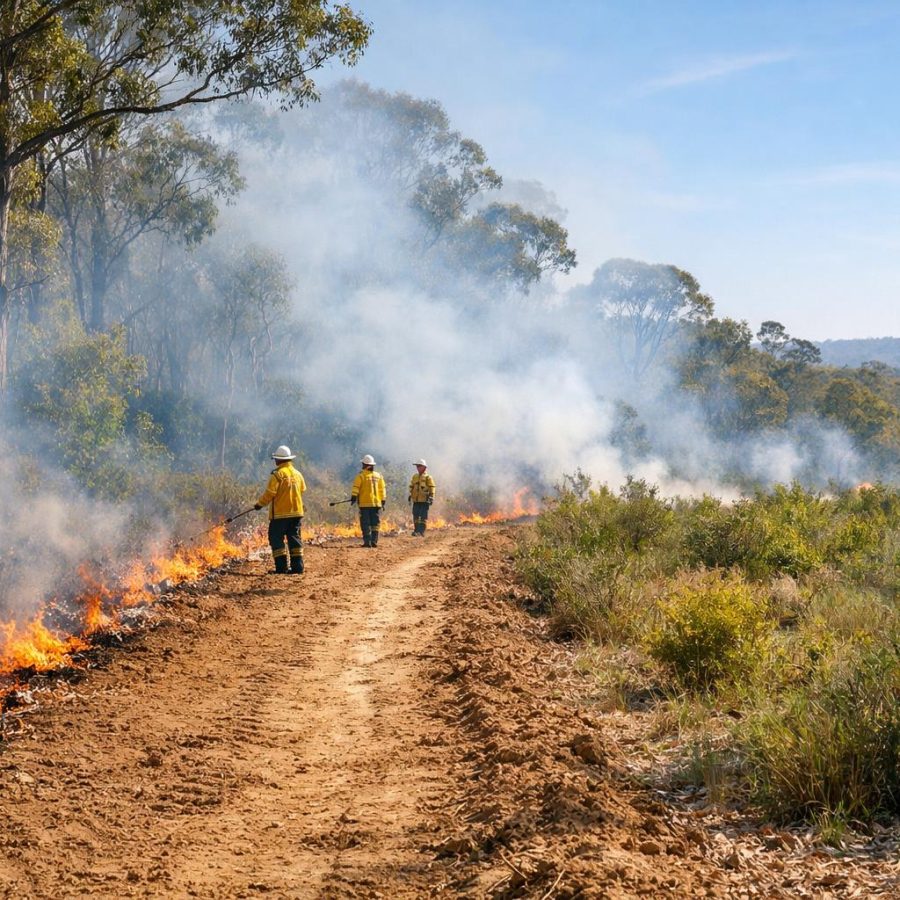
Protect People and Assets — Threat Assessment, Protective Action and Defensible Property Decisions
Protect people and assets during wildfire operations by assessing who and what may be threatened, applying protective procedures under direction, controlling access to hazardous locations and monitoring safety as conditions change. This stage is about disciplined judgement, clear priorities and practical support for the wider wildfire response.
Part 4 refresher progress
Mark each section as refreshed while you work through the people-and-assets protection process.
By the end of Part 4, you should be able to:
Explain how crews assess the number, location and safety of people and assets in a threatened area.
Describe how protective procedures are implemented under direction to protect people in the path of wildfire.
Recognise the need to control access to hazardous locations in line with organisational procedures.
Understand property defensibility, occupier assistance, safety monitoring and post-fire checking/reporting.
Assess the people and assets at risk
As far as conditions allow, crews determine and assess the number, location and safety of people and assets in the threatened area.
Start with the threat picture
Protect people and assets during wildfire operations by first building a clear threat picture. The course places this step before protective action because crews need to understand what may be exposed. Therefore, the assessment begins with people, then expands to assets that may be affected by the wildfire.
The course wording is deliberate: “as far as conditions allow”. This matters. Crews work inside a changing operational environment. They gather and assess information where it is safe and practical to do so. The task is not to force certainty where conditions do not support it. Instead, the crew should form the best available picture and keep it current.
People remain the first priority
The assessment considers the number of people, their location and their safety. This keeps the response focused on immediate human consequences. It also helps the crew understand where protective action may be needed. A threatened area may include residents, visitors, workers or other people who require consideration within the wider operational plan.
Assets are also assessed. These may include properties, structures, infrastructure or other items that require protection within the incident priorities. However, the work stays grounded in direction and procedure. The crew’s role is to gather, assess, act as directed and report relevant information clearly.
A good threat assessment answers three practical questions: who may be exposed, what assets may be exposed and what can be safely confirmed right now?
Implement protective procedures under direction
Appropriate protective procedures are implemented, under direction, to protect people in the path of a wildfire.
Protection is purposeful, not improvised
Once the threat picture is clearer, the response may move into protective action. The course states that protective procedures are implemented under direction. This protects discipline on the fireground. It also keeps local action connected to the wider operational plan.
The knowledge evidence for this course identifies protective procedures such as alerts and warnings, in-situ protection and relocation. These are not casual decisions. They sit inside organisational procedures and operational direction. Therefore, the crew member supports the assigned protective action rather than creating a separate plan.
Direction keeps protective action aligned
Protective work may involve assisting people who are directly threatened. It may also involve helping apply protective procedures already chosen by the operational structure. In either case, the crew needs to remain clear about the instruction, the purpose and the limits of the task.
This is where communication matters. A crew member may need to confirm instructions, report changes or advise that conditions have shifted. However, the article should never lose its central point: protective action must be implemented under direction and with the safety of people at the centre.
Protective procedures should be practical, directed and clearly connected to the safety of people in the threatened area.
Alerts and warnings
Protective communication may form part of the broader process used to support people at risk.
In-situ protection
Some protective actions may involve supporting people in place, depending on direction and conditions.
Relocation
Where directed, movement away from danger may form part of the protective procedure.
Best practice
Confirm the protective task, understand who it supports and keep action aligned with the direction given.
Common mistake
Trying to solve a people-protection problem alone without staying inside the direction and communication structure.
Control access to hazardous locations
Access by the public and personnel to hazardous locations is controlled, as directed, in accordance with organisational procedures.
Hazardous access can create new problems
Wildfire operations can become more difficult when people enter locations that are already unsafe. Therefore, the course includes access control as part of protecting people and assets. This applies to both the public and personnel where hazardous locations are involved.
Access control is not a separate issue from safety. It helps prevent further exposure. It may also protect the working area so crews can operate with fewer avoidable interruptions. The direction to control access must follow organisational procedures. That keeps the action consistent and accountable.
Control access as directed
The crew member does not invent restrictions independently. Instead, access is controlled as directed. This wording matters because the task may vary by incident, hazard and operational arrangement. A crew needs to understand what access control is required, where it applies and how it should be managed.
The wider lesson is clear. Protecting people and assets is not only about what happens inside the threatened area. It also includes preventing additional people from entering danger. As a result, good access control supports both public safety and firefighter safety.
If a location is hazardous, controlling access as directed can stop the incident from becoming more complex.
Consider property defensibility and occupier assistance
The defensibility of property and assets is considered and, where appropriate, assistance is provided to help occupiers.
Defensibility supports realistic decisions
Protect people and assets during wildfire operations by considering what can reasonably be defended within the incident conditions and direction given. The course specifically requires the defensibility of property and assets to be considered. This is important because not every asset sits in the same position, under the same exposure or with the same practical protection options.
Defensibility is a decision-support idea. It helps the crew understand whether assistance may be appropriate and whether the wider response can realistically support protective work. The course does not ask crew members to make unsupported guarantees. Instead, it asks them to consider defensibility and then act appropriately within the operational structure.
Assist occupiers where appropriate
If assistance is appropriate, occupiers may be helped. This wording also deserves care. Assistance is not automatic in every case. It depends on direction, safety, conditions and organisational requirements. Therefore, the crew member remains practical and disciplined.
This part of the response also requires good communication. Crews may need to understand what occupiers need, what hazards are present and what can be safely supported. The best assistance is controlled, useful and aligned with the wider protective action.
Property defensibility is considered carefully. Assistance to occupiers is provided only where it is appropriate and operationally supported.
Defensibility refresher check
Monitor safety during the incident and report after the fire
The safety of people and assets in the threatened area is monitored, then the safety of people and security of assets is checked and reported after the fire.
Monitoring keeps the threat picture alive
Threat assessment is not a one-time action. Conditions may change. People may move. Access may alter. Fire behaviour may affect the threatened area differently over time. Therefore, the course requires the safety of people and assets in the threatened area to be monitored.
Monitoring means crews remain attentive to the protective situation after the initial assessment. They notice whether safety conditions shift and they continue to support the operational picture. This helps prevent outdated assumptions from guiding later action.
Post-fire checking closes the protection loop
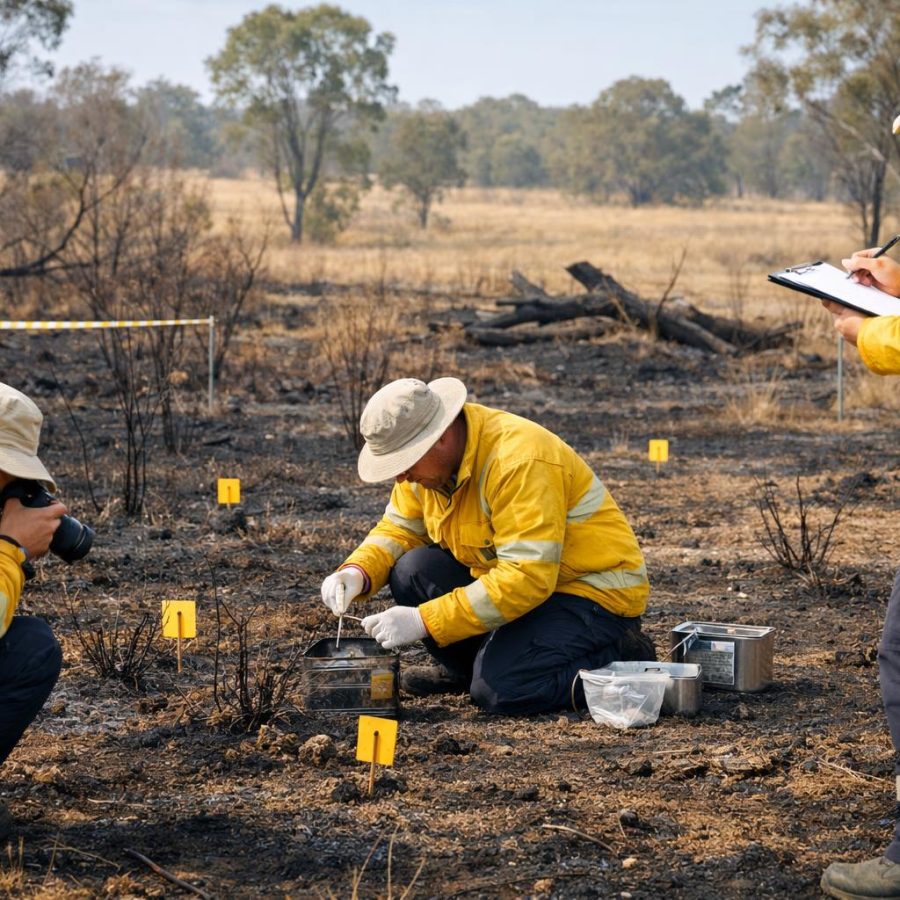
After the fire, the safety of people and the security of assets in the area are checked and reported. This is a vital completion step. Protective work does not end merely because active flame has passed. The course expects a final check and a report.
This final step shows the disciplined structure of Suppress wildfire. Receive, prepare, proceed, protect, combat, mop up and recover are all linked. Here, Part 4 finishes by reporting on the condition of people and assets after the immediate threat has changed. As a result, the wider response can transition with better information.
Monitor
Keep the safety of people and assets under review while the threat remains active.
Check
After the fire, check the safety of people and the security of assets in the area.
Report
Pass on the post-fire safety and security findings through the required pathway.
WILDFIRE READY focus: D
Part 4 activates the letter D in the WILDFIRE READY Cycle: Defend people, property and threatened assets.
Determine who and what is threatened
Assess the number, location and safety of people and assets as far as conditions allow.
Direct protective action
Implement protective procedures under direction to support people in the path of wildfire.
Defensibility and duty of care
Consider property defensibility, assist occupiers where appropriate and keep safety monitoring active.
Part 4 brings the response focus directly onto people, property and assets. It is a practical protection stage. Crews assess what may be threatened, act under direction, control access where hazards exist, consider defensibility, assist where appropriate and report safety outcomes.
This stage also prepares the way for Part 5. Once people and assets are considered within the threatened area, the series moves deeper into active wildfire combat, briefings, safety zones, tactics, equipment and fire behaviour. The protection work in Part 4 helps shape the context for those next operational decisions.
Scenario: People and assets are threatened
A crew arrives in an area where a wildfire may threaten residents, several properties and a hazardous access point. Which action best matches the Part 4 process?
Part 4 refresher check
Choose the best answer for each question.
1. What must be determined and assessed in the threatened area as far as conditions allow?
2. Protective procedures to protect people in the path of wildfire are implemented:
3. After the fire, what must be checked and reported?
Say the Part 4 sequence out loud
Use this short drill to reinforce the protection sequence before moving into Part 5.
- Assess the number, location and safety of people and assets as far as conditions allow.
- Implement protective procedures under direction.
- Control public and personnel access to hazardous locations as directed.
- Consider the defensibility of property and assets.
- Provide occupier assistance where appropriate.
- Monitor the safety of people and assets in the threatened area.
- After the fire, check and report the safety of people and the security of assets.
FireRescue Training Hub
Access practical fire and emergency study support resources, downloads, checklists, audio guides, and member-only course content.
- Course library
- PDF downloads
- Audio guides
- Checklists
Study support only. Not accredited training or a replacement for workplace procedures.
About the author and safety review
Ken Walker
Former Station Officer and fire service educator
Former career firefighter with extensive career and volunteer fire service experience.
Qualifications: Associate Diploma of Applied Science in Fire Technology; Institute of Fire Engineers studies.
Author profilehttps://www.firerescue.com.au/about-us/