The safest bushfire decision is usually made before the fire starts. This guide explains when to leave early, how to build a practical bushfire survival plan, what staying to defend really involves, and the last-resort actions to consider if it becomes unsafe to leave.
Audience: Public first
Australia-wide: Check local agency advice
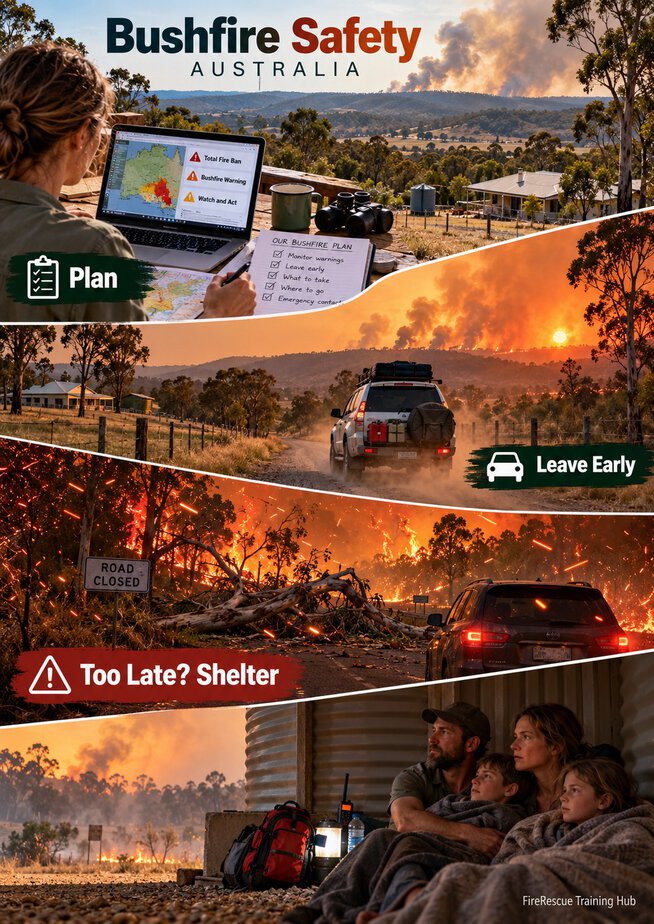
Leaving early is the safest option. Do not wait until you can see flames, smell smoke or receive an Emergency Warning if your plan already tells you to leave. Leaving late can place you on roads at the most dangerous time or leave you unable to get out at all.
This guide replaces older wording that could make “leave” and “stay and defend” sound like equally safe choices. Current public guidance strongly emphasises planning ahead and leaving early.
It also reflects the current Australian Fire Danger Rating System, current warning arrangements including AusAlert, contemporary advice for people needing extra assistance, and clearer last-resort guidance if leaving is no longer safe.
Why leaving early is the safest option
Bushfires can move quickly and conditions can change faster than people expect. Smoke can reduce visibility, embers can start new fires ahead of the main front, trees and powerlines may block roads, and traffic can build as many people try to leave at once.
CFA currently advises people in high fire-risk areas to leave the night before or by 10 am on days rated Extreme or Catastrophic. NSW RFS also identifies leaving early as the safest option. SA CFS advises that leaving early means leaving before your escape route becomes blocked and that on Extreme or Catastrophic days it is not considered safe to wait until a fire starts.
Leaving early means going to a safer, lower-risk location before a fire threatens your area. It does not mean packing the car after you smell smoke or deciding to leave when flames become visible.
- Deciding your trigger before the day arrives.
- Leaving before fire is in your immediate area.
- Travelling while roads and visibility are still safer.
- Going to a planned location with lower fire risk.
- Taking essential medication, documents, supplies and animals with you.
- Waiting for flames or thick smoke.
- Waiting for an Emergency Warning after your own trigger has been reached.
- Finishing every last property job before leaving.
- Assuming emergency services will personally tell you when to go.
- Driving into smoke or attempting to pass through a fire area.
Decide your trigger before the emergency
A trigger is the pre-decided point at which you put your plan into action. It reduces the temptation to “wait and see” while conditions become worse.
Your trigger should take account of local fire-agency advice, the Fire Danger Rating, weather, household circumstances, travel time and individual risk. It needs to be simple enough that everyone in the household understands it.
Examples of triggers that may form part of a plan:
- An Extreme or Catastrophic Fire Danger Rating.
- Hot, dry and windy conditions in a high-risk area.
- A fire starting within a pre-decided area around your community.
- A Watch and Act warning affecting your area, if you have not already left.
- Loss of power, water, road access or communications that makes your plan less viable.
- An earlier trigger because someone needs extra time or assistance.
Know the national Fire Danger Rating actions
Moderate: Plan and prepare. High: Be ready to act. Extreme: Take action now to protect life and property. Catastrophic: For your survival, leave bushfire risk areas.
Build a bushfire survival plan that works in the real world
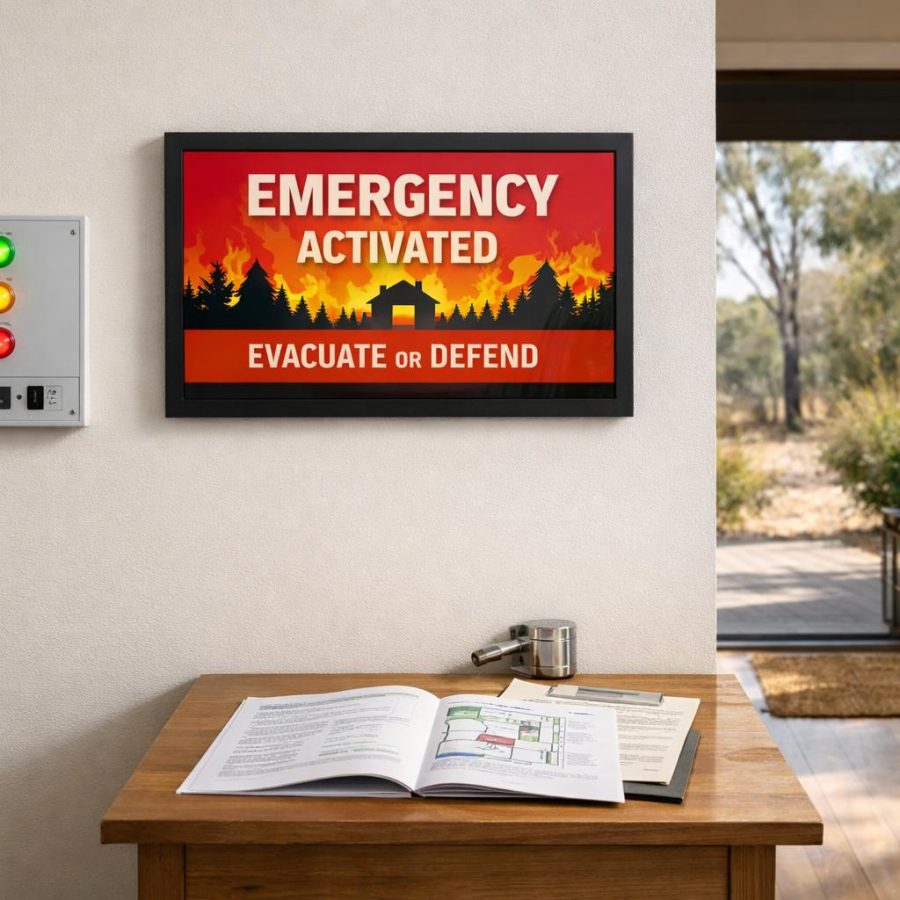
A useful plan is more than “we will leave if there is a fire”. Under stress, simple decisions can become difficult. A written and practised plan gives the household fewer decisions to make when conditions are deteriorating.
1. When?
Know your trigger and the latest time you intend to leave.
2. Where?
Choose a destination in a lower-risk area and a backup location.
3. How?
Plan transport, fuel, routes and a backup if the main route is closed.
4. Who?
Include children, visitors, neighbours needing help and animals.
What should you take?
- Essential medicines, prescriptions and medical aids.
- Identification, insurance details and important contacts.
- Phone, chargers and power banks.
- Drinking water and basic food.
- Sturdy clothing and footwear.
- Pet carriers, leads, water, food and medications.
- Essential items for babies, older people or people with disability.
- Printed information in case phones or internet access fail.
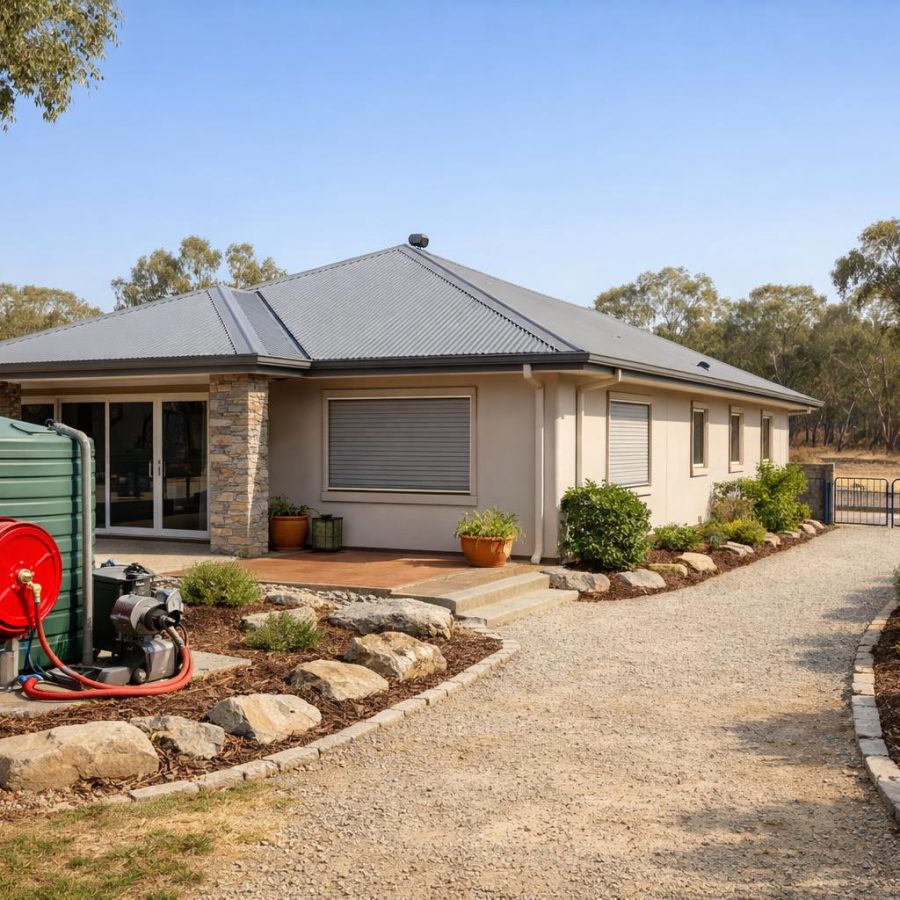
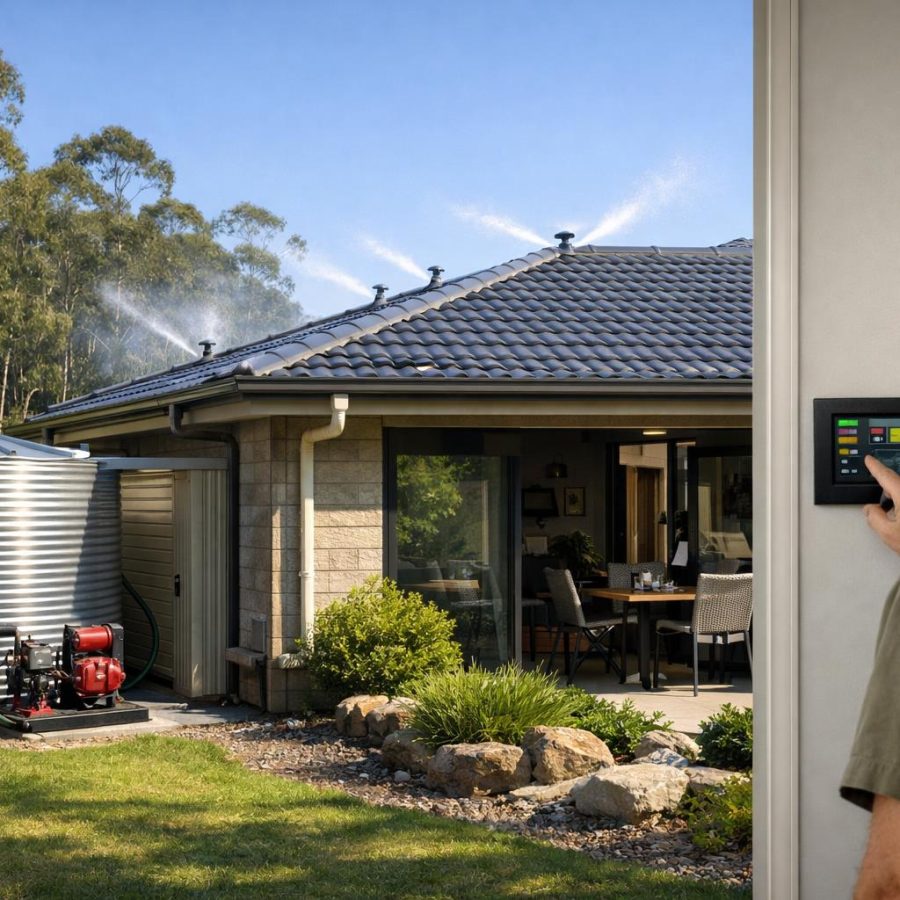
A well-prepared property still matters even when your plan is to leave early. Reducing combustible material and preparing the home can improve resilience to ember attack, but preparation should never become a reason to delay leaving once your trigger is reached.
Understand warnings — but do not wait for one
Australia’s Australian Warning System uses three principal warning levels: Advice, Watch and Act, and Emergency Warning. Always read or listen to the full warning because the specific call to action matters.
AusAlert became ready for use from 1 October 2026. It uses cell-broadcast technology to send emergency messages to compatible devices in affected areas. State and territory agencies may phase its use alongside existing warning systems.
Your bushfire plan may require you to leave well before a formal warning is issued. Use multiple information sources where possible, including your state or territory emergency website or app, fire-service information, Bureau of Meteorology forecasts, ABC Local Radio and AusAlert when issued.
What about staying and defending?
Australian jurisdictions do not all present this decision in exactly the same way. Leaving early is the safest general public option, while some agencies still provide detailed stay-and-defend planning for suitable, well-prepared households.
Staying to defend is not simply “remaining at home”.
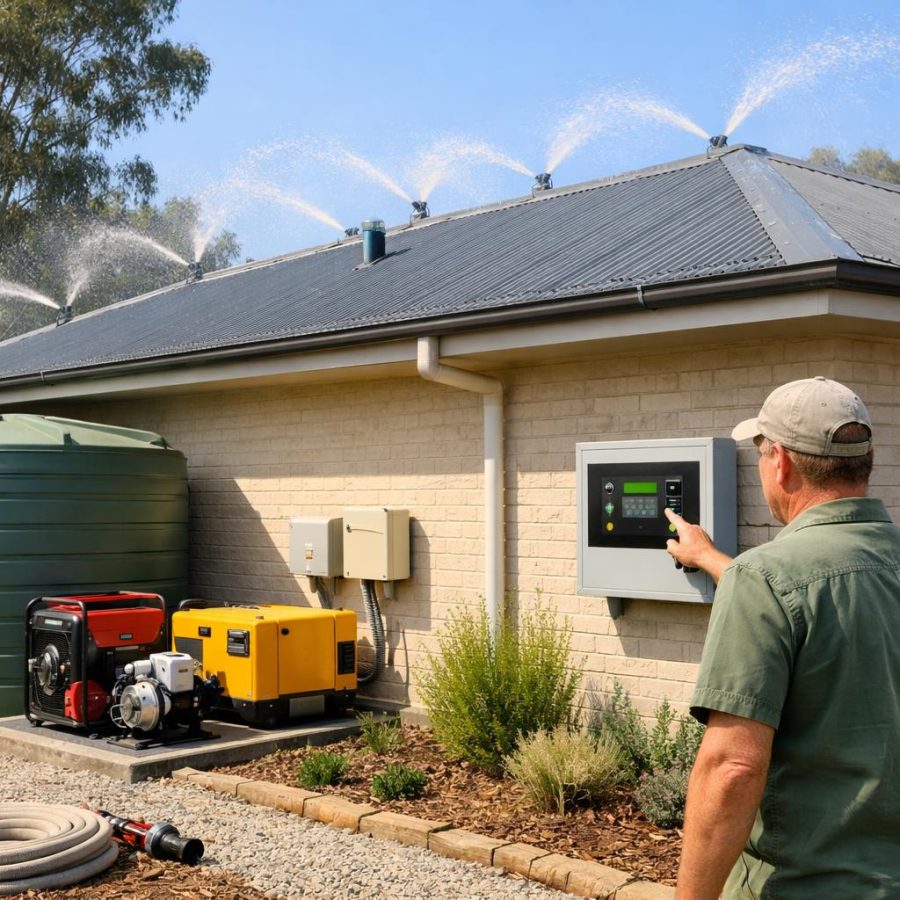
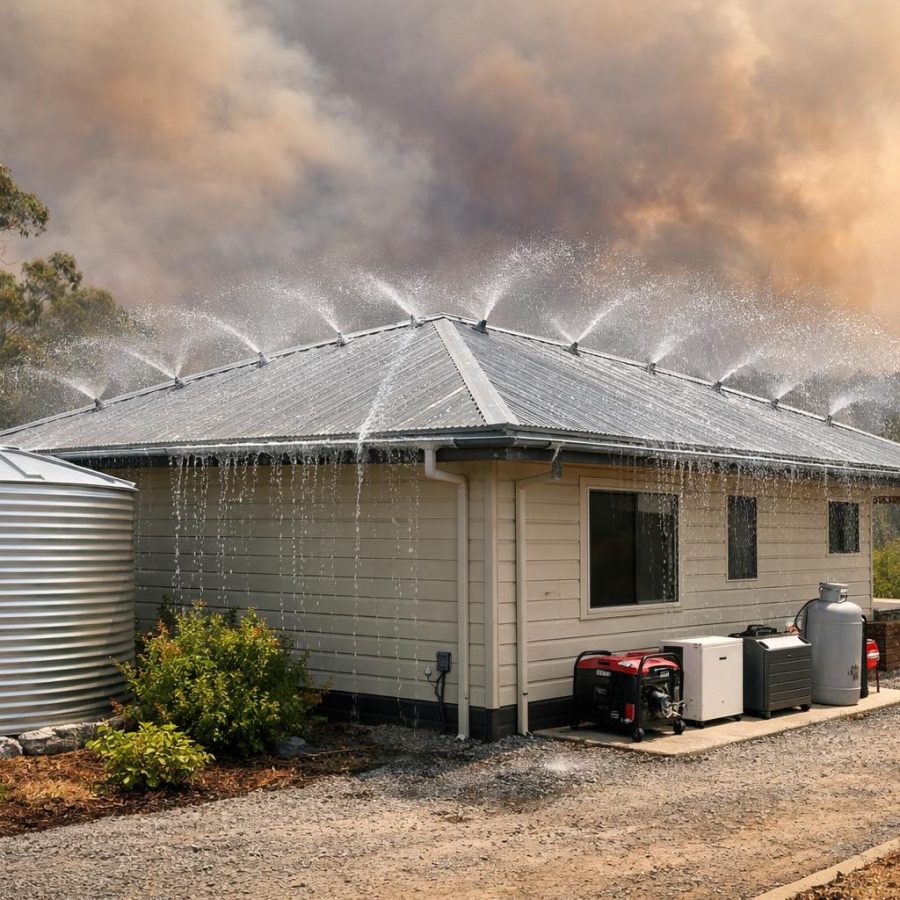
It can involve prolonged physical work in extreme heat, smoke, strong winds and ember attack while power, water and communications may fail. A person may need to continue monitoring and extinguishing spot fires for hours after the main fire front has passed.
CFA states that people should never stay to defend on Catastrophic days and advises leaving the night before or by 10 am. NSW RFS and SA CFS also provide detailed planning information while placing strong emphasis on leaving early in dangerous conditions.
A general internet article cannot determine whether a particular property, water supply, access route, building or household is suitable to defend. Anyone considering that strategy should use the current assessment and planning material from their own fire authority.
Who should strongly favour leaving early?
- children, older or frail people;
- people with disability, mobility limitations or medical conditions;
- people who need extra time to understand, decide or move;
- anyone unable to safely undertake prolonged physical work;
- households uncertain about their property’s bushfire risk or preparation;
- households without the water, equipment or building preparation required by their local guidance;
- properties with difficult or limited access; and
- anyone who has doubts about whether they can safely carry out the plan.
If it becomes too late to leave
The safest plan is to avoid reaching this point. However, a road may be blocked, a vehicle may fail or fire may arrive faster than expected.
Do not attempt a late evacuation through fire, heavy smoke or an unsafe road.
If the fire is already close and your route is unsafe, leaving may expose you to greater danger. Seek the best available shelter and follow current emergency-service advice.
Last-resort survival locations vary by jurisdiction and circumstance. They can include a well-prepared building, approved private bushfire shelter, designated community refuge or safer place, a vehicle in a clearer area, burnt ground or another substantially lower-fuel location. Every option can carry serious risk and none guarantees survival.
Learn the official last-resort guidance for your local area before fire season. Do not assume a Neighbourhood Safer Place will have emergency personnel, water, toilets or food available.
People who need extra time or help
A plan must be realistic for the people who will actually use it. Someone who needs help transferring into a vehicle, collecting medical equipment, moving animals or understanding rapidly changing information may need to leave much earlier than another household.
Decide who will help
Nominate a primary helper and a backup. Do not rely on one person being available.
Leave earlier
Allow extra time for mobility, medications, medical equipment, children and animals.
Practise the plan
A simple practice can reveal problems with vehicles, access, communication or packing before an emergency.
Pets, livestock and animals
Animals can add significant time to evacuation. Include them in the plan from the beginning.
- Keep carriers, leads and identification accessible.
- Know which evacuation destination accepts animals.
- Plan transport for horses and livestock well before dangerous conditions arrive.
- Do not put yourself in danger trying to catch an animal after your safe departure time has passed.
- Have a backup person or location if your first animal plan fails.
Bushfire smoke is also a health hazard
Bushfire smoke contains fine particles and gases that can irritate the eyes and airways and worsen existing heart or lung conditions. Children, older adults, pregnant people and people with heart or lung disease may be more sensitive.
When smoke is present but fire is not directly threatening you, official health advice may include reducing strenuous outdoor activity, keeping doors and windows closed, using air conditioning on recirculate where suitable and following personal medical treatment plans.
A properly fitted P2 or N95 respirator can reduce inhalation of some fine particles. It does not filter gases such as carbon monoxide and does not make it safe to remain in a dangerous fire environment.
What firefighters want the community to understand
Operational perspective
- Fire crews may be dealing with multiple incidents at once.
- A fire truck cannot be guaranteed for every property.
- Roads need to remain usable for emergency vehicles as well as the public.
- Late evacuations can expose civilians and responders to additional risk.
- Conditions on the fireground can change before a public warning catches up with the situation.
From a firefighting perspective, one of the best safety decisions a household can make is often made hours before crews are dispatched: leave while conditions still allow time, visibility and route choices.
Frequently asked questions
When is the safest time to leave?
Before a fire threatens your area. In high-risk locations, local authorities may advise leaving the night before or early in the day when Extreme or Catastrophic conditions are forecast.
Should I wait for an Emergency Warning?
No. If your plan says it is time to leave, act on it. Fire can develop quickly and warnings may not reach everyone before conditions become dangerous.
Can I stay and defend?
Guidance varies. Some agencies provide detailed stay-and-defend planning for suitable and highly prepared households, but leaving early remains the safest option. Catastrophic conditions may make defending unsafe regardless of preparation.
If I prepare my home well, can I rely on it to survive?
No. Preparation can reduce risk and improve resilience, but no preparation can guarantee a home will survive a bushfire.
What if it is already too dangerous to drive away?
Do not drive through fire or heavy smoke simply because your original plan was to leave. If your route is no longer safe, seek the best available shelter and follow current emergency-service instructions.
The key message
Know your risk. Decide your trigger. Know where you will go. Prepare the people and animals who depend on you. Check official information. And when your trigger is reached, leave early.
If the plan fails and it becomes too late to leave, the objective changes from protecting property to surviving the immediate fire impact. Last-resort options carry serious risk and should never be treated as a substitute for early planning.
- CFA — When to leave
- CFA — How to defend your property
- CFA — Last-resort options
- NSW RFS — Plan and prepare
- SA CFS — Planning to leave early
- Bureau of Meteorology — Fire weather and Fire Danger Ratings
- AusAlert — National emergency warning system
- Victorian Department of Health — Bushfires and public health
Ken Walker — former Station Officer and fire-service educator with career and volunteer firefighting experience.
This guide combines current public-facing bushfire guidance with an operational firefighting perspective. It is reviewed against official sources and updated when significant safety guidance changes.
Safety disclaimer
This article provides general educational information for an Australian audience. Bushfire risk, buildings, roads and emergency arrangements differ between locations. It does not determine whether a property is safe to defend and does not replace current advice from your state or territory fire service, police or emergency authorities. During an emergency, follow official warnings and directions. If life or property is in immediate danger, call Triple Zero (000).
FireRescue Training Hub
Access practical fire and emergency study support resources, downloads, checklists, audio guides, and member-only course content.
- Course library
- PDF downloads
- Audio guides
- Checklists
Study support only. Not accredited training or a replacement for workplace procedures.
About the author and safety review
Ken Walker
Former Station Officer and fire service educator
Former career firefighter with extensive career and volunteer fire service experience.
Qualifications: Associate Diploma of Applied Science in Fire Technology; Institute of Fire Engineers studies.
Author profilehttps://www.firerescue.com.au/about-us/