BBQ fires in Australia are often preventable. Most happen because of gas leaks, poor maintenance, grease build-up, unsafe positioning or cooking outdoors when fire conditions are restricted.
What this guide covers
This guide explains how LPG barbecue fires and gas leaks can happen, how to inspect equipment before use, how to test for leaks with soapy water, and how to reduce the chance of flare-ups and grease fires. It also covers cylinder storage, compatible fittings, and the way fire restrictions can affect outdoor cooking in Victoria and elsewhere in Australia.
It is written for homeowners, renters, campers, caravan owners and families using outdoor gas barbecues. Where rules differ by state or territory, the guidance below explains the general safety approach and points readers back to the relevant local fire authority.
How LPG barbecue fires and gas leaks occur
LPG barbecues are popular because they are convenient and fast to light, but the same fuel that makes them useful can become dangerous when something is loose, worn or damaged. LPG is flammable, and a small leak can create a fire risk long before anyone sees flames.
Many barbecue incidents begin with a simple fault: a cracked hose, a regulator that is no longer seating properly, a loose connection, an O-ring that has perished, or a cylinder valve that has not been closed correctly. A leak may be slow and hard to notice at first, or it may release enough gas to create a sudden ignition risk when the BBQ is lit.
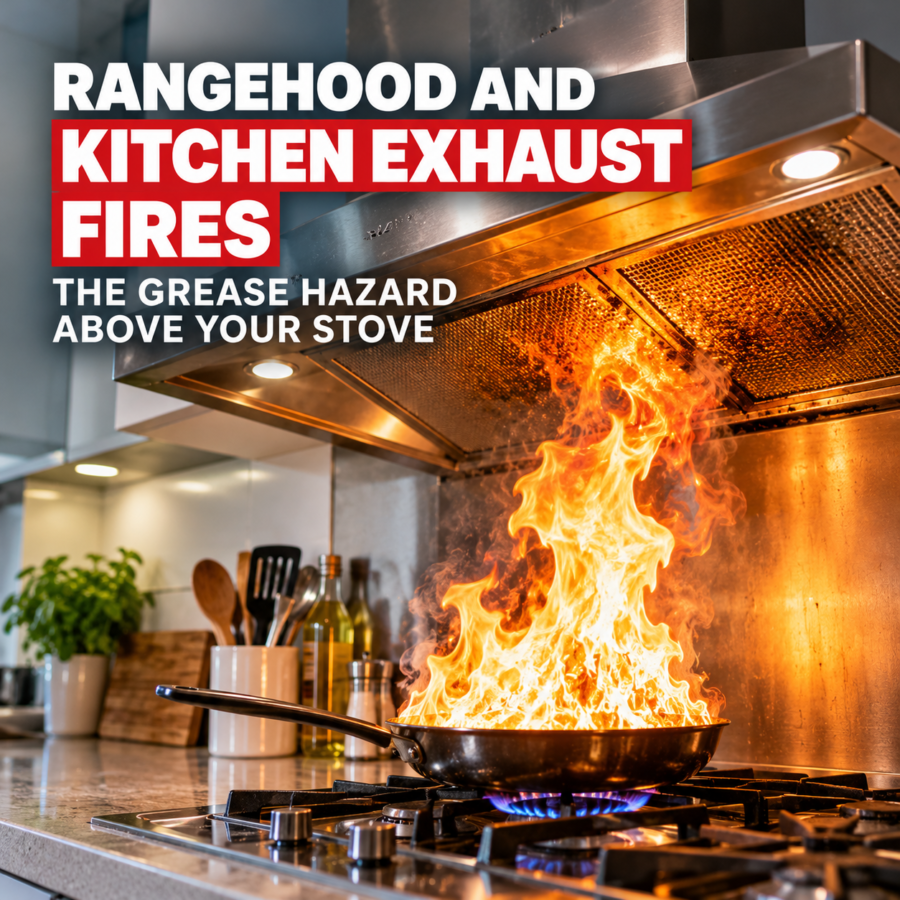
Fires can also start when grease accumulates under the grills or around the burners. Fat and food residues can ignite, then spread flame to nearby surfaces, utensils or combustible items left too close to the barbecue. Even when there is no gas leak, grease build-up can turn an ordinary cooking session into a dangerous flare-up.
Common causes of barbecue gas leaks and fires
| Hazard | Why it is dangerous | What to do |
|---|---|---|
| Damaged hose | Cracks, brittleness or wear can let LPG escape. | Do not use the BBQ until the hose is checked and replaced by a suitable person if needed. |
| Faulty regulator | A damaged or poorly fitting regulator can allow leaks or unstable gas flow. | Inspect it before use and follow manufacturer instructions. |
| Leaking connection | Loose or deteriorated connections can release gas near ignition points. | Test with soapy water before lighting. |
| Grease accumulation | Fat and residue can ignite and cause flare-ups or fire spread. | Clean the barbecue regularly after it has cooled. |
| Unsuitable location | Wind, clutter, walls, overhangs or enclosed spaces increase risk. | Move the BBQ to a stable, well-ventilated outdoor area. |
These are common risk factors, not the only ones. Always follow the barbecue manufacturer’s instructions and have gas fitting work done only by appropriately qualified people.
Understanding LPG and why gas can build up dangerously
LPG is stored as a pressurised liquid in a cylinder and turns into vapour when released for use. That vapour can ignite easily if it meets a flame, spark or hot surface. The main danger is not just the gas itself, but where it goes after escaping.
If LPG leaks outdoors in open air, it may disperse more quickly. In low, enclosed or poorly ventilated spaces, it can collect and remain there. That is why portable LPG cylinders should not be used indoors or in confined spaces. Garages, sheds, tents, caravans, enclosed patios and some balconies can be unsafe because gas may accumulate and create a fire or explosion risk.
LPG safety also matters when you are storing cylinders. Cylinders should be upright, in a suitable outdoor location and away from heat, flames and other ignition sources. If a cylinder is exposed to heat from the BBQ itself, or from fire nearby, the risk increases quickly.
Inspecting cylinders, hoses, regulators and connections before use
A quick pre-use inspection can prevent many barbecue problems. Make it part of your routine before every cook-up, not just at the start of summer.
Look for visible damage
- Check the cylinder for dents, corrosion, rust, obvious damage or signs that it has been dropped or mishandled.
- Inspect the hose for cracks, stiffness, abrasion, kinks or areas that look dry and deteriorated.
- Look at the regulator for damage, loose fittings or signs it no longer seats properly.
- Check the O-ring or sealing component where the connection joins, if your model uses one.
- Make sure all connections are clean, secure and assembled according to the barbecue and cylinder manufacturer instructions.
Check the age and condition of the cylinder
Cylinders should be tested and exchanged according to applicable requirements and service rules. Do not assume an old cylinder is safe simply because it still looks acceptable from the outside. If a cylinder is damaged, heavily corroded or overdue for required testing, it should not be used.
If you are unsure whether a cylinder, connector or fitting is compatible with your barbecue, do not force it. Confirm the correct match against the current appliance and cylinder instructions, and use an appropriate authorised exchange or service process.
How to do a soapy-water leak test
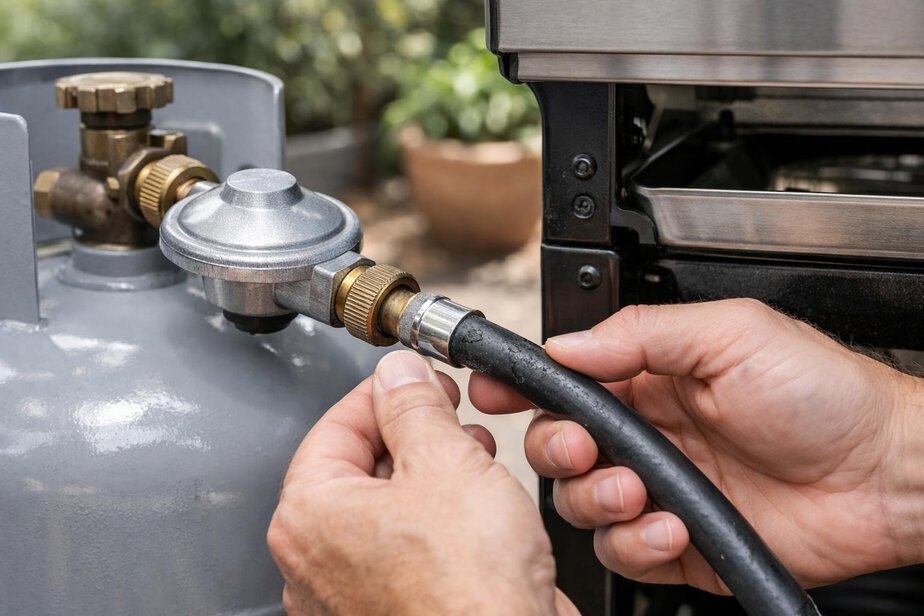
CFA guidance supports using soapy water to help identify gas escaping from connections. This is a simple test, but it must be done carefully and it does not replace a proper inspection.
- Set up the BBQ outdoors in a well-ventilated area with the burners off.
- Make sure there are no flames, cigarettes, lighters, hotplates or other ignition sources nearby.
- Connect the cylinder and fittings according to the manufacturer’s instructions.
- Apply a soapy-water solution to the hose connections, regulator joins and other exposed joints where leaks could occur.
- Watch closely for bubbles forming or growing at a connection. Bubbles can indicate gas escaping.
- If you see bubbling, or if you smell gas, stop and do not light the BBQ.
- Turn off the gas supply only if it is immediately safe, move people away from the area and arrange for the fault to be checked by a suitably qualified person.
Never use a match or lighter to test for leaks. Do not rely on smell alone, because a leak may be noticeable only in some conditions or may become more obvious after the gas has built up. If in doubt, assume there is a leak and keep clear.
What to do if gas is smelled or a leak is suspected
Gas smells near a barbecue should always be treated seriously. Do not ignore it, even if the BBQ has not yet been lit.
- Do not strike matches or use a lighter.
- Do not switch electrical appliances on or off in the area where gas may have accumulated.
- Keep children and pets away from the BBQ.
- If it is safe, turn off the cylinder valve without leaning over hot parts or reaching into flames.
- Move away and ventilate the area by simply allowing fresh air to disperse the gas.
- If there is fire, heavy leakage, or any immediate danger, evacuate and call Triple Zero (000).
It is also important not to restart a barbecue that has already shown signs of leaking until the problem has been properly checked and resolved. A persistent leak may be in the hose, regulator, valve, fitting or barbecue itself.
Safe BBQ positioning, ventilation and clearance
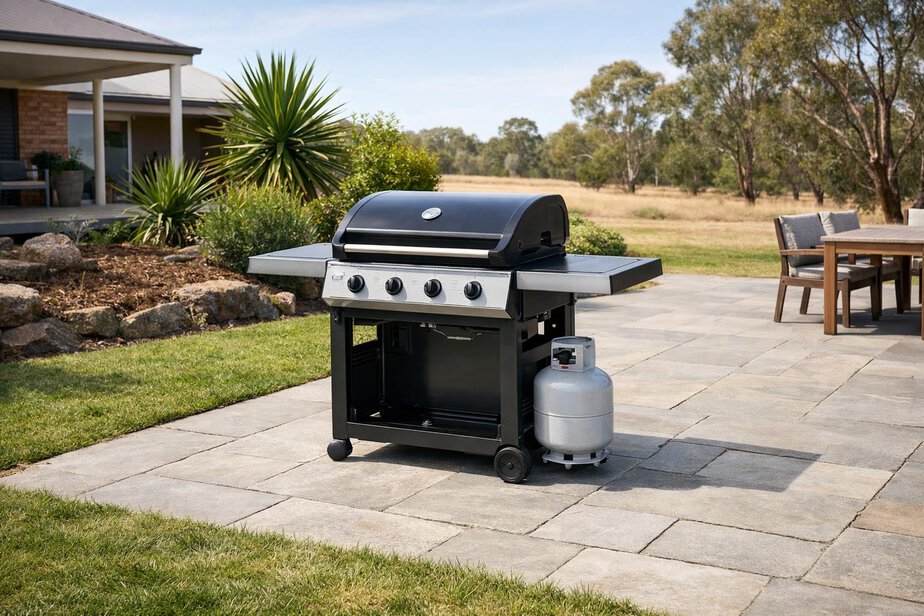
Place the barbecue on a stable, level surface and keep it away from combustible materials. This includes fences, timber railings, deck furniture, dry vegetation, paper, cardboard, fabric awnings, curtains and stored fuel containers.
Outdoor ventilation matters because LPG and heat both need room to disperse. A barbecue should be used in a properly ventilated outdoor area, not in a confined courtyard, garage or enclosed balcony. Good ventilation helps reduce gas build-up and lowers the chance that smoke, heat and combustion products will pool around the appliance.
Carbon monoxide is another reason to avoid enclosed or partially enclosed spaces. Gas appliances can produce dangerous combustion gases if they are used where ventilation is poor or where exhaust gases cannot escape. This risk applies even when the barbecue seems to be working normally.
Strong wind can also create problems. Wind may move flames unexpectedly, make cooking unstable, or extinguish burners on some appliances. If conditions are too windy to use the barbecue safely, postpone cooking rather than trying to improvise.
Grease and fat fires: prevention, cleaning and flare-ups
Flare-ups are brief flames caused by fat or marinade igniting on hot surfaces. They are different from a larger grease fire, which can spread and become difficult to control. Knowing the difference matters because the response should match the risk.
To reduce flare-ups and grease fires:
- Clean the grill, drip tray and internal surfaces regularly after the BBQ has cooled.
- Remove accumulated grease and fat before they build up.
- Trim excess fat from food where appropriate.
- Be careful with oily marinades and sugary sauces, which can ignite or burn quickly.
- Keep a close watch on cooking food and do not leave the BBQ unattended.
If a flare-up happens, stay calm and reduce the heat only if it is safe to do so. If flames become aggressive or persistent, shut down the BBQ if you can do so without exposing yourself to danger and move people back. Do not put yourself at risk trying to reach over flames or hot surfaces.
Never use water on burning cooking fat. Water can spread hot burning fat and make the situation worse. If fire spreads beyond a small flare-up, evacuate the area and call Triple Zero (000).
Correct shutdown, cooling and cylinder storage
A safe barbecue session does not end when the food comes off the grill. Correct shutdown reduces the chance of a delayed fire, gas leak or accidental ignition later.
- Turn off the burners according to the manufacturer’s instructions.
- When it is safe, close the cylinder valve.
- Leave the BBQ to cool before cleaning, moving or covering it.
- Do not disconnect the cylinder while the barbecue or nearby parts are still hot.
- Store the cylinder upright outdoors in a suitable ventilated location away from heat, flames and ignition sources.
If the barbecue has been used in a place where fire restrictions apply, make sure it is fully shut down and cooled before leaving it unattended. Keep matches, lighters and spare ignition sources away from the storage area as well.
Gas cylinder testing, exchange services and compatible fittings
Gas cylinders are not “fit and forget” items. They are subject to testing and condition checks, and they must be connected with compatible fittings. A cylinder that is damaged, corroded or overdue for required testing should not be used.
Australian households may encounter different connector types, including newer fittings on some cylinders and appliances. This makes compatibility checks important, especially if you have replaced an older BBQ, swapped cylinders, or bought a second-hand appliance. Do not force fittings together or use improvised adapters that are not specified for the equipment.
Never refill domestic LPG cylinders with automotive LPG. That is an important safety rule from Fire and Rescue NSW. If you are unsure about exchange, testing or the correct fitting type for your BBQ, seek advice from the relevant supplier or a qualified gas professional.
Victorian Fire Danger Period and Total Fire Ban requirements
Fire restrictions can change the way outdoor cooking is allowed. In Victoria, CFA guidance distinguishes between solid-fuel, gas and electric outdoor cookers, and the requirements can vary depending on whether a Fire Danger Period or Total Fire Ban is in place.
During a Victorian Total Fire Ban, solid-fuel outdoor cooking is prohibited. Gas or electric cooking may be permitted only if the applicable conditions are met. Those conditions can relate to construction, supervision, wind, surrounding clearance and the presence of firefighting water, depending on the current rules. Because those details can change, always verify the current CFA advice before cooking.
Outside Victoria, the rules are not the same everywhere. States and territories can have different fire ban systems, different wording, and different conditions for outdoor gas appliances. Do not assume that what is allowed in one place is allowed in another. Before lighting a BBQ on a hot, windy or high-risk day, check the current advice from the relevant fire authority.
Camping, caravan and apartment balcony considerations
Camping and caravan use adds extra risk because the barbecue may be used near tents, awnings, canvas, vehicles or other confined spaces. LPG appliances should not be used in tents, caravans, garages or similar enclosed areas. Gas and combustion products can build up where air movement is limited, creating both fire and carbon monoxide risks.
On a caravan site or campground, choose a stable outdoor cooking location and keep the appliance well away from soft furnishings, stored gas bottles and fabric structures. Make sure the barbecue is supervised throughout use, especially where children are nearby.
Apartment balconies need special caution. Even if the BBQ itself is designed for outdoor use, balcony use may be restricted by building rules, lease conditions, body corporate requirements or local safety rules. A balcony can also be too confined for safe ventilation. Confirm the building rules before use and ensure that the space is truly suitable for outdoor gas cooking.
Practical BBQ safety checklist
Before use
- Check the cylinder for damage and make sure it is upright and secure.
- Inspect hoses, regulators, O-rings and connections for wear or looseness.
- Use soapy water to test for leaks before lighting.
- Make sure the area is outdoor, well ventilated and clear of combustible materials.
- Check local fire restrictions before cooking.
During use
- Supervise the barbecue at all times.
- Keep children away from hot surfaces and fuel components.
- Watch for flare-ups and grease build-up.
- Do not use flammable liquids to start or accelerate cooking.
- If gas is smelled or flames behave abnormally, shut down only if it is immediately safe and move people away.
After use
- Turn off burners and the gas supply safely.
- Allow the BBQ to cool before cleaning or covering it.
- Remove grease and food residue after the barbecue has cooled.
- Store cylinders upright outdoors in a well-ventilated place.
- Do another inspection before the next use.
Frequently asked questions
Can I use a gas BBQ on a balcony?
Maybe, but not always. Apartment balconies may be restricted by building rules or other safety requirements, and the space must still allow safe ventilation. If the balcony is enclosed or poorly ventilated, it may not be suitable for LPG cooking.
What does a gas leak smell like?
LPG is commonly odorised so leaks are easier to detect, but you should not rely on smell alone. Use visual checks and soapy water testing, and treat any suspected leak seriously.
Should I test for leaks every time I cook?
A quick pre-use check is wise every time. At minimum, inspect the cylinder, hose, regulator and connections before use, and do a soapy-water test if anything seems loose, damaged or suspicious.
Can I use water on a BBQ grease fire?
No. Water can spread burning fat and make the fire worse. If a fire grows beyond a small flare-up, evacuate and call Triple Zero (000).
How do I know if my BBQ cylinder is safe?
Look for damage, corrosion, wear and compatibility problems, and make sure it is in date for required testing or exchange. If you are unsure, have it checked by a suitable provider.
What should I do if my burner keeps going out in the wind?
Stop using the BBQ and move to a more sheltered, safe outdoor position. Wind can affect flame stability and cooking performance, and strong gusts can create extra risk.
Can I keep a spare cylinder next to the BBQ?
Only if it is stored safely, upright and away from heat, flames and ignition sources. Follow the appliance and cylinder instructions and keep the storage area ventilated.
Do fire bans apply to gas barbecues?
Often they can. The exact rules depend on the state or territory and the type of fire restriction in force. Always check current local fire authority advice before lighting up.
Professional considerations for trained gas and fire safety personnel
From a professional risk perspective, barbecue incidents involve a mix of fuel release, ignition source control, user behaviour and the condition of the appliance assembly. LPG hazards can include gas accumulation, flash ignition, flame impingement on nearby components, cylinder heating, and secondary fire spread from grease or nearby combustibles.
A competent risk assessment for an outdoor gas cooking setup should consider the appliance condition, cylinder location, ventilation, surrounding fuel load, likely ignition sources, user supervision, access to a shutdown point, and whether the site layout encourages safe disengagement during an abnormal event. For example, a barbecue placed close to a wall, under an overhang, or beside combustible outdoor furniture presents a different risk profile from an appliance in an open, well-maintained yard.
Where a suspected leak, heat exposure or cylinder defect is identified, the safe approach is to isolate people from the area, avoid introducing ignition sources and arrange assessment by appropriately qualified personnel. This guide does not replace appliance-specific procedures, gas fitting work or site-specific emergency planning.
Conclusion
Most BBQ fires in Australia can be prevented with a careful pre-use inspection, safe outdoor placement, clean cooking surfaces and a disciplined shutdown routine. LPG cylinders, hoses and regulators deserve the same attention as the cooking itself, because a small fault can quickly become a serious fire risk.
If you smell gas, see bubbling at a connection, or cannot safely control the situation, move people away and call Triple Zero (000). For everyday cooking, keep it simple: inspect, test, supervise, clean and check the current local fire restrictions before you light the BBQ.
Authoritative sources
- CFA: BBQ, Smokers and Pizza Ovens — https://www.cfa.vic.gov.au/fire-safety/outside-your-home/bbq-smokers-and-pizza-ovens/bbq-smokers-pizza-ovens
- Fire and Rescue NSW: Barbeque Fire Safety — https://www.fire.nsw.gov.au/fire-safety/home-fire-safety/topics/bbq
- Fire and Rescue NSW: LPG Cylinder Safety — https://www.fire.nsw.gov.au/fire-safety/home-fire-safety/topics/lpg-cylinder-safety
- CFA: Quick Barbecue Safety Check — https://news.cfa.vic.gov.au/news/quick-barbecue-safety-check-will-keep-you-safe-this-melbourne-cup-day
- CFA: Firefighters’ Reported BBQ Incident — https://news.cfa.vic.gov.au/news/bbq-fire-causes-injuries
- Fire and Rescue NSW: Spring Fire Safety — https://www.fire.nsw.gov.au/fire-safety/home-fire-safety/campaign/spring-fire-safety
Sources and further reading
- CFA: BBQ, SMOKERS AND PIZZA OVENS
- FIRE AND RESCUE NSW: BARBEQUE FIRE SAFETY
- FIRE AND RESCUE NSW: LPG CYLINDER SAFETY
- CFA: QUICK BARBECUE SAFETY CHECK
- CFA: FIREFIGHTERS’ REPORTED BBQ INCIDENT
- FIRE AND RESCUE NSW: SPRING FIRE SAFETY
Victorian Fire Danger Period and Total Fire Ban requirements
In Victoria, using a barbecue outdoors during a declared Fire Danger Period is subject to specific CFA conditions.
These include:
- Wind must be less than 10 km/h.
- The area three metres around and above the barbecue must be clear of combustible material.
- A person capable of extinguishing the fire must supervise the barbecue at all times.
- The barbecue must be completely turned off when cooking finishes.
During a Total Fire Ban, outdoor cooking using wood, charcoal, heat beads or other solid fuels is prohibited.
A properly constructed or commercially manufactured gas or electric barbecue may be used if all applicable conditions are satisfied, including the supervision and clearance rules above.
You must also have at least 10 litres of water immediately available, or a hose connected to a water supply and ready for use.
Before cooking, check the current requirements on the CFA Can I or Can’t I? page.
Important: These are Victorian rules. Other states and territories have different restrictions.
FireRescue Training Hub
Access practical fire and emergency study support resources, downloads, checklists, audio guides, and member-only course content.
- Course library
- PDF downloads
- Audio guides
- Checklists
Study support only. Not accredited training or a replacement for workplace procedures.
About the author and safety review
Ken Walker
Former Station Officer and fire service educator
Former career firefighter with extensive career and volunteer fire service experience.
Qualifications: Associate Diploma of Applied Science in Fire Technology; Institute of Fire Engineers studies.
Last safety review:
Author profilehttps://www.firerescue.com.au/about-us/