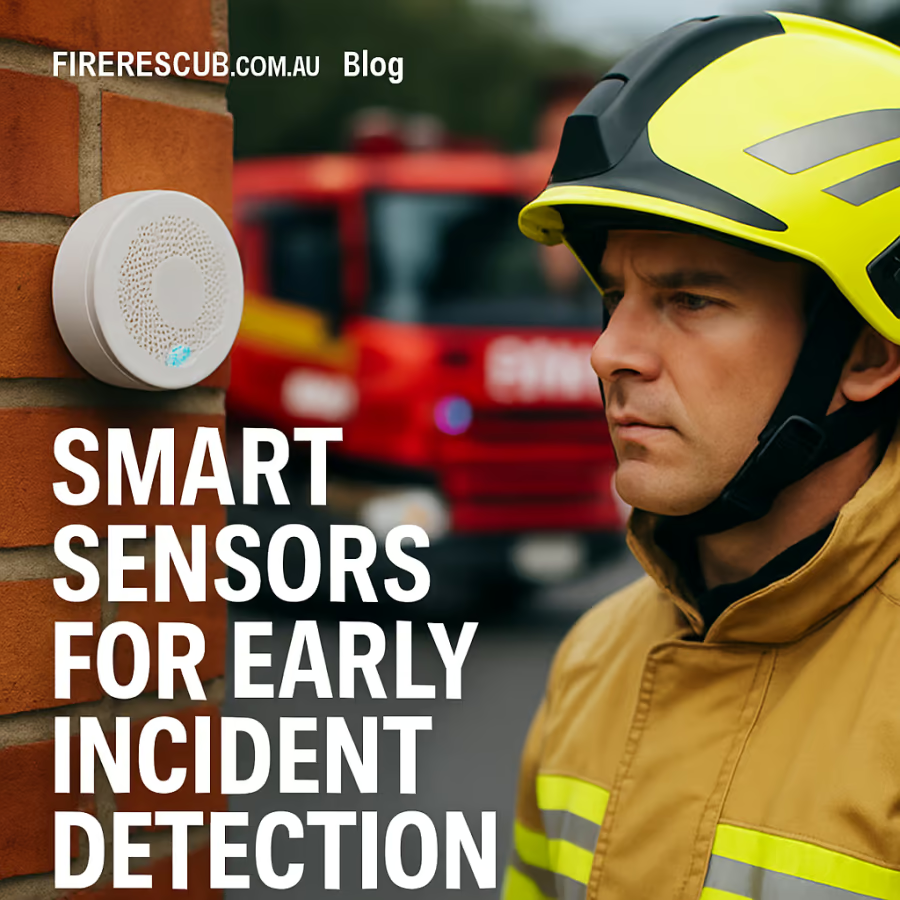
A standard audible smoke alarm is an important safety device, but it may not provide enough warning for someone who is Deaf or hard of hearing, especially while asleep. In a fire, seconds matter. The right alerting system can give a person time to wake up, leave the building and get to safety.
Why audible warning alone may not be enough
Smoke alarms are designed to alert people early, before smoke and fire make escape difficult. For many Deaf and hard-of-hearing Australians, a sound-only alarm may not be effective enough, especially overnight when hearing aids are off, when a person is in a deep sleep, or when a bedroom door reduces what can be heard from elsewhere in the home.
This is why specialised alerting equipment matters. A purpose-designed system can combine sound with other forms of warning, such as flashing lights and vibration. The aim is not simply to make the alarm louder. The aim is to create a warning method the person can reliably notice and respond to.
Early warning is especially important at night because people are less alert, less likely to notice smoke quickly and more likely to need extra time to wake, orient themselves and move out safely. A fire in the home can grow very fast. If a person does not wake promptly, the risk rises sharply.
It is also important not to depend only on a mobile phone, smartwatch, hearing aid or another person in the house. These can be useful in some situations, but they should not be the main warning method. The primary protection should be a properly installed, purpose-designed smoke-alarm alerting system.
Specialised alerting options for Deaf and hard-of-hearing people
Specialised smoke alarms and connected alerting systems may use one or more of the following methods:
- flashing strobe lights
- vibrating pads placed near or under the bed
- different sound patterns or louder audible alerts
- combined systems that use sound, light and vibration together
Fire safety guidance in Victoria notes that people who are Deaf or hard of hearing may benefit from vibrating pads, strobe lights or different sounds. A key point is that each alarm system should provide at least two types of sensory alert. That way, if one method is missed, another may still wake or warn the occupant.
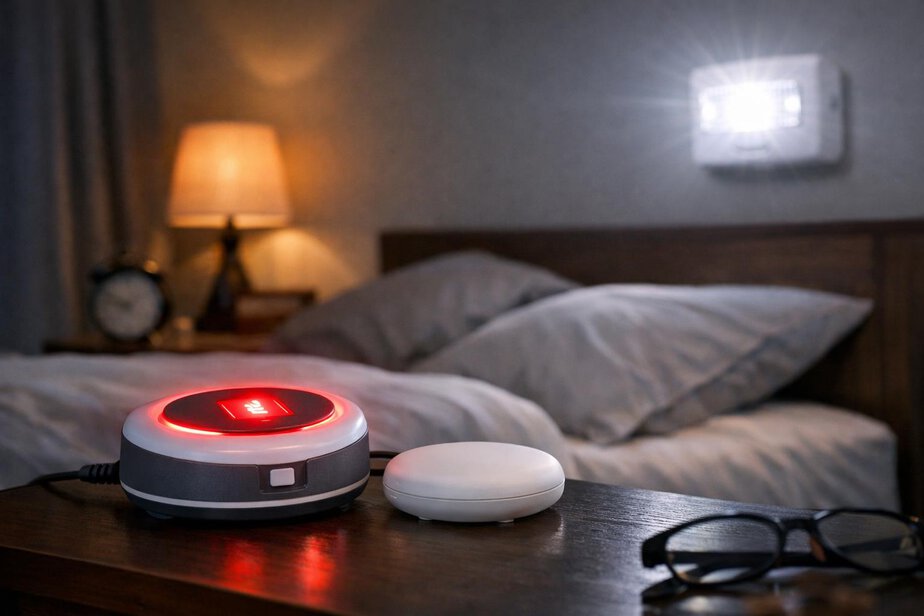
In practical terms, a good system might use a loud audible alarm in the home, a flashing strobe in the bedroom and a vibrating pad under the pillow or mattress. Another option may include a connected visual and tactile alert linked to a broader home alarm network. The best choice depends on the person’s needs, the home layout and the type of alarm system that can be installed safely and lawfully.
Flashing strobe lights
Strobe lights give a strong visual warning. They are especially useful for people who are awake and can see the alert, or for use in bedrooms and living areas where the light can be seen quickly. They should be bright enough to notice, but installed in a way that is suitable for the room and does not create avoidable glare or placement problems.
Vibrating pads
Vibrating pads are commonly placed near the bed or under bedding so the alert can be felt during sleep. This can be particularly important when someone may not hear an alarm in another room. The vibrating device should be part of a tested system that activates when smoke is detected, not a separate device that depends on someone remembering to switch it on.
Combination systems
Systems that combine sound, light and vibration are often the most practical option because they provide more than one chance to notice the alarm. If the person is awake, the sound or light may alert them. If they are asleep, the vibration may wake them. If one sense is limited by the situation, another may still work.
Why interconnected smoke alarms matter
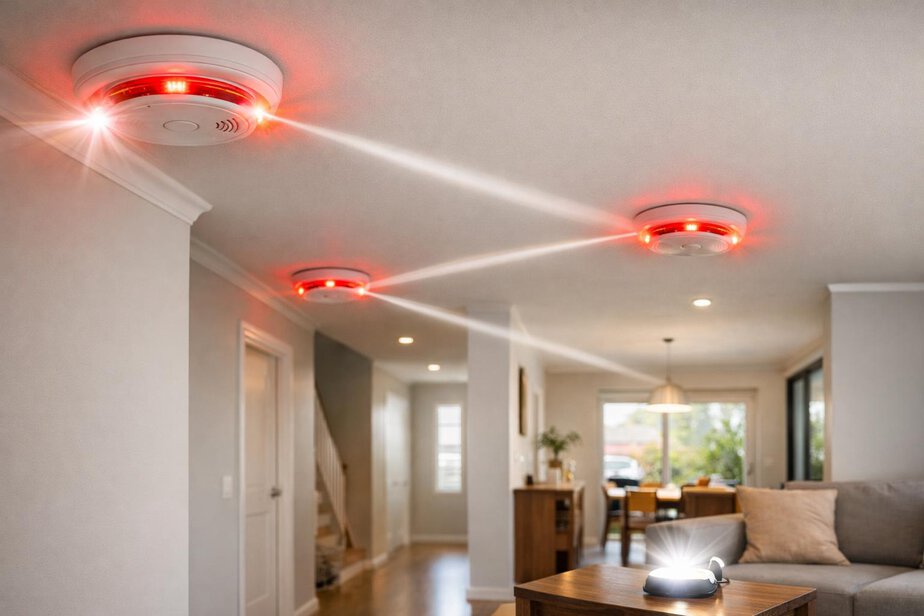
Interconnected smoke alarms can improve warning across the whole home. When one alarm detects smoke, every connected alarm activates. This means the warning is not limited to the room where smoke first starts. It spreads through the house, which is especially important if someone is asleep in another bedroom or is in a part of the home with limited visibility or sound transmission.
For Deaf and hard-of-hearing residents, interconnection is particularly valuable because it helps activate the visual and tactile alerting devices linked to the system. If one alarm is triggered in the kitchen or hallway, the bedroom unit can respond immediately and wake the person where they are sleeping.
Interconnection may be wired or wireless. Wired systems are physically connected by cabling. Wireless systems use a compatible radio signal to link alarms together. The right choice depends on the home, the existing wiring, the building type and whether any electrical work is needed.
Wired interconnected alarms
Wired interconnection is often suited to homes where suitable cabling already exists or where a qualified installer can complete compliant electrical work. Because electrical work can be regulated, this should be handled by a suitably licensed professional where required.
Wireless interconnected alarms
Wireless interconnection can be useful in existing homes where running cables would be difficult or disruptive. It may suit renovations, retrofits or situations where room layout makes a wired system harder to install. Even so, the system still needs to be selected, positioned and tested carefully so every unit communicates properly.
| Option | Typical benefit | Points to check |
|---|---|---|
| Wired interconnection | Stable linkage between alarms | May require licensed electrical work |
| Wireless interconnection | Easier retrofit in some homes | Battery care, range and compatibility |
| Combined visual and vibrating system | Supports sleep and waking detection | Must activate reliably with the alarm |
Whatever system is chosen, it should meet the applicable Australian Standard and local state or territory requirements. Do not assume that a product sold for one market is automatically suitable for use in every Australian home.
Where smoke alarms should be located in the home
Alarm placement is just as important as the device itself. Victorian fire services recommend alarms in every bedroom and living area, as well as alarms between sleeping areas and the remainder of the home. At least one alarm is required on every level. These location principles are widely sensible because smoke spreads quickly through a home and sleeping people need the earliest possible warning.
For a Deaf or hard-of-hearing household, these locations also help ensure that connected visual and vibrating alerts are more likely to trigger where they are needed most. A bedroom alarm can wake the sleeper directly, while hallway or living area alarms can help detect smoke before it reaches sleeping areas.
Practical placement ideas
- inside or near each bedroom, where suitable for the alarm type
- in hallways that lead to sleeping areas
- in living areas where people spend time awake
- on every level of the home, including stairs or landings where appropriate
- near escape routes so the alarm is likely to activate early enough to support evacuation
Placement can vary depending on room shape, ceiling height, airflow and the alarm manufacturer’s instructions. Avoid placing alarms where steam, cooking fumes or dead air pockets can cause nuisance alarms or reduce effectiveness. The aim is to follow both the product instructions and local safety guidance.
Connecting alarms to personal emergency systems
Some specialised smoke alarms can connect to personal emergency alarm systems used by older people or people with disability. This can be helpful when a person already uses a monitored call system or another support device. The smoke alarm may then trigger a broader alert pathway, helping the user or a monitoring service know that urgent action is needed.
This kind of integration must be planned carefully. The smoke alarm still needs to be the primary fire warning device, and the whole arrangement should be suitable for the home and the person’s needs. A connected personal emergency system should not replace a compliant smoke-alarm setup. Instead, it may add another layer of support.
If a person is considering this option, they should check compatibility with the alarm manufacturer, the emergency system provider and any support worker or installer involved. Not all equipment will work together. It is better to confirm the full chain of alerting before purchase or installation than to discover a mismatch later.
When communication with a monitoring service is involved, it is especially important to understand what happens if power is lost, the internet drops out or batteries fail. The home fire-warning system should still provide immediate local alerting without depending entirely on external communications.
Testing, battery care and replacement
A smoke alarm system only protects people if it works when needed. That means routine testing is essential. Fire services generally advise testing smoke alarms monthly, cleaning or dusting them at least annually and replacing alarms after 10 years. Many homes are best served by alarms powered by a 10-year, long-life battery where suitable, because they reduce the chance of the device being left without power.
For Deaf and hard-of-hearing households, testing should include the complete alerting system, not just the alarm sound. The light and vibration also need to be checked. If a strobe is fitted, confirm that it flashes as expected. If a vibrating pad is used, make sure it activates strongly enough to be noticed from the normal sleep position. If multiple alarms are interconnected, test that all linked units activate.
What to include in a monthly test
- the smoke alarm itself
- the flashing light or strobe
- the vibrating pad or pillow device
- the connection between alarms in different rooms
- any linked personal emergency alert system
If the system does not respond correctly, do not ignore it. Replace batteries if the manufacturer allows user replacement, check for dirt or obstruction and arrange repair or assessment if needed. If the unit is near the end of its life, replacement may be safer than repeated troubleshooting.
Cleaning is also important. Dust, cobwebs and insects can interfere with smoke alarm performance. Follow the manufacturer’s instructions and avoid damaging the unit. If in doubt, seek help from a qualified installer or the product supplier.
Building a night-time escape plan that works
Even the best smoke alarm system is only one part of home fire safety. Every household should have a simple escape plan and practise it. This is especially important at night, when people may be in different rooms, wearing different sleep aids or helping children or older relatives.
Start by making sure everyone knows what the alarms mean and what to do straight away. When the alarm activates, leave the building immediately. If there is smoke, crawl low beneath it where necessary. Go to the household’s agreed meeting place. Then call Triple Zero (000) from a safe location. Never return inside a burning building.
Plan the basics in advance
- identify at least two ways out of each room where possible
- keep exits clear of clutter, shoes and storage items
- choose a safe outdoor meeting place everyone can remember
- make sure children know to follow adults immediately
- help older people, visitors or anyone with limited mobility understand the plan
For households with children, rehearse what to do if the alarm sounds at night. Children may need simple, repeated practice to remember the steps when startled. For older people or anyone who may need assistance, the plan should include who helps, how they are assisted and what to do if one exit is blocked.
Do not wait until a fire occurs to work out the details. A short practice drill can reveal problems such as blocked hallways, missing keys, poor bedroom exits or confusion about who checks on whom. These issues are easier to solve before an emergency.
Support, funding and who to check with
Some Deaf and hard-of-hearing Australians may be eligible for support through the NDIS, or through other disability, aged-care or community support arrangements. The NDIS may fund visual and tactile smoke-alarm systems for eligible participants when the support meets funding requirements. However, funding is not automatic. It depends on eligibility, assessment and the relevant criteria at the time of application.
Because programs vary, it is wise to ask the disability support provider, support coordinator or plan manager what evidence or product details may be needed. In some cases, the local fire service, occupational therapist, installer or product supplier may also help explain suitable options.
Smoke alarm laws, tenancy responsibilities and assistance programs can differ between Australian states and territories. Owners, landlords and tenants may each have different obligations. That means readers should not assume Victorian guidance is identical everywhere in Australia. Local requirements should always be checked before buying or installing equipment.
Where electrical work is required, use a qualified electrician or other appropriately licensed installer. This is especially important for wired interconnected systems. Compliant equipment and proper installation are central to safety. A low-cost product or informal installation may seem convenient, but it can leave a household unprotected if it does not meet the applicable rules or cannot be trusted to operate correctly.
When choosing equipment, look for products that are intended for Australian use and that match the relevant standard and local rules. Keep the paperwork, instructions and service details together so future testing, maintenance and replacement are easier.
Home review checklist
Use this short checklist to review your own home or a home you manage:
- Do we have a smoke-alarm system that gives more than one type of alert?
- Does the system include visual, vibrating or other suitable warning methods for the person who needs them?
- Are the alarms interconnected so one activation triggers the whole home?
- Are there alarms in bedrooms, living areas, hallways and on every level?
- Have we tested the full system, including lights and vibrating equipment, this month?
- Are batteries, power supplies and devices in good condition?
- Are the alarms less than 10 years old, or due for replacement?
- Do we have a simple night-time escape plan that everyone understands?
- Do children, older people or anyone with mobility needs know what to do?
- Have we checked local laws, landlord requirements, funding options and installer rules?
For Deaf and hard-of-hearing Australians, a well-planned smoke-alarm system can make a real difference, especially at night. The best approach is usually a compliant, interconnected setup with at least two alert methods, regular testing and a clear escape plan. Before buying or installing anything, verify the facts, product compatibility and local procedures with your fire service, disability support provider, landlord or qualified electrician.
FireRescue Training Hub
Access practical fire and emergency study support resources, downloads, checklists, audio guides, and member-only course content.
- Course library
- PDF downloads
- Audio guides
- Checklists
Study support only. Not accredited training or a replacement for workplace procedures.
About the author and safety review
Ken Walker
Former Station Officer and fire service educator
Former career firefighter with extensive career and volunteer fire service experience.
Qualifications: Associate Diploma of Applied Science in Fire Technology; Institute of Fire Engineers studies.
Author profilehttps://www.firerescue.com.au/about-us/