Many clothes dryer fires can be prevented through regular maintenance and safe use. Cleaning lint filters, maintaining airflow and recognising early warning signs are important ways to reduce fire risks in Australian homes.
How clothes dryer fires start
Clothes dryer fires usually start when heat, lint and poor airflow come together. A dryer produces hot air to remove moisture from fabric. If that heat cannot escape properly, the appliance works harder and internal temperatures can rise. Lint is a major concern because it is light, dry and highly combustible. It can build up in the filter, around the drum, in ducts and behind the machine.
A fire can begin in several ways. Lint may ignite near heating elements or hot components inside the appliance. A blocked vent can trap heat and reduce cooling. A damaged cord or faulty electrical part can overheat. Overloading the dryer can also increase strain, reduce airflow and lengthen drying time, which means more heat for longer.
Dryers are often used in busy households, so problems can go unnoticed. A load that seems harmless at the start may become risky if the filter is not cleaned, the machine is packed too full or the appliance is left running when no one is nearby. That is why dryer fire prevention is not just about one action. It is about a series of small habits that keep heat, lint and electricity under control.
Why lint accumulation increases fire risk
Lint is made from tiny fibres shed by towels, sheets, blankets and everyday clothing. Some of it is caught by the filter, but some can pass through and collect inside the dryer cabinet, ducting and exhaust path. The more lint that accumulates, the more fuel there is if a hot surface or electrical fault occurs.
Lint also interferes with airflow. When air cannot move freely, the dryer must run hotter or longer to dry the same load. That creates a chain reaction: restricted airflow leads to higher temperatures, which can dry lint even further, making it easier to ignite. A blocked vent can also cause the appliance to cycle poorly, leaving damp clothing behind and encouraging people to run repeated loads.
It is important not to assume that a clean-looking lint trap means the dryer is safe. Some lint is hidden in places that are not obvious, especially behind the appliance or in venting that has not been checked for a long time. Even in a well-kept laundry, lint can still build up faster than people expect if the dryer is used often, if heavy fabrics are washed frequently or if the machine is pushed hard during winter.
Common causes of dryer fires
Several avoidable problems appear again and again in laundry fire incidents. The most common are simple to understand, which makes them easier to prevent.
- Lint filter not cleaned after every use. A blocked filter restricts airflow and leaves fuel close to hot parts.
- Lint behind or around the dryer. Fluff collecting near vents, fans or heating components can ignite.
- Dryer placed too close to walls or stored items. Restricted airflow and nearby combustibles increase risk.
- Overloading the machine. Heavy or crowded loads dry unevenly and can strain the appliance.
- Clothing contaminated with flammable substances. Items exposed to petrol, solvents, paint or oils can remain hazardous even after washing.
- Electrical faults. Damaged cords, overheating plugs or overloaded outlets can create heat and sparks.
- Poor maintenance. Worn seals, blocked ducts and ageing parts can make the appliance run hotter than intended.
Not every dryer fire has the same cause, and not every warning sign appears at once. That is why prevention should focus on both cleaning and careful use.
Cleaning the lint filter correctly
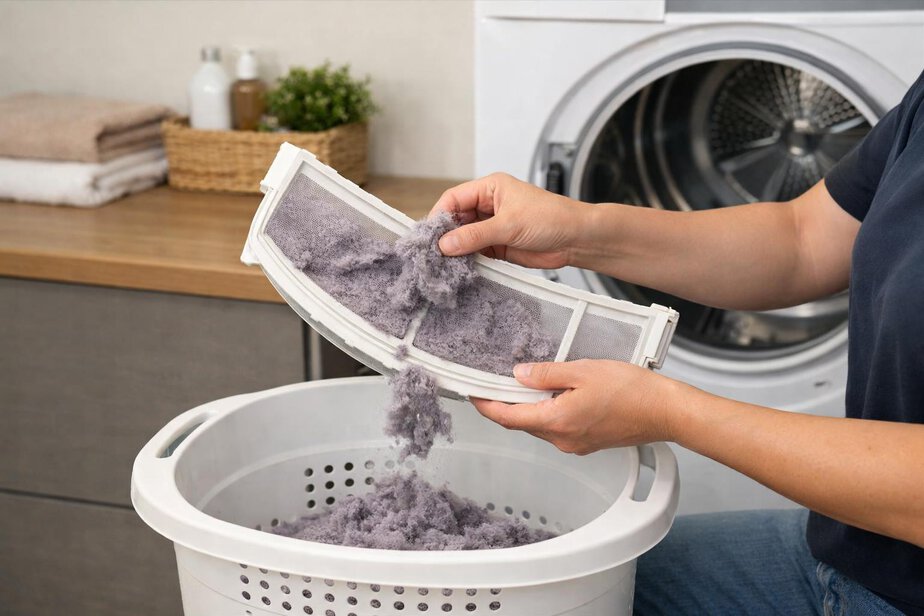
The lint filter should be cleaned after every load. This is one of the simplest and most effective ways to reduce fire risk. If the filter is left partly blocked, the dryer may still run, but airflow will be reduced and heat will build up more quickly.
What to do after each load
- Turn the dryer off and let the cycle finish.
- Remove the lint screen or filter as directed by the manual.
- Clear the lint by hand and place it in a bin.
- Check that the filter is intact, seated correctly and not damaged.
- Reinstall it properly before the next load.
Never operate a dryer with a missing, loose or damaged lint filter. If the filter does not fit securely or seems worn, stop using the dryer until it is replaced with the correct part. Do not improvise with makeshift covers or mesh. The appliance has been designed for a specific airflow pattern, and a poor substitute can create a new hazard.
Some filters also need a deeper clean from time to time, especially if fabric softener residue or fine dust has built up. Follow the manufacturer’s instructions rather than guessing. A filter that looks clean may still be coated in residue that reduces airflow.
Safe ventilation and dryer maintenance
Dryers need space to breathe. Adequate ventilation helps heat escape and allows the appliance to work as intended. If warm air is trapped behind the machine or if the vent path is blocked, the dryer can overheat.
Keep the area around the dryer clear of baskets, cleaning products, cardboard, soft furnishings and other items that should not be near heat. Do not crowd the appliance into a tight space unless the installation has been designed for it. Check the manual for the recommended clearance around the sides, back and top.
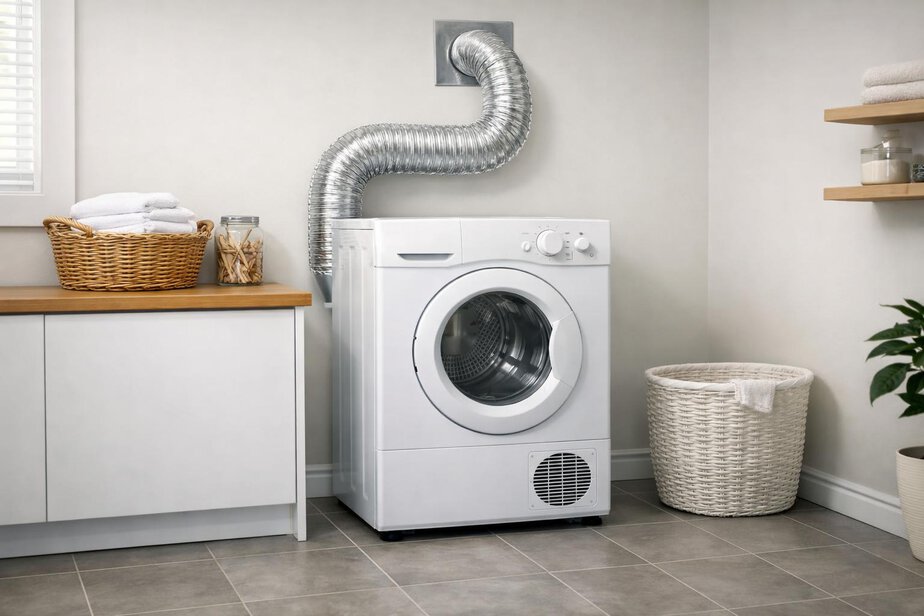
For vented dryers, the exhaust duct needs regular attention. Lint can collect in the duct, at bends or at the outdoor outlet. If the vent is long, crushed, kinked or poorly installed, airflow can be reduced even when the lint filter is clean. If you notice the room getting hotter than expected, the laundry feeling steamy or the dryer taking much longer than usual, the venting may need inspection.
Keep the cool-down cycle intact. Some people are tempted to stop a load early, but the cycle helps the appliance lower internal temperatures safely. Let the programme finish unless there is an emergency.
Electrical safety matters too. Do not overload power boards or outlets, and watch for signs that something is wrong: a warm plug, repeated tripping, scorch marks, flickering power or a burning smell. Repairs should be carried out by appropriately qualified people. If you are unsure about the wiring, socket or circuit, do not keep using the dryer until it has been checked.
Vented, condenser and heat-pump dryers compared
Different dryer types manage moisture in different ways, and that affects maintenance.
| Dryer type | How it works | Main fire-safety focus |
|---|---|---|
| Vented dryer | Expels warm, moist air to the outside through a vent or duct. | Keep ducting clear, undamaged and correctly installed. Lint buildup in the exhaust path is a key concern. |
| Condenser dryer | Condenses moisture into water collected in a tank or drained away. | Clean filters and condensers as directed. Airflow still matters because lint can affect performance and overheating. |
| Heat-pump dryer | Reuses heat more efficiently and usually runs at lower temperatures. | Keep filters and internal components clean according to the manual. Lower heat does not remove the need for maintenance. |
Heat-pump dryers are often marketed as efficient, but they still need proper care. A lower drying temperature does not mean fire risk disappears. Any dryer can become hazardous if lint builds up, airflow is restricted or electrical faults are ignored.
Risks of unattended and overnight operation
One of the easiest ways to reduce risk is to stay home and awake while the dryer is running. Laundry appliances can fail without much warning, and an early problem is easier to notice if someone is nearby. A burning smell, unusual noise or excess heat may be caught before it turns into a fire.
Overnight drying is especially risky because warning signs may go unnoticed for hours. If something overheats while everyone is asleep, the fire may grow before anyone is alerted. That is why laundry fire safety advice consistently focuses on using appliances when people are awake and able to respond.
If a load must be done during a busy day, set a reminder to check the dryer before leaving the area. Avoid starting a cycle and going out. Even if the appliance has operated safely before, conditions can change from one load to the next.
Oil-contaminated towels, clothing and self-heating hazards
Clothing or cloth items contaminated with cooking oil, motor oil, petrol, paint, solvents or alcohol should not be tumble dried. Some of these substances can remain in fabric even after washing, and small amounts may still create a fire hazard. Heat can build up in the fibres, and in some cases residual oil can contribute to ignition during or after drying.
This risk deserves extra care because the item may look clean and feel dry. That can create a false sense of safety. If the fabric has been exposed to a flammable substance, treat it as hazardous unless a qualified source says otherwise. Do not rely on appearance alone.
There is also a self-heating concern with oily fabrics. Residual heat and absorbed oils can sometimes contribute to ignition, especially if the material is stacked, compacted or left where heat cannot dissipate. The exact risk depends on the substance involved, the amount present and the circumstances, so the safest approach is to avoid tumble drying these items altogether.
Warning signs of overheating and electrical faults
Do not ignore small changes in how the dryer sounds, smells or behaves. These can be early warnings that the appliance needs attention.
- Burning smell or unusual hot smell during or after a cycle.
- Dryer exterior feels hotter than normal or the laundry room becomes unusually warm.
- Clothes take much longer to dry despite a normal load size.
- Repeated tripping of a breaker or frequent loss of power to the outlet.
- Warm plug, warm power point or scorch marks around the socket.
- Rattling, scraping or grinding noises that were not there before.
- Visible damage to the cord, plug or venting.
If any of these signs appear, stop using the dryer and arrange an inspection by a qualified person. A malfunctioning appliance should not be treated as a minor annoyance. It may be the first clear warning that heat or electricity is not being controlled properly.
When to stop using a dryer and arrange professional repairs
Stop using the dryer if the lint filter is damaged, the cord is frayed, the plug is discoloured, the machine keeps tripping power, or the appliance produces heat and smells that do not seem normal. Do not wait for the problem to get worse. A dryer that has already shown signs of overheating may fail again under load.
Professional help is also needed if the venting is inaccessible, the dryer cabinet seems blocked with lint, the drum does not spin freely or the machine is making noises that suggest mechanical wear. Some issues are simple to describe but not safe to fix without training.
Do not attempt unqualified electrical repairs. Do not open panels or bypass safety components. If the repair involves wiring, internal electrical parts or a suspected fault in the socket or circuit, it should be handled by an appropriately qualified person.
Practical household fire prevention checklist
Use this checklist as a regular habit, not as a one-off clean-up task.
- Clean the lint filter after every load.
- Check that the filter is undamaged and fitted correctly.
- Keep the area behind and around the dryer clear.
- Follow the manufacturer’s instructions for spacing, installation and maintenance.
- Do not overload the dryer.
- Let the cool-down cycle finish.
- Stay home and awake while the appliance is operating.
- Keep smoke alarms installed, maintained and tested.
- Do not dry items contaminated with flammable substances.
- Watch for burning smells, hot plugs or repeated tripping.
- Arrange prompt repairs when something seems wrong.
- Include the laundry in your home fire escape planning.
If you share the home with children, older people or tenants, make sure everyone knows what the dryer sounds like when it is operating normally and who to tell if something unusual happens. Fire safety improves when the whole household understands the basics.
FAQs
How often should I clean the lint filter?
Clean it after every load. That simple habit is one of the strongest defences against dryer fire risk.
Can I run the dryer when I leave the house?
It is safer to stay home and awake while the dryer is running. If a problem starts, you are more likely to notice it early.
Is a condenser or heat-pump dryer fire-safe?
No dryer is completely fire-safe. These models can still overheat or develop problems if lint, airflow or electrical issues are neglected.
Why does my dryer smell hot sometimes?
A hot smell can happen when lint builds up, airflow is poor or an electrical fault is developing. If the smell is new or strong, stop using the dryer and have it checked.
Should I vacuum behind the dryer?
Cleaning lint from behind the dryer is helpful, but do it carefully and only when the appliance is turned off and cool. Avoid disturbing electrical connections or venting components.
What should I do if I think the dryer is overheating?
Stop the appliance, switch it off if you can do so safely and do not use it again until it has been inspected by a qualified person.
Can oily towels be dried safely if they were washed first?
Not automatically. Some oil contamination can still remain after washing. The safest approach is to avoid tumble drying items that may contain flammable residues.
Professional considerations for firefighters and investigators
In a fireground or investigative context, dryer fires may present as a combination of appliance origin, lint loading, duct restriction and nearby fuel load. Standard scene safety still applies: treat the laundry area as potentially electrically compromised, isolate power where appropriate and consider hidden extension through cabinetry, wall cavities or duct runs.
For investigators, useful points of interest may include filter condition, vent path configuration, evidence of maintenance history, signs of overload, cord and plug integrity, and whether clothing contamination could have contributed to ignition. Where self-heating is alleged, the type of contaminant, laundering history and post-wash handling may be relevant. Conclusions should remain evidence-based and avoid assuming one causal pathway without support.
For operational crews, a closed laundry door may help limit smoke spread, but only if it can be done safely during evacuation. Public safety messaging should continue to emphasise evacuation first and avoidance of untrained intervention.
Conclusion
Clothes dryer fire safety comes down to a few consistent habits: clean lint every time, keep airflow clear, use the appliance sensibly and act quickly if something seems wrong. Those steps are simple, but they make a real difference in Australian homes, apartments and shared laundries. A dryer that is properly maintained and used with care is far less likely to become a fire risk.
Sources and further reading
FireRescue Training Hub
Access practical fire and emergency study support resources, downloads, checklists, audio guides, and member-only course content.
- Course library
- PDF downloads
- Audio guides
- Checklists
Study support only. Not accredited training or a replacement for workplace procedures.
About the author and safety review
Ken Walker
Former Station Officer and fire service educator
Former career firefighter with extensive career and volunteer fire service experience.
Qualifications: Associate Diploma of Applied Science in Fire Technology; Institute of Fire Engineers studies.
Author profilehttps://www.firerescue.com.au/about-us/