Aphasia can make it hard to speak, understand words, read, or write. In an emergency, that can slow down care and add stress. A simple communication card can help a person, family member, carer, or responder share the most important information quickly and clearly.
What an emergency communication card is
An emergency communication card is a small, easy-to-read card that explains how a person communicates and what support they need. It is not a medical record. It is a quick guide for urgent situations.
For a person with aphasia, the card can help others understand that communication may be slow, but the person may still understand much of what is said. Aphasia affects language. It does not automatically affect intelligence.
The goal is simple. Give emergency workers and other helpers the right clues at the right time, so they can speak clearly, avoid confusion, and gather important information without rushing.
Why a card can make emergency care safer
In a stressful situation, a person with aphasia may struggle to find words, answer questions, or explain pain, symptoms, or medicines. Family members may also be upset and may not remember every detail.
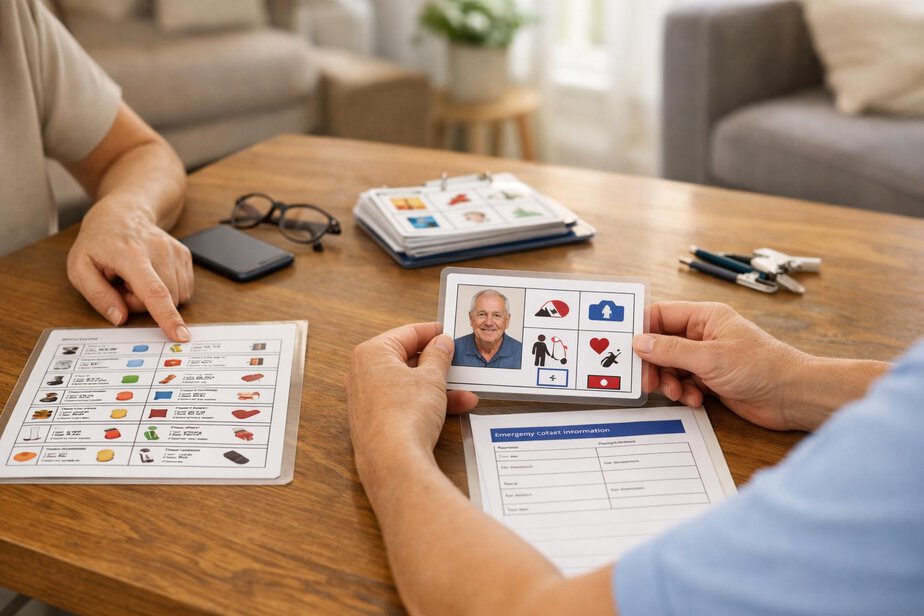
A card can help by giving responders a clear starting point. It can show the person’s preferred name, what kind of aphasia they have, how they usually communicate, and who to call if more detail is needed.
It can also reduce misunderstandings. For example, a person may nod, point, or use short answers. That does not mean they understand everything or that they are confused in the usual sense. Clear, calm communication matters.
For emergency care, the safest approach is to assume the person may need extra time and support, then confirm key facts rather than guessing.
What to include on the card
Use large, clear text. Keep the card short enough to read fast, but detailed enough to be useful. A photo can help staff identify the right person quickly, especially if they are distressed or unable to speak at all.
Essential details
- The person’s preferred name.
- A clear statement such as: I have aphasia.
- A recent photograph.
- A brief explanation of how aphasia affects them.
- Whether they understand spoken questions.
- Their preferred way to answer, such as speaking, pointing, writing, pictures, or yes/no questions.
- Simple instructions such as: Please speak slowly, Use short sentences, and Give me time to answer.
- Emergency contact names and phone numbers.
- Important medical conditions.
- Current medications and doses, where known.
- Allergies and serious medication reactions.
- Their usual communication ability after stroke or brain injury.
- Their doctor, speech pathologist, or other important healthcare contact.
- The date the information was last checked.
If space is limited, use short headings and plain language. If you need more detail, keep a second page with extra medical information. The main card should still stand alone if that is all anyone can see.
How to write the card clearly
The best card is practical, not polished. It should be easy to read under pressure. Short sentences help. So do plain words and a simple layout.
Useful wording examples
- I have aphasia.
- I may understand you better than I can speak.
- Please ask one question at a time.
- Please wait for my answer.
- Yes/no questions help me.
- Pointing and writing may help.
It is also helpful to explain the person’s usual communication after their stroke or brain injury. For example, they may speak in short phrases, rely on gestures, or need time to find words. That gives responders a realistic picture of what is normal for them.
How family members and carers can keep it up to date
A card is only useful if it stays current. Medicines change. Contacts change. Communication can also change over time, especially after stroke, brain injury, illness, or therapy.
Pick a routine for checking the card. Many families review it when medicines change, after a specialist appointment, or every few months. Add the date it was last checked so everyone knows whether the details are fresh.
It can help to make more than one copy. Keep one in a wallet or handbag. Put another in a phone case, vehicle emergency kit, or with important medications. A digital copy can also be stored in a phone’s emergency information screen, if the person uses one.
| Where to keep a copy | Why it helps |
|---|---|
| Wallet or handbag | Easy to find during an unexpected hospital visit. |
| Phone case or digital emergency screen | Useful if the person is separated from family or belongings. |
| Vehicle emergency kit | Helpful after a crash or if ambulance staff need quick information. |
| With regular medications | Keeps medicine lists and allergy details together. |
How emergency responders and helpers should communicate
When a person shows a communication card, the best response is calm, respectful, and direct. Speak to the person first, not only to the family member beside them. If another person is helping, that is useful too, but the person with aphasia should still be included.
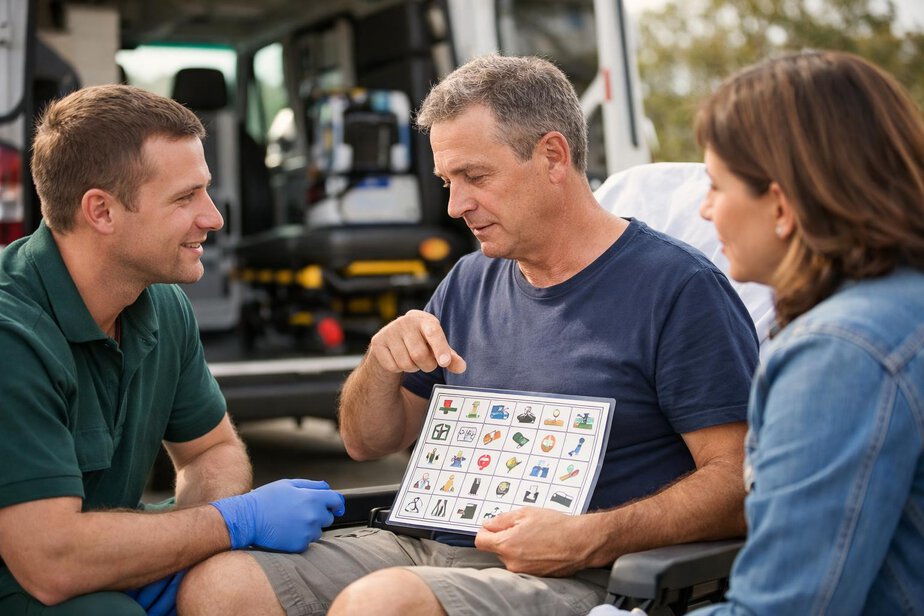
Helpful communication usually means fewer words, not louder words. Introduce yourself. Explain what is happening. Use short sentences. Ask one question at a time. Allow extra time for an answer. If the person cannot speak easily, try writing, gestures, pictures, or simple choices.
Good communication habits
- Reduce noise and distractions where possible.
- Use a calm voice.
- Speak slowly.
- Use yes/no questions when suitable.
- Check important information rather than assuming.
- Repeat or rephrase if needed.
- Avoid rushing the person.
- Avoid speaking to them like a child.
If the person uses pointing, writing, or pictures, those tools can be very helpful. A clipboard, pen, or phone note may make a difficult exchange easier. The aim is to support communication, not to test it.
Long-term aphasia versus a possible new stroke
It is important to tell the difference between a person’s usual aphasia and a new, sudden change. A person may have long-term aphasia after a stroke or brain injury and still be stable in their everyday communication. That is different from speech difficulty that starts suddenly or becomes worse without warning.
Sudden speech difficulty, facial drooping, arm weakness, trouble understanding, or a new change in communication may indicate a stroke. In Australia, immediate life-threatening emergencies require Triple Zero (000). Do not assume new symptoms are only caused by existing aphasia.
A communication card is useful, but it should never delay urgent treatment. If the person has a card, show it early. If symptoms are changing fast, keep the focus on urgent medical care and emergency assessment.
A simple checklist for making the card
A family member, carer, or the person with aphasia can use this short checklist to build the card step by step. It does not need to be perfect. It just needs to be clear and practical.
- Write the person’s preferred name.
- Add a recent photo.
- State clearly: I have aphasia.
- Describe the communication problem in one short sentence.
- List what helps most, such as short sentences or yes/no questions.
- Add emergency contacts and phone numbers.
- List medical conditions, medicines, doses, allergies, and serious reactions.
- Include the usual doctor, speech pathologist, or other key contact.
- Check the date and update it when needed.
- Print several copies and store them in sensible places.
If the person is able, involve them in choosing the words and layout. That can make the card more accurate and more respectful. It also helps the person feel prepared rather than spoken for.
Conclusion
A well-made emergency communication card can save time, reduce stress, and help a person with aphasia be understood in a crisis. The best cards are short, clear, and practical. They explain who the person is, how they communicate, what they need, and who to contact.
Just as importantly, responders and helpers should stay calm, speak slowly, and treat the person as an adult with dignity. If symptoms are sudden or worsening, call Triple Zero (000) right away and consider stroke first. Before publication or use, verify facts, local procedures, and any current guidance from relevant Australian health services.
FireRescue Training Hub
Access practical fire and emergency study support resources, downloads, checklists, audio guides, and member-only course content.
- Course library
- PDF downloads
- Audio guides
- Checklists
Study support only. Not accredited training or a replacement for workplace procedures.
About the author and safety review
Ken Walker
Former Station Officer and fire service educator
Former career firefighter with extensive career and volunteer fire service experience.
Qualifications: Associate Diploma of Applied Science in Fire Technology; Institute of Fire Engineers studies.
Author profilehttps://www.firerescue.com.au/about-us/