Smart bushfire sprinkler zoning is about using limited water in the smartest possible way. Instead of flooding every part of the property at once, the system should detect where the threat is strongest, protect that area first, and keep adjusting as the fire conditions change.
Why smart zoning matters in a residential bushfire system
A bushfire sprinkler system is not just about putting water on the house. It is about keeping the building more difficult to ignite for as long as possible, while using the available water, pressure and battery or generator power efficiently. That is especially important on a residential property where the tank is finite, the pump has limits, and conditions can change very quickly.
If every sprinkler turns on at once, the system may waste water on areas that are not under the greatest threat. It may also lose pressure, shorten operating time and reduce the system’s overall effectiveness. In a bushfire, those losses matter. The practical goal is to send the right amount of water to the right part of the house at the right time.
For this part of the integrated system series, smart zoning carries a moderate but important role in overall readiness. It supports the wider protection package, which includes ember-resistant construction, roof and gutter measures, dedicated water storage, pumping, sensors, backup power and control systems. Sprinkler zoning should never be treated as a stand-alone solution.
Start with the fire-risk map, not just the pipe layout
Good zone design begins with the actual way bushfires threaten a house. Hydraulic design matters, but it should not be the only driver. A zone that looks neat on paper may be a poor choice if it does not match how embers, heat and flame exposure reach the building.
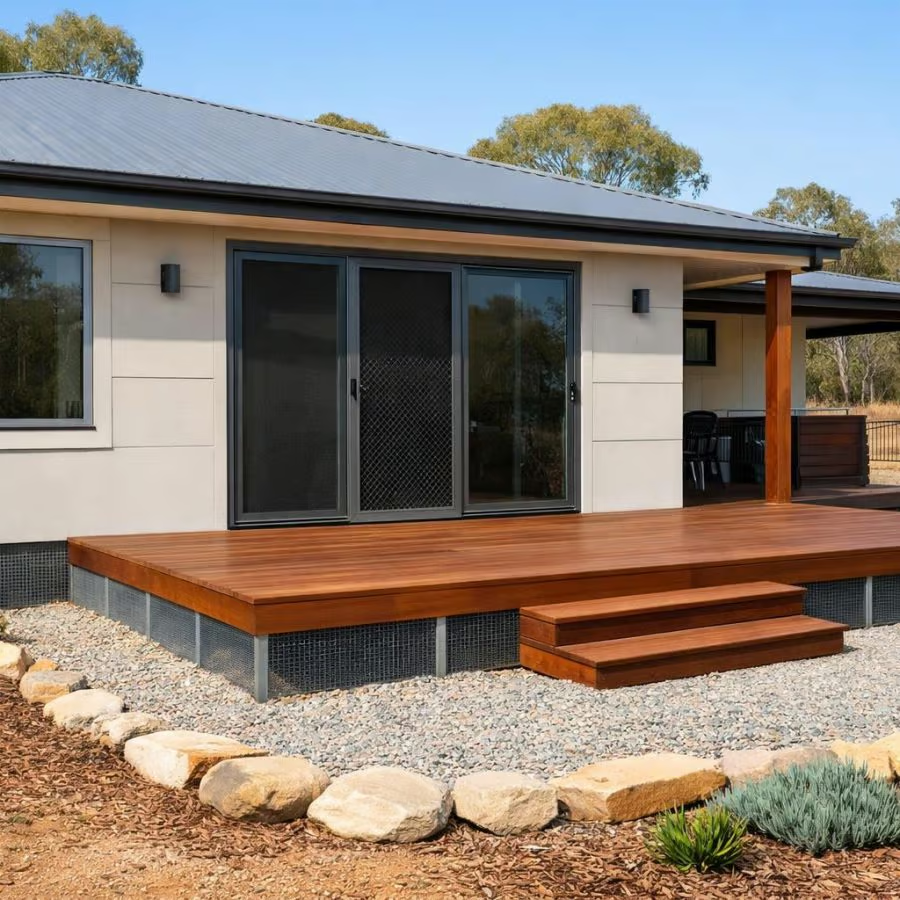
Before deciding where zones go, the homeowner or designer should consider which parts of the property are most exposed. That usually includes the windward side of the building, roof edges, gutters, decks, verandahs, garages, sheds and any plant room or service space that is important to the operation of the house. The immediate ground around the structure may also deserve attention, especially where embers can accumulate or grass and litter may ignite.
The best layout is often a compromise between two things:
- Hydraulic performance — whether the pump, pipes and valves can deliver the required flow and pressure.
- Actual fire risk — whether the zone covers the part of the house that is most likely to be attacked first.
This means a zone should not be chosen only because it is easy to pipe together. It should make sense from a fire exposure point of view. In some cases, a small section of roof or a windward wall may need priority even if the plumbing becomes slightly more complex.
For a typical house, the base system should normally use about four to six independently controlled zones. That is often enough to separate the main risk areas without making the system overly complicated. Larger or unusual properties may need more, but excessive zoning can increase cost, failure points and maintenance burden.
Typical residential sprinkler zones
Every property is different, but many homes can be organised around a small number of functional zones. These zones should reflect both the building shape and the likely bushfire attack paths.
A practical zone set may include:
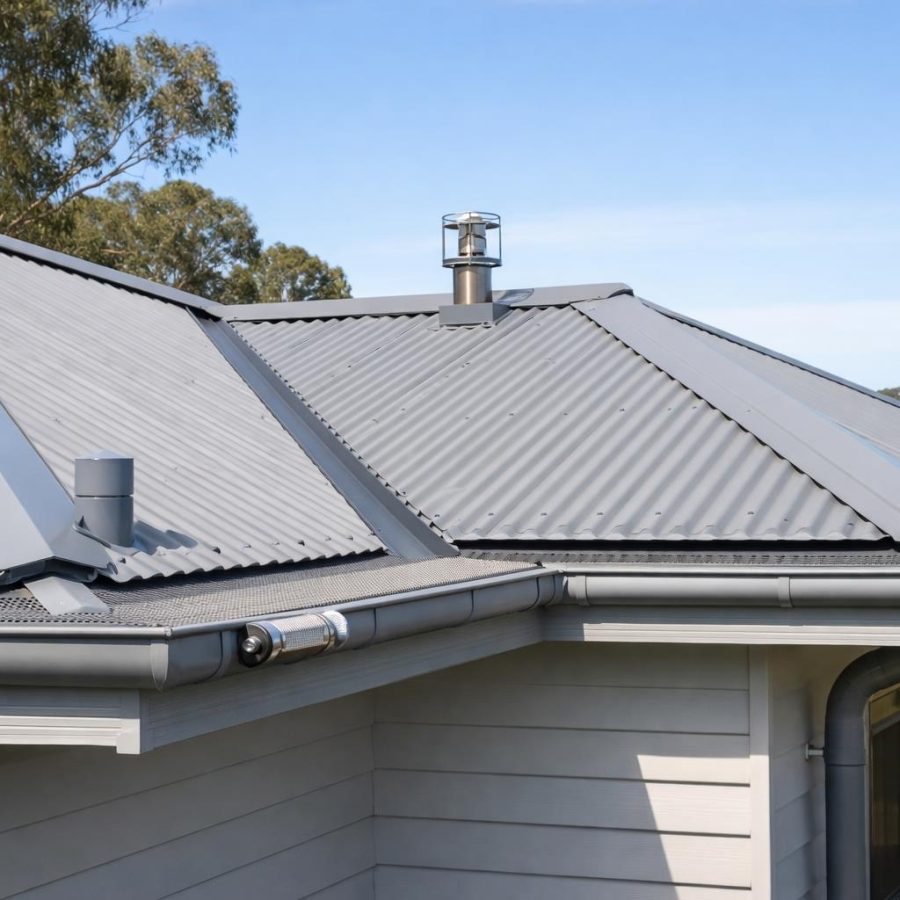
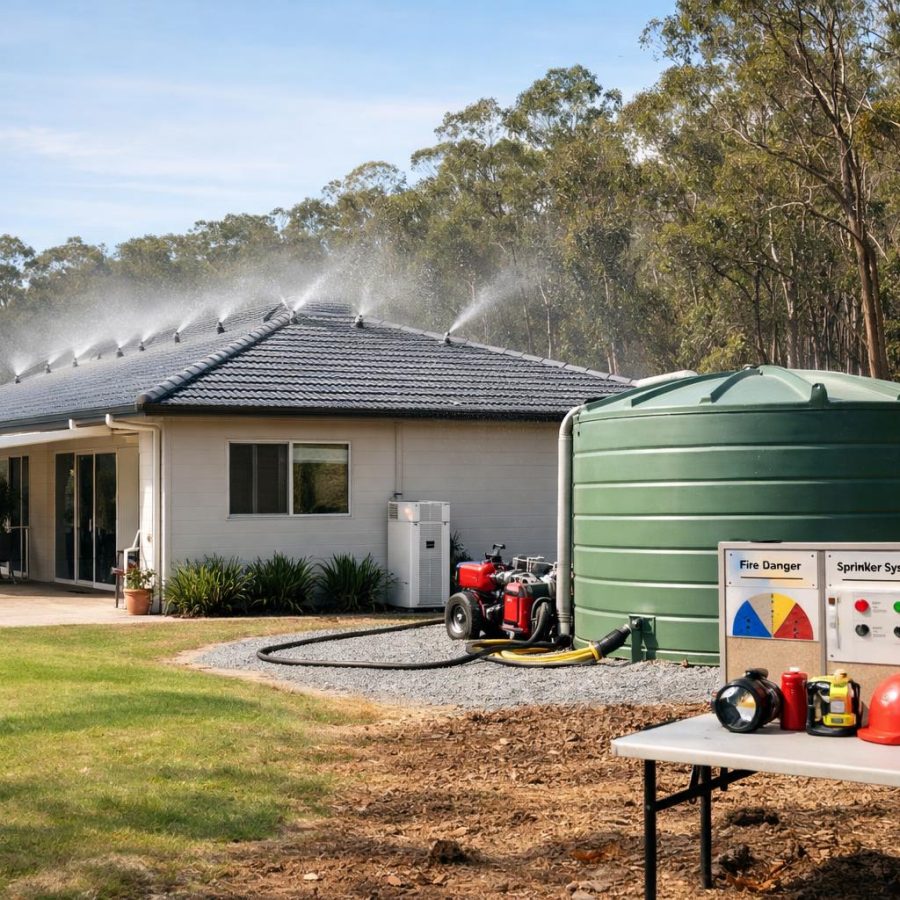
- Roof and gutters — to help reduce ember accumulation and ignition risk around roof edges and debris-prone areas.
- Windward walls and windows — to cool the surfaces most exposed to radiant heat and ember attack.
- Decks and verandahs — to protect combustible external structures that can ignite quickly.
- Immediate ground around the house — to help keep nearby fuel from becoming a more serious ignition source.
- Garage or shed — where attached or nearby structures may store fuel, tools or vehicles and can threaten the main dwelling.
- Protected plant room or equipment area — where critical system components, if present, deserve their own protection strategy.
Not every home will need all of these as separate zones. A simple house may combine some functions, while a more complex property may separate them further. The important point is that the zones must match the protection problem. A broad, one-size-fits-all spray layout is usually a weak solution.
It is also worth separating zones by exposure level. For example, the roof edge and windward wall may face very different conditions from the sheltered side of the building. If the system can treat them separately, it can respond more intelligently.
Different sprinkler types for different jobs
Homeowners sometimes assume a single sprinkler head or spray pattern can do everything. In bushfire protection, that is rarely a good assumption. Different surfaces and locations need different spray characteristics.
Roof edges and gutters may need a pattern that reliably reaches the target surfaces without being blown away too easily. Walls and windows may benefit from spray coverage that cools the exposed surface without wasting water in areas that do not matter. Decks and verandahs may need a different throw and droplet pattern again, especially where structural timber or stored items could ignite.
For the ground around the house, the goal may be to dampen close-in fuel and reduce local heat build-up, rather than fully saturating a wide area. A plant room or protected equipment space may need careful, targeted application that avoids unnecessary water on sensitive components while still reducing ignition risk.
One important caution is that fine mist should not automatically be assumed to be suitable in strong bushfire winds. Wind can strip away very fine spray before it reaches the surface you are trying to protect. The sprinkler type should be selected for the location and intended job, not just for appearance or catalogue description.
Where practical, sprinkler heads should also be placed or shielded to reduce the chance of failure from direct flame, falling branches, flying debris or physical impact. A head that is easy to damage is a weak point in the whole system. Protection can include thoughtful placement, guards or locating the sprinkler where it is less exposed, provided the spray pattern still does its job.
The design principle is simple: the best sprinkler is the one that performs well in the specific zone it is meant to protect. Uniformity is less important than function.
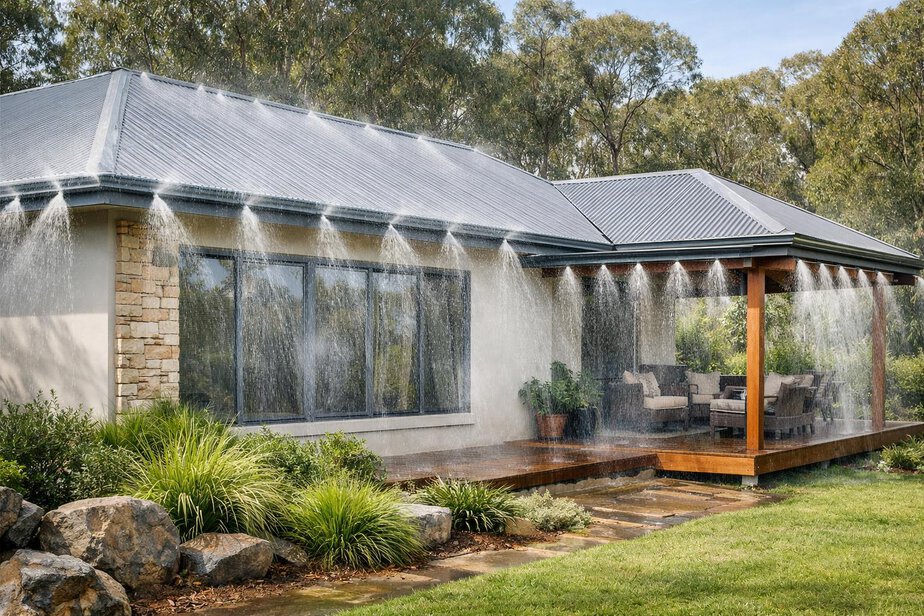
How smart zoning should think: priority, not fixed order
A smart system should not lock the house into a rigid sequence such as zone one, then zone two, then zone three. Bushfire conditions are dynamic. Heat, smoke and wind can shift across the property in minutes, and the highest-threat area may change during the event.
A simple three-level priority model is practical for homeowners and still flexible enough for real conditions:
- High priority — the area experiencing the strongest confirmed threat.
- Medium priority — the area exposed to wind, embers or rising heat.
- Low priority — the area that only needs background protection for now.
The system should automatically move zones between these levels as conditions change. That means the zone facing the wind and strongest heat may become high priority first, while sheltered areas remain medium or low priority until the threat spreads or shifts.
Automatic decisions should consider sensor location, heat intensity and wind direction. It is sensible to confirm a wind change briefly before making major protection changes, so short gusts do not cause unnecessary switching. A momentary shift should not make the whole system chase every fluctuation.
The practical goal is not perfect prediction. It is sensible adaptation. The system should favour the part of the house most likely to be attacked first, then adjust as the threat moves.
Monitoring each zone: flow, pressure and fault detection
Each sprinkler zone should have its own flow monitoring, pressure monitoring and fault detection. That is the difference between a simple on-off system and a genuinely smart protection system.
Why does this matter? Because a zone may be activated but still not receive the water it needs. A valve might be stuck, a pipe might be damaged, a head might be blocked, or a major leak might be draining the line. Without independent monitoring, the system may appear to be running even though it is not protecting the intended area.
Zone monitoring should be able to identify abnormal behaviour such as:
- Flow that is much higher than expected, which may indicate a burst pipe or major leak.
- Flow that is much lower than expected, which may point to blockage, valve failure or supply problems.
- Pressure that drops too far under load, suggesting the pump or supply cannot support the zone demand.
- A mismatch between commanded operation and actual water delivery.
Each zone should therefore be treated as a separate monitored unit. This lets the system warn the resident when a zone is not behaving as expected, rather than leaving them to guess. It also supports better decision-making if multiple zones are operating at once.
Automatic self-testing should periodically check valve operation and look for abnormal flow or pressure. This does not replace real commissioning, but it helps detect issues before a bushfire occurs.
| Zone feature | Why it matters | What the homeowner should expect |
|---|---|---|
| Flow monitoring | Shows whether water is actually moving through the zone | Alerts if flow is too high or too low |
| Pressure monitoring | Shows whether the zone is receiving usable pressure | Flags possible pump, valve or pipe issues |
| Fault detection | Helps identify broken, blocked or leaking parts | Warns that the zone may not be protecting correctly |
Allowing more than one zone to run at the same time
Some homeowners assume the system must only run one zone at a time. That is too restrictive for a well-designed bushfire protection system. If the house is threatened in more than one area, and the hydraulic calculations confirm that the pump, water supply and pipework can support the demand, several zones should be able to operate together.
This is especially important where fire exposure is not neatly localised. For example, a strong wind-driven ember attack may affect the roof edge, decks and windward windows at the same time. In that case, it may be sensible to protect more than one area simultaneously rather than waiting for each zone to be cycled individually.
The system should therefore be designed around capacity, not habit. If the tank, pump and pipe sizes support concurrent operation, the control system should not artificially restrict the home to one active zone only. The only real test is whether the combined demand remains within safe hydraulic limits.
That said, simultaneous operation should be deliberate, not automatic in every situation. The controller must still manage priorities and protect the reserve water needed to keep the system operating for the planned period.
Manual override, remote control and local fallback
Every zone should have automatic control, remote control and local manual override. This gives the system flexibility and protects against failures in communication, automation or sensors.
Automatic control is the normal mode. It allows the system to make routine decisions based on heat, smoke, wind, pressure, flow and tank level. Remote control can help a homeowner, property manager or authorised responder adjust protection from a safer location. Local manual override is the essential fallback if communications fail or the resident or firefighter needs immediate hands-on control.
This matters because bushfire conditions can disrupt internet, mobile coverage or smart-home networks. A loss of connectivity must not stop the zone from operating. The system should remain functional even if remote links are unavailable.
For ordinary homeowners, the practical message is simple: no single control method should be the only method. A resilient system keeps working when one layer fails. That is the same principle used across the wider integrated bushfire protection design.
It is also important to separate what a homeowner can safely do from what trained responders may do. Residents can normally use the system as designed, follow warnings, and choose pre-set options or manual zone controls where provided. Firefighters or authorised responders may have different operational needs, but those should be planned and documented in advance rather than improvised during the event.
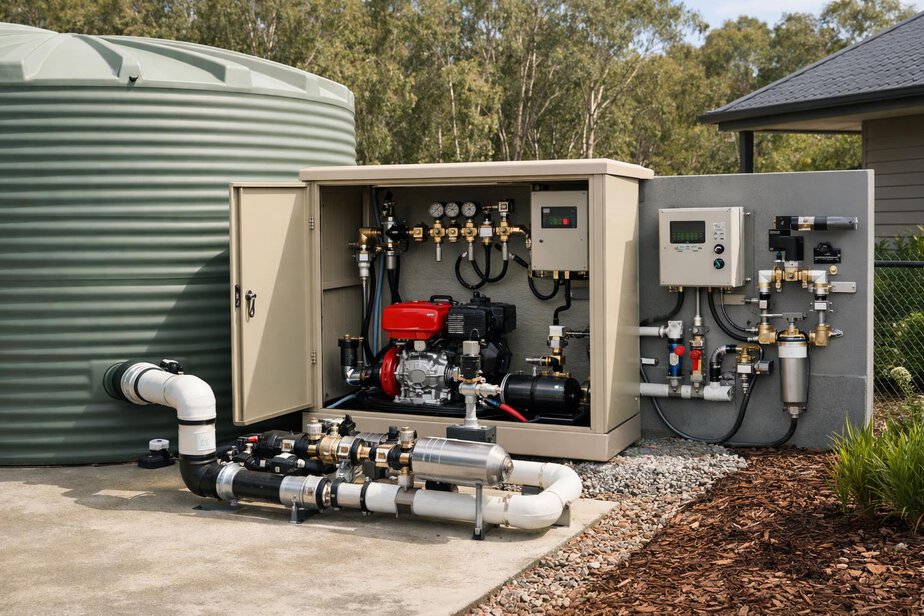
Burst pipe and leak protection: save the tank, save the system
A burst pipe or major leak can destroy a bushfire sprinkler system’s effectiveness very quickly. If a damaged line continues to run, it can drain the dedicated tank, reduce pressure for all remaining zones and leave the house with little real protection when it is needed most.
That is why abnormal flow should trigger automatic isolation of the affected zone. The rest of the system should keep operating. The resident should receive a clear warning, and the controller should recalculate how much water remains available and which zones should now receive priority.
The principle is straightforward: a single failed line should not be allowed to take down the entire dedicated bushfire water supply. A smart system protects the reserve by sacrificing the failed zone, not the rest of the house.
Exposed pipework is an important part of this discussion. Where pipework is likely to be exposed to heat or flame, metal or another suitably fire-resistant material is preferred. Exposed plastic pipework and heat-sensitive fittings should be treated as potential failure points. They may work well in ordinary conditions, but they may not be reliable in a severe fire environment.
Homeowners should also think about physical damage. Pipes and fittings near driveways, stored equipment, garden work areas or low roof edges may be more vulnerable than they first appear. Better protection at installation stage can prevent later isolation events.
Adaptive run times: water should respond to conditions, not just the clock
Fixed timers alone are not enough for a smart bushfire sprinkler system. A zone should not run for the same length of time every time just because that is what the clock says. The run time should adapt to real conditions.
Useful inputs include heat reduction, smoke and heat conditions, wind direction, wind speed, flow, pressure, tank level and current zone priority. If the area cools and the threat eases, the run time can be reduced. If wind and heat worsen, the system can extend operation or shift priority to the threatened side of the building.
This approach helps preserve water and pressure. It also allows the system to focus more effort where it is actually needed. For example, a low-priority area may receive periodic protection while the tank remains above the protected reserve. If water becomes limited, the system should progressively reduce lower-priority zones first and then suspend them if necessary so the highest-threat areas remain protected.
The protected reserve is important. The system should not use every last litre just because the house still has a zone running. The resident needs a buffer for the full event, not a system that empties itself too early. The dedicated bushfire tank remains the source for all sprinkler operation, and the full design should still aim to support the planned two-hour autonomous operating target.
Adaptive control is not about being clever for its own sake. It is about keeping the right water in the right place for as long as possible.
Commissioning: test the system in the real world, not just on paper
A bushfire sprinkler system should never be considered ready because the drawings look sensible or the sprinkler manufacturer’s specifications seem suitable. Every zone must pass a real-world commissioning test before the system is treated as complete.
Commissioning should confirm the actual spray pattern, flow, pressure, surface coverage and valve operation. It should also check how the system performs in wind and whether the spray still reaches the intended areas. Where the design includes multiple zones operating together, that combined operation should also be tested.
This is especially important because a system that works in calm conditions may perform quite differently in wind. A spray pattern that looks acceptable on paper may miss the edge of a roof or drift away from a window in moving air. Only a physical test can reveal those issues.
Commissioning should also confirm that the controller correctly identifies zone activation, detects abnormal flow and pressure, and responds properly when a zone is isolated. If a zone is meant to run with others, the test should show that the hydraulic setup can support that demand without unacceptable pressure loss.
For homeowners, the key point is to treat commissioning as a safety step, not a formality. A system that has not been tested properly may not behave the way you expect on a bad fire day.
- Verify each zone individually.
- Verify combined operation where designed.
- Check wind performance, not only calm-water performance.
- Confirm automatic warnings, manual overrides and fault isolation.
Putting smart zoning into the whole bushfire protection system
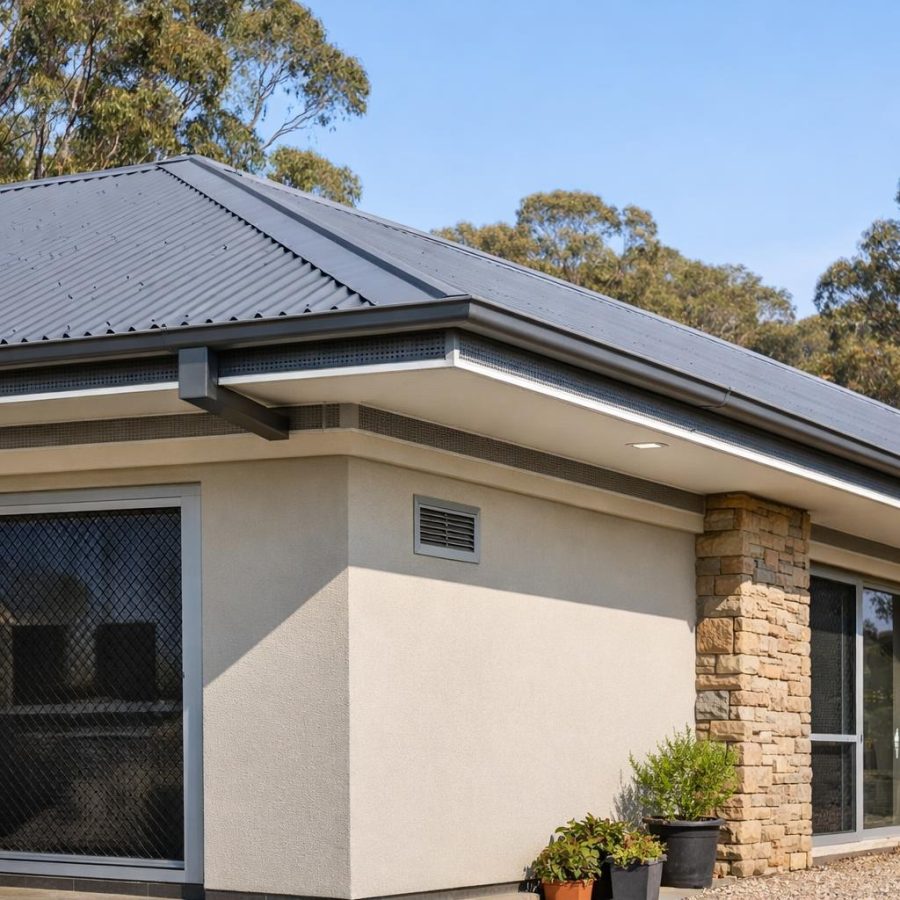
Smart sprinkler zoning is only one part of an integrated residential bushfire protection system. It works best when it complements the rest of the house design rather than trying to replace it. Ember-resistant construction, protected roof and gutter details, dedicated water storage, pumps, sensors, backup power and the dual-controller approach all matter.
The zoning strategy should therefore fit the broader plan. A roof and gutter zone may support ember control. A windward wall zone may reduce heat exposure. A deck zone may help protect combustible verandah elements. A ground zone may reduce nearby ignition sources. A garage, shed or plant-room zone may protect critical outbuildings or support areas that could otherwise intensify the fire problem.
At the same time, the system should remain realistic. It cannot make a house fireproof, and it cannot guarantee survival. What it can do is improve the house’s resistance, buy time, and use the available water more intelligently than a simple all-on approach.
The central lesson is practical: do not waste limited water by turning everything on at once. Detect where the threat is strongest, protect that area first, and keep adjusting the zones as the fire changes. That is how smart zoning contributes to a more resilient home.
Before publication or installation, verify local requirements, product suitability, hydraulic calculations and site-specific procedures, as these can change and must be checked for each property.
FireRescue Training Hub
Access practical fire and emergency study support resources, downloads, checklists, audio guides, and member-only course content.
- Course library
- PDF downloads
- Audio guides
- Checklists
Study support only. Not accredited training or a replacement for workplace procedures.
About the author and safety review
Ken Walker
Former Station Officer and fire service educator
Former career firefighter with extensive career and volunteer fire service experience.
Qualifications: Associate Diploma of Applied Science in Fire Technology; Institute of Fire Engineers studies.
Author profilehttps://www.firerescue.com.au/about-us/