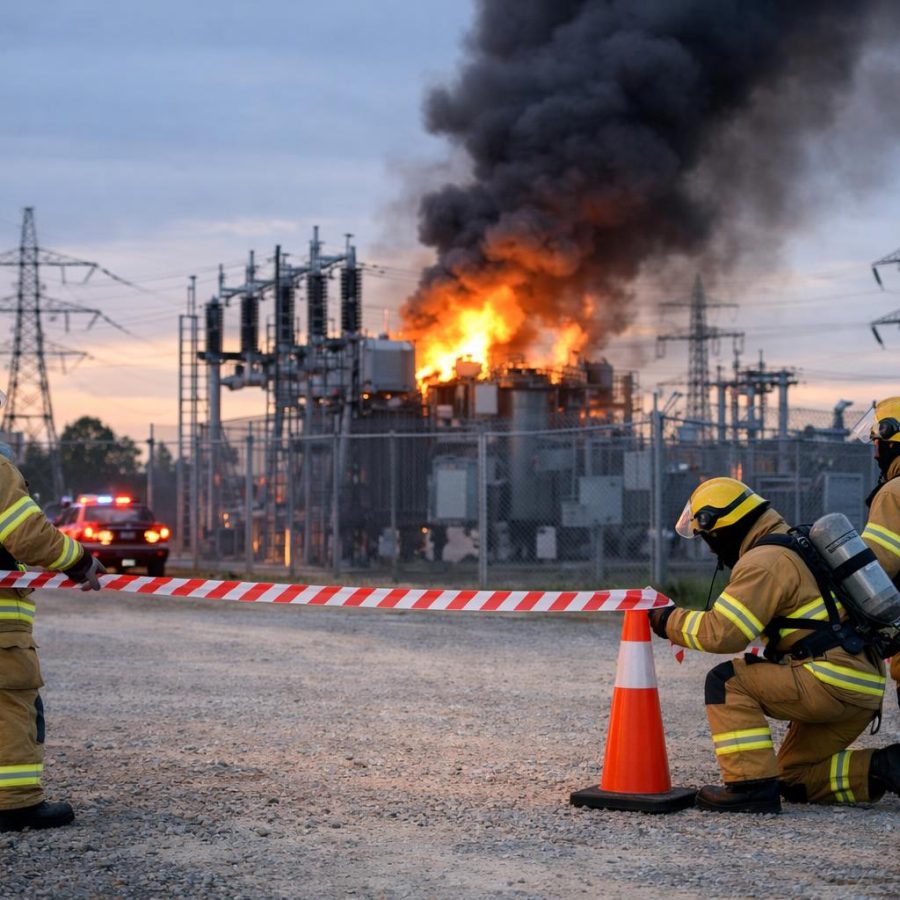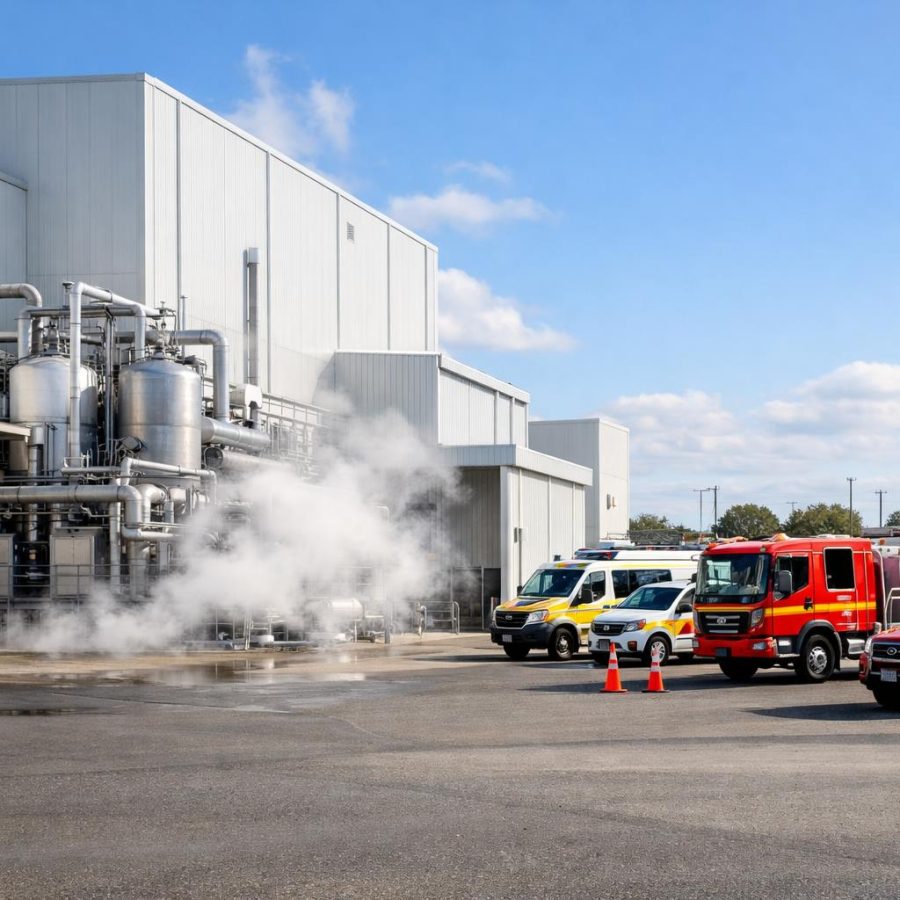
Disaster Victim Identification, or DVI, is the structured process used to establish the identity of deceased people after major incidents where normal identification may be difficult, delayed or inappropriate. In Australia, DVI is not just a forensic task. It is an emergency management function that depends on scene safety, disciplined coordination, accurate records and respectful treatment of the deceased and their families.
What Disaster Victim Identification Means
Disaster Victim Identification is used after incidents involving multiple fatalities, especially where the circumstances make ordinary identification procedures unreliable. It may be required after major transport accidents, bushfires, floods, building collapse, industrial incidents, explosions, terrorism, natural disasters and other emergencies involving multiple deaths.
DVI exists to support three connected goals. First, it helps confirm who has died. Second, it supports coronial and investigative processes by ensuring the right information is linked to the right person. Third, it helps families receive accurate information as soon as it can be safely and lawfully provided.
In practice, DVI is a coordinated process rather than a single action. It can involve police, forensic specialists, pathologists, odontologists, fingerprint specialists, coronial authorities, health services, emergency managers and other supporting agencies. Depending on the incident, firefighters, ambulance personnel, SES members and other first responders may have an important role in the early stages, especially in safety, access control, documentation and logistical support.
A key principle is that identification should never be based solely on visual recognition following a major disaster. Appearance can be changed by fire, trauma, water exposure, decomposition, contamination or the effects of the incident itself. Formal identification may require reliable comparison of ante-mortem information, such as records from a person before death, with post-mortem information gathered after the incident. That may include fingerprints, dental comparison, DNA and other scientifically reliable evidence.
For immediate life-threatening emergencies in Australia, always call Triple Zero (000).
When a Formal DVI Process May Be Required
A formal DVI process may be required whenever the scale, complexity or circumstances of an incident make ordinary identification methods unreliable, unsafe or incomplete. The trigger is not only the number of fatalities. It is also the condition of the scene, the condition of the deceased, the likelihood of mixed or displaced remains, the possibility of missing persons and the need for a careful investigative pathway.
In some events, the early response may still focus heavily on rescue. In others, the scene may quickly shift from rescue operations to recovery, investigation and identification. Emergency managers should expect that DVI may begin as soon as it becomes clear that the incident is likely to involve multiple victims and a formal, coordinated identification process will be needed.
Situations that often create the need for DVI include:
- incidents where many people are reported missing
- events with severe trauma, fire or water exposure
- scenes with fragmented, commingled or otherwise compromised remains
- incidents in remote locations or areas with difficult access
- events where the deceased may not be readily identifiable by standard methods
- situations where coronial and criminal investigation requirements overlap
It is important to understand that not every mass-casualty event immediately becomes a mass-fatality event. Early intelligence may be incomplete. That is why responders should avoid premature assumptions about the number of deceased or the identity of any person found at scene.
Formal DVI is usually activated and managed through police and the relevant jurisdictional arrangements. The exact structure can vary between states and territories, but the principle remains the same: once the incident reaches a threshold where specialist identification is needed, a controlled and multi-agency process should take over.
The Role of Police and Forensic Specialists
Police generally have a central role in DVI operations in Australia. They coordinate the broader identification process, manage investigative priorities and work with coronial and forensic partners to ensure that evidence, documentation and human remains are handled lawfully and consistently.
Forensic specialists may include pathologists, odontologists, fingerprint specialists, DNA laboratories, anthropologists, imaging experts and other technical advisers. Their role is to build a reliable identification picture using recognised methods and to support the coroner, investigators and affected families.
Police and forensic teams may be involved in tasks such as:
- confirming the need for formal DVI arrangements
- coordinating scene examination and recovery priorities
- collecting and comparing ante-mortem and post-mortem information
- maintaining records and chain of custody
- managing the movement of remains and property
- liaising with coronial authorities and family support services
First responders should understand the difference between assisting and directing. Firefighters, ambulance personnel, SES members and other initial responders may provide crucial support at the scene, but they should not attempt to take over specialist identification functions unless they are specifically trained and authorised to do so. Their job is to help create the conditions for a reliable DVI process while continuing to perform their own operational responsibilities.
That cooperation is especially important where agencies are dealing with simultaneous pressures: search and rescue, scene safety, public information, infrastructure damage, hazard management and family concerns. Effective DVI depends on clarity about who is responsible for what, and when.
First Responder Priorities at a Mass-Fatality Scene
At the earliest stage, the main priority is still the preservation of life. Surviving casualties must be protected and treated without unnecessary delay. Once immediate life-saving actions are underway or complete, responders should quickly shift to disciplined scene control and preservation.
A simple sequence can help guide first actions at a mass-fatality scene:
- Protect surviving casualties. Remove people from immediate danger where possible and provide urgent treatment.
- Make the scene safe. Identify hazards such as fire, smoke, structural instability, electricity, fuel, contaminated water, sharp debris, heavy machinery, weather exposure or unstable vehicles.
- Establish incident control. Confirm command arrangements and make sure the right agencies are linked into the response.
- Preserve the scene. Avoid unnecessary disturbance and protect areas that may later be examined by police and forensic specialists.
- Notify police and appropriate specialist authorities. Early notification supports coronial, forensic and DVI arrangements.
- Establish controlled access. Limit entry to authorised personnel only.
- Record important observations. Capture information while it is fresh and before the scene changes.
- Avoid unnecessary movement of deceased people or property. Only move when required for safety, rescue or authorised operational purposes.
- Maintain responder accountability. Know who is in the controlled area and what they are doing there.
- Support an organised transition to specialist DVI operations. Hand over information, records and control in a disciplined way.
This sequence is a practical reminder rather than a complete procedure. It helps responders avoid the common mistake of focusing only on recovery and forgetting that the same scene may soon become a major investigation site.
Responder safety comes first. A scene with deceased people can still be extremely dangerous. The presence of fatalities does not reduce the need for hazards assessment, exclusion zones, PPE and safe working practices. In some events, the hazards may persist long after the rescue phase has ended.
Scene Safety Before Recovery Operations Begin
Mass-fatality scenes may remain hazardous because of fire, structural instability, hazardous materials, electricity, fuel, contaminated water, sharp objects, heavy machinery, weather conditions or unstable vehicles and debris. Fire and rescue services, police, ambulance and SES personnel all have a role in identifying and managing these risks within their own scope of practice.
Before recovery work begins, incident controllers should make sure that the scene has been assessed and that conditions are understood as far as possible. In some cases, that means limiting access until engineers, hazardous materials specialists or other technical advisers have confirmed that entry is reasonably safe. In other cases, it may mean working in phases with strict controls.
It is also important to distinguish between urgent operational movement and forensic disturbance. If a person or object must be moved to prevent further harm, allow rescue access or address an immediate hazard, that may be necessary and justified. The key is to keep it controlled, documented and proportionate.
Where practical, responders should note:
- the condition of the scene on arrival
- obvious hazards and who identified them
- whether any areas were unstable or inaccessible
- what actions were taken to reduce immediate risk
- what was moved, by whom and for what reason
These observations matter because the scene may change quickly during a large incident. Weather, tides, fire spread, traffic management, recovery work and public access can all alter the evidence picture. Clear records help later investigators understand what happened and what was unavoidable.
Protecting the Integrity of the Scene
Preserving scene integrity is one of the most important responsibilities in a mass-fatality response. Once immediate life-saving operations are complete, unnecessary disturbance should be minimised. The scene may contain critical evidence about identity, cause of death, sequence of events and the broader circumstances of the disaster.
Deceased people and associated property should not be moved unless required for safety, rescue, preservation or authorised operational purposes. If movement is necessary, responders should record the original location and relevant circumstances wherever practicable. That includes where the person or item was found, the orientation if relevant, nearby objects, visible injuries if observations are authorised to be recorded, and the reason for any movement.
Protecting the integrity of the scene also means thinking about what not to do. Unnecessary searching through belongings, informal tagging, unauthorised rearrangement of items or casual discussion of identities can all create problems later. The best approach is disciplined restraint: do what is necessary, document what you do and leave specialist interpretation to the correct authorities.
Personal belongings can be important identification or investigative evidence. They should be handled according to authorised procedures and not treated as ordinary property. Items may have legal, emotional and evidentiary significance. Even apparently small objects can become important in the identification process or in explaining how a person came to be at the scene.
In practice, preservation involves more than physical protection. It also includes protecting information. Details about the scene should be shared only with people who need them for operational or investigative reasons. Casual conversation, speculation or unofficial messaging can spread errors very quickly in a large incident.
| Operational area | What good practice looks like | Why it matters |
|---|---|---|
| Access control | Only authorised personnel enter controlled areas | Reduces disturbance, maintains safety and supports accountability |
| Movement of remains | Only when necessary and documented | Protects evidence and supports later identification |
| Property handling | Handled under authorised procedures | Preserves evidentiary value and family relevance |
| Information sharing | Restricted to operational need | Limits rumour, error and distress |
Recording Locations and Important Observations
Accurate records are central to DVI. In a major incident, memory alone is not enough. The scene may be complex, the workforce may be large and the operation may continue over many hours or days. Good documentation helps maintain continuity across shifts, agencies and facilities.
Depending on local procedures, records may include the names of personnel entering controlled areas, times of entry and exit, location information, property movements, significant decisions, hazards identified and transfers between agencies or facilities. These records do not need to be elaborate to be useful. They need to be clear, timely and consistent.
First responders should focus on observations that are objective and immediately relevant. Useful details may include:
- the exact or approximate location where a person was found
- the state of the area around them
- any visible identification marks or property in the immediate vicinity, where authorised to note
- whether the area had been disturbed before responders arrived
- the sequence of operational actions taken at the location
Where possible, note what was seen rather than what is assumed. For example, a responder can record that a person was found in a particular position near a specific object, but should avoid drawing conclusions about identity or cause of death unless that is part of their authorised role. This distinction matters because later forensic interpretation may be very different from first impressions.
Accurate records also support family liaison. Families may ask where their relative was found, when the person was last seen or what happened to personal property. Those questions can only be answered safely and accurately if the scene record is disciplined from the start.
Good record keeping is also a protection for responders. It shows what was done, by whom and for what purpose. In a long and stressful operation, that clarity can reduce confusion and support a fair review afterwards.
Respect, Dignity and Family Considerations
Respect for deceased people is a core obligation in DVI, not an optional extra. Families and communities experience a mass-fatality event through grief, uncertainty and the need for answers. How responders act at scene can influence trust for a long time.
Respectful handling means more than avoiding obvious disrespect. It includes careful language, controlled access, attention to privacy and a refusal to treat the scene as routine. Even where the operational tempo is high, the deceased should be managed as people who matter to their families, communities and the law.
Cultural, spiritual and religious needs should be considered where practicable while maintaining legal, coronial and identification requirements. This may involve consultation through appropriate channels, sensitivity around handling, timing or placement of remains, and awareness that families may have specific concerns about ritual, prayer or mourning practices.
Family liaison is a specialist task in many jurisdictions, but all responders contribute to the family experience. Families need accurate information delivered through appropriate channels. Unconfirmed identities should not be released prematurely. It is better to say that identification is in progress than to offer false certainty. Even well-meant reassurance can become distressing if it later proves wrong.
Public communication must be handled with care. Media and community interest in mass-fatality events can be intense. Operational staff should not comment beyond their role or speculate about identities, casualty numbers or causes. Media releases should be coordinated through approved communication pathways so that families are informed appropriately and investigators are not compromised.
Responder privacy matters too. Personnel should not share images, scene details or identifying information on personal devices or social media. Even if the intention is to debrief with friends or seek support, the risk of harm is too high. Operational discipline includes digital discipline.

Temporary Mortuary and Examination Arrangements
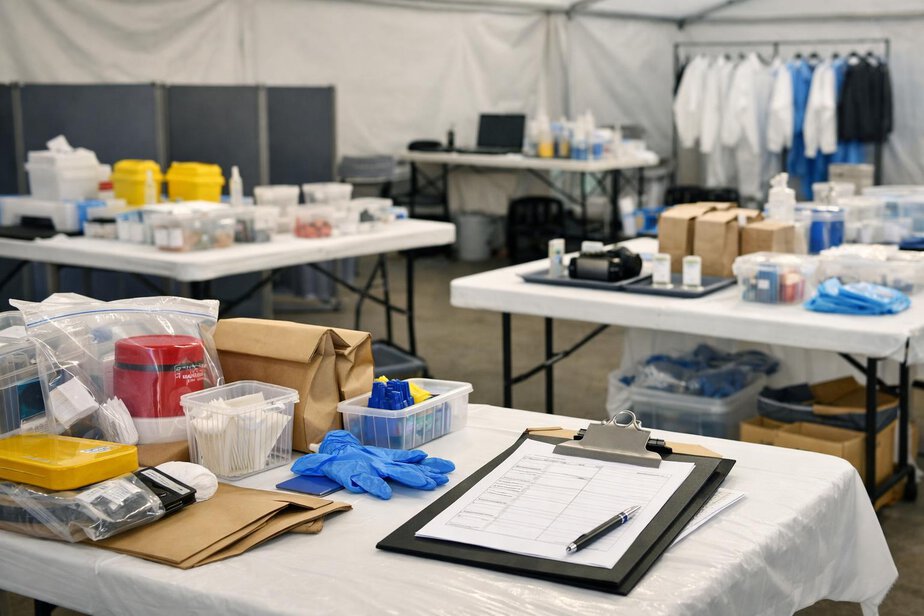
At a high level, temporary mortuary and examination arrangements may be needed when the scale of an incident exceeds ordinary local capacity or when remains need to be held securely for examination, identification and coronial purposes. These arrangements are usually coordinated through specialist and jurisdictional authorities rather than left to front-line crews.
The purpose of temporary facilities is to support orderly handling, documentation, examination and transfer of remains and associated property. They may be used to help separate stages of the process, maintain chain of custody and provide a controlled environment for forensic work. They are not ordinary storage areas, and they should not be improvised without proper direction and authority.
Emergency managers should expect that DVI operations can continue well after the visible emergency response has finished. Recovery, examination, information matching and family liaison can take considerable time. This creates ongoing demands on staffing, logistics, record management and inter-agency coordination.
At a practical level, this means planning for transport, security, documentation, refrigeration or other preservation arrangements where authorised, controlled access, welfare support for staff and clear communication pathways. The exact arrangements will vary by jurisdiction and incident. The role of first responders is to support those arrangements without trying to replace specialist mortuary, forensic or coronial functions.
Because these facilities sit at the intersection of public health, forensic science and respectful care, coordination with health authorities and other responsible agencies is essential. Good planning reduces delays, prevents error and helps ensure that each deceased person is treated consistently and lawfully.
Coordination with Coronial, Forensic and Health Authorities
DVI is not managed in isolation. It sits within a wider system that includes coronial investigation, forensic science, public health, emergency management and sometimes local or state government support. Clear coordination is essential because different agencies may have different but overlapping responsibilities.
The coroner generally has a central role in determining how the deceased are managed from a legal and investigative perspective. Forensic specialists support the technical work required for identification and, where relevant, for understanding cause and circumstances of death. Health authorities may be involved where there are contamination, infection control, public health or mortuary considerations. Local and state government may support logistics, infrastructure and community liaison.
First responders are not expected to resolve every issue themselves. Their responsibility is to recognise when specialist input is needed and to help create the conditions for that input to happen safely and efficiently. That may include making sure access routes are clear, keeping scene records in order, supporting communications, safeguarding evidence and helping with the handover to specialist teams.
Coordination works best when agencies share a common understanding of roles, terminology and priorities. In Australia, that often means following jurisdictional DVI arrangements, coronial processes and agency doctrine rather than improvising a new process at the scene.
International DVI principles may be relevant where local agencies align with widely recognised police and forensic practices, but the operating detail should always match Australian legal and jurisdictional requirements. The key is consistency, not copying terminology without understanding the local framework.
Supporting First Responders After Difficult Incidents
Responders involved in mass-fatality incidents may be exposed to confronting conditions, prolonged work periods and repeated decision-making under pressure. Even when personnel are experienced, the emotional and physical burden can be significant. Agencies should plan for welfare from the beginning, not as an afterthought.
Support should include appropriate rest periods, fatigue management, peer support, psychological support and clear pathways for personnel to report difficulty. People should be encouraged to speak up rather than feeling they must simply tolerate the impact. That applies to firefighters, ambulance officers, police, SES members, emergency managers, recovery workers and support personnel.
Practical welfare measures may include:
- shift rotation and task variation where operationally possible
- access to supervisors who understand the work
- time away from the scene when exposure has been prolonged
- briefings and debriefings that are structured and factual
- clear advice about peer and professional support options
Welfare also connects back to operational performance. Fatigue affects judgement, record keeping, communication and safety awareness. In a mass-fatality operation, those are exactly the areas that must remain strong. Looking after responders is therefore a matter of both duty of care and good incident management.
Commanders and supervisors should recognise that not every responder will react in the same way. Some people want immediate practical tasks. Others may need distance from the scene. Neither response is wrong. What matters is that agencies provide an environment where people can work safely and seek help without stigma.
Transition from Emergency Response to Investigation and Recovery
One of the hardest parts of a mass-fatality response is knowing when the operational focus changes. At first, the work may be dominated by rescue, hazard control and urgent public safety. Later, the emphasis shifts towards preservation, recovery, identification, investigation and family support. That transition must be deliberate and well recorded.
The handover from emergency response to specialist DVI operations should include clear communication about scene status, hazards, movements already made, access arrangements, records created and outstanding risks. If possible, the same disciplined structure used during rescue should continue through recovery so that there is no gap in accountability.
From an emergency management perspective, the transition is not the end of the incident. It is the beginning of another phase with different objectives. Agencies may still be dealing with safety issues, operational fatigue, public messaging, logistics and family enquiries even while forensic work continues. The scene may remain active for days, and sometimes much longer.
Because of that, leaders should plan for continuity. They should expect turnover of personnel, updates to information, ongoing liaison with coronial and forensic authorities and careful management of community expectations. A calm, structured transition helps prevent errors at a time when the incident is already highly sensitive.
Ultimately, successful DVI is measured not by speed alone but by accuracy, dignity and lawful process. The goal is to identify people correctly, support the bereaved and preserve the integrity of both the scene and the investigation.
Practical Key Takeaways
Disaster Victim Identification is a specialised, structured process used after incidents where multiple deaths make ordinary identification difficult or inappropriate. It is built on coordination, evidence, records and respect.
- Life-saving work always comes first, and immediate rescue should not be delayed unnecessarily.
- Once rescue is complete, scene preservation becomes increasingly important.
- Police usually have the central coordination role, supported by forensic and coronial authorities.
- First responders help by securing the scene, controlling access, recording observations and protecting evidence.
- Do not rely on visual recognition alone after a major disaster.
- Move deceased people or property only when necessary and only in a controlled, documented way.
- Keep access, photography and information sharing tightly controlled.
- Respect the dignity, privacy and cultural needs of deceased people and their families.
- Support responders with rest, peer support, psychological care and fatigue management.
- Expect DVI to continue after the initial emergency response has ended.
Good DVI practice helps families, investigators and communities by replacing confusion with process and speculation with reliable information. For publication or operational use, always verify local procedures, agency doctrine and coronial requirements before acting on any incident-specific guidance.
FireRescue Training Hub
Access practical fire and emergency study support resources, downloads, checklists, audio guides, and member-only course content.
- Course library
- PDF downloads
- Audio guides
- Checklists
Study support only. Not accredited training or a replacement for workplace procedures.
About the author and safety review
Ken Walker
Former Station Officer and fire service educator
Former career firefighter with extensive career and volunteer fire service experience.
Qualifications: Associate Diploma of Applied Science in Fire Technology; Institute of Fire Engineers studies.
Author profilehttps://www.firerescue.com.au/about-us/