Undertake Road Accident Rescue Capstone
Full crew scenario from initial briefing to final readiness check.
Undertake road accident rescue capstone learning brings the whole series together. In this final article, one complete crew scenario moves from the first briefing through scene safety, casualty management, access planning, casualty removal, evidence preservation, equipment recovery, decontamination, documentation and final readiness checks.
Part 8 Progress Tracker
Refresh each section as the full road accident rescue scenario unfolds.
Learning Summary
Part 8 uses one practical crew scenario to reinforce the complete undertake road accident rescue workflow. First, the team receives task information and prepares. Next, members establish scene safety, manage casualties, develop an access plan and remove the casualty. Finally, they preserve the scene, recover equipment, complete documentation and restore readiness.
Receive and prepare
Confirm the task, prepare equipment, select PPE and discuss likely hazards.
Secure and assess
Control hazards, establish safe work areas and stabilise the vehicle.
Care and unlock
Assess the casualty, plan access, protect the casualty and complete removal.
End ready
Preserve evidence, recover equipment, decontaminate, debrief and document.
Begin the Capstone With Briefing, Equipment and Team Readiness
The capstone begins with a dispatch to a side-impact collision at dusk. Early information suggests one trapped casualty, moving traffic nearby and several agencies already responding. Therefore, the crew starts by confirming the task, preparing equipment, selecting suitable PPE and discussing likely hazards while en route.
Receive the operational picture
The crew leader confirms the reported location, the collision type, casualty details, expected agencies and known environmental hazards. This information gives the team a practical starting point. It does not replace on-scene assessment, yet it helps members prepare with purpose.
Because the report mentions possible entrapment, the crew considers likely access needs before arrival. Meanwhile, members remain ready to update their assumptions once they see the scene.
Equip the team before arrival
Next, the crew checks road rescue equipment and confirms operational readiness. Members also select PPE relevant to the rescue conditions. In addition, the team discusses traffic, low light, vehicle systems, glazing and the risk of unstable vehicle movement.
This conversation builds shared awareness. As a result, the crew arrives more prepared to recognise hazards and act within the rescue plan.
A strong rescue operation begins before arrival, because sound preparation supports safer decisions later.
Establish Scene Safety Before the Rescue Task Expands
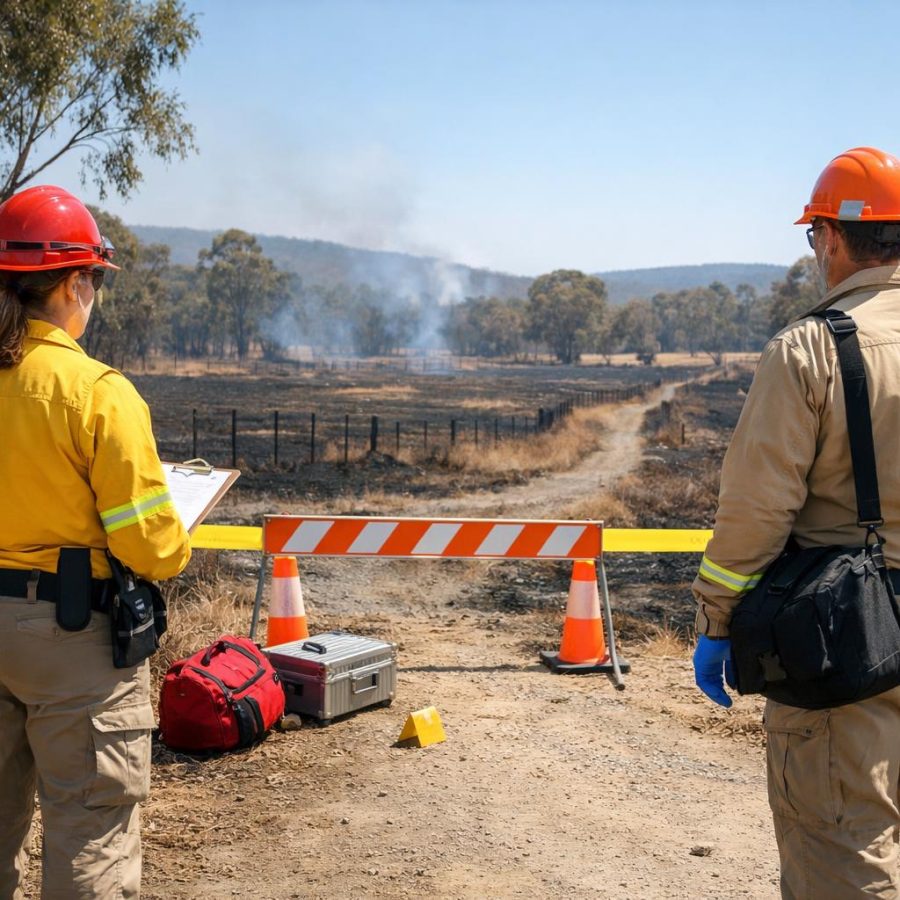
On arrival, the crew sees one damaged vehicle partly across the roadside edge and another vehicle clear of the main work area. Traffic slows nearby, bystanders gather and the trapped casualty remains inside the first vehicle. Before the team moves deeper into rescue work, it assesses hazards, applies controls and creates a safer operating space.
Assess the whole scene
The crew considers traffic movement, vehicle positions, possible fuel or electrical hazards, glass, scene access, bystanders and the medical access route. Then, members confirm the casualty location and look for hazards that could change during the operation.
This first assessment guides every later action. Without it, the rescue could become rushed, narrow and less safe.
Control risks and stabilise the vehicle
The team follows scene management procedures, establishes a safe working area and positions equipment so it supports the task. After that, members stabilise the casualty vehicle to reduce unwanted movement during access and removal.
Because the rescue area now has clearer boundaries and better control, medical and rescue tasks can progress with less confusion.
Assess
Identify hazards, risks, scene layout and casualty position.
Control
Apply safe work practices, scene boundaries and traffic-aware controls.
Stabilise
Prevent unwanted vehicle movement before access or removal advances.
Manage the Casualty and Clarify the Rescue Need
With the scene under better control, the crew focuses on casualty management. First, members maintain hygiene precautions. Next, they assess the casualty, support stabilisation and clarify the nature of the entrapment so the access plan can reflect real needs.
Care shapes the rescue plan
The casualty reports lower-body restriction and discomfort. Medical personnel request improved side access while continuing assessment. Therefore, rescue decisions now connect directly to casualty needs, not only to visible vehicle damage.
Throughout this stage, the crew maintains respectful communication and avoids unnecessary movement around the casualty space.
Coordinate with medical personnel
Rescue members provide information about vehicle access, entrapment points and likely working space. In return, medical personnel explain treatment needs that affect the pace and direction of access work.
This coordination matters. It prevents the rescue pathway from becoming tool-led when it should remain casualty-led.
Maintain hygiene precautions during casualty contact and support.
Assess injuries and entrapment so the plan reflects the casualty’s condition.
Support medical personnel while keeping the rescue task coordinated.
Plan Access, Protect the Casualty and Complete Safe Removal
The team leader, medical personnel and rescue crew now agree on a side access pathway. Because casualty protection remains essential, the crew prepares shielding, pads sharp hazards and confirms that the chosen approach supports controlled removal.
Create the planned access pathway
The rescue crew uses appropriate techniques and equipment to create the required access space. Members work methodically, communicate clearly and monitor the casualty environment as vehicle work progresses.
Instead of chasing speed alone, the team keeps every action linked to the agreed rescue objective.
Remove the casualty with control
Once the path is ready, responders coordinate with medical personnel and begin casualty removal using suitable rescue removal techniques and equipment. The team maintains stability, clear communication and casualty protection through the movement phase.
Finally, the casualty transfers safely from the vehicle to medical care. That outcome reflects the quality of every decision that came before it.
Consult
Confirm the access plan with leadership and medical personnel.
Protect
Shield the casualty and manage hazards created by access work.
Open
Create the planned access pathway using suitable techniques and tools.
Remove
Complete casualty removal in a controlled, coordinated way.
Conclude the Incident With Evidence Care, Recovery and Documentation
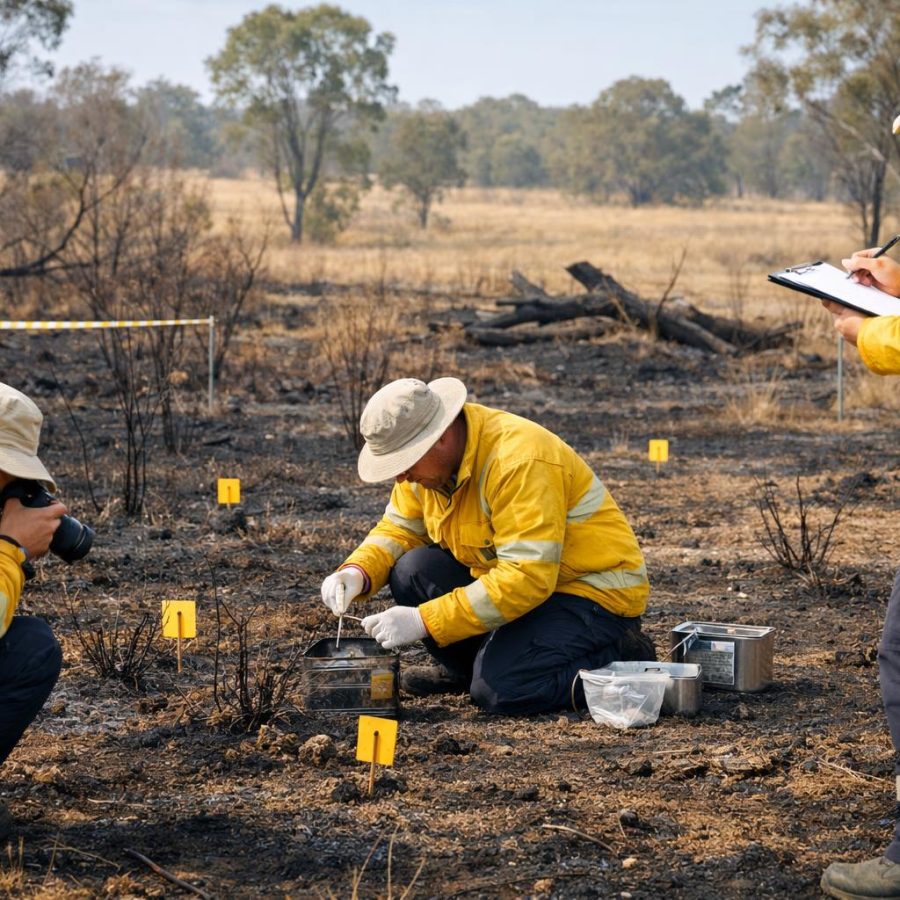
After casualty removal, the rescue task does not simply stop. Instead, the crew shifts to scene preservation, equipment recovery, cleaning, decontamination, hygiene precautions, debriefing and operational documentation.
Preserve the scene and recover equipment
The team protects incident scene integrity and avoids unnecessary disturbance. Meanwhile, deployed tools, stabilisation gear and protective materials are recovered carefully. Members identify damage, contamination or servicing needs before equipment returns toward readiness.
This stage supports both accountability and the next operational response.
Debrief and document the operation
The crew contributes to the operational debrief and completes required documentation. Notes, reports and exposure records help capture what occurred, what actions were taken and what follow-up may be needed.
Therefore, the final phase turns rescue experience into accountable records and future learning.
The rescue ends well when the casualty is clear, the scene stays protected and the crew restores readiness responsibly.
Use the Capstone to Review the Full Road Accident Rescue Workflow
This final article connects the whole series. Each earlier part supports one stage of the same rescue pathway. When crews apply the process in order, they create a more disciplined, casualty-focused and operationally ready response.
The full sequence matters
Briefings help teams prepare. Scene safety creates the working conditions. Casualty management clarifies the rescue need. Access planning shapes the pathway. Removal techniques complete the technical rescue task. Close-out actions protect evidence and restore readiness.
Together, these stages form one connected rescue discipline.
The capstone supports future learning
Training becomes stronger when learners can connect isolated tasks into a full operational picture. For that reason, this capstone scenario works as both a summary and a practical review tool.
It also gives teams a clear structure for discussion, drills and scenario-based reflection.
A rescue crew performs best when each stage supports the next, from first briefing to final readiness check.
The Full RESCUE Cycle
The undertaking road accident rescue capstone brings the complete RESCUE Cycle together. Each stage supports a practical operational purpose and keeps the rescue process clear, ordered and casualty-focused.
Receive
Receive the briefing, confirm task information and understand the reported hazards.
Equip
Prepare rescue equipment, select PPE and build shared team awareness.
Secure
Assess the scene, control hazards, create safe work areas and stabilise vehicles.
Care
Maintain hygiene, assess casualties, stabilise where needed and support medical personnel.
Unlock
Plan access, protect casualties, create the pathway and complete controlled removal.
End Ready
Preserve the scene, recover equipment, decontaminate, debrief and complete records.
Part 8 focus: Use the RESCUE Cycle to connect the full rescue process from first information to final readiness.
Interactive Capstone Scenario Drill
Choose the strongest full-sequence crew response for the scenario.
Scenario
Your crew receives a dusk-time report of a side-impact collision with one possible trapped casualty. On arrival, traffic remains active nearby, the casualty vehicle requires stabilisation and medical personnel need improved access. Which response best reflects the full road accident rescue workflow?
Knowledge Quiz
Test the complete Part 8 rescue sequence before closing the series.
Question 1
What should happen early in the road accident rescue workflow?
Question 2
Why does casualty assessment matter before access planning?
Question 3
What completes the technical rescue flow?
Question 4
What does “End Ready” include?
60-Second Final Refresher Drill
Tick each statement once you can explain it clearly in your own words.
I can describe how scene safety, casualty care and access planning connect.
I can explain why controlled removal depends on every earlier stage of the rescue.
I can describe why evidence, equipment, decontamination and documentation complete the operation.
FireRescue Training Hub
Access practical fire and emergency study support resources, downloads, checklists, audio guides, and member-only course content.
- Course library
- PDF downloads
- Audio guides
- Checklists
Study support only. Not accredited training or a replacement for workplace procedures.
About the author and safety review
Ken Walker
Former Station Officer and fire service educator
Former career firefighter with extensive career and volunteer fire service experience.
Qualifications: Associate Diploma of Applied Science in Fire Technology; Institute of Fire Engineers studies.
Author profilehttps://www.firerescue.com.au/about-us/