BAL Rating Guide
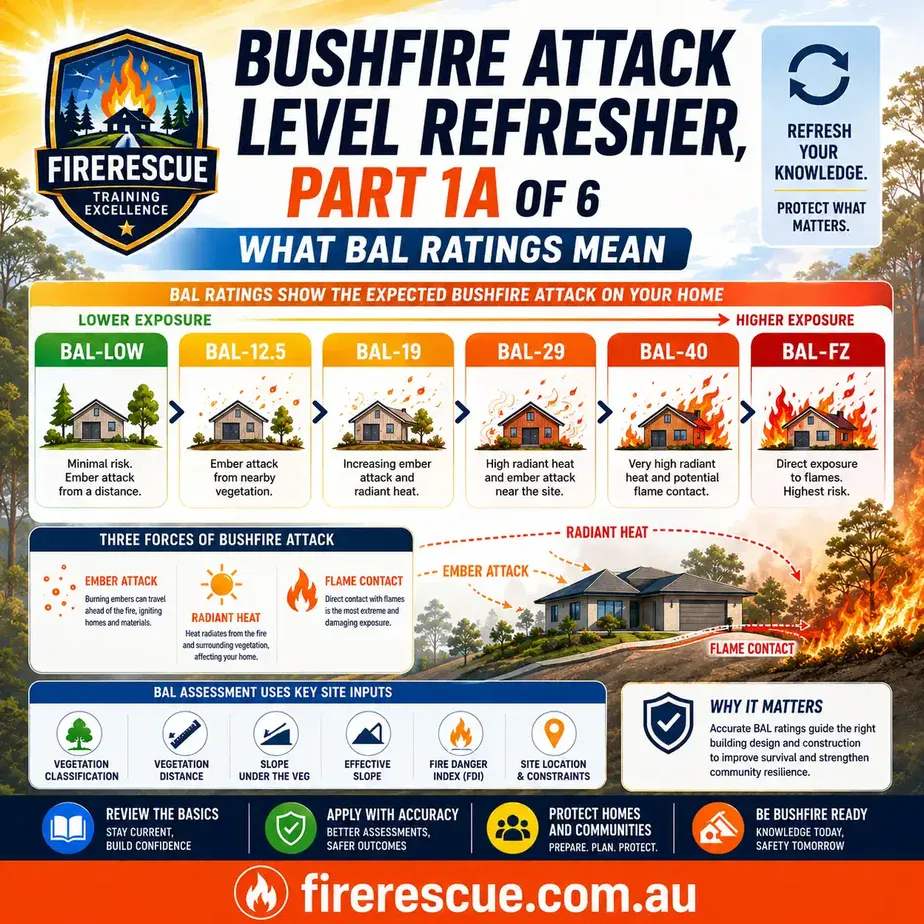
Quick refresher: BAL-LOW to BAL-FZ.
Part 6 of 6
Record and Report BAL Assessments: Final Capstone and Communication
Record and report BAL assessments clearly so the result can be understood, checked and used correctly. This final lesson explains documentation, reporting, communication, verification notes and the full capstone workflow.
Mark each section as refreshed as you work through the article.
0% refreshed
Learning summary
Part 6 completes the course by turning the BAL outcome into a clear record, report and communication process.
Main goal
You will learn how to record and report BAL assessments in a clear and usable way.
Key tasks
This lesson covers documentation, reporting, communication, limitations, assumptions and the final capstone workflow.
Why it matters
A good BAL result can still fail if the record is unclear, incomplete or hard to follow.
Why it is important to record and report BAL assessments well
A BAL result must be clear, traceable and easy to understand. Therefore, good reporting matters.
When you record and report BAL assessments well, you protect the quality of the whole process. First, good records show what was assessed. Next, they show how the result was reached. Finally, they show any limits that affected the work.
Good reporting also supports review. A trainer, supervisor, builder, designer or site owner may need to understand the result later. Therefore, the report should be clear and direct.
In addition, good records reduce confusion. They help other people understand the vegetation, distance, slope and fire danger inputs used in the assessment. As a result, the BAL outcome becomes easier to trust and easier to explain.
Most importantly, documentation is part of professional practice. A BAL assessment is not complete until the findings are recorded and communicated properly.
Record the result clearly. Then report it in a way that shows the input chain, the verification step and any limits or assumptions.
What should be included in BAL records
A strong record is simple, complete and easy to check. Therefore, the right details must be included.
A BAL record should identify the site clearly. It should also identify the proposed building location. These details link the assessment to the correct place.
Next, the record should show the major site inputs. These inputs include the relevant fire danger information, vegetation classification and type, distance to vegetation and slope under vegetation.
After that, the record should show the BAL outcome. It should also show that the result was verified in line with organisational procedures.
Finally, the record should note limitations, assumptions, access issues or uncertainty. These details matter because they explain the context of the assessment.
Record checklist
- Site address or site identification details
- Proposed building location
- Relevant FDI or wind speed input
- Vegetation classification and type
- Distance to vegetation
- Slope under vegetation
- Determined BAL outcome
- Verification note
- Constraints, assumptions or limitations
How to write clear BAL reports
Good BAL reports are clear, short and specific. They do not hide behind vague wording.
To write clear BAL reports, start with plain language. State what site was assessed. Then state the key site inputs used. After that, state the BAL result.
Keep the writing direct. For example, write “The site vegetation was classified as woodland” rather than “It was considered that the vegetation may possibly be woodland.” Clear wording improves readability and reduces confusion.
In addition, use headings and lists where helpful. These features make the report easier to scan. They also help the reader find the result, the key inputs and the important notes quickly.
However, clear reporting does not mean weak reporting. You should still include the essential facts, the verification step and any relevant limits.
Say what was assessed, what inputs were used and what BAL was determined.
Use short sentences, plain words and clean headings.
Include the verification step and any important limitations or assumptions.
How to communicate BAL findings clearly
A good assessor can explain the result in plain language. Therefore, communication matters as much as documentation.
When you communicate BAL findings, keep the message simple. First, explain what site was assessed. Next, explain the main inputs used. Then explain the BAL result.
If the audience is a site owner or client, avoid heavy jargon where possible. Instead, explain the result in practical language. However, stay within your role and do not give advice outside scope.
Communication should also be honest. If there was a site constraint, say so. If an assumption had to be noted under procedure, say that too. Clear communication builds trust.
Finally, match the explanation to the record. The spoken explanation and the written report should support each other, not contradict each other.
Do not overstate the result. Explain the assessment clearly, stay within scope and rely on the recorded evidence.
Record limits, assumptions and constraints honestly
Every assessment has a context. Therefore, the report must show important limits and assumptions.
If part of the site was hard to access, record that. If visibility was reduced, record that. If a plan was unclear, record that too. These notes help other people understand the conditions under which the work was done.
Assumptions should also be recorded clearly. However, assumptions must follow organisational procedure. They should never be used to hide weak assessment work.
Recording limits honestly protects the assessor. It also protects the quality of the report. In contrast, hiding limitations can make the final BAL harder to defend.
Therefore, the best habit is simple. If a constraint affected the assessment, note it clearly, explain it briefly and show how procedure was followed.
Common report notes
- Restricted site access
- Dense vegetation limiting visibility
- Unclear boundary or building position
- Weather or safety limits
- Procedure-based assumptions that were required
Check the report before finalising it
A final check improves quality. Therefore, every BAL report should be reviewed before release.
Before you finalise the report, review the basics. Check the site details. Check the building location. Then check the fire danger, vegetation, distance and slope information.
Next, check the BAL result itself. Make sure it matches the recorded inputs and the required method. After that, check that the verification note is present.
Finally, review readability. Short sentences, clear headings and specific language make the report easier to understand. If a sentence feels vague, tighten it. If a paragraph feels crowded, split it.
This final review stage is simple, but it is powerful. It catches small errors before they become bigger problems.
Accuracy check
Make sure the site details and key inputs are correct.
Process check
Make sure the BAL was verified under organisational procedures.
Readability check
Make sure the report is easy to read, easy to scan and easy to explain.
The final capstone workflow
The capstone brings the whole course together. Therefore, it should follow a clear and practical sequence.
First, confirm the site and the assessment task. Next, review the relevant standards, organisational procedures and fire danger input. Then gather and confirm vegetation, distance and slope information.
After that, determine the BAL. Next, verify the result through the required process. Then prepare the written record and report.
Finally, communicate the findings clearly. This includes the BAL result, the main site inputs and any important limitations or assumptions.
When the learner follows this workflow, the assessment becomes more structured. As a result, the final record is stronger and easier to defend.
Confirm the site and collect the required inputs carefully.
Use the required method to determine the BAL.
Check the result against procedure and recorded evidence.
Write and explain the result clearly and professionally.
Using the BAL READY Cycle in this final part
Part 6 focuses strongly on the Y step: your records are clear.
The BAL READY Cycle now closes the course. The learner has worked through bushfire attack, standards, site location, vegetation, distance, slope and BAL determination. Now the result must be recorded and reported clearly.
This final step matters because a good result still needs a good record. Therefore, clear communication, clear reporting and clear evidence complete the process.
Use the required inputs and method to identify the BAL.
Check the result through organisational procedures.
Prepare a clear record and formal report.
Communicate the outcome so others can understand and use it.
Practical scenario drill
Use this scenario to apply the final part of the course.
Scenario
You have completed the site assessment. The site inputs were recorded. The BAL was determined and verified. One part of the site had restricted access, and that limitation was noted during the assessment.
Question: What is the best final step?
Common mistakes and better habits
These habits help lift report quality and readability.
Common mistake
Giving the BAL result without showing the key inputs that support it.
Better habit
State the result and show the key inputs clearly and in order.
Common mistake
Using vague wording that makes the report hard to follow.
Better habit
Use short sentences, clear headings and direct language.
Common mistake
Leaving out assumptions, access problems or limitations.
Better habit
Record important limits honestly and explain them briefly.
Knowledge check
Answer these quick questions to finish the course.
60-second refresher drill
Use this drill as a quick recap for Part 6 and the full course.
- Name five things that should appear in a BAL report.
- Explain why clear writing improves a BAL report.
- Describe why limits and assumptions should be recorded honestly.
- State why the BAL should be verified before the report is finalised.
- Explain how to communicate the BAL result clearly to a site owner or client.
FireRescue Training Hub
Access practical fire and emergency study support resources, downloads, checklists, audio guides, and member-only course content.
- Course library
- PDF downloads
- Audio guides
- Checklists
Study support only. Not accredited training or a replacement for workplace procedures.
About the author and safety review
Ken Walker
Former Station Officer and fire service educator
Former career firefighter with extensive career and volunteer fire service experience.
Qualifications: Associate Diploma of Applied Science in Fire Technology; Institute of Fire Engineers studies.
Author profilehttps://www.firerescue.com.au/about-us/