Caravans, campervans and motorhomes are compact, well-used spaces, which means fire can spread quickly and cut off escape routes with very little warning. Good preparation, safe equipment and a practiced escape plan can make the difference between a close call and a serious emergency.
Why fire moves so quickly in a caravan or motorhome
A caravan or motorhome can feel safe and familiar, but it contains many things fire likes: soft furnishings, bedding, paper, cooking oils, plastics, electrical gear, gas appliances and fuel. Once a small fire starts, heat and smoke build fast in a confined area. A narrow hallway, a single doorway or a blocked exit can quickly trap people inside.
That is why fire safety in a recreational vehicle is different from fire safety at home. You often have less space, less time and fewer escape options. A small fault in a charger, a hot appliance left too close to bedding, a gas leak or a cooking flare-up can become a fast-moving emergency.
The aim is not to be alarmed. The aim is to be ready. If you understand the main hazards and set up your vehicle properly before you travel, you can reduce the chance of a fire starting and improve your chances of getting out safely if one does.
Essential fire safety gear to carry and check
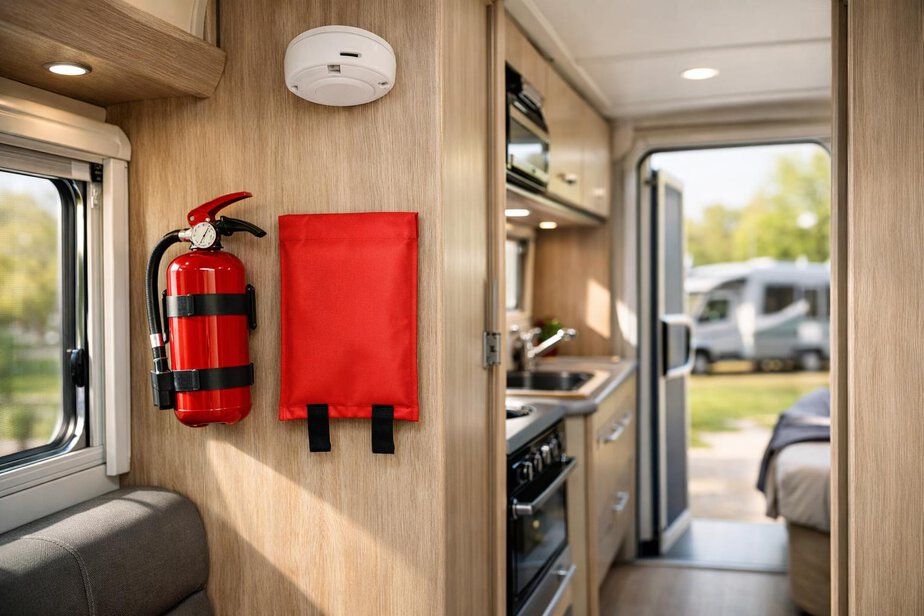
Before any major trip, check that your caravan, campervan or motorhome has the right fire safety equipment and that it still works. Fire and Rescue NSW recommends a working smoke alarm, a dry chemical powder fire extinguisher and a fire blanket located near the exit. The escape route should be clear, and nothing should block the way out.
These items are not optional extras. They are part of basic travel preparation. A smoke alarm may give you the first warning while people are asleep. A dry chemical powder extinguisher can help with a very small fire if there is a safe exit behind you. A fire blanket can be useful for a small cooking fire. But none of these items replaces the need to leave immediately if fire grows, smoke thickens or your exit becomes unsafe.
What to check before departure
- Test the smoke alarm and replace the battery if needed.
- Check the extinguisher pressure gauge and confirm it is easy to reach.
- Make sure the fire blanket is accessible near the exit, not buried in a cupboard.
- Check that doors and windows open freely.
- Keep the main exit, bedside exits and internal walkways clear.
- Look over the expiry dates, service labels and condition of safety equipment.
It is also sensible to know how your equipment works before you need it. Read the instructions, check the mounting points and understand the safe way to use each item. If your extinguisher is too old, damaged or unserviceable, replace it before you travel.
Plan the escape route before you leave home
Every caravan and motorhome should have a simple escape plan. This should be done before travel, not after a scare. Everyone who will sleep in the vehicle should know how to get out in the dark, where to meet once outside and how to call for help.
Practice the plan in daylight first, then repeat it at night with the lights off. This matters because fire and smoke often happen when people are asleep. In the dark, familiar things feel different. A locked hatch, a blocked cupboard or a stack of bags can slow you down when seconds matter.
What a good escape plan includes
- The nearest safe exit from each sleeping area.
- A second way out if the main door is blocked.
- Where children will go once outside.
- Who will call Triple Zero (000).
- Where to stand away from the caravan, LPG cylinders and nearby hazards.
- A quick check that no one has gone back inside.
Keep doors, windows and hatches easy to open. Do not store chairs, luggage, shoes or loose gear across escape paths. If a window is intended for emergency exit, make sure everyone knows how to use it and can reach it without climbing over clutter.
If you travel with children, older people or anyone with limited mobility, plan how they will get out early and safely. The plan should be simple enough to remember while sleepy, stressed or in smoke.
Cooking, heating and open flames
Many caravan fires begin in the kitchen or near a heat source. A pan left unattended, a towel too close to a burner, a heater placed near bedding or a barbecue used in the wrong place can create a dangerous situation very quickly.
Portable LPG barbecues, heaters and cooking appliances must not be used inside caravans, motorhomes or other enclosed spaces. Even when doors or windows are open, these devices can produce deadly carbon monoxide. Carbon monoxide is invisible and you cannot smell it. It can make people very sick or kill them without warning.
Permanently installed gas appliances are different, but they still need suitable ventilation and safe operation. Vents and flues must not be blocked. Follow the appliance instructions and keep clear space around heat-producing equipment.
Simple cooking and heating habits that reduce risk
- Stay in the kitchen area while cooking.
- Keep tea towels, paper and packaging away from burners and ovens.
- Turn off appliances when not in use.
- Let hot plates, grills and portable appliances cool before moving them.
- Use heaters only as intended by the manufacturer.
- Keep a fire blanket near the exit and know when to use it.
Never use a barbecue, heater or other portable gas appliance inside a caravan or motorhome just because it feels drafty or cold outside. If a space is not designed for that appliance, it is not a safe place to use it.
If a cooking fire starts and it is very small, you may only attempt to extinguish it if there is a safe exit behind you and the path out remains clear. If there is any doubt, leave immediately and close the door behind you if it is safe to do so. Never try to fight a fire if smoke is building or the flames are spreading.
LPG cylinders, hoses, regulators and ventilation
LPG can be useful for cooking and heating, but it must be treated with care. Cylinders must be securely mounted so they cannot move during travel. Fittings, regulators and hoses should be in good condition and checked regularly. If you notice damage, cracking, corrosion or wear, do not ignore it.
Pilot lights should be turned off before towing, and also while the towing vehicle’s engine is running. This reduces risk during travel and fuel stops. Follow the instructions for your specific setup, because layouts and controls can vary between vehicles.
Portable gas appliances should not be used inside enclosed spaces. Permanently installed appliances need ventilation, and vents and flues must not be blocked by luggage, covers, dust or modification. Good ventilation is part of the appliance’s safety system, not an optional extra.
Safe LPG habits on the road and at camp
- Check cylinders are secured upright and cannot shift.
- Inspect hoses for cracks, brittleness and damage.
- Keep regulators clean and protected from impact.
- Do not block vents, flues or gas compartments.
- Turn off pilot lights before towing.
- Use portable LPG appliances outdoors only.
Gas installation, repair and servicing work should only be completed by an appropriately licensed gas fitter. Do not try to improvise repairs with tape, glue or makeshift fittings. Even a small leak can create a fire or explosion hazard.
Because requirements can differ across states and territories, check local rules before travel and before any modification or repair work. What is acceptable in one place may not meet requirements in another.
| Hazard | Safer action | Who should do the work |
|---|---|---|
| Damaged LPG hose | Stop using it and have it checked or replaced | Licensed gas fitter |
| Blocked vent or flue | Clear the blockage and keep ventilation open | Owner can keep area clear; servicing by licensed gas fitter |
| Gas appliance repair | Do not use until repaired | Licensed gas fitter |
Electrical systems, powered sites and lead safety
Electrical gear can also start fires if it is damaged, overloaded or used carelessly. This includes chargers, inverters, portable devices, extension leads, 240-volt caravan supplies and built-in electrical systems.
Electrical installation work, including 240-volt wiring and safety switches, should be completed by a licensed electrician. Caravan and motorhome owners can do basic checking and safe use, but not unlicensed electrical work.
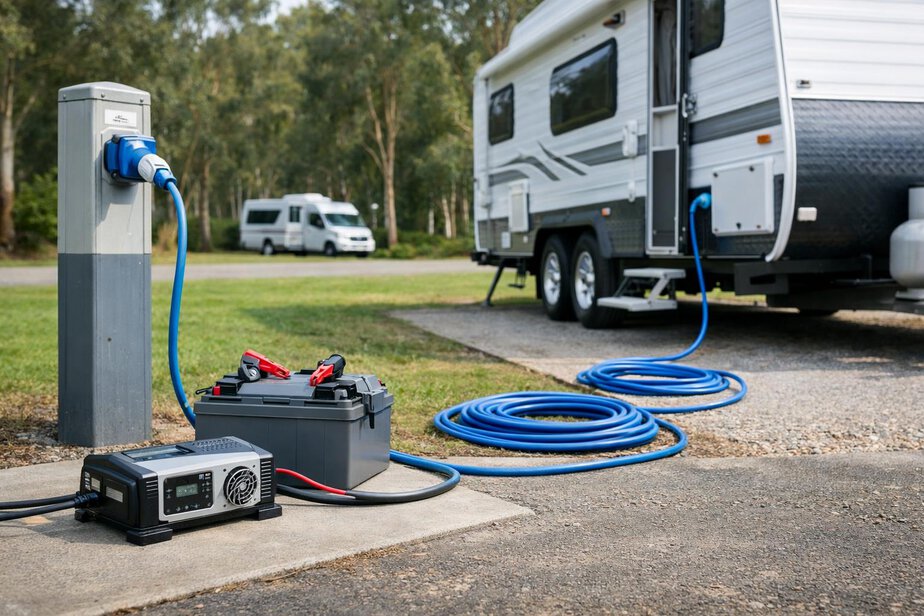
At powered sites, use suitable caravan electrical leads. Leads should be undamaged, fully uncoiled and placed where vehicles and people cannot damage or trip over them. Never use double adaptors to connect a caravan supply lead. If a connection or lead looks worn, gets hot or appears unsafe, stop using it and seek help.
Practical powered-site checks
- Inspect leads before every trip.
- Keep plugs and connectors dry and protected.
- Do not run leads where tyres can roll over them.
- Do not place leads under mats, bedding or rugs where heat can build up.
- Use the site’s electrical connection as intended.
- If a safety switch trips repeatedly, get the system checked rather than forcing it back on.
A common mistake is treating every socket, adapter or extension as interchangeable. They are not. Power equipment needs to match the system, the load and the conditions. If in doubt, stop and have the setup checked by a qualified person.
Lithium batteries, charging and warning signs
Lithium-ion batteries are now common in phones, power banks, tools, e-bikes, cameras, laptops and many caravan accessories. They can be very useful, but they need careful charging and storage. A damaged or failing battery can overheat quickly and produce toxic smoke.
Use the manufacturer-approved charger for lithium-ion batteries. Charge devices on a hard, non-flammable surface and keep them away from bedding, carpet, clothing and paper. Do not charge batteries while asleep or away from the caravan. Disconnect them when charging is complete.
Pay attention to warning signs. Stop using a battery if it becomes extremely hot, swollen, damaged or begins leaking, smoking, smelling unusual, hissing or popping. These signs may mean the battery is failing and could catch fire or restart after seeming to cool down.
Safer charging habits for trips and overnight stays
- Charge on a bench, tray or other hard surface.
- Keep chargers and batteries out of direct sun and away from heat sources.
- Use the correct charger for the device.
- Do not cover charging devices with clothes or bedding.
- Unplug when charging is finished.
- Keep damaged batteries away from other items and do not keep using them.
If a battery becomes hot or starts to smell strange, warn everyone and move away from the caravan. Battery fires can release toxic smoke and may flare up again after appearing to be out. Call Triple Zero (000) and follow emergency advice. Do not handle a damaged battery more than necessary.
Because battery products and charging systems vary widely, check the manufacturer instructions for each item. Do not assume a device is safe just because it has been used before without trouble.
Camping setup, campfires and heat sources around your van
The area around the caravan matters as much as the inside. Campfires, barbecues, fuel containers, gas cylinders and hot equipment should all be placed with enough separation to reduce the chance of one hazard affecting another. Sparks, radiant heat and careless placement can start fires or damage gear.
In Victoria, CFA advises keeping campfires at least three metres from tents, equipment, gas cylinders and fuel. That is a practical reminder that heat needs space. Keep water available and completely extinguish the fire before leaving or sleeping. Always check local restrictions and Total Fire Ban rules, because requirements can change depending on where you are and the fire danger on the day.
Across Australia, fire restrictions, caravan requirements and gas rules can differ between states and territories, so local checking is essential. What is allowed in one region may not be allowed in another, especially during high fire danger periods.
Safer campsite habits
- Keep campfires well away from vehicles and gear.
- Store fuel containers and gas cylinders in suitable locations.
- Do not place hot barbecues near awnings, walls or dry grass.
- Keep a clear zone around heat sources.
- Supervise children and pets near any heat source.
- Fully extinguish ashes and embers before going to sleep.
When setting up camp, think about wind direction as well as distance. A gust can move embers farther than expected. Dry grass, paper and soft furnishings can ignite quickly if a heat source is too close.
If a fire starts: act early, warn others and get out
If a fire starts in a caravan, campervan or motorhome, do not waste time looking for the perfect response. The first priority is to get people out safely.
What to do immediately
- Shout a warning and wake everyone.
- Leave immediately using the nearest safe exit.
- Move well away from the caravan and LPG cylinders.
- Call Triple Zero (000).
- Warn neighbouring campers and caravan-park management.
- Do not return for belongings.
If the fire is tiny and the exit behind you remains clear, you may use the extinguisher or fire blanket. Only do this if you are trained enough to do it safely and the fire is still very small. If you cannot get out easily, if the smoke is heavy, or if the fire is already growing, leave immediately and call for help.
Never stay longer than the situation allows. A blaze inside a small vehicle can change in seconds. Smoke, heat and toxic gases can make it impossible to see or breathe. Once outside, stay outside and keep others away from the vehicle and cylinders.
Pre-trip and bedtime fire-safety checklist
A simple checklist makes fire safety easier to remember, especially when you are packing, travelling or settling in for the night. Use it every time you head away.
Before every major trip
- Test the smoke alarm.
- Check the dry chemical powder extinguisher.
- Confirm the fire blanket is near the exit.
- Make sure doors, windows and escape paths are clear.
- Inspect LPG cylinders, hoses, regulators and fittings.
- Check that vents and flues are open and unobstructed.
- Confirm the battery chargers and electrical leads are in good condition.
- Review the escape plan with everyone travelling.
- Check local fire restrictions, site rules and state or territory requirements.
Before going to bed
- Turn off cooking appliances.
- Make sure portable LPG appliances are not being used indoors.
- Check that chargers are unplugged when finished.
- Keep the escape route clear.
- Confirm everyone knows the nearest exit.
- Place keys, phone and torch where they can be reached quickly.
- Make sure the area around heat sources is tidy and safe.
If you build these habits into every trip, they soon become routine. That routine can buy you precious time if something goes wrong in the middle of the night.
Final checks before you travel
Caravan and motorhome fire safety is about preparation, not fear. A working smoke alarm, a good extinguisher, a fire blanket near the exit, safe LPG handling, careful charging and a practiced escape plan all work together to reduce risk.
Check your vehicle before every major trip and service fire equipment, gas installations and electrical systems according to manufacturer instructions. Use licensed trades for gas and 240-volt electrical work. Keep campfires, barbecues and heat sources away from the van. Watch for battery warning signs. Keep escape routes clear. And make sure everyone knows what to do if fire starts.
Most importantly, remember that immediate life-threatening emergencies in Australia require Triple Zero (000). If a fire starts, get people out first, warn others and call for help. Before publication or travel, verify the latest facts, local procedures and rules in your state, territory and campsite.
FireRescue Training Hub
Access practical fire and emergency study support resources, downloads, checklists, audio guides, and member-only course content.
- Course library
- PDF downloads
- Audio guides
- Checklists
Study support only. Not accredited training or a replacement for workplace procedures.
About the author and safety review
Ken Walker
Former Station Officer and fire service educator
Former career firefighter with extensive career and volunteer fire service experience.
Qualifications: Associate Diploma of Applied Science in Fire Technology; Institute of Fire Engineers studies.
Author profilehttps://www.firerescue.com.au/about-us/