Key takeaways
During emergencies, especially fires and natural disasters, stress affects how people behave and respond to evacuation orders. Recognising common stress reactions can improve your chances of a safe escape.
Australian emergency services work together to provide clear instructions during crises. Following official advice and knowing what to expect helps reduce confusion and panic.
Emergency Evacuation Behaviour Under Stress
Get the practical Australian guide covering stress reactions, safer evacuation decisions, preparation steps, and when to call 000. Clean, quick, and easy to follow.
- Common stress reactions explained
- Simple actions that improve safety
- Australian emergency context
- Fast PDF access on any device
Provided by www.firerescue.com.au for general emergency awareness. In a life-threatening emergency, call 000.
Why understanding emergency evacuation behaviour under stress matters
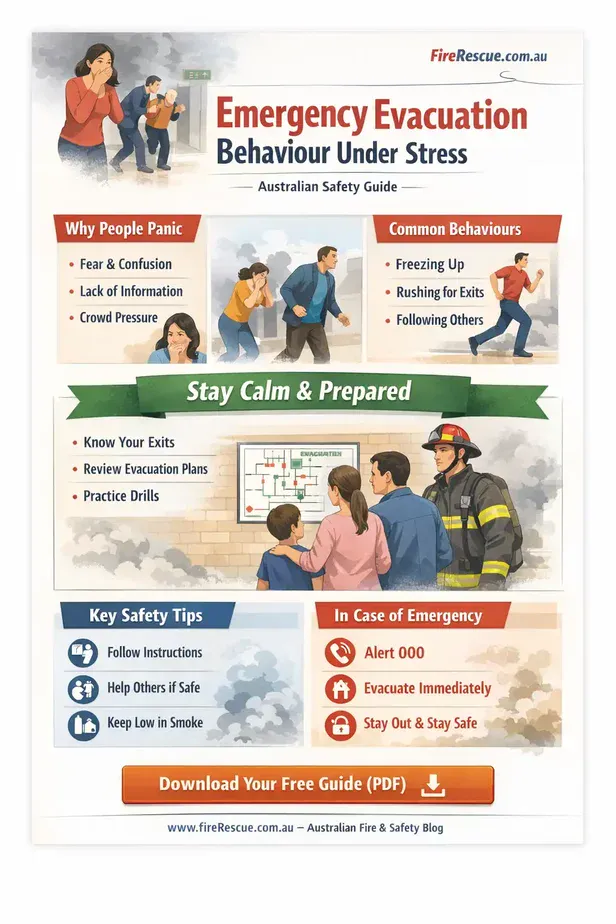
Emergency evacuation behaviour under stress is a critical factor when lives are at risk. Emergencies such as bushfires, floods, or building fires create high-pressure situations where quick decisions are needed. However, stress often changes how people think and act, sometimes causing hesitation, confusion, or risky choices. By learning about these common reactions, you can better prepare yourself and your family to remain calm and follow instructions efficiently.
Australian fire and emergency services, including Fire and Rescue NSW, Victoria’s Country Fire Authority, State Emergency Service units, and Ambulance services, provide timely warnings and clear guidance to help residents evacuate safely. Understanding typical human responses to stress complements these efforts and supports safer evacuations.
Moreover, recognising how stress influences behaviour allows communities to develop better education programs and drills that simulate real emergency scenarios. These initiatives help individuals anticipate their own reactions and practice effective responses, ultimately reducing the chance of panic or dangerous mistakes when actual emergencies occur.
In addition, workplaces and public venues across Australia are increasingly integrating psychological insights into their emergency plans, ensuring that evacuation procedures account for human behaviour under stress. This holistic approach enhances overall safety and resilience, benefiting everyone involved.
Common stress reactions that affect evacuation
Fight, flight, or freeze responses
When faced with danger, the body reacts instinctively. Many people experience the fight, flight, or freeze response. Flight urges you to escape quickly, fight might cause confrontation or rash action, and freeze can leave you unable to move or decide. In emergencies, freeze reactions delay evacuation, while impulsive fight responses may put you at risk.
It is important to note that these reactions are automatic and stem from the brain’s attempt to protect you. However, understanding them can help you override instinctive impulses that may not be suitable during evacuation. For example, a fight response might manifest as arguing with emergency personnel or trying to stay behind to protect property, which can increase danger.
Tunnel vision and impaired judgment
Stress hormones narrow your focus, which can mean ignoring alternative escape routes or failing to notice important information. Tunnel vision reduces situational awareness and may lead to mistakes, such as going toward smoke or dangerous areas. Staying aware of your surroundings and listening carefully to official advice is essential.
This narrowing of focus often causes people to fixate on familiar exits or routes, even if they are blocked or unsafe. Training yourself to quickly scan your environment and consider multiple options can counteract this effect. Emergency signage, clear lighting, and rehearsed evacuation drills also help improve decision-making during high stress.
Denial and delay
Some people struggle to accept that an emergency is real or threatening. This denial can cause delays in evacuation, increasing risk. Australian emergency services emphasise the importance of acting early when warnings are issued. Trust official sources and prepare to leave as soon as alerts arrive.
Denial may stem from a belief that the danger won’t affect you personally, or from hope that the situation will improve without needing to evacuate. Overcoming this mindset requires awareness and a proactive attitude. Families and communities that discuss potential emergencies and agree on action plans beforehand tend to experience less denial and faster response times.
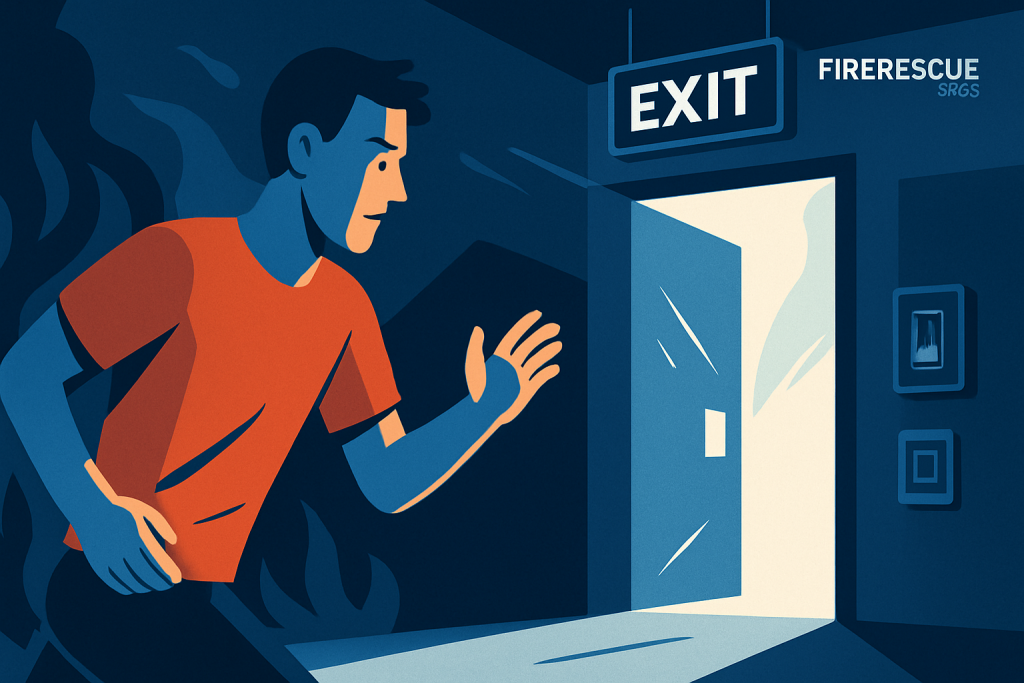
How to improve your emergency evacuation behaviour under stress
Preparation is the best defence against stress-induced mistakes. Knowing your local risks, having an evacuation plan, and practicing it regularly build confidence. This reduces panic and hesitation when a real emergency happens.
During an evacuation, focus on staying calm and moving decisively. Listen carefully to alerts from emergency services and follow their instructions. Avoid unnecessary risks such as returning to collect belongings or taking unapproved routes. Taking deep breaths and reminding yourself of the plan can help maintain composure.
Remember to check on vulnerable family members, neighbours, and pets early so they are not left behind when time is short. Community support often plays a critical role during evacuations.
It is also beneficial to familiarise yourself with local emergency signals and communication channels. Many Australian communities use multiple platforms such as SMS alerts, social media updates, and local radio broadcasts. Being comfortable with these sources ensures you receive timely information and reduces uncertainty.
Mental rehearsal can be a powerful tool. Visualising the evacuation process and your role within it helps prepare your mind to act quickly and calmly. This technique can reduce the impact of stress by building a sense of control and readiness.
If you only do five things
First, prepare an evacuation plan tailored to your home and family, including alternative routes and meeting points. Practice it at least twice a year to build confidence.
Second, stay informed by monitoring official warnings from Fire and Rescue NSW, the SES, or emergency apps. Early alerts give you crucial time.
Third, act promptly when advised to evacuate. Do not wait for signs of immediate danger or try to gather personal items beyond essentials.
Fourth, stay calm during the evacuation, breathe steadily, and focus on moving safely rather than rushing recklessly. Follow emergency personnel directions closely.
Fifth, after evacuating, contact emergency services on 000 if anyone is injured or trapped. Check in with family and emergency centres to confirm your safety.
Additionally, keep an emergency kit prepared with essentials such as water, medications, important documents, and basic first aid supplies. Having this ready reduces decision-making stress during evacuation and ensures you have what you need.
Remember, during an evacuation, patience and cooperation with others can make a significant difference. Avoid congestion by leaving early if possible and assist those who may require extra help.
Who does what in Australia
In Australia, different agencies manage emergencies with clear roles. Fire and Rescue services focus on firefighting and rescue operations, including structural fires and bushfires. The Police maintain public order, assist with evacuations, and manage traffic during emergencies.
State Emergency Service (SES) specialises in flood, storm, and other natural disaster responses, often helping with rescues and clearing debris. Ambulance services provide medical care and transport injured or ill people to hospitals. In life-threatening emergencies, always call 000 immediately.
Knowing who to expect and when can help you trust instructions and improve coordination during evacuations.
Beyond these primary agencies, local councils and volunteer groups play important roles in community preparedness and support. These organisations often organise education sessions, evacuation drills, and assist with welfare centres during disasters. Engaging with these groups can enhance your knowledge and connection to local emergency networks.
Furthermore, Australia’s emergency management framework encourages collaboration between agencies at federal, state, and local levels, ensuring a coordinated and efficient response. This system benefits evacuees by providing clear communication channels and resource sharing during crises.
Final thoughts on emergency evacuation behaviour under stress
Stress during emergencies influences behaviour in ways that can either help or hinder safety. Understanding these effects prepares you to respond more effectively. Australian emergency services are there to guide and support you but being ready yourself is vital.
Follow official warnings, prepare in advance, and maintain a calm mindset when evacuating. Your actions will make a difference not only for your safety but also for your community’s resilience.
For more information and updates, visit the websites of Fire and Rescue NSW, SES, and your local council emergency services. Stay safe and be prepared.
Remember that every emergency situation is unique, and while preparation reduces risk, flexibility and adaptability are also crucial. Being mentally and physically ready to adjust your plans as conditions change can save lives. Continual education and community involvement strengthen Australia’s overall emergency response capability.
Finally, consider the psychological aftermath of emergencies. Stress reactions can persist after evacuation, and seeking support from mental health services or community groups is important for recovery. Resilience is built not only through physical safety but also through emotional wellbeing.
FireRescue Training Hub
Access practical fire and emergency study support resources, downloads, checklists, audio guides, and member-only course content.
- Course library
- PDF downloads
- Audio guides
- Checklists
Study support only. Not accredited training or a replacement for workplace procedures.
About the author and safety review
Ken Walker
Former Station Officer and fire service educator
Former career firefighter with extensive career and volunteer fire service experience.
Qualifications: Associate Diploma of Applied Science in Fire Technology; Institute of Fire Engineers studies.
Author profilehttps://www.firerescue.com.au/about-us/